
by Stanley Wright
The portrayal of women’s psychological experiences in horror films has undergone significant evolution from the 1960s to the present day. This shift is exemplified by two iconic films: “The Haunting” (1963) and “The Innkeepers” (2011). Eleanor in “The Haunting” embodies the 1960s archetype of a woman whose psychological issues are viewed through a lens of hysteria, while Claire in “The Innkeepers” represents a more modern and nuanced portrayal of women’s mental health. By comparing these two characters, we can explore how societal views on women and mental health have changed and how these shifts are reflected in the horror genre.
In the 1960s, women’s mental health issues were often dismissed as “hysteria” or emotional instability. The term “hysterical” has its roots in ancient notions that linked women’s psychological disturbances to their reproductive organs. This view persisted into the mid-20th century when women’s emotional and psychological struggles were frequently trivialized and attributed to their supposed inherent frailty.
Hill House has stood for about 90 years and appears haunted: its inhabitants have always met strange, tragic ends. Now Dr. John Markway has assembled a team of people who he thinks will prove whether or not the house is haunted.

Eleanor, portrayed by Julie Harris, embodies this archetype. She is depicted as emotionally fragile, largely shaped by her traumatic past and oppressive family life. Her longing for belonging and her susceptibility to the supernatural events in Hill House are seen as extensions of her fragile psyche. Eleanor’s mental state deteriorates throughout “The Haunting” as she becomes increasingly isolated. Early in the film, Eleanor is shown to be emotionally fragile, burdened by guilt over her mother’s death, and desperate for a place where she belongs. Her internal monologues reveal her growing obsession with Hill House and her belief that the house is calling to her, reflecting her deep psychological turmoil.
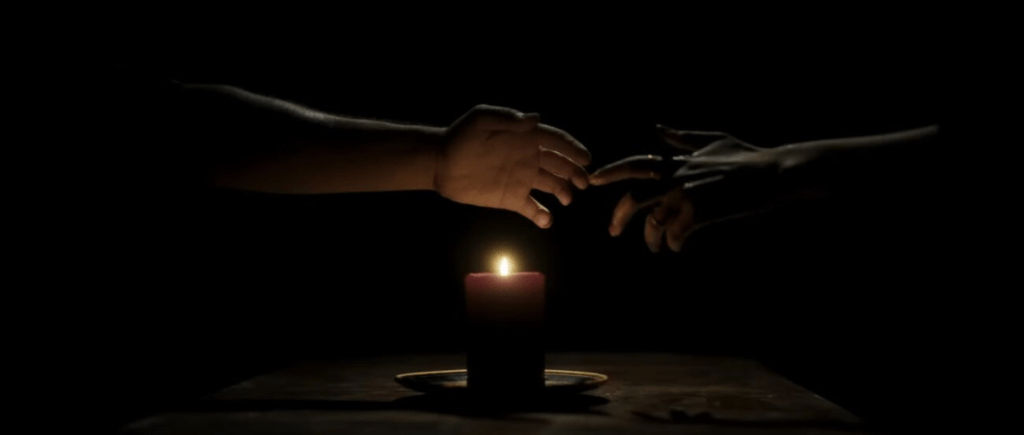
In one scene, Eleanor stands before a mirror, repeating to herself, “Journeys end in lovers meeting,” showing her increasing detachment from reality and her growing connection to Hill House. Her fixation on the house’s ominous messages illustrates her psychological breakdown. The house’s supernatural occurrences seem to target Eleanor specifically, suggesting a connection between her mental state and the hauntings. As her obsession with the house grows, the manifestations become more intense. In a pivotal scene, Eleanor experiences a terrifying moment when she feels an unseen force gripping her hand in the dark. She initially believes it is another character, Theo, offering comfort, but when the lights come on, she realizes she is alone. This scene blurs the line between her psychological instability and the house’s supernatural influence, emphasizing her isolation and descent into madness.
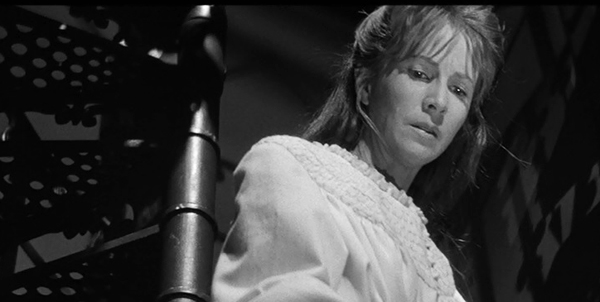
Eleanor’s behavior is often dismissed by the other characters as hysterical or overly emotional, reflecting the 1960s societal views on women’s mental health. Dr. Markway, the group leader, acknowledges Eleanor’s troubled past but often regards her growing fear and erratic behavior as a sign of weakness rather than a legitimate response to supernatural events. This attitude mirrors the period’s tendency to trivialize women’s psychological struggles.
In modern times, there is a greater understanding and recognition of mental health issues, and women’s psychological struggles are approached with more empathy and nuance. Mental health is increasingly viewed through the lens of medical and psychological science rather than outdated notions of hysteria.

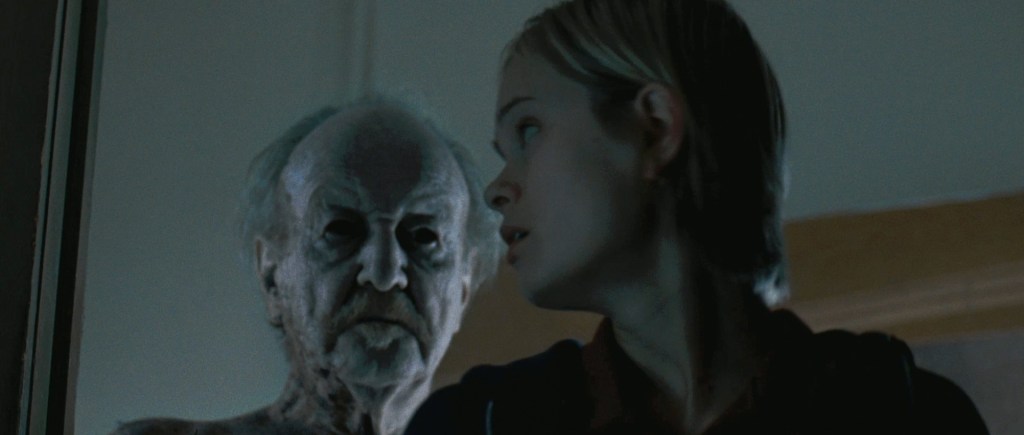
During the final days at the Yankee Pedlar Inn, two employees determined to reveal the hotel’s haunted past begin to experience disturbing events as old guests check in for a stay.
Claire, portrayed by Sara Paxton, is a relatable and grounded character whose psychological state is portrayed with nuance and realism. She is not depicted as inherently fragile or hysterical but as a curious and brave young woman navigating an extraordinary situation. Claire’s fear and anxiety are portrayed as genuine and relatable responses to the increasingly strange events at the Yankee Pedlar Inn. Her reactions are grounded in realism, making her a sympathetic and believable character.
In one scene, Claire uses a tape recorder to capture potential ghostly sounds. When she hears unsettling noises through the headphones, her fear is palpable. She doesn’t overreact hysterically but instead tries to rationalize her fear, which makes her responses feel authentic and relatable to the audience. Claire’s character is depicted with a balance of curiosity and vulnerability. Her involvement in ghost-hunting is driven by genuine interest rather than an underlying psychological instability. Claire’s vulnerability is showcased when she decides to explore the basement alone after hearing strange noises. Her fear builds gradually, and when confronted with a supernatural event, her reaction is one of genuine terror rather than exaggerated hysteria. This realistic portrayal highlights her courage and relatability.
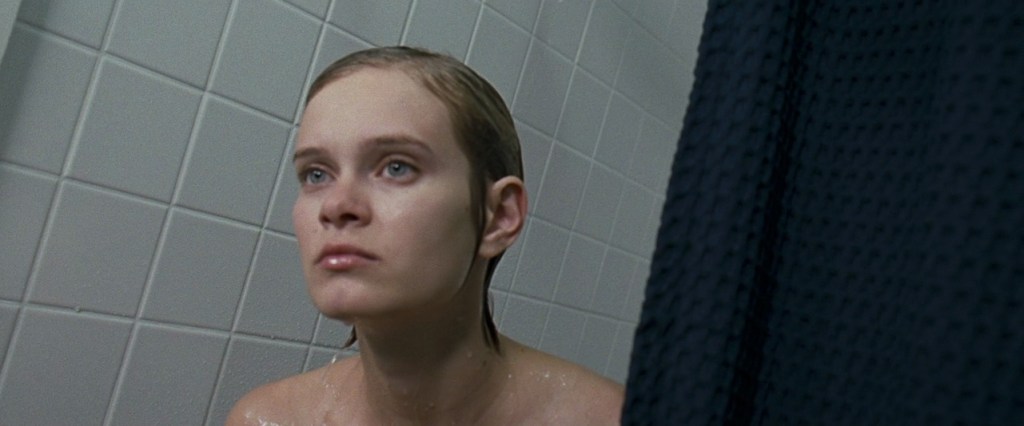
Claire’s psychological experiences are handled with empathy and nuance. Her fear and anxiety are treated as valid responses to the extraordinary circumstances she faces, rather than as signs of inherent emotional instability., In the film’s climax, Claire’s encounter with the inn’s ghost is depicted with a mix of terror and determination. Despite her fear, she confronts the ghostly presence, showing both her vulnerability and strength. This nuanced portrayal underscores the modern approach to depicting women’s psychological responses to horror.
The examples from “The Haunting” and “The Innkeepers” illustrate the evolving portrayal of women’s psychological experiences in horror films. Eleanor’s character in “The Haunting” reflects the 1960s view of women’s mental health as intertwined with hysteria and supernatural influence, while Claire’s character in “The Innkeepers” embodies a modern, empathetic approach to depicting fear and anxiety. Through their interactions with their settings and their responses to supernatural events, both characters highlight the broader societal and cultural shifts in understanding and representing women’s psychological experiences in the horror genre.
Stan, a native of Union, South Carolina, found inspiration for his passion for horror in the
haunting image of an abandoned house consumed by kudzu that lingered in his memories. These
days, Stan likes to watch horror movies as well as dabble in screenwriting and writing about
horror.
Find Stan on X.com/Deathlok38
 NightTide Magazine
Leave a comment