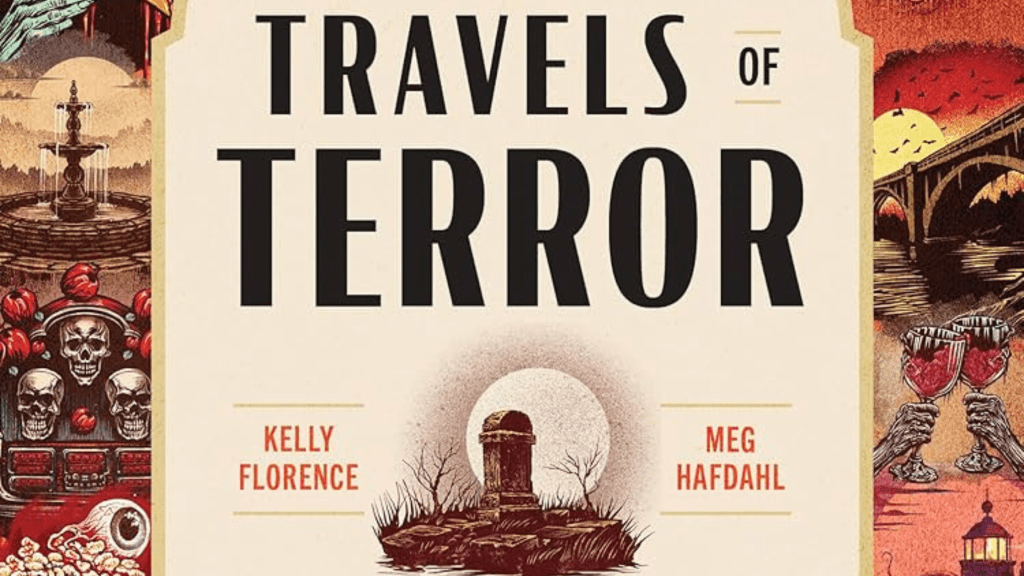
NightTide sat down with this incredible duo to talk about their newest book, Travels of Terror: Strange and Spooky Spots Across America, their neverending research for “The Science of..” series’ and their love for all things horror.
Grab your flashlight, garlic, and ghost hunting equipment. We’re taking you on the ultimate road trip of the spookiest places around the U.S.
Horror lovers, lifelong best friends, and co-hosts of the Horror Rewind podcast, Kelly Florence and Meg Hafdahl, have traveled around the U.S. to bring you the most thrill-inducing spots for horror, history, and true crime. They’ve compiled a list of what to do, where to stay, where to eat and drink, and where to shop to make your vacation-planning a breeze.
They’ve also delved into the history and pop culture of each spot, revealing hidden gems, most notorious true crimes, women you should know, horror books and movies set in the state, and other strange facts about some of the scariest places around the nation.

1. How did you blend scientific concepts with your analysis of horror literature and films? Were there any challenges in making these connections clear and engaging for a broader audience?
We like to approach our research through the lens of curiosity. We will follow a thread that intrigues us, as horror fans, to discover the true science, history, and basis for the stories we read or watch. Through interviews and research, we make sure to distill the information into something we can all understand. It’s important to us to make the information fun and accessible, not overly academic or boring. This has proven to be a great way to connect with readers of our books to start great conversations of how truth can be scarier than fiction!
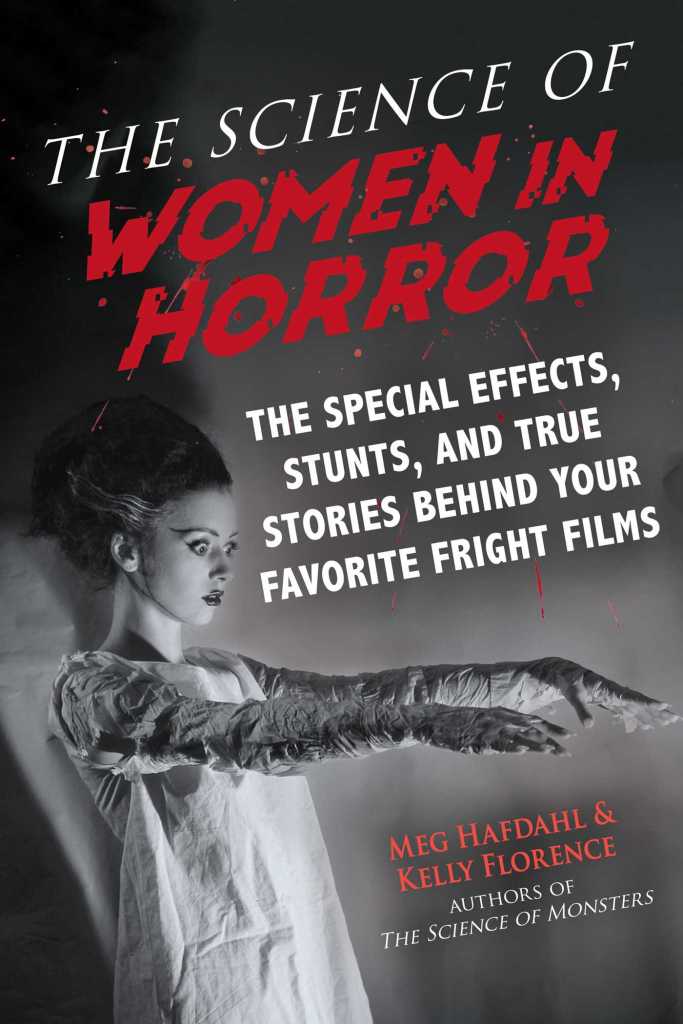
2. In your research for “The Science of Women in Horror,” what surprising scientific insights did you uncover about the portrayal and evolution of female characters in horror?
By focusing on standard tropes of how women have been portrayed in the horror genre, we were able to see how filmmakers and writers have used these tools to usurp our expectations. For example, little girls are often portrayed as sweet and innocent but the horror genre has created the “creepy kids” trope that turns that notion on its head. Women are seen as nurturing mothers but horror unveils the monstrous. We also researched how the roles of women have changed over time with research for the Geena Davis Institute. Their work clearly shows that representation matters on screen when it comes to diversity of race, gender, sexual orientation, and careers that characters are shown in.
3. Hitchcock is known for his psychological thrillers. How did you explore the psychological underpinnings of fear and suspense in his films?
We definitely leaned into both aspects, as we’re fascinated with not only the scientific reason we get scared and crave thrilling stories, but also, as creatives, we want to know how Hitchcock was so masterful at it! In our other biographies it was easier to connect their lives (Agatha Christie and Stephen King) to their art. Appropriately, Hitchcock was a little more hard to pin down, shadowy. He was so consumed by his filmmaking, the art of it, the science of it, that it was his life. We think that alone is a study in psychology.


4. Monsters in literature and film often reflect societal fears. How did you analyze the scientific basis of these fears, and what modern anxieties do you think current monsters represent?
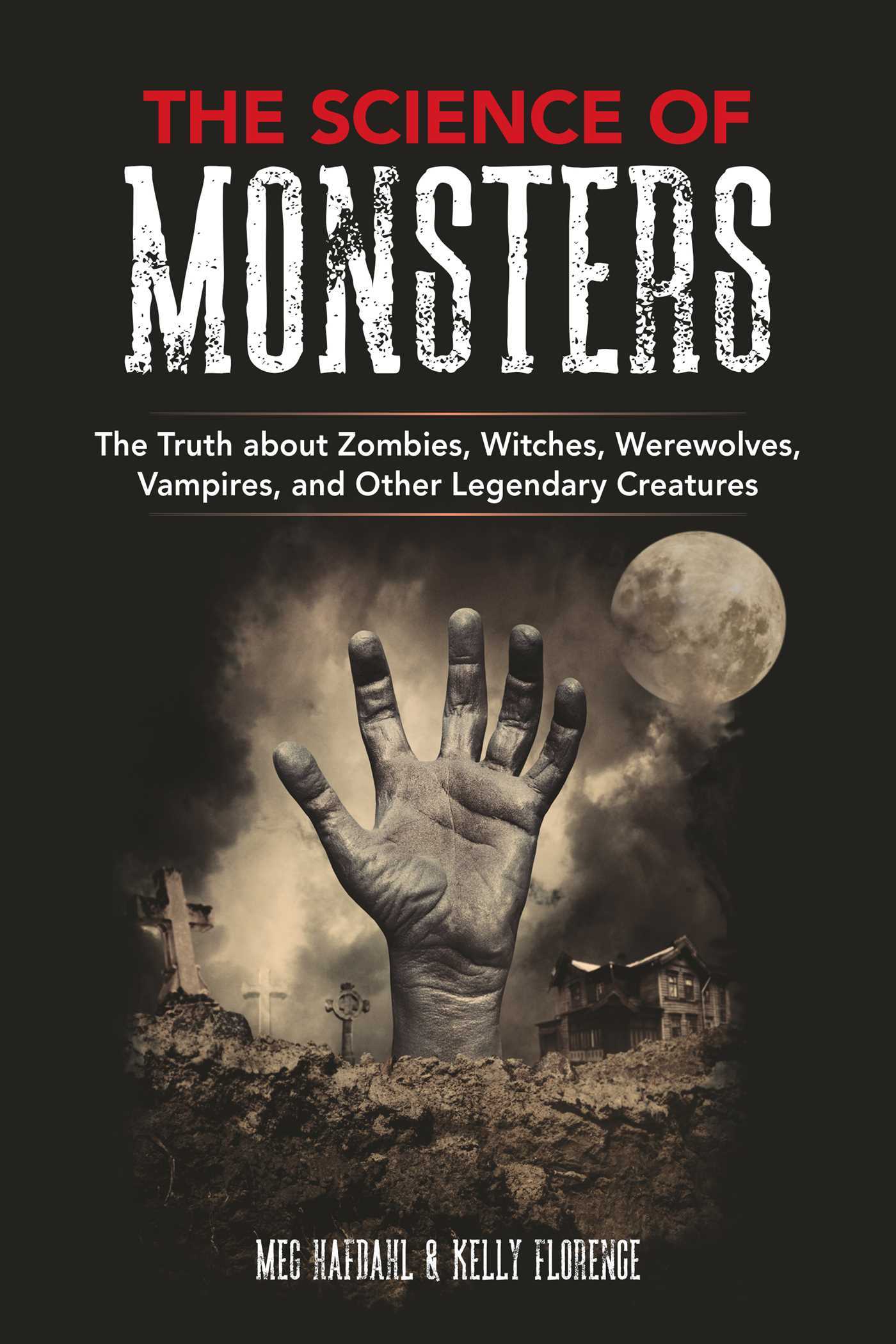
Even before Mary Shelley wrote Frankenstein, monsters have represented more than just a scary creature lurking in the woods. Tales throughout cultures in history show that monsters can be an effective way to warn children about dangers, fears, and the unknown. As we researched the various origins of contemporary monster stories, we understood that many of them come from scientific bases including medical conditions, cultural beliefs that affect humans physiologically, and people’s upbringing. In 2024, we’ve noticed an uptick in horror that focuses on the occult, manipulation, faith, and beliefs. We postulate that this reflects the uncertain times we are in with our economy, politics, and more.
5. Stephen King’s works span a wide range of horror sub-genres. What scientific principles or psychological theories did you find most prevalent in his storytelling, and how do they contribute to the horror experience?
What we found most fascinating about Stephen King’s work were the biographical aspects we researched that directly influenced him. Whether it was a news article that got him thinking about a worldwide pandemic or research into government conspiracies, the Master of Horror very much found inspiration in real things. It is also important to note that the things he experienced throughout his life directly affected the stories he told at the time he wrote them including his struggle with alcoholism, his near fatal accident, and aging.
6. Having written about diverse topics within horror, from gender roles to iconic directors and legendary authors, what common scientific themes or patterns did you identify across these different areas?
We are all terrified of something! Truly, it’s been interesting to see how often fear of the unknown, fear of “losing our minds,” and fear of harm or death are universal in much of the horror genre. Scientifically, this comes down to our innate instinct for survival. The flight or flight response can be felt as we’re watching a horror movie or reading a scary book. We put ourselves into the characters’ position and empathize, imagining what we would do in their situation.
7. How do scientific principles of fear, suspense, and the unknown affect audience reactions to horror films and literature? Can you share any specific examples from your books?
Well there is science that proves our bodies react to films just like we would in a real, life threatening situation. I think this is amazing, and such a testament to the human imagination. Our heart rates, sweating, all of it, can be altered by ideas, by art. I know this one reason horror is appealing for so many, we are searching for memorable experiences. We want to feel something, and horror often does the scientific definition of this. Meg recently spoke to a paramedic who recalled racing to an emergency at a movie theater. Someone was having a full blown panic attack in their seat, thanks to the first Saw movie. And, the paramedic pointed out, it was a young, healthy guy, not the stereotypical person one might assume would be scared nearly to death!

8. Can you walk us through your research process for these books? How did you balance academic research with engaging storytelling to appeal to both horror fans and those interested in science?
Being self proclaimed research nerds, we proudly tell people we would rather be in a library all day than enjoying the outdoors! This love and quest for knowledge fuels us to dig deeper into sources and not look at the obvious topics or routes. One thing that helps with this is interviewing experts from a variety of backgrounds and fields who help us and our readers understand sometimes very complex topics in a new and interesting way.
9. Based on your scientific analyses, where do you see the future of horror in literature and film heading? Are there any emerging trends or scientific advancements that you believe will influence this genre?
I know when we were writing about witches for The Science of Witchcraft, we were really thrilled to see the witch trope explored with more depth and diversity than in years past, so that has been a nice surprise, especially within horror and not only fantasy. Again, to use the word diversity, it’s also apparent that foreign films are touching eyes they may have missed in the past thanks to streamers like Shudder. And of course, it goes without saying, but horror is a reflection of the real world, so there is a trend to depict diverse stories seen through marginalized eyes, and that’s the most thrilling of all. We’re seeing revenge tales, have-and-have-not stories, monster outs romance, and so much more through filmmakers who weren’t always represented in years past.
10. What were some of the most personally intriguing or unexpected findings during your research for each of these books? Did any particular discovery change your perspective on horror?
By doing the research on Agatha Christie for our book, we discovered how knowledgeable she was about the topics she wrote about. With a vast knowledge of history, pharmaceuticals, and poisons her plots came to life with realism. One scientific discovery that changed our perspective on horror was when we discovered that a rare medical condition was the basis for Nightmare on Elm Street. Knowing that people in the 1980s really died by what they thought was a sleep demon visiting them at night, gave us a new appreciation for Freddy Kruger and how truly terrifying he is.
11. What inspired you to write “Travels of Terror: Spooky Places in the USA,” and how did you go about selecting the locations featured in the book? Were there any criteria that a place had to meet to be included?
As we’ve been traveling together as best friends for over twenty years, we naturally gravitated to finding the best horror themed shops, restaurants, and sites in every city we visited. It became a natural next step to pitch it to our agent! With so many great options of cities to visit and write about, we chose twelve places that balance well known tour spots and hidden gems. The main criteria that we considered when writing about a city were ease of travel, such as walkability or public transportation options, safety, and costs. We received our best tips and recommendations from locals, especially rideshare drivers! We’re excited to share the inside scoop that we got with our readers.
12. Can you share some of your most memorable or chilling experiences while researching and visiting these spooky places? Were there any particular locations that stood out to you or had a profound impact?
We don’t want to give too much away! But we’ll say that we encountered paranormal activity, which we are both rather skeptical about, so that was life-changing. And probably our favorite part was all the cool people along the way. It’s refreshing to be in Salem, Massachusetts in October and realize there are so many people who enjoy the same things we enjoy. Or even Pittsburgh on a random Tuesday! We love finding like-minded fans of the gothic and the spooky. We’re so excited to meet more!
13. How do the cultural and historical backgrounds of these spooky places contribute to their eerie reputations? Did you find any common threads or unique stories that highlight why these locations have become such integral parts of American haunted folklore?
Great question! Obviously America is haunted by a past marked with slavery, racism, sexism, so much. And as a country that formed because it wanted better, we think this dissonance provides a folklore rich with hauntings. If we could find a common thread, it is that the stories of ghosts were almost always synonymous with marginalized people, whether it be sex workers, orphaned children, or those in poverty to name a few. And often their deaths, whether fictional or real, were because of ideals (greed, lust) that we as humans, as Americans, don’t want to face. Ghost stories are a way for us to understand our history, especially the not so beautiful parts.

Kelly Florence (left)
Kelly Florence is a communication instructor at Lake Superior College in Duluth, Minnesota and is the creator and co-host of the Horror Rewind podcast as well as the producer and host of the podcast Be A Better Communicator. She received her B.A. in theatre at the University of Minnesota-Duluth and got her M.A. in communicating arts at the University of Wisconsin-Superior.
Meg Hafdahl (right)
Horror and suspense author Meg Hafdahl is the creator of numerous stories and books. Her fiction has appeared in anthologies such as Eve’s Requiem: Tales of Women, Mystery and Horror and Eclectically Criminal. Her work has been produced for audio by The Wicked Library and The Lift, and she is the author of two popular short story collections including Twisted Reveries: Thirteen Tales of the Macabre. Meg is also the author of the two novels; Daughters of Darkness and Her Dark Inheritance called “an intricate tale of betrayal, murder, and small town intrigue” by Horror Addicts and “every bit as page turning as any King novel” by RW Magazine.

Horror Rewind Podcast with Kelly & Meg
Start listening here!

 NightTide Magazine
Leave a comment