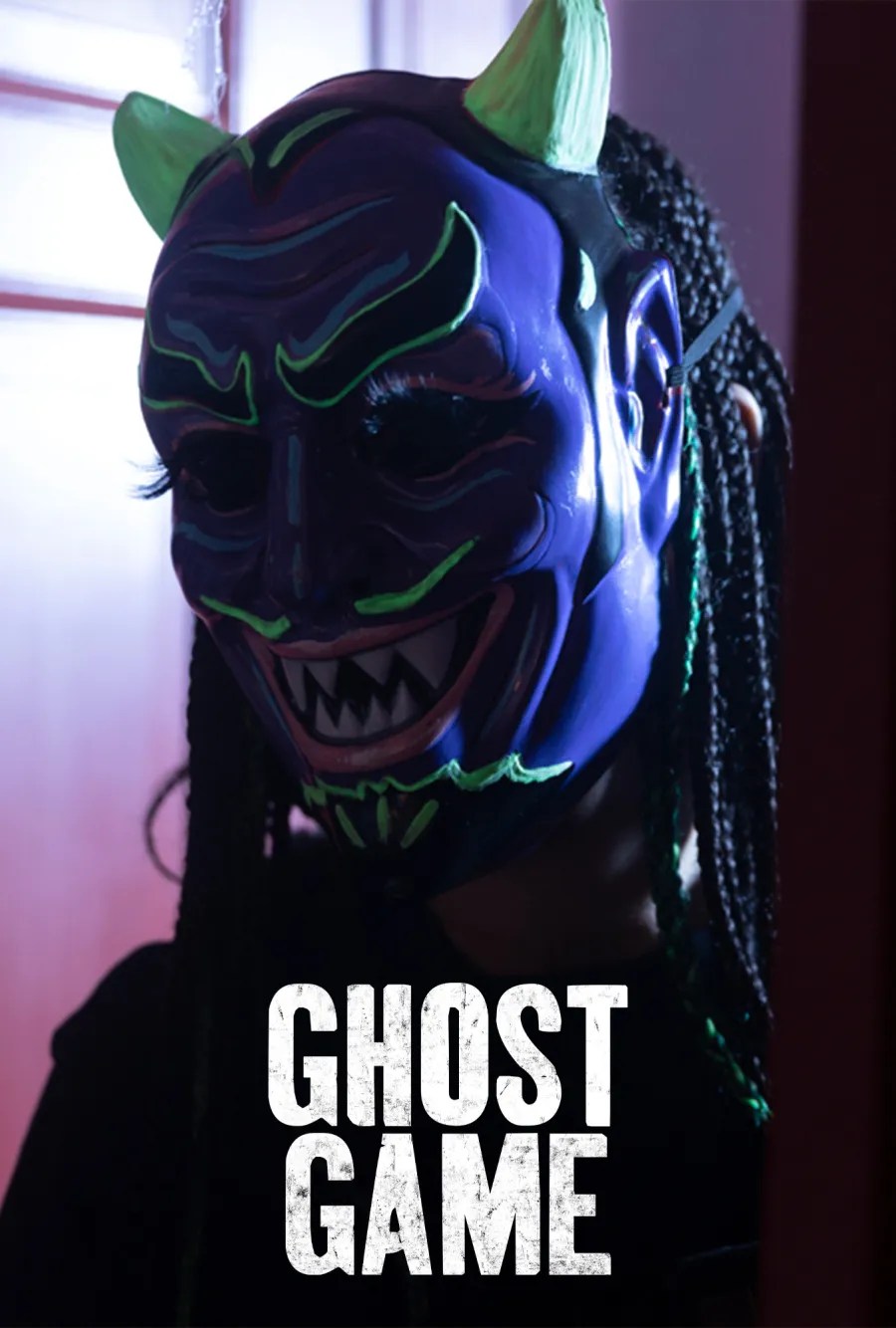
Ghost Game (2024)
Participating in an internet challenge that requires breaking into homes and living undetected alongside the residents, a thrill-seeking couple target an infamous haunted house and endure a series of chilling incidents as they witness a family descending into madness.
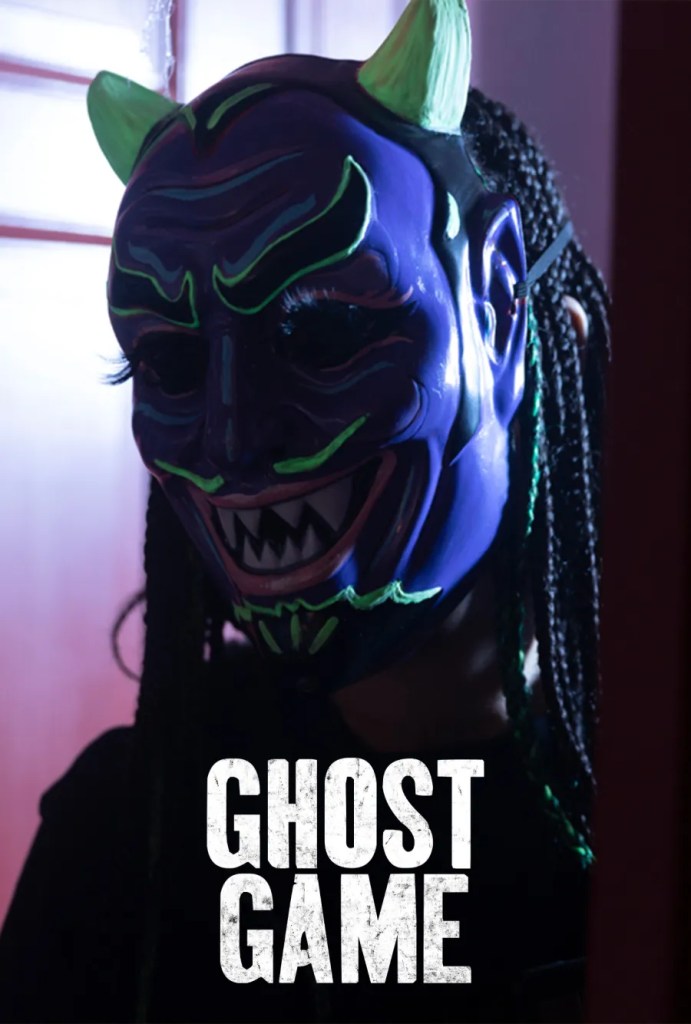
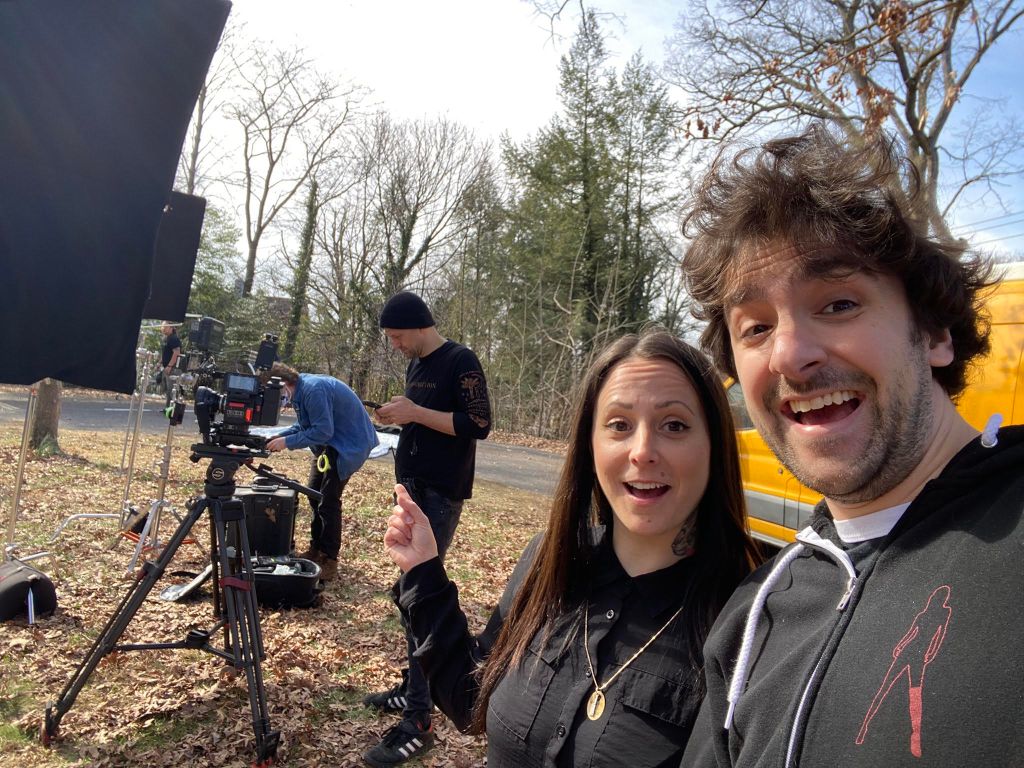
There has been nothing invented in the last 40 years that has made us more brazen, more bold, and more idiotic than the internet. Media literacy is in the toilet, opinions (unsolicited, usually) are handed out like candy, and our willingness to push the envelope for ourselves and unsuspecting others is at an all-time high. I sat down with writer, Adam Cesare and director Jill Gevargizian on how they created the madness of Ghost Game in this spoiler-free interview.
Mo Moshaty: I’m so glad we got to sit down and talk about this because the thought that someone could be in my house without my knowledge freaks me the hell out. Adam, as the writer, I want to ask you about your approach the theme of invasion in this story, because your novel, Clown in a Cornfield, has that theme as well.
Adam Cesare (writer): I think horror thrives in spaces that feel uncomfortable, so I never want my characters to feel too cozy. In Ghost Game there’s that extra transgression of knowing you’re in the wrong. The characters in Clown in a Cornfield are transgressing, but more in like a “we’re just kids messing around” way, where they assume their own safety. The protagonists in Ghost Game are breaking and entering. And I like having our sympathies with them somewhat but never fully all the way.
MM: What inspired the story of Ghost Game?
AC: I was watching the local news and there was a story of a guy who had broken into a house and was living there for weeks. He was hiding in the guest bedroom, laying under the bed and charging his phone, the family that lived in the house completely unaware. He only got caught because he’d used the bathroom, thinking the homeowners were out for the day, but they weren’t and they heard him flush the toilet. Even though he was completely benign, that’s a really creepy thought. Someone’s living in my house and I don’t even know.
MM: Jill, this seems like such an incredible pairing! What inspired you to work with Adam and within the exploration of the theme of voyeurism and madness in a haunted setting?
Jill Gevargizian (director): I already knew Adam because we had worked together on another script of his and I am a huge fan of his novels. He wrote Ghost Game long before I knew him. The project was picked up to be part of a slate of films with Epic Pictures. And when they were looking for a director, he put my name in the hat to one of the Executive producers Ed Sanchez (director of The Blair Witch Project), who I also already knew! Ed reached out. I read the script and 2 months later we were shooting it! I love that you bring up the theme of voyeurism because looking back at my work I’ve realized it’s been not only part, but a big part of almost every film I’ve directed. That wasn’t at all intentional. What drew me to the script was that it was a home-invasion film colliding into a classic haunted house film. Two genres I had never worked in. Two different storylines. And within that, there were two casts of characters and lots to explore within the relationships.
MM: The haunted house is almost a character in itself. How did you approach the set design to create a tangible sense of dread for the audience?
JG: The script was written to take place in an awesomely old and huge mansion. I never thought we’d be able to get anything even close to it but our producers found the dream location in Hagerstown, Maryland. It’s an old mansion that a governor lived in back in the 1800s. That amazing location did a third of the work for us. The second third was thanks by our amazing production, designer Jen Davis. Jen and I discussed the history of the house. We made up our own story so that we could pick pieces from multiple eras to subtly hint at the backstory of this house. The last third was thanks to our camera and lighting team. DP Justin Brooks and I developed a list of camera rules for how we would handle all of the supernatural moments and hopefully connect them for the viewer. Our gaffer Nate Airy and Justin created a beautiful but creepy atmosphere right out of my dreams.

MM: Adam, madness is a recurring theme in both Ghost Game and Clown in a Cornfield. How do you conceive and write the progression of madness in your characters?
AC: In the Clown in a Cornfield books, I have a much larger canvas. Three 80-100,000 word novels. So that progression can be a little more slowburn. Ghost Game, being a screenplay, and a tight 80-something minute movie that Jill made, characters and their relationships had to be sketched pretty quickly. I think it’s a true testament to the cast and Jill that the progression of their madness can so clearly be charted. And I tried to plot everyone as pretty close to madness, when we first meet them, whether we realize that or not. Just a lot of stressors. Social, economic, familial: life’s hard and we’re always close pretty to losing it, right? Right?!
MM: Jill, how did you direct your actors to portray the “losing it”, the escalating tension and terror, and did you face any challenges in maintaining a believable progression?
JG: I feel like as the director is my job to know where we are in the story and be able to relay that to the actor so they don’t have to worry about that. Because we’re never shooting in story order. But the really tense moments in the film we were lucky to shoot somewhat in order so that the actors could stay in that place. In this film, the “descent into madness” is a reaction to mysterious happenings going on into the house. Wasn’t so much research, but more so imagining how we (the actors and I) would feel in those situations. But I think most of the tension is built in the editing room.
MM: Fear and the feeling of insanity go hand in hand in horror films. Adam, how did you develop the interactions and contrasting reactions between the couple and the haunted family to highlight different those aspects?
AC: That’s all Jill and the actors! I just put words on a page, and tried to build these characters and their relationships the best I could. I really see it as a story of two families, our literal family living in the house, and then the even more dysfunctional family of our three “ghosts” who have to work together to move around the house unseen.
MM: Home invasion scares me to death! How do you feel the theme of invasion in Ghost Game reflects societal or psychological boundaries being crossed?
AC: Home invasion is such a specific flavor of horror, and I am just a sucker for the subgenre. It’s a universal fear. The ultimate transgression. Someone intruding on what should be the safest space for you and your loved ones. The natural progression of that, for me, is “well, what if we turned that home invasion into an organized sport? What does Olympic level THE STRANGERS look like? Even if you’re not setting out to hurt anyone?”
JG: I hope it brings to focus how inhuman social media and the internet can make us act. But outside of that, I hope people just have fun with this film because it’s probably the most fun horror movie I’ve made yet!
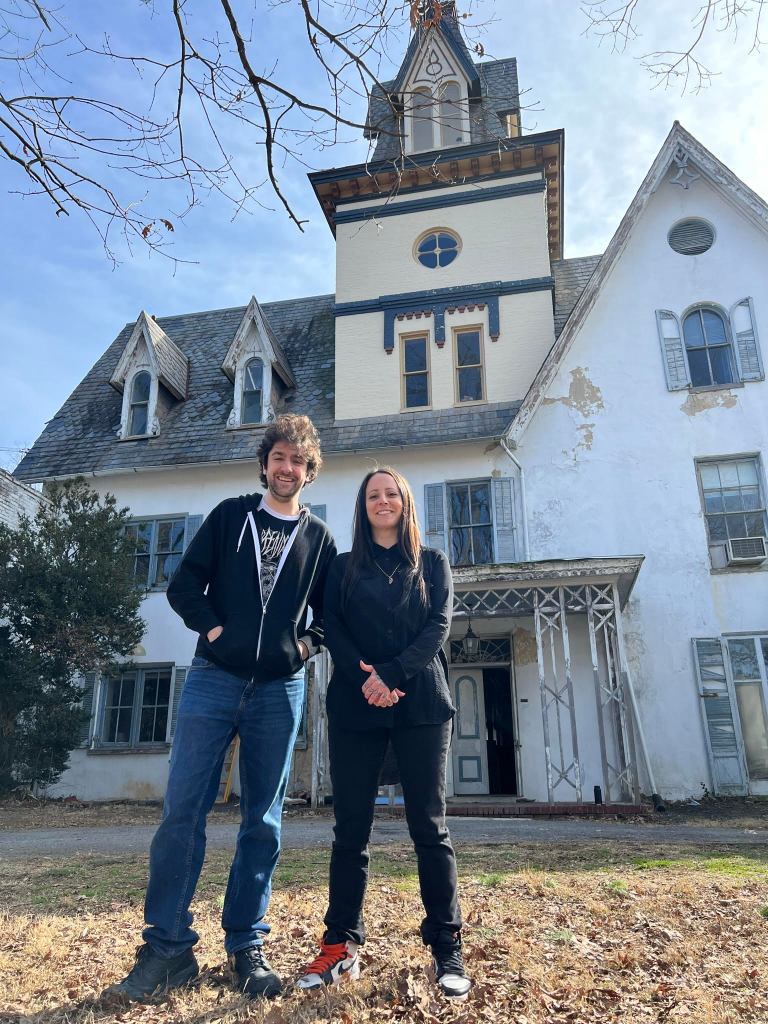
GHOST GAME takes of Fright Fest’s MAIN SCREEN
FRIDAY 23 AUGUST – 3.15 PM
Writer: Adam Cesare, Director: Jill Gervargizian.
With: Emily Bennett, Kia Dorsey, Zaen Haidar, Vienna Maas.
INTERNATIONAL PREMIERE – Discovering his girlfriend, Laura, has been secretly taking part in an internet challenge involving breaking into homes and living undetected alongside the residents, Vin wants in on the next adventure. The target? Halton House, an infamously haunted manor that’s just been bought by a new family. Once the thrill-seeking couple enters the house, chilling, unexplained incidents begin to happen. It seems Laura and Vin aren’t the only thing haunting the old manor. As the new owner descends into madness posing a danger to the family, the encounter becomes more than a game and more a battle for their own survival.
 NightTide Magazine
Leave a comment