Family trauma is bold, caps lock, underlined phrase these days. It’s on How to Spot a Narcissist TikTok, its in the group chat and now it’s in our cinemas. NightTide sat down with writer/director Parker Brennon to chat about extreme vulnerability, visibility and the importance of family, found or otherwise.
Mo Moshaty: I wanted to talk to you a little bit about the inspiration for Hauntology, because as an outsider, I wasn’t privy to the extreme haunted-ness of Ohio. What from your upbringing in Ohio or any family history that you’ve learned that inspired Hauntology?
Parker Brennon (writer/director): You know, I think there are a few things when I think back and I did write the first version in 2019, so it has been a while, but I remember I grew up with this book, I can see it on my bookshelf now called Weird Ohio and it just sort of is an overview of every strange and haunted place that this author could find. And I remember later in life I saw a map. I don’t even know if this is legitimate, but I saw a map someone made where they identified all the haunted attractions in Ohio that kind of sprung up around September and October and they were saying Ohio has more haunted attractions than any other state. I think that’s where I got this idea that Ohio’s actually really haunted people love horror here, and maybe that’s not so well known for other people in the country. So if you ever come to Ohio, I recommend Lakeview near Cleveland and Spring Grove near Cincinnati. Those are incredible cemeteries.
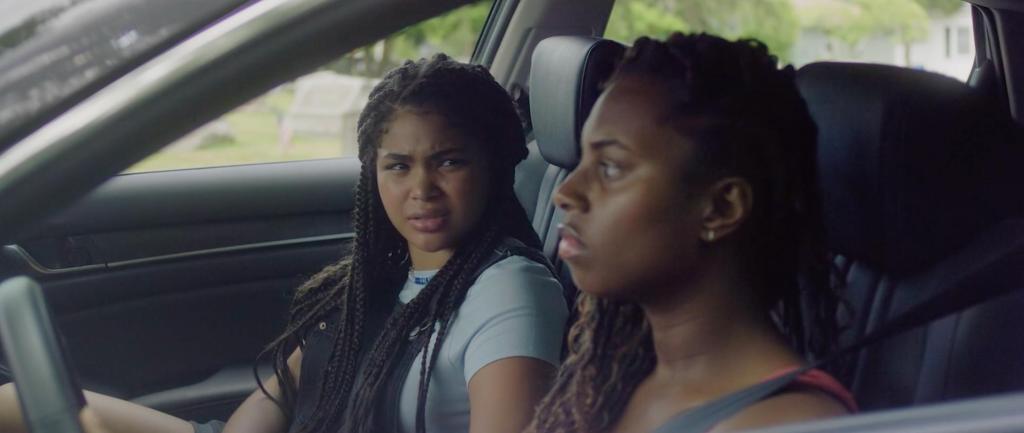
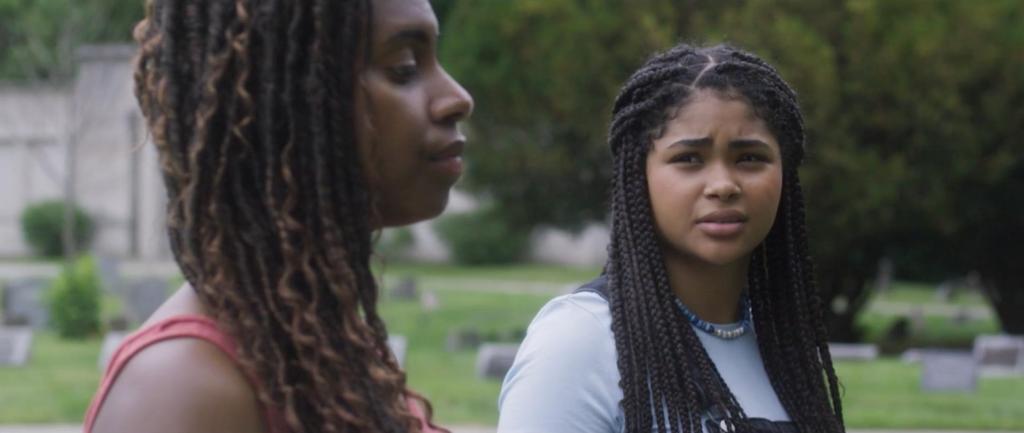
MM: I want to talk about the inspiration for the characters of Venus and Jazmin because they have a very, what I call a very normal sisterly connection, like they may not be ubër close. They kind of distanced themselves from each other, which I think is quite realistic. I have a hard time with cinema that just makes siblings be two peas in a pod because I don’t think that’s usually the case.
PB: Jasmine was the first character to come to life, thanks to Lindsey McDowell. Let me explain — Lindsay plays Madeline in the movie. There’s a great woman named Ashley Blackwell who writes about people of color and horror. She has a website called Graveyard Shift Sisters and she posted about a web series Lindsey did. It was called “MisSpelled,” and I remember Lindsey produced and acted in the web series. I watched it and was so struck by Lindsey’s performance. I knew she was really special, so when I went to LA in 2019, I met Lindsey at a diner and told her I wanted to write something for her. That’s where the character Jasmine came from. I wanted Lindsey to have a lead role in my first piece. Later, when the movie was actually coming to life, we got great auditions from our casting director. I went to see a play that Samantha Russell was in, and it was a one-woman show. Samantha’s performance was outstanding, and I thought she might be the better fit for the role of Jasmine. However, I still wanted Lindsey to be in the movie, so I gave her the lead role in the casual house segment. So that’s my long-winded explanation for where the character Jasmine came from.
For Venus, the character initially started as more of a blank slate. It was one of our producers who suggested that I, being a non-binary person, infuse some of that into Venus. Initially, Venus was portrayed as a cisgender person, but incorporating this aspect really expanded the character and made it feel more relatable. Developing the dialogue and the movie itself went through about 30 different drafts, taking quite some time but that process brought Venus to life and allowed for deeper connections between different parts of the story. Originally, the stories were separate and unrelated, but eventually, they became interconnected with numerous Easter eggs. Eventually, Jasmine reveals that all of this was very meaningful.
MM: It was very touching and relatable. I think that these small pieces make the story very self- aware of our culture today. It’s important to see on screen the kind of conversations and self-discoveries that people may have in their lives. The dialogue between Venus and Jasmine was fleeting, but it was significant in opening them up to each other in a new way.
PB: And for me, it’s when Jasmine says you don’t have to decide, like that’s the thing that just takes this weight off my shoulders, and I hope for other queer people who watch the movie. Because especially, I mean, Venus is only 12 years old, it can be challenging to really understand. I didn’t understand my gender identity until I was in college. That really bled into the first segment of the film, Witchcraft Becomes Her.
I didn’t want to include it in the movie because it felt too revealing and weird, and I just remember I sent the script to all of my closest friends and people who I trust. And everyone said no, like, you gotta keep that one. You gotta keep that one in there. So, I kind of begrudgingly said alright. And I think really that theme of having a strong support system and battling the darkness together was really important to me.

MM: You know right off the bat, having that feeling of being seen is going to be essential for a lot of people that are watching this. Horror has always been queer and feeling those pieces is going to be so welcomed to a lot of and alongside of that, each segment which makes us not only care about what’s happening to Venus and Jazz, but also their family history and how far it’s gone back and the injustice, like in the segment, The Day Mabel Came Out of the Grave. You’re giving us two people that are realizing you cannot fix something that no longer works. What was your inspiration for that and was it bringing Mabel’s character in an essential piece of the world build?
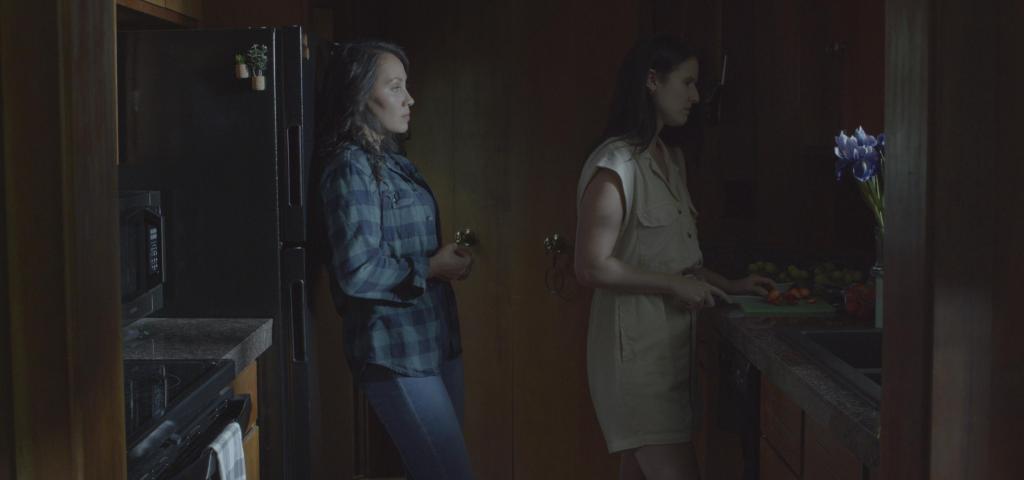
PB: I didn’t want to go into too much detail about what was happening between Jade and Iris because I wanted people to kind of project their own relationship onto it. There’s also this odd tendency to place a person of color with a white counterpart on screen, which I don’t understand, it’s not the only combination possible, so there’s a nod to subtext there as well.
MM: We get a lot of heft to Mabel’s story here which is tough to watch and it’s the implication of what her outcome is that is truly heartbreaking, we’re in the center of a powerful piece about the lineage and the injustices faced by women of color. When you examine the terrible things that have happened to this woman, you realize that it was because she was an outcast or was doing something perceived as wrong. It’s important to have that connection to the past, recognizing the injustice she faced, and being grateful for where we are today.
PB: It truly is, and was on set, the emotionally heaviest piece of the film, yes.
MM: And from this point we’re introduced to The Man in the Hat, which that incredible poster art imagery comes from. Is he representative of anything, or is he just kind of the bogeyman that permeates their line?
PB: For me, he was inspired by these kinds of like politicians and people who are super, super conservative. But then you find out later that, you know, they were like having gay sex in the bathroom. And so, that was secret note for the actor who played William Cashel. Because the reason you’re so hateful is because your character has queer desires that he’s repressing, and that repression is enough for him to kill Mabel. She’s a woman of colour and she’s a lesbian and it’s something a man of that time would take a personal affront to. She’s unabashedly herself and he hates that.
MM: You know, getting into more of the women in this family, going from Mabel’s story, getting to May’s story, they were just not able to finish loving the people that they love. They were both cut short before they got to kind of complete what they wanted to do. What is May’s story, what does how did that come to fruition for you?
PB: In Paint and Black Lace, it was actually a little bit inspired by a true event, which was a Columbus Gay couple who had an art gallery and they were forging the paintings of a well-known artist and they were found out and I had a friend that sort of relay this story to me and he said that would be a really interesting idea for a movie. And of course I was writing Hauntology at the time, so to make it my own, it became a ghost story and I just thought, I mean, it felt like the most obvious thing in the world that the artist who’s being ripped off would be pissed. And if we’re in a world where ghosts can like manifest and affect the living, you know there’s gonna be revenge. And there is that pain and grief as May lays dying and her partner just pulls away. The set was a teary mess that day.
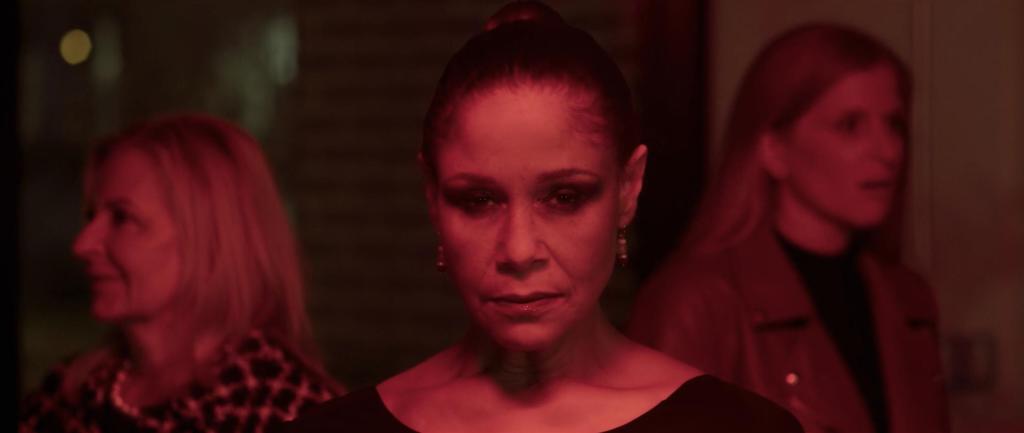
MM: These poor women, just trying to be who they are, unbothered, and May being disturbed from beyond the grave is something else. I would haunt people too!
It brings me to the final story of The Old, Dark Cashel House, you have this united from between housekeeper Ms. Boxell and the lady of the house Mrs. Cashel. It’s already eerie and then they’ve invited Madeline to basically report that their home isn’t haunted. They feel that they can handle her because not necessarily her addiction to the social media, but her need to feel safe by letting someone know where she is, and she can’t because they’ve locked her cell phone away. Talk to me about the dynamic in this segment because…phew!
PB: I think it’s not where it all started, but it did become very important because it’s kind of before that segment, we’re just getting these glimpses of the William Cashel character. He’s basically the big bad of the movie, but then The Old, Dark Cashel House is where we finally get a better taste of who William is. I just love this idea that he’s so oppressive that even beyond the grave, he is controlling his great granddaughter and anybody who enters the house. Another interesting thing about William for me is that when he was alive, he was just about as awful of a human being as one can be, he murderous, he’s racist. But beyond the grave, it’s like he’s been dead for so long that in my opinion, he’s almost on autopilot. He just wants to harass people and bother them and make their lives harder, but he can’t do that much anymore. It’s kind of funny that there’s actually some humor to it too, just in the way that he feels the need to stop Madeline from making a phone call. I mean, that’s like the weird balance of William. And sometimes I think he’s kind of amusing, but he’s also this horrible, oppressive person.

MM: Venus and Jazmin’s arrival at The Cashel House brings a whole other element of trauma and pain but there’s this other side of it. Is it possible that the pain can stop here for their family?
PB: I think pulling the audience through the turmoil of Mabel and her life in pre-abolitionist times and moving into Mae’s life in during the civil rights era. Jasmine and Venus are here in modern times, and the importance is in that inclusion. I remember when “Get Out” hit theaters and it really made an impact. It showed that we can tell amazing horror stories with Black characters. It’s great to see more people of color and queer people being represented in movies. It’s important to showcase their history and create visibility.
MM: I just appreciate the visibility aspect so much and it’s rare we see one if not many women of color fronting horror films these days. So, I thank you!
PB: I really hope everyone enjoys it, it’s been a big part of my life for over five years.

 NightTide Magazine
Leave a comment