Penny-pinching time is starting for a lot of us as Christmas and gift giving time looms around us. A side-hustle here, another part-time job there. We’re killing ourselves to make ends meet. So, guards up loves as the MLMs will start to flood your inbox. That “friend” from high school thinks “this would be so perfect for you!”
The lion’s share of these schemes often exploit the wish of financial independence, in most cases ending up with more emotional, mental and financial strain. Success that rarely materializes takes its toll and the pressure of every new relationship being a recruitment exercise makes the burden even harder.
We got to sit down with Filmmaker Brea Grant about her new film, MLM and its terrifying themes of risk and reward.

Mo Moshaty: Your past films, like Lucky and Torn Hearts, explore the psychological impact of extreme situations on women. How does MLM continue this exploration, particularly within the framework of a multi-level marketing company?
Brea Grant: I was reading a lot about MLMs and how they specifically prey on women (particularly new moms, women who need extra money, or women looking for community). I wanted to show how a woman might get involved in something like this and end up trapped. Horror is such a great lens to show the endless levels of punishment, the failures, and the psychological toil an MLM might have on a person.
MM: In MLM, Sarah faces ‘horrific consequences’ for not selling, which is in itself financially terrifying. How did you balance the horror elements in the film with the real-world issues surrounding multi-level marketing schemes?
BG: I wanted to make sure Sarah had real reasons for getting involved. An MLM can look promising. Sarah sees a friend succeeding in doing it. She needs the money. If all of that is offered, it’s hard not to say yes. And once you’re in, you cannot get out (for financial, social, or other reasons). For the short, we obviously leaned in a lot to the comedy of it but hopefully got across the real world consequences of these programs. The goal was to show how she gets deeper and deeper into the system with no returns.
MM: Your films often center around women pushed to their psychological and emotional limits, facing intense and often harrowing situations. What is it about these stories that resonate with you, and how do you approach portraying the complexities of female resilience and vulnerability?
BG: As a horror filmmaker, I think this is just what we do — we push things to their limits. In part, it’s play acting to see what we ourselves would do. It’s also correcting past wrongs when we felt like we didn’t do what we should have. For me, I don’t always need to be writing an extremely strong and smart final girl. I can have a woman with flaws and vulnerabilities who is scared and wants to run. Maybe because I see myself in her but also because women are people with real life flaws. With years of the final girl trope ingrained in us, I want to explore different kinds of women in these extreme situations. Not every woman will be able to take down Michael Myers but that doesn’t make her life less valuable and doesn’t mean we shouldn’t be cheering for her.
MM: I love how your films often critique societal expectations placed on women, whether in the music industry or personal safety. How does MLM comment on the pressures of consumer culture and the illusion of empowerment in MLMs?
BG: I was reading Naomi Klein’s Doppelganger recently and she said (I’m going to butcher it) something along the lines of she wanted to be easier on individuals and harder on systems. That really resonated with me. It’s my goal not to critique the women fighting each other to be the only female musician in the room but why we are only allowing room for one in the first place. MLMs sell the false narrative that if you just hustle a little more, you too could be a girl boss when we know it is literally impossible for everyone in an MLM to succeed. It’s a pyramid designed to fail those at the bottom to help those at the top. So in this short, there is literally NO WAY to succeed and once you start failing, things get worse and worse for you with no way out.
MLMs sell a dream of living the perfect life through capitalism but as we all know, there is no perfect life under capitalism. You will always be stepping on someone else to get to the top.
MM: Given your directorial ability to create tension and conflict in seemingly ordinary situations, how did you approach the setting and atmosphere in MLM to enhance the horror of Sarah’s predicament?
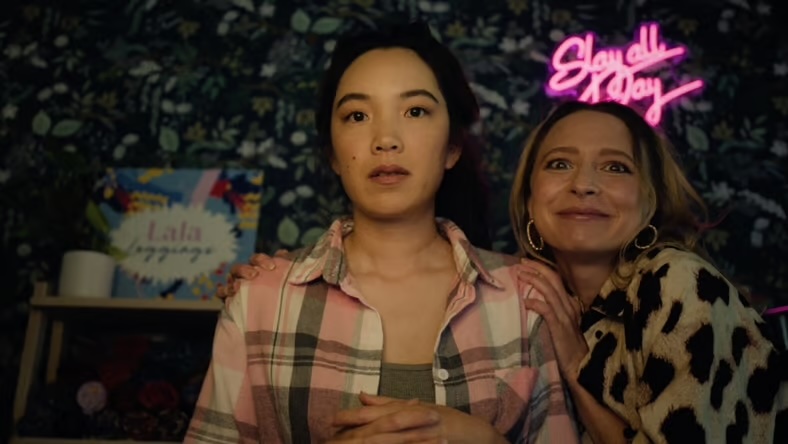
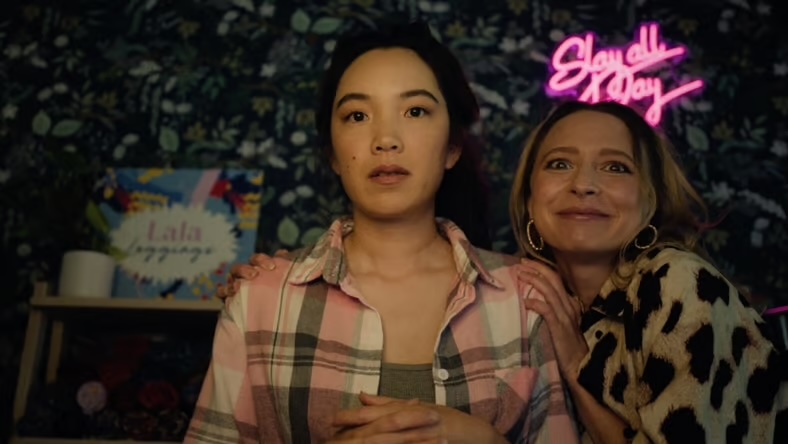
BG: We shot this one for a small budget so the setting had to be one we had access to. But it made sense to set it all in Sarah’s home where she was mostly alone. I even made sure we never saw her husband’s face to emphasize that this is a female world and she has no help. Beyond that, we spent a lot of time discussing the look and feel of Sarah’s selling room. It’s a beautiful background, perfectly lit but once you widen out, it’s a mess. It’s supposed to define what we put on the Internet versus real life. We also used camera movement to portray that things were out of Sarah’s control — things like a dolly zoom and physically twisting the camera so that we are just as disoriented as Sarah is.
MLM premiered at The Overlook Fest in New Orleans and most recently at Fright Fest UK
Brea Grant is a multifaceted American actress, writer, director, and podcaster best known for her roles on Heroes, Friday Night Lights, and Dexter. Raised in Marshall, Texas, she holds Bachelor’s and Master’s degrees in American Studies from the University of Texas at Austin. Grant made her directorial debut with the apocalyptic road trip film Best Friends Forever, which premiered at the Slamdance Film Festival, and later gained acclaim for 12 Hour Shift, a dark heist film featuring Angela Bettis and David Arquette. She co-hosts the popular podcast, Reading Glasses with Mallory O’Meara, exploring books and reading culture. Additionally, she has written comics like We Will Bury You and Mary, a graphic novel inspired by Mary Shelley. Grant’s work has garnered industry recognition, including a Daytime Emmy nomination for her producing work on EastSiders and runner-up for the Audience Award at the Overlook Film Festival for her short film MLM. Throughout her career, Grant has balanced acting, directing, and writing, solidifying her status as a creative force in genre storytelling.


 NightTide Magazine
Leave a comment