
by Monica Ferrall

I want to play a game. As of October 29th, these six words have echoed through the brains of horror fans for two decades. They’ve permeated pop culture, been quoted by Scarlett Johansson in Marvel’s Captain America: The Winter Soldier, and even made it to an off-broadway musical in an unauthorized parody*. With eleven films in all, the Saw franchise rivals that of both Halloween and Friday the 13th in the number of sequels — and it’s done it in half the time. Since earning initial praise at Sundance, Saw has been cut down, ridiculed, and minimized. Whether it’s an indie hit, cult classic, substanceless snuff, or B-movie trash, we cannot argue the prolificness of Saw. So, why did a film that would later be dubbed as “torture porn” take such a strong hold on pop culture? Why did people flock to theaters eleven times making it the 7th most financially successful franchise of all time?
First things first, “torture porn”, or a subgenre of films that glorifies gore, mutilation, and sadism, was nothing new. Blood Feast (1963) is regarded as the first film to fully capitalize on excessive gore and meaningless violence, though gore itself, or the realistic depiction of mutilation, dates back to D. W. Griffith’s Intolerance (1916). Following Blood Feast were films that aimed to shock and appall like Wizard of Gore (1970) which touted “scenes so far beyond any you’ve ever seen that no description is possible” and films that used excessive gore for comedic effect, such as Peter Jackson’s Bad Taste (1987) and Braindead (1992). These were disparaged as “Splatter Films” and dominated horror in the early 1970s, following, and not coincidentally, America’s involvement in the Vietnam War. As our first war with regularly broadcast live footage, the horrors of Vietnam pierced households through their television sets each evening and the impact of that was reflected in pop culture. As much as Americans wanted escapism, they needed catharsis. They needed a coping mechanism. They needed horror.
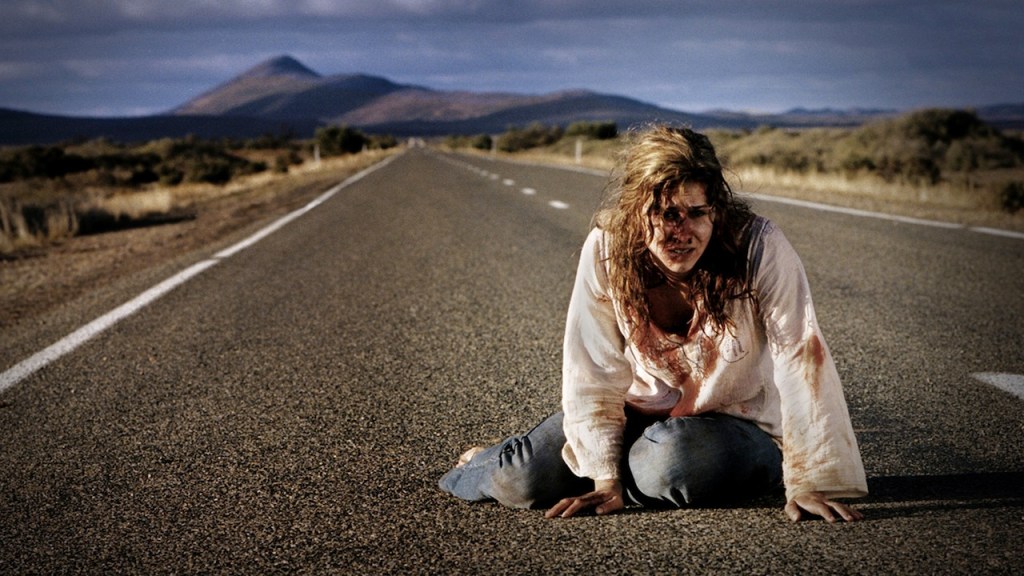
The early 2000s heralded a new era of the splatter film and the correspondence is clear. Following the attacks of 9/11, America was collectively struck by humanity’s capacity for acts of violence and mass destruction. Violence once again permeated our homes and gore the cinema. And while Vietnam spawned revenge films like Last House on the Left (1972), the splatter films of the early 2000s took on a slightly different tone. The films of the 2000s weren’t reckoning with random violence or revenge, they were reckoning with hatred. Eli Roth’s Hostel (2005) follows a pair of friends who, after a night of debauchery on a European backpacking trip, are kidnapped by a human trafficking ring that sells people for the purposes of torture rather than sex. They soon learn Americans fetch the highest price and they were specifically targeted. Sound familiar? In an article titled “How Eli Roth’s Hostel Tapped into America’s Post-9/11 Fears”, columnist Dominick Suzanne-Mayer surmises “In the case of Hostel, we grappled with an idea that people always had in the backs of their minds but never really had to engage with: the rest of the world hating us. The events of 9/11 blew that open, and for all the films of that fallout that engaged with it in some way, none was blunter than Roth’s.” Like so many horror films before them, films of this era such as House of 1000 Corpses (2003), Wolf Creek (2005), and Hostel (2005) contend with the fear of the stranger. The protagonists are tortured by a family of hill-billies, an Australian outbacker, and an elite-wealthy European businessman. Here is where the Saw franchise breaks the mold. First, the victims of Saw are always revealed to have a connection – they are not strangers — and second, the abductor does not take part in the torture firsthand. In Saw, the torture is almost explicitly self-inflicted. In this way, Saw contends not with the fear of the stranger, but the fear of ourselves.
This perspective is not only what sets Saw apart, but what allows it to outlast its competitors. As the events of 9/11 ignited in Americans a fear of their neighbors, it also ignited a self-awareness that was difficult to reconcile, especially with the retribution that followed. Anger and violence united the nation and the successive hunt for Bin Laden turned the ‘war on terror’ to the ‘war on torture’. And intentional or not, Saw’s low-budget gritty aesthetic mirrored images from the site of American-inflicted torture and human rights violations, Abu Ghraib prison. Given this, it seems only appropriate that the essence of Saw is achieving freedom through torture. And even more so, it’s about evil carried out with good intentions. Jigsaw’s perverse moral code believes torture is necessary for reformation, while those in captivity are willing to harm and kill for freedom. Wan and Whannel, the creators of Saw, are Australian, of course, so analyzing their film in the context of American politics may seem arbitrary — though Australia experienced a death toll of their own in a 2002 Al-Qaeda attack on Bali. Australia also has its own complex history with imprisonment in its origins as a British-established penal colony. While themes of captivity and freedom bear a heavyweight in Australian politics and no doubt influence Saw, the U.S. embraced it.
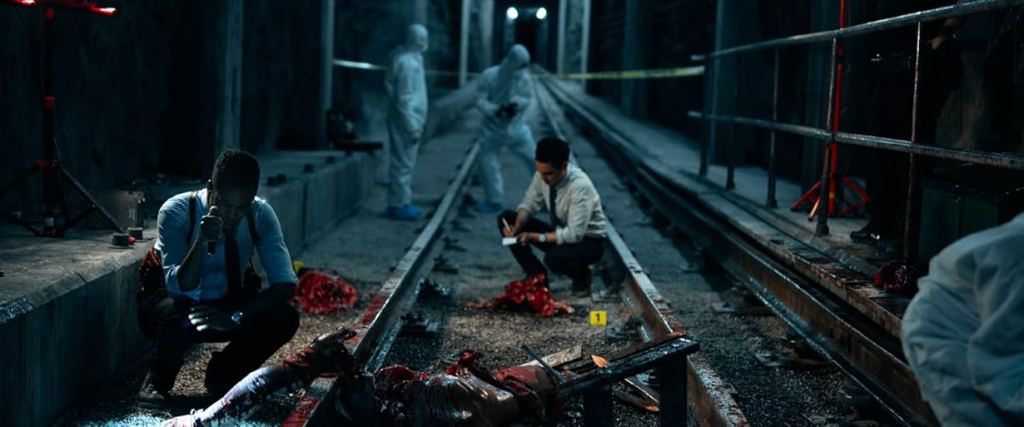
Saw has also recently resurrected with three recent films and another due next year. Given the violence that dominates the news in every direction, that’s no coincidence either. And it’s certainly no coincidence that the film to follow the public exposure of video footage of police brutality, such as the murder of George Floyd, would be Spiral (2021). Each time violence and purposeful human brutality become inescapable in the real world, dominating both the public eye and the media cycle, a Saw movie is not far behind. The other elements that make Saw an enduring franchise are the purposefulness of its victims, the mechanics of the game, and the distance from the torture.
Each Saw movie begins with someone gaining consciousness in unfamiliar surroundings. They don’t know why they’re there or how to leave – then they find the tape recorder. At first, the grouping of victims appears meaningless, though the meaning will inevitably be revealed. Saw, in its selection of seemingly random victims, grants a wish-fulfillment for the audience to experience vicariously. The same wish-fulfillment a CSI procedural provides – that the bad guys will be caught and they’ll be caught within 42 minutes. In both of these, we endure violence on screen that we know to be true to the real world, but we experience it through an escapist lens. In the real world, we witness violence and rarely see justice; in the movie theater, we get both. Unlike the casualties of the attacks we witnessed in the news, the victims of Saw were never “innocent”. Justified or not, they all made life choices that drew them into Jigsaw’s hunting sights. And here’s why Saw movies continue to be funded, made, released, and devoured while films like Turistas (2006) fade into the ether – Saw pairs the catharsis of retribution with the hope of survival. The audience roots both for vengeance and escape, allowing themselves to subconsciously reckon with the dark side of humanity. As a country shaken to its core by acts of terror, America faced the chasm between two choices — revenge as a show of force (“we will not let the terrorists win”) and questioning whether we deserved it. This chasm is where Saw thrives. Throughout two decades of Saw films, Saw reckons with the darker sides of an independent nation – drug addiction, police corruption, private healthcare, and corporate greed. In a sense, Saw weeds out the ills of society, but manages to avoid the nihilism of Watchmen’s Rorschach by allowing them to reform. John Kramer, known to the media as “Jigsaw”, threads a precarious political needle. He selects people who ‘don’t deserve to live’ but remains strictly anti-capital punishment. He aims to only rehabilitate, never to kill. He acknowledges the sins of humanity, while still having faith that they can change. Torture just so happens to serve both needs. Saw’s retribution is as hopeful as it is violent. As much as we vicariously watch ne’er-do-wells get torn apart, we also see them (on occasion) rehabilitate. That’s the essence of Saw, that Jigsaw’s methods, as seen through Amanda, work. And when they don’t — it’s because they can’t overcome their flaws.
The clever part of Saw’s format is that if the characters follow Jigsaw’s directions to the letter, they will survive. It’s almost always in attempting to outsmart him that they fail. The rigidity of the rules is an integral part of the fantasy. The violence, though excessive, is not senseless. The mechanics of the game and even the mechanics of the traps themselves are coldly calculated, as reliable and as inevitable as clockwork.
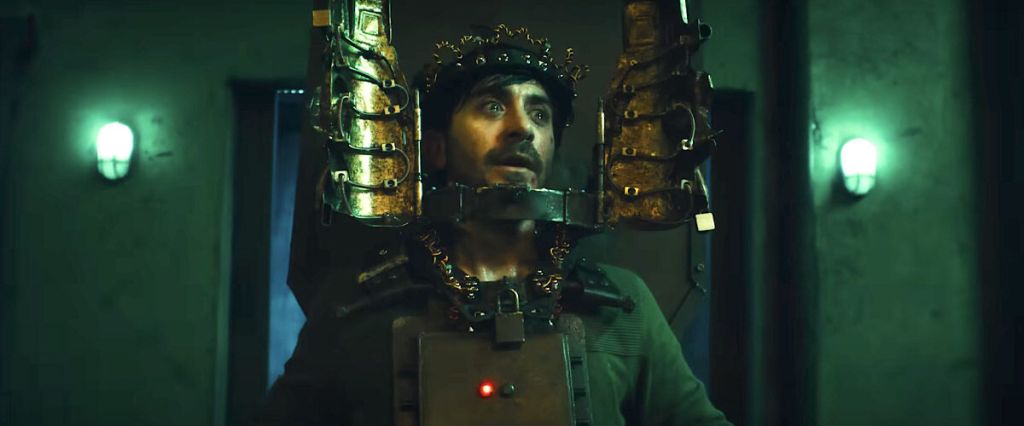
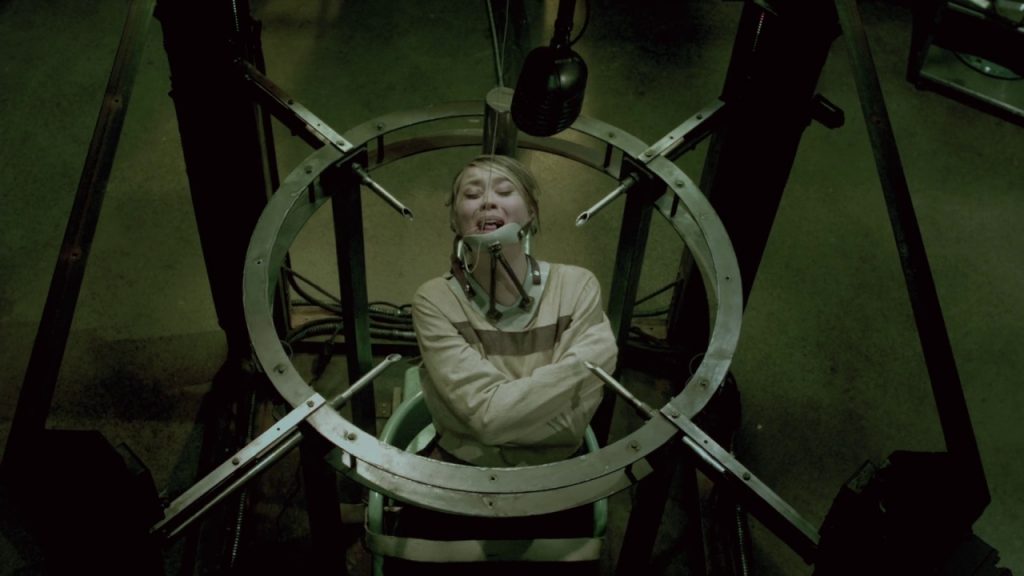
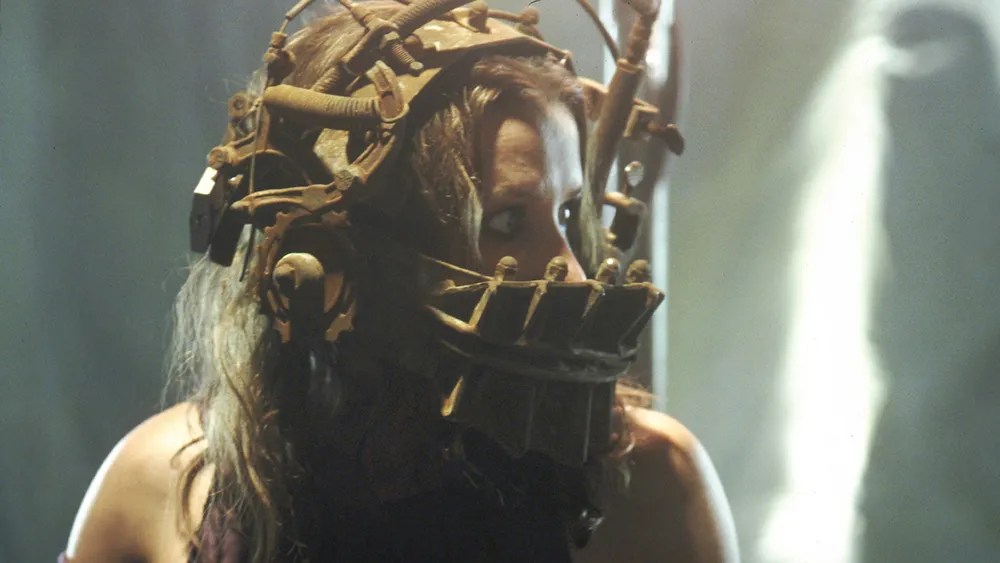
The traps themselves played a vital role in the hype for the Saw franchise. As each film boasted new and more elaborate traps, fans reveled in the creativity. These gear-powered devices did more than tap into the endless fascination with medieval torture devices, they created a distance between the torturer and the tortured. This separates the audience, too, from the torturer, aligning them with the tortured. The torture almost operates independently, separated enough from the perpetrator to completely shift the blame. The inherent choice (live or die) feeds this narrative as well. The torture is self-inflicted and death by trap isn’t instigated by Jigsaw himself, but rather the victim making the wrong choice. As the Saw films are not all created equal, there are exceptions to this, of course. Still, it stands that the most successful Saw films in the franchise mimic the Final Girl trope of the slasher — In Saw, Saw II, and Saw V in particular, we root for survival rather than torture. We endure the torture with the protagonist for the ultimate escape. Saw focuses on the violence of the audience surrogate, asking not what separates the monster from man as so many horror narratives do, but what the average person could do to survive.
This ‘average person’ surrogate is a significant way Saw sets itself apart, as well as one of the components that made it timely. For so long, horror was driven by the fears of women. We sat with women in dark closets and walked with them up winding staircases. We feared for them and lavished on their deaths. Saw, contrarily, overwhelmingly focuses on male protagonists: their journeys, their deaths, their body mutilation. Saw centers not only on men’s bodies but men’s failures. Men are selected because they’ve failed to live their lives virtuously, then punished for their misdeeds by being forced to endure pain. In Saw VI and Saw: The Final Chapter, the failure is more pronounced as the men fail not simply to save their own lives but those of everyone around them. And here lies where Saw is perhaps the most poignant. For a franchise that boasted a predominantly young, white, male audience — so much so that psychologists studied the phenomenon — it’s fascinatingly self-deprecating. Saw portrays the antithesis of the hyperviolence celebrated in the typical action hero, particularly that of the 1980s. Where John McClane, an average cop, improvises his way through killing terrorists to save his beloved wife (and everybody in the building) in Die Hard (1988), the average men of Saw fail to save anyone. When given the chance to rescue loved ones, co-workers, or even medical clients, they simply fail – even with clear instructions. They lack the strength, mental acumen, and bravery. Averageness becomes their downfall.
There’s a certain irony here which either points at an inherent narcissism of the audience or an inherent self-awareness of toxic masculinity. This irony also predicts the crisis in masculinity that will follow in the next two decades. From 2000 to 2016, the rate of white male suicides increased by 21%, and while there’s much speculation as to why, one correlation seems clear: Men are the least likely to seek mental health help, or help in general. Which leads us back to the men of Saw. These men are flawed and scared. They panic under pressure and when allowed to collaborate, they compete instead. They suffer hubris and isolation. Instead of asking for help or following instructions, they panic and die — or panic, attempt to outsmart everyone and die. Dr. Lawrence Gordon is one of the few who insists on collaboration – and he survives. He also shows emotion and vulnerability. When he survives, he doesn’t stand strong and heroic, he’s pale from blood loss – a ghost of himself. As much as Saw portrayed graphic torture, it also portrayed men in pain and hysterics. This breakdown of masculinity, of men sitting in terror and squealing in pain may be the true emotional catharsis of Saw.
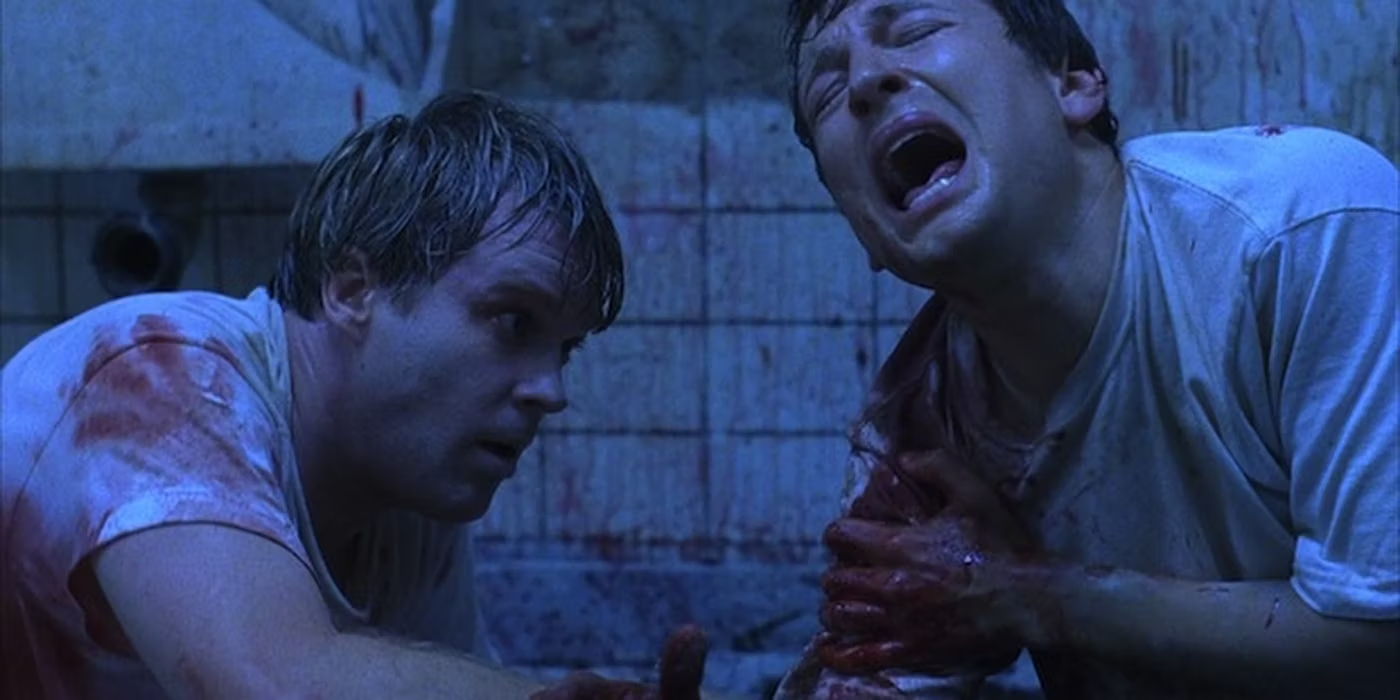
Particularly throughout the sequels, Saw explores the rift between societal expectations of men and reality. Men should be brave. Men should be strong – both in physicality and in stoicness. When they’re expected to play the hero, they’re expected to play it with confidence, unshaken resolve, and style. Saw: The Final Chapter presents this most bluntly as Bobby Dagen writes a memoir about surviving Jigsaw only to be taken captive and forced to play out the heroics he claimed in his book. He fails — no surprise there — unable to do what society expects him to be able to do, and even more so, submitting to the pressure to pretend that he can even without an audience. Looking back on the films of the 1990s and a political landscape that reconciled with supporting the troops but not the war, it seems inevitable that a generation of men raised on Bruce Willis and Will Smith might find solace in Saw with its themes of expectation and failure, especially in the context of pain. Perhaps, in a universe where men acknowledged fear, suffering, and pain, often submitting to them, young men felt free.
So. Does Saw explore the weight of performative masculinity even in closed quarters? Does it dance in the rift between vengeance and immense guilt? Or does it simply scratch that morbid curiosity of medieval punishment? The choice is yours.
*Saw the Musical: An unauthorized Musical of Saw is coming back to Los Angeles in March 2025.

Monica Ferrall (she/her) is a director/screenwriter originally from the Pacific Northwest. She studied screenwriting and horror film theory at Loyola Marymount University. She writes queer, feminist-themed horror features, television and has earned a fellowship in After Dark Film’s Feature Lab as well as a place in Millennia Scope Entertainment’s TV Writer’s Room, which focuses on bolstering LGBTQIA+ representation.
 NightTide Magazine
Leave a comment