

These Bradbury stories dive into the supernatural with a fresh curiosity for life, death, and the cultural heartbeat of Mexico. His fascination with Mexican warmth and the vibrant Day of the Dead traditions adds a rich, colorful layer to his work, giving readers a feel for Mexico’s unique approach to celebrating life and honoring the dearly departed, making every tale both haunting and deeply human. Here’s where you can find each story!
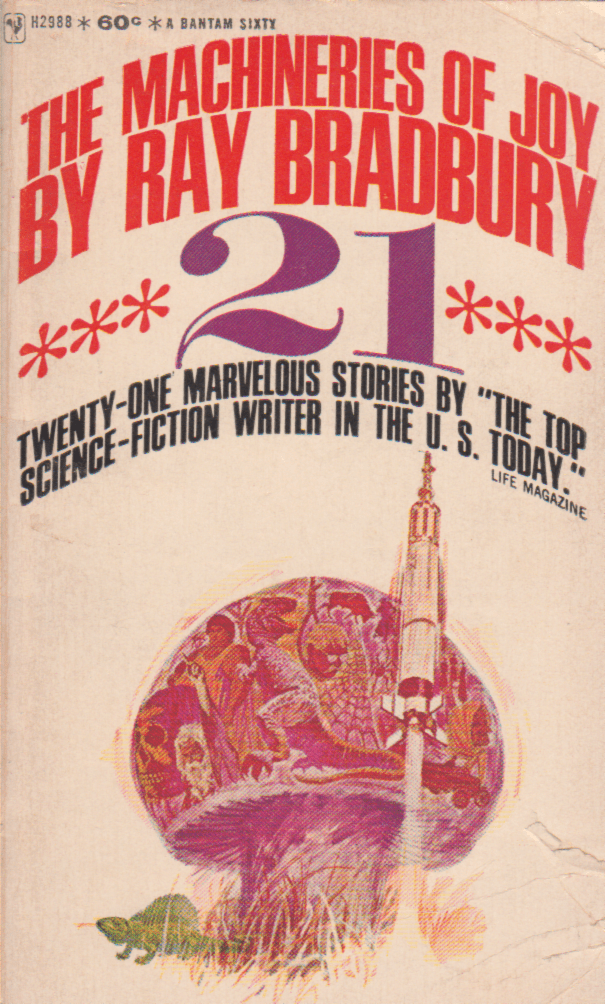
Dia de Muerte – The Machineries of Joy
Imagine this: a kid who’s super excited for the Day of the Dead festivities. He’s totally captivated by everything happening around him—the bright decorations, family traditions, and even this random shiny car that seems totally out of place. Plus, there’s a bullfight going on, which might sound intense, but it actually fits right in as a symbol of life and death.
Bradbury uses the bullfight and that odd car to show how life and death are intertwined, with modern things nudging in on old traditions. The boy’s pure excitement highlights how Día de los Muertos isn’t about fearing death but celebrating it—remembering family and embracing the idea that life just keeps rolling, even after we’re gone. It’s a cool, heartfelt look at how death can be seen as a natural, even joyful part of life.
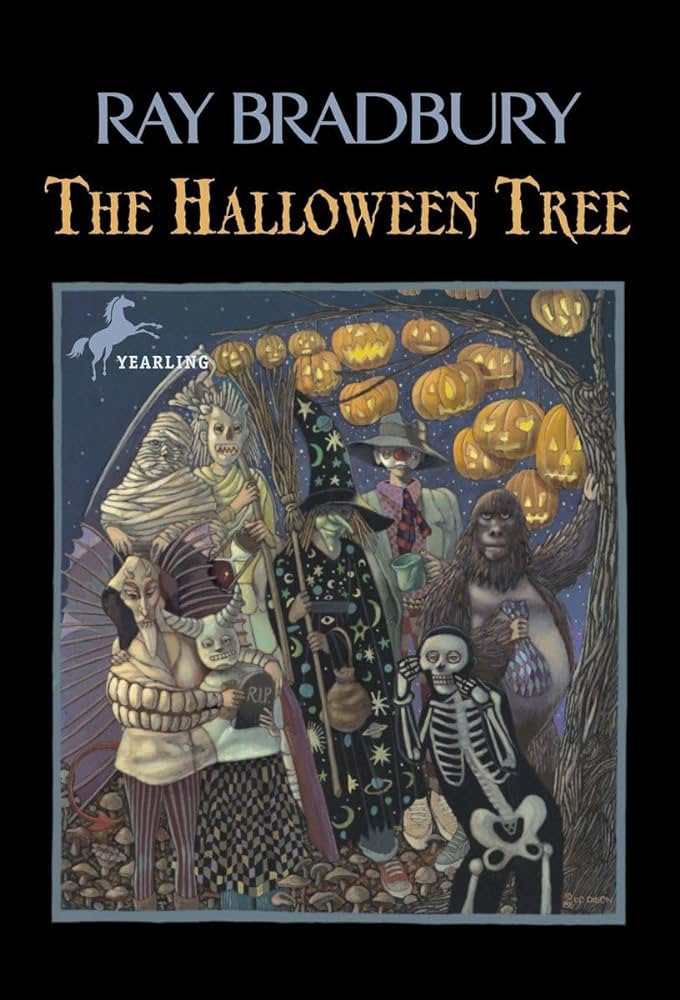
The Halloween Tree – The Halloween Tree
Ray Bradbury’s The Halloween Tree takes readers on a time-traveling adventure with a group of children determined to save their friend Pipkin, led by the fanciful Mr. Moundshroud. Together, they explore the roots of Halloween across different cultures, with the story culminating in Mexico during Día de los Muertos. Here, Bradbury illustrates the significance of sugar skulls, marigolds, and other traditions, tying Halloween’s mystery to Día de los Muertos’s bright celebration of life and memory.
Through this journey, Bradbury not only underscores the diversity of global customs but also connects them through universal themes of honoring the dead. Often seen as Bradbury’s tribute to the shared nature of these traditions, The Halloween Tree juxtaposes Halloween’s eerie atmosphere with Día de los Muertos’s colorful and respectful tone. This narrative shows that death-related customs are both personal and universally human, portraying remembrance as a vibrant and communal celebration of life.
Never – Originally Published in the New Yorker in 1947, can be found here in Bradbury Stories
Ray Bradbury’s short story Never, published in The New Yorker in 1948, is a poignant exploration of the emotional landscapes surrounding loss, memory, and longing. While it may not explicitly connect to Día de los Muertos, its themes resonate deeply with the spirit of remembrance inherent in the holiday.
In this tale, Bradbury employs his signature poetic style, weaving together sorrow and acceptance as the characters confront the inevitability of change and the slow fading of memories over time. The narrative captures a sense of warmth and nostalgia, reflecting on how personal legacies endure even as life transitions unfold. Through Never, Bradbury invites readers to contemplate the delicate balance between holding onto the past and embracing the present, making it a resonant piece on the human condition.
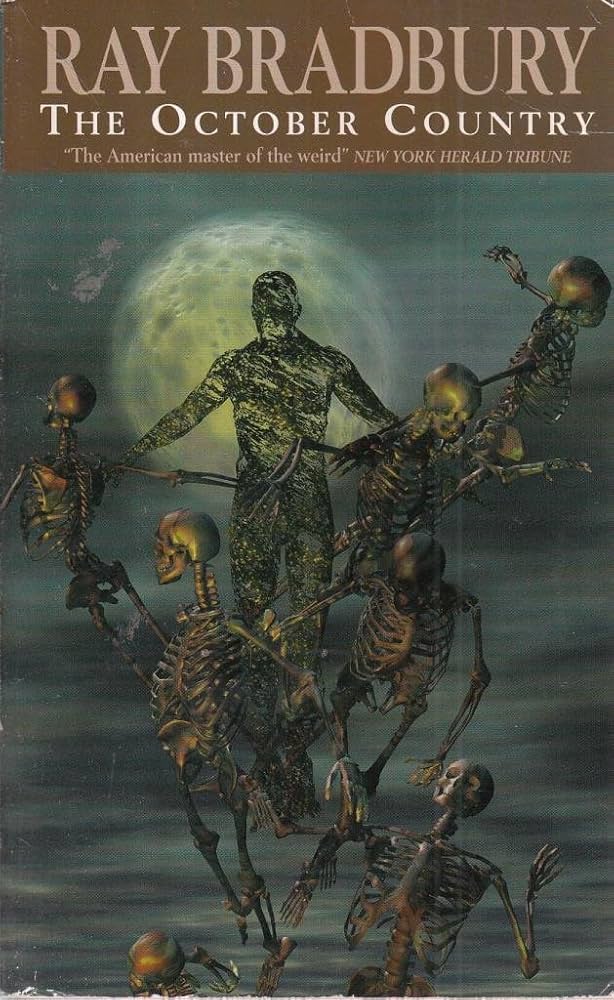
Next in Line – The October Country
This one has stuck with me the longest. In Ray Bradbury’s haunting tale, set against the vibrant backdrop of a Mexican village during Día de los Muertos, we follow an American couple visiting a cemetery. At first, it seems like a cultural adventure, but as the story unfolds, the wife becomes increasingly disturbed by the local customs surrounding death and burial. This isn’t just a simple cultural exchange; it’s a chilling exploration of how vastly different attitudes toward mortality can provoke a sense of horror and alienation, not mention the fear of ones own impending death.
Bradbury deftly contrasts the wife’s growing unease with the Mexican perspective, where death is embraced with acceptance and ritual. This clash of cultures is central to the story’s horror. The wife’s horror symbolizes the fear of the unknown and the misunderstanding that often accompanies being an outsider in a foreign culture.
The mood throughout is dark and eerie, emphasizing the psychological impact of her experience. As she grapples with her discomfort, we see how cultural differences can manifest as fear and alienation. This story powerfully illustrates that while some cultures celebrate and honor their dead with joy, others may struggle to comprehend these customs, leading to a sense of dread and disconnection. Bradbury not only explores the fear of death itself but also highlights the fears that arise from misunderstanding and cultural clashes.

Calling Mexico – Originally Published in Collier’s in 1950, now found in The Stories of Ray Bradbury
In Ray Bradbury’s story Calling Mexico, the haunting sense of longing permeates the narrative as an American man living in a cold, northern city becomes captivated by a woman he can only see through a window. This window acts as a barrier and a bridge—separating him from her world while simultaneously offering a glimpse into the warmth and vibrancy of Mexican life.
His obsession with the woman symbolizes a deeper yearning for the emotional richness and liveliness he associates with Mexican culture, a stark contrast to the stark, impersonal atmosphere of his own environment. As he watches her, the warmth of her world intensifies his feelings of isolation and longing, transforming his admiration into a bittersweet desire for a life he cannot fully grasp or participate in.
Bradbury’s portrayal of Mexico reflects an idealized vision, rich with tradition and vitality, emphasizing the protagonist’s misery in his inability to connect with it directly. The longing for this distant place and the woman within it becomes almost a form of emotional torture, highlighting the protagonist’s dissatisfaction with his own reality. Ultimately, the story captures the essence of yearning for something beautiful yet unattainable, evoking a deep sense of melancholy that resonates with anyone who has ever felt disconnected from the warmth of life and culture they deeply desire.
Bradbury’s work has always seemed ahead of its time whether it be writing about race, space and how man can be the scariest beast, but it’s lovely to see his devotion and longing for Mexico pulse so much through his writing.

Mo Moshaty is a horror writer, lecturer and producer. As a Cognitive Behavioral Therapist and life long horror fan, Mo has lectured with Prairie View A&M Film & TV Program as a Keynote, BAFSS Horror Studies Sig and The University of Sheffield in the United Kingdom. Mo has partnered with horror giant, Shudder Channel, to co-produce the 13 Minutes of Horror Film Festival 2021 and 2022 with Nyx Horror Collective and her literary work “Love the Sinner” was published with Brigid’s Gate Press in July of 2023 and her two volume collection, “Clairviolence: Tales of Tarot and Torment will be published with Tenebrous Press in 2025.
Mo is the creator and Editor-in-Chief of NightTide Magazine and the Founder of Mourning Manor Media.



 NightTide Magazine
Leave a comment