By Mo Moshaty
Its rare that alien stories remain with just the alien. These encounters usually force us to confront our own humanity, our relationships, friendly, familial and romantic, and our horrific communication in times of crises and the tragic breakdown of it when it’s most needed. These stories illustrate that it’s through the unknown—extra-terrestrial or other unexplainable phenomena—that we confront the most familiar parts of ourselves. First up –
Friendships, secrets and lies…
DREAMCATCHER (2003)
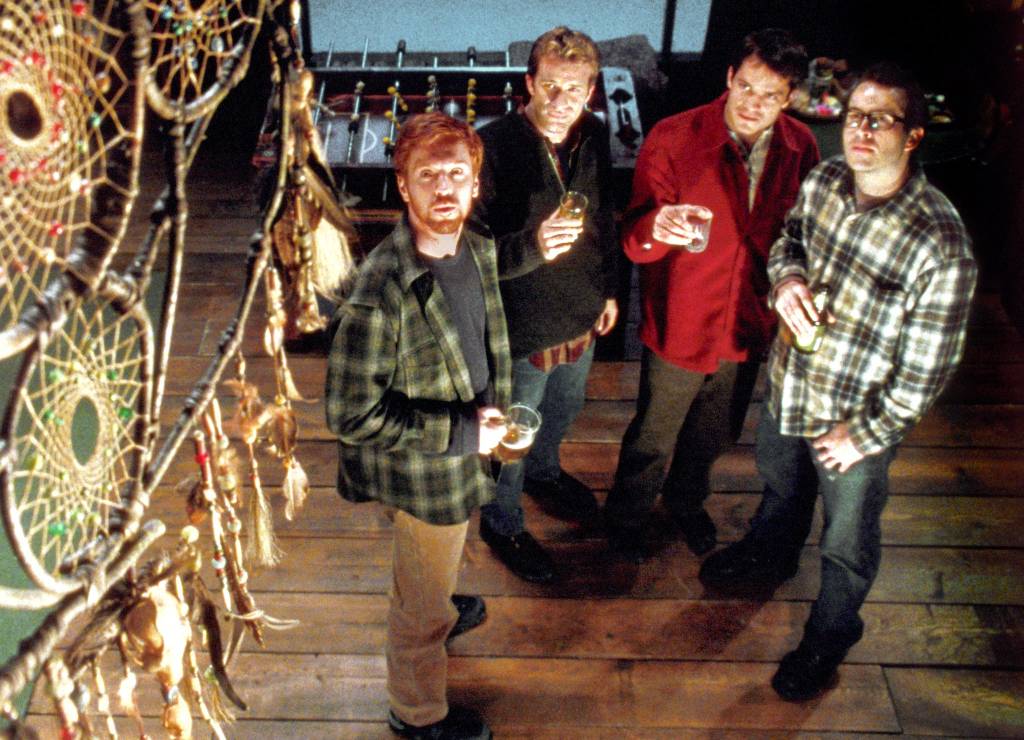
At its gooey center, Dreamcatcher is a story of childhood friendships held by the tightest hands onto the thinnest threads, and those bonds are tested under the weight of otherworldly and terrifying circumstances. We follow Henry (Thomas Jayne), Beaver (Jason Lee) Pete (Timothy Olyphant) and Jonesy (Damian Lewis), four life-long friends reuniting for a hunting trip. It’s been a long time coming, as they’ve waited for Jonesy, the victim of hit and run, to recover. The men settle into their snowbound cabin only to find themselves in the crosshairs of an alien invasion.
What makes this story so engrossing and relatable is how the alien threat magnifies cracks in their bonds, bringing old tensions and deep loyalty to the forefront. Anyone who’s had a sleepover and played truth or dare can tell you that once the masks fall off, they really make a thud, and it’s not long before insults are flung and attitudes abound (I’d like to draw your attention to 90210’s Season 1, Episode 13: “Slumber Party”…but I digress).
Flashbacks reveal that the friends, considered outcasts in their own right (King loves his underdogs), befriend a bullied boy with special needs named Douglas who refers to himself as Dudditz. Dudditz (Donnie Wahlberg) becomes the glue that holds these men together, for they may have drifted apart due to each of their own unwillingness to be upfront, truthful or forgiving when it really counted.
Once the alien has revealed itself in its crude form of a worm-like creature they soon name ‘Ripley’, or as Beaver refers to it, an ‘ass-weasel’, the men’s secrets, obsessions, and hidden habits come to light and sacrifices mortally and morally are made.
‘Ripley’ acts as a catalyst for these men whose history is both their strength and their slow unravelling. Without this catalyst, we wouldn’t get them to face truths about themselves and about loyalty, sacrifice and forgiveness and their ‘reckoning’ may have never begun. The alien doesn’t just drive the narrative, it pulls our face kicking and screaming to the mirror to show us the fragile yet resilient nature of the human condition, of love and of loyalty.
Next, collaboration and understanding…
THE VAST OF NIGHT (2019) AND ARRIVAL (2016)

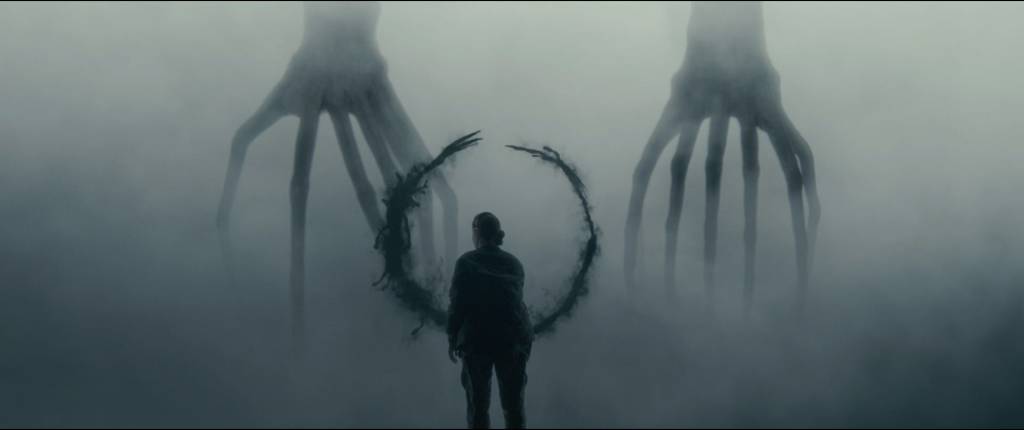
Sierra McCormick and Jake Horowitz in The Vast of Night (2019), Amy Adams in Arrival (2016)
My first brush with The Vast of Night was after tons of screenwriter friends gave me the absolute FOMO in their chats about the crushing weight of its scenes and the incredibly front-loaded, dialogue heavy first act. But it’s within this structure that the town and characters really thrive and turn against all conformity, reason and expectations of small-townsfolk in the 1950s.
Our main spotlight stays on Fay (Sierra McCormick) and Everett (Jake Horowitz), two teenagers worlds apart in street smarts and thinking beyond the city limits. They stumble upon a mysterious radio signal that seems to suggest extra-terrestrial activity, each handling the message differently and yet collaboratively; as they seek to find a reason for it, hoping to push aside their fear and isolation. The signal and its meaning begin to unravel the town around them and account for its inhabitants strange behavior and that horrific ride home scene where the signal takes over the car radio. It bonds the two leads as they band together against other’s disbelief and it highlights their willingness to face this thing together – even as virtual strangers, and the aliens (unseen for the lion’s share of the film) who may have sought to search and destroy have united instead.
As for the film Arrival, the collaboration is more on the nose and one on one. When alien ships begin to land across the world, linguist Louise Banks (Amy Adams) takes up the bestowed task of deciphering their language, leading her on a deeply personal journey that reshapes her understanding of time and connection – by whatever means they’re available through. The aliens serve as a mirror, much like in Dreamcatcher, reflecting not only our frailty but our struggle to communicate and be heard by our own species let alone an extra-terrestrial and if we can just get out of our own way, we can embrace understanding over conflict and our own shortcomings and accountability. Lastly, we take a look at transformation and emotional connection…
CLOSE ENCOUNTERS OF THE THIRD KIND (1977) AND E.T. the Extraterrestrial (1982)
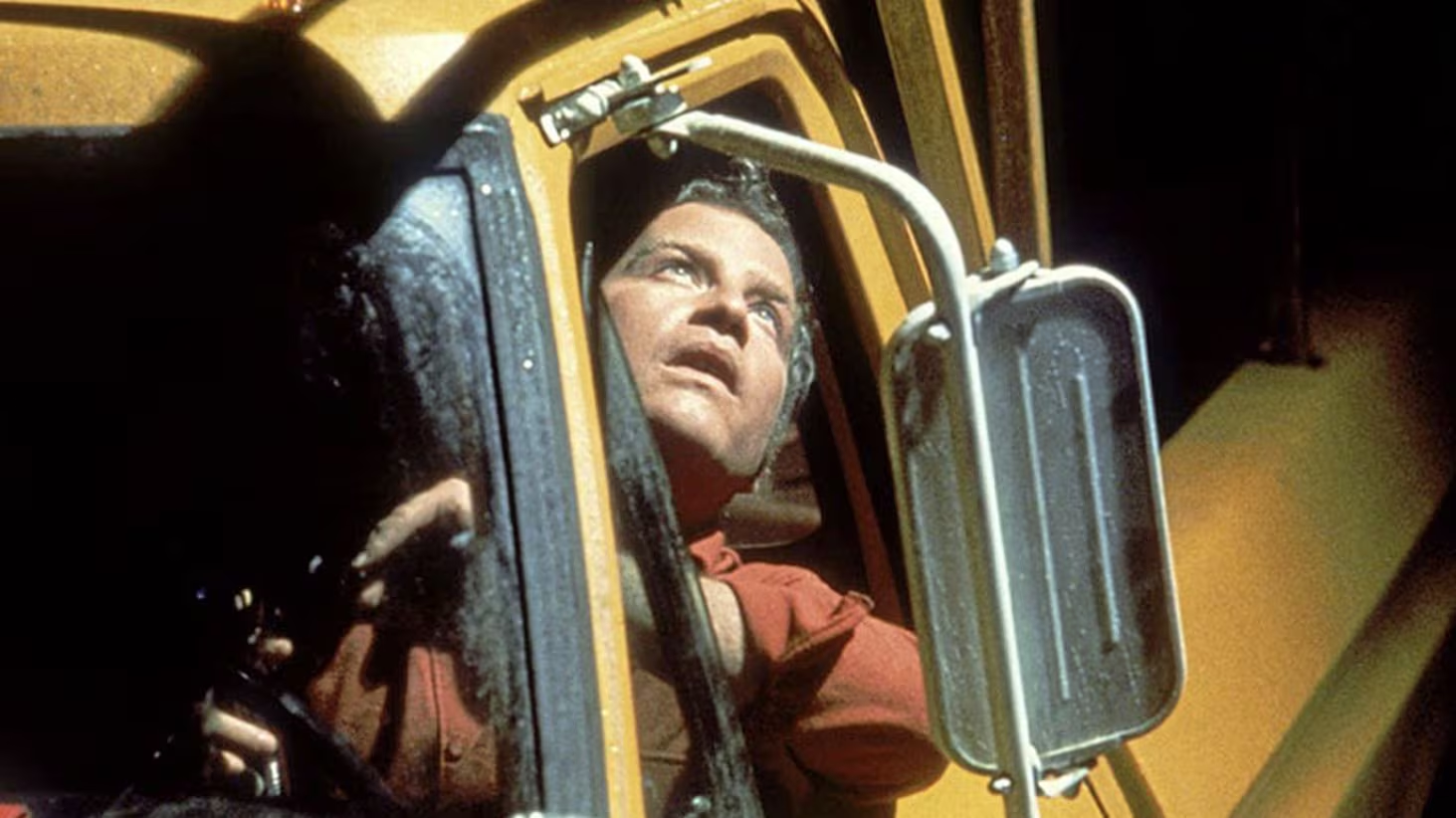

Richard Dreyfuss in Close Encounters of the Third Kind (1977), Henry Thomas in E.T the Extraterrestrial
In Close Encounters of the Third Kind, alien contact is more than a catalyst for personal transformation for its protagonist, Roy Neary, it’s a study in obsession and human frustration in trying to understand the incomprehensible. Roy is an Average Joe, wife, kids, simple job, and witness to an extraterrestrial event. Roy becomes obsessed with the encounter, it’s inhabitants, the encounter’s meaning and the string that tethers them all together. This obsession strains his family relationships, as his wife and children struggle to understand, and not fear, his behavior (the mashed potato scene alone is highly unsettling). For Roy, it’s not just the encounter, it’s what it means for him, his future and his purpose, something he’s never really felt confident about. He’s constantly volleying between his responsibility to his family and his personal fulfilment. How can he explore what he truly feels he needs to for his own betterment, if he still has obligations at home? It fills Roy with terror, anger, and sadness. Roy finally makes the decision to leave Earth with the aliens, a choice that really underlines how much this encounter triggered what he felt was missing from his life and how much it has changed him. The aliens have become less of something to fear, they’ve become his one-way ticket to self-love and completion.
On the other hand, E.T. the Extra-Terrestrial takes a more close-knit approach to the alien encounter. Instead of pinning meaning and personal yearning on the alien, Elliot’s (Henry Thomas) bond with his newfound friend believably explores empathy and friendship as he and his siblings, Michael (Robert MacNaughton) and Gertie (Drew Barrymore) see E.T. as deserving of protection, love and care while all the adults in the film react with anger and hostility. It’s such a stark contrast as the adults, who are supposed to be the cooler heads prevailing, seem to bulldoze their way to destroy E.T. out of fear and the children seek to understand what seems to be far beyond their level. E.T’s extreme vulnerability and danger reflect Elliot’s own struggles within his family dynamic and his purpose – to fight for the little guy…literally.
Sci-fi horror with aliens isn’t just about the thrill of the unknown—it’s about what those encounters reveal about us. Films like Dreamcatcher, The Vast of Night, Arrival, Close Encounters of the Third Kind, and E.T. remind us that the extraordinary circumstances of alien interaction often shine a light on the most ordinary aspects of humanity. Through fear, collaboration, and connection, these stories challenge us to see ourselves—and each other—in new and transformative ways.



 NightTide Magazine
Leave a comment