By Paul A J Lewis
Mid-way through William Malone’s 1985 SF-horror hybrid Titan Find, West German astronaut Hans Hofner (played memorably by Klaus Kinski) describes an ancient structure discovered on Titan, Saturn’s largest moon, as eine Sammlung von Lebensgeister: a collection of spirits or ghosts. (The compound word lebensgeister—”spirits of life”—tends to refer to a vital life force, like the concept of chi.) Hofner is part of a group of astronauts who have discovered on Titan what is essentially an ancient menagerie: a collection of alien species apparently frozen and contained (imprisoned?) within capsules of various sizes. However, one of those captive aliens has escaped and is hungry for blood.
During the 1980s, films blending elements of science-fiction and horror seemed to rain down from the skies like meteorites laden with cosmic contaminants. Many of these pictures were referential—if not reverential—throwbacks to the sci-fi moves of the 1950s. It seems not coincidental that such films seemed to peter out following the end of the Cold War in 1989. (Incidentally, Titan Find’s emphasis on Richter Dynamics’ status as a West German-corporation-of-the-future perhaps highlights how difficult it was to imagine the fall of the Iron Curtain that was symbolised through the reunification of Germany.) Kickstarted by Ridley Scott’s Alien (1979), these films included remakes of 1950s films such as John Carpenter’s The Thing (1982), Tobe Hooper’s Invaders from Mars (1986), Chuck Russell’s The Blob (1988), and Cronenberg’s The Fly (1986). They also included films that incorporated nostalgia for 1950s sci-fi such as Forbidden World (Allan Holzman, 1982), Galaxy of Terror (Bruce D Clark, 1981), Dark Side of the Moon (D J Webster, 1990), and—of course—Titan Find.
A firm favourite of the VHS era, Titan Find has been released in a couple of different edits. The US distributor didn’t care for the film’s original title and changed it to Creature—a moniker that Malone does not like. (In other territories, such as the UK, the film retained its original title, sometimes styled as The Titan Find.) The US release was also slightly trimmed, eliminating some expository material towards the front end of the film whilst also cutting a few seconds of gore. On the other hand, the US release contained a few moments of dialogue that aren’t in the Titan Find edit. These two cuts of the film also differ in some aspects of sound design and editing too: notably, the Creature cut features narration over the film’s opening title crawl, which establishes the race—depicted within the film—for space resources between the US-based NTI corporation and the West German Richter Dynamics.
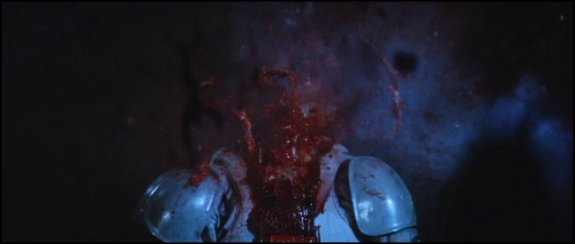
Titan Find opens with two NTI astronauts exploring an ancient structure on Titan. Strange capsules, containing mummified alien creatures, litter the floor of this structure. The astronauts accidentally rupture one of the capsules, and the creature within it comes to life before attacking the NTI ship’s crew. The NTI ship returns to Earth with one survivor on board, only to crash into Concord, the corporation’s space station. Following this incident, NTI dispatched a team to Titan. Aboard the ship are the captain, Mike Davison (Stan Ivar), engineering officer Jon Fennel (Robert Jaffe), medical officer Wendy Oliver (Annette McCarthy), co-pilot Beth Sladen (Wendy Schaal), and Susan Delambre (Marie Laurin). Also aboard are NTI corporate honcho David Perkins (Lyman Ward) and security officer Melanie Bryce (Diane Salinger).
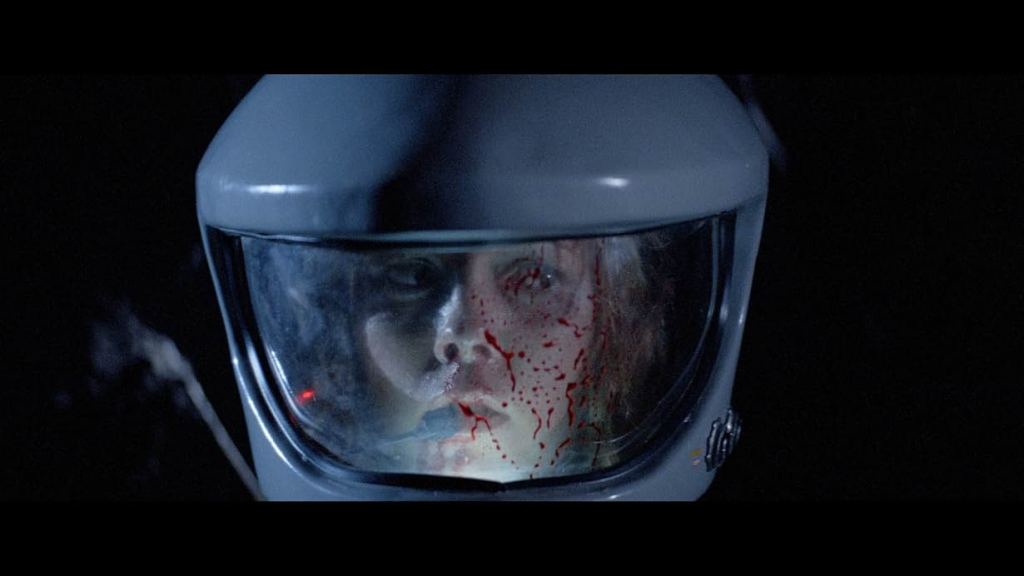


A bad landing on Titan forces the NTI crew to traverse the surface of Titan to seek assistance from the crew of a Richter Dynamics ship that has beaten Davison’s team to the surface of the moon. However, they find the Richter Dynamics ship in disarray, the crew missing. The sole survivor is the sinister Hans Hofner (Klaus Kinski). Hofner tells the NTI crew that the alien creature has killed more than 20 of his colleagues. Soon, the NTI crew is faced with the creature, which appears to possess the ability to control the dead, returning them to life as zombies in order to lure the living to their doom.Malone was approached by producers William Dunn and Moshe Diamant, who wanted to make a film like Alien. Malone already had a treatment in storage, a pastiche of Edward L Cahn’s It! The Terror from Beyond Space (1958), and he adapted this, writing the script over a period of two or three months alongside co-writer Robert Short. Short is known primarily as a makeup effects artist on films such as Tim Burton’s Beetlejuice (1988) and Steven Spielberg’s E.T.: The Extra-Terrestrial (1982).
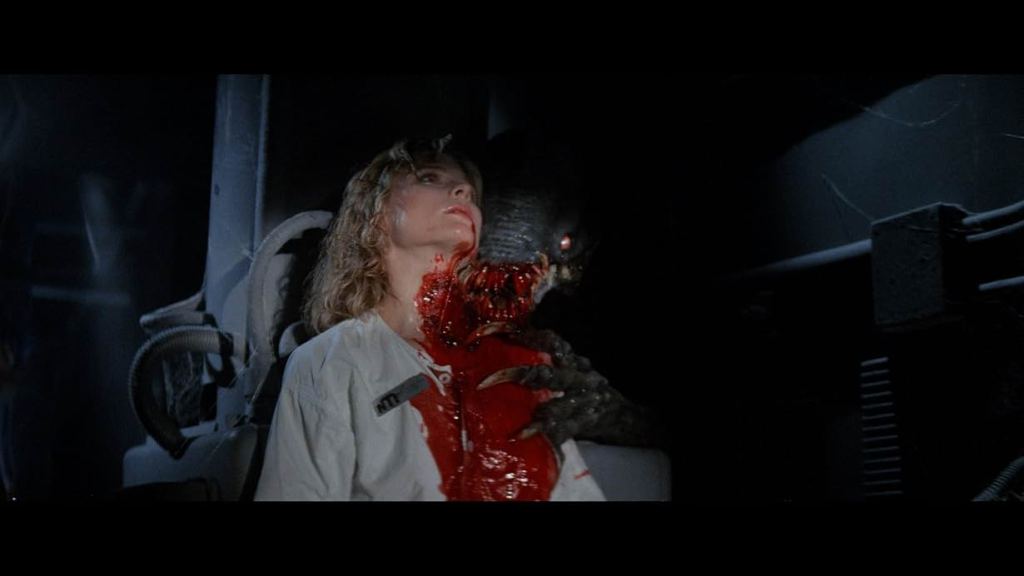
Unlike Spielberg’s alien, however, the extra-terrestrial in Titan Find is far from friendly. Much of the film takes place in claustrophobic narrow corridors, of both the spaceships and the ancient alien structure on Titan. If the film is like a haunted house story set in space, the alien is comparable to a vampire—to the extent that the creature stores the corpses of its victims in the engineering deck of the Richter Dynamics ship, hanging them upside down from the ceiling so that it may drink blood from their throats.
To create this sense of a haunted house in space, the production employed 24 sets, including the German and American spaceships, and the locations on the surface of Titan. (The surface of the planet was crafted from black cinders.) Much of the picture was filmed on sets created in a warehouse in Burbank during an incredibly hot summer, which led to the actors suffering from extreme heat in scenes that required them to wear their spacesuits.
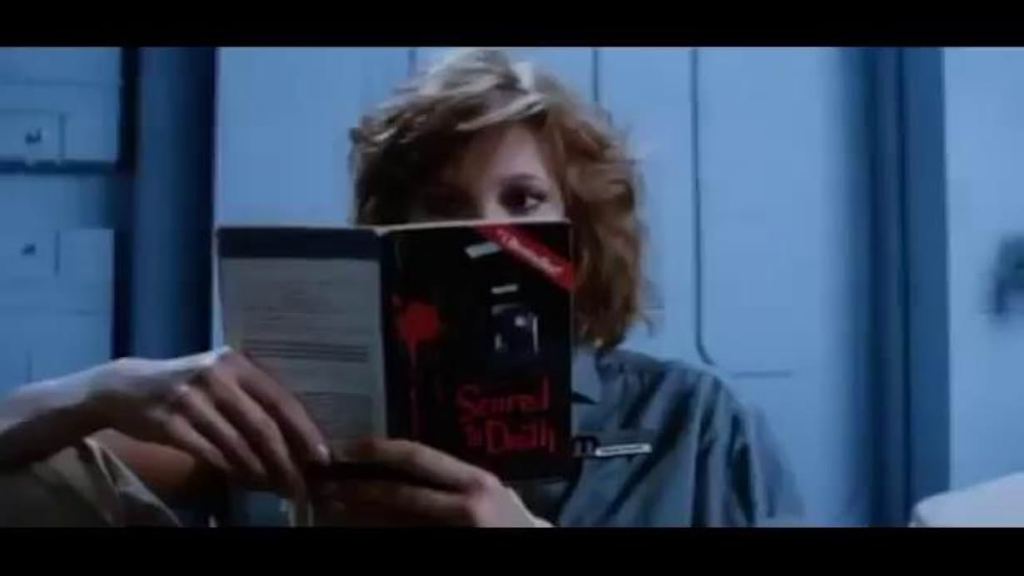
Aside from the direct riffs on Alien, Titan Find is packed with plenty of little references to other films. Early in the film, Beth is seen reading a paperback novel. A medium shot in the Titan Find cut, missing from the shorter Creature edit, makes sure the book is easily identifiable: it’s a novelisation of William Malone’s debut feature, Scared to Death (1980). (“That stuff’ll rot your brain,” Davison jokes.) In the final moments of the film, after Bryce has reappeared at the Richter Dynamics ship, the security officer hands the paperback—which she has “rescued” during her trip to the NTI ship—to Beth. (One of the two astronauts killed by the creature in the opening sequence is named Ted Lonergan and played by John Stinson. Stinson had played a character with the same name in Scared to Death.)
Functioning pretty much like the Final Girl of an Eighties slasher film, it’s Beth who devises a plan to stop the alien, using her knowledge of the 1951 film The Thing From Another World. “I saw a movie once, where a group of people were trapped on a space station by a carrot from another planet,” Beth tells a bemused Davison and Perkins, “They killed it by electrocution.” Beth’s recollections of The Thing lead the survivors to jerry-rig the ship’s fusion reactor in order to create a trap for the marauding alien.
Though the premise of Titan Find—the discovery of a collection of alien life within a mysterious and ancient alien structure, followed by one of these lifeforms escaping and picking off a group of space travellers one-by-one—draws on Alien, there are some aspects of Titan Find that anticipate James Cameron’s 1986 sequel Aliens. (This is perhaps unsurprising, given that Malone has recounted encountering Cameron at a screening of Titan Find.)
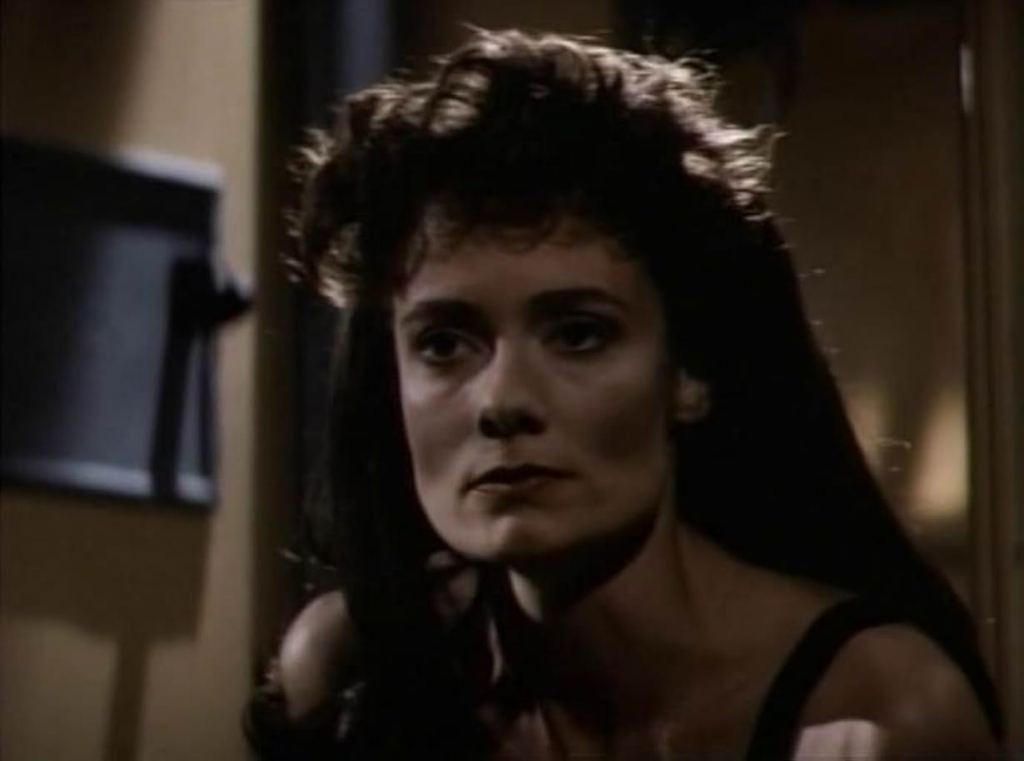
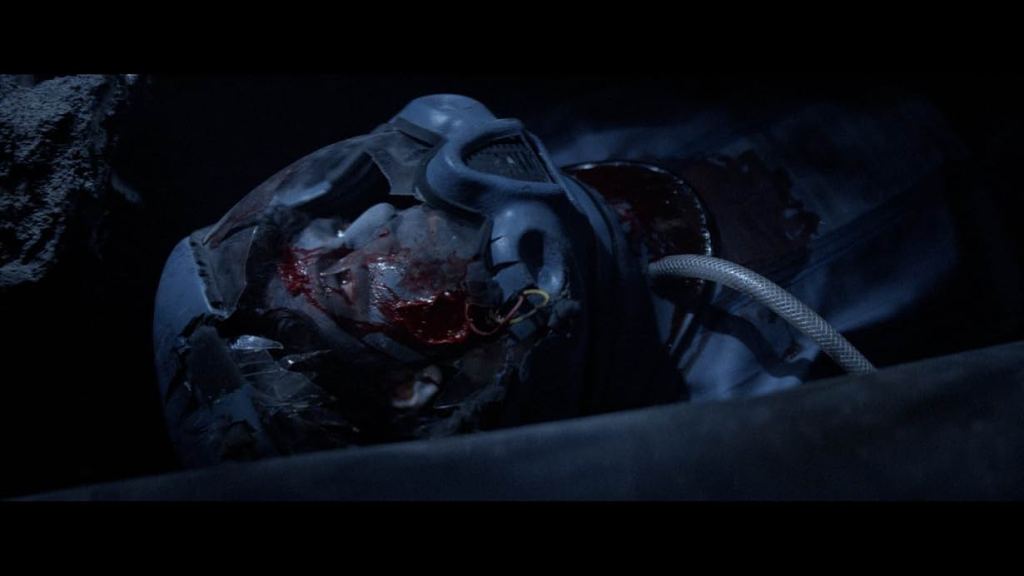
Malone has pointed to the kick-ass female security officer, Melanie Bryce, as a model for Cameron’s reworking of Ellen Ripley as an action heroine. (Here, it’s worth noting that Bryce’s all-black leather outfit seems intentionally to reference the spacesuits in Mario Bava’s Planet of the Vampires, often cited as an influence on the visual design of Alien.) However, with its cold blue light and emphasis on spacesuit-clad figures examining sealed stasis capsules, on a formal level, the pre-credits scene of Titan Find (in which NTI astronauts Ted and Howard discover the alien menagerie) seems mirrored in Aliens’ opening sequence and its depiction of astronauts finding Ripley’s stasis capsule on the Nostromo’s drifting escape pod. The characterisation of NTI corporate stooge Perkins also anticipates aspects of Paul Reiser’s memorable role as Burke in Cameron’s Alien sequel.
“Klaus Kinski is dead now, and the world is a better place for it.”
-William Malone
Titan Find was produced in an era during which science-fiction films were exploring the dehumanising impact of the corporate mindset (NTI and Richter Dynamics are, the opening title crawl tells us, locked in a battle for “commercial supremacy” of space and its resources) whilst still also being impacted by Cold War separatism. Thus in this film, we are presented with a conflict between the US and West German corporations, Richter Dynamics being presented in the film through the sinister appearance of Klaus Kinski’s Hans Hofner, the sole survivor of the West German team.
The elephant in the room, or the xenomorph on the proverbial spaceship, is Kinski’s small but memorably delirious role as Hofner. At this point in his career, Klaus Kinski had earned a reputation for onset behaviour that was volatile, aggressive, and often deeply abusive. There are plentiful stories of Kinski assaulting actors and crewmembers on film sets during the 1980s. Interviewed in Fangoria in 1999, William Malone said Kinski openly told the director that he had sexually abused his daughter, Natassja. In the same interview, Malone commented that “Klaus Kinski is dead now, and the world is a better place for it.”
In the documentary Creation is Violent: Anecdotes on Kinski’s Final Years (2023), Diane Salinger describes an incident in which Kinski assaulted her on the set of Titan Find. Recounting the event, Salinger finds some dry humour in the event; describing Kinski as comparatively small in height, Salinger’s response was to pick the German actor up as if he was an infant, wrap her arms around him, and shake him up and down “like trying to calm down a temper tantrum child.” She says that Kinski had “a basic fear of not being masculine enough” and his aggressive behaviour “was his way of compensating.”
Here, Kinski brings a manic energy to his character which, as troubling as the actor’s behaviour during production may have been, seems fitting for a character who has been marooned on Titan after witnessing the other 20 members of his ship’s crew massacred. He mutters his dialogue, often skulking in the background during scenes before coming to the front. There’s an extraordinary physicality to Kinski’s presence in this film, captured in the way he waves his arms whilst speaking, which lends credibility to some of the more ludicrous dialogue. “That man is certifiable,” Davison says of Hofner after the German astronaut has ranted about the alien creature being “evil” and possessing a “collective intelligence.” It’s not difficult to imagine Malone or other members of the film’s cast and crew saying the same thing about Kinski.
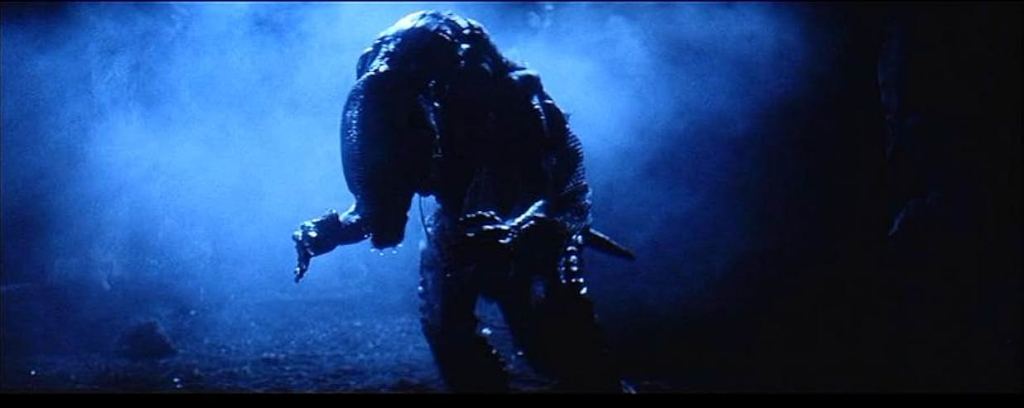
There are some wonderfully witty, fast-paced dialogue exchanges, which are sometimes reminiscent of screwball comedy. Embarking on the trip to Titan, Wendy asks why they need a security officer on board. “Just in case,” Perkins says. “In case of what?” Davison asks. “I don’t know, I’ve never been there,” Perkins responds. Some other clever touches in the film include moments in which we see from the alien’s point-of-view as it confronts Davison’s team. A filter is used in these moments, predating the thermal vision of the titular Predator in John McTiernan’s 1987 picture.
A film about ancient alien relics, William Malone’s Titan Find now feels like something of an alien relic itself—of an era in which independent filmmakers could employ all of their creative resources, on very limited budgets, to achieve an atmosphere as thick as the methane-laden mists of Titan itself. There’s a comic book quality to the film which facilitates a seductively lurid mixture of Cold War anxieties, intertextual references, screwball dialogue, and “video nasty” era gore. In the film, Davison tells Beth that the horror novel she is reading will “rot your brain.” But as Beth’s character arc demonstrates, familiarity with the tropes of genre fiction may help one survive both an increasingly dehumanised, corporate cultural landscape and the occasional marauding space invader.



 NightTide Magazine
Leave a comment