Our mission is to spotlight the visionary womxn shaping the future of horror cinema. Through Fearless Frame, we celebrate the artistry, innovation, and diverse perspectives of womxn filmmakers who craft chilling tales, push boundaries, and redefine the genre. By amplifying their voices, we aim to inspire audiences and empower creators to continue forging their paths in the shadowy corners of storytelling. Through the month of December, we will be showcasing a womxn filmmaker in the horror genre each day!
SUNITA SOLIAR

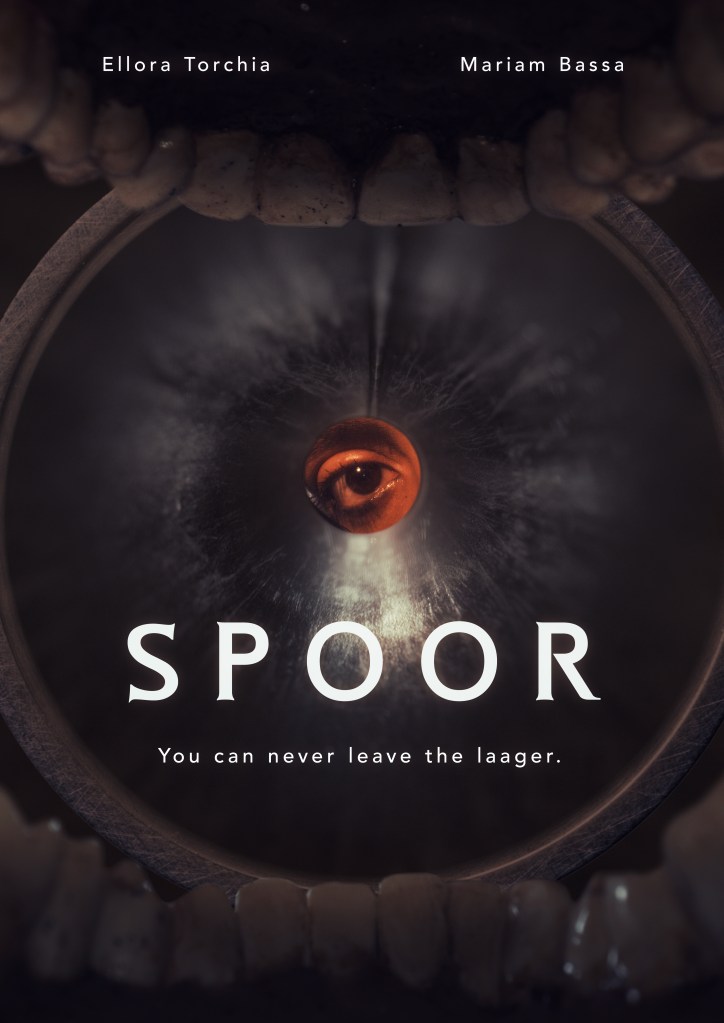
WORK: SPOOR – Spoor, Body Horror 2023 (14:47) – Written and Directed by Sunita Soliar
SYNOPSIS: A freakish, throbbing growth torments Ash. She is stuck caring for her vitriolic, dementia-ridden mother. With every indignity, Ash’s lump grows, until it erupts, spewing a mysterious substance. Will Ash figure out what it is and how to stop it?
BIO: My artistic background is predominantly in creative writing. I completed the MA in prose fiction at UEA, and my work has appeared in publications such as Five Dials, Fitzrovia News, and The Times Literary Supplement. I have also used creative writing as a way to engage with the wider community, and I ran a writing group for Solace Women’s Aid, which focused on helping people tell their unheard stories. It was after a monologue I wrote was featured in the live fiction event, Liars’ League, in which actors read the work of writers, that I began to explore dramatic writing. I began to workshop my chapters with actors, which led me to begin writing dramatic scenes. The work I did in prose fiction, which involved drilling deep into the psyches of my characters, prepared me to find a language for displaying those contents in a visual form. This led me to make my debut short film, Spoor in 2023. Spoor has played at 30 festivals, including Sitges, Leeds, HollyShorts and Aesthetica and won multiple awards, including Best International Narrative Short at Kerry International Film Festival. It recently premiered on Alter on YouTube, where it has been viewed over 80,000 times in two weeks.
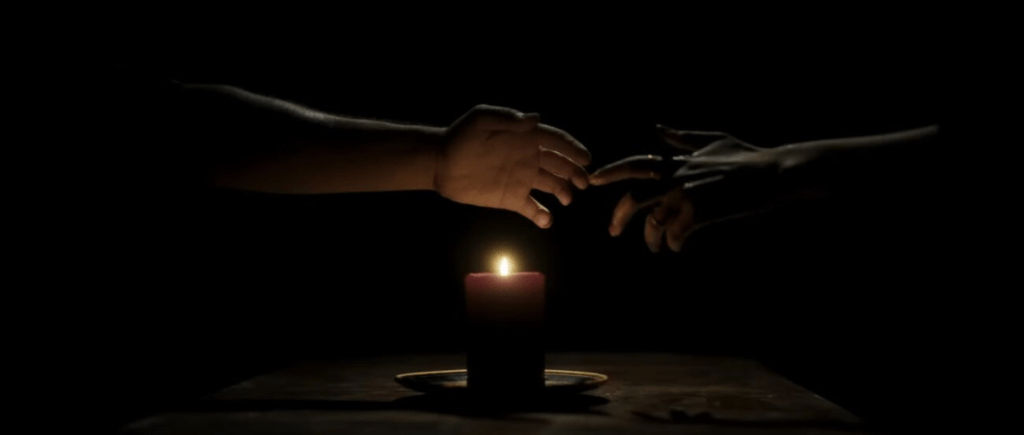
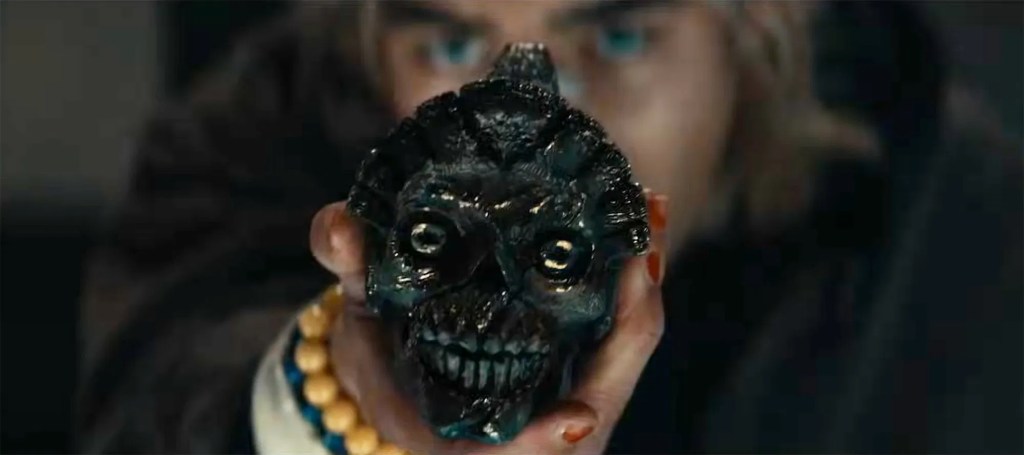
STORY STATEMENT: The film is about the way that generational trauma is passed on and expresses itself as pain in the body – and what we have to do to become free of it. The specific trauma of Spoor is the history of Indians who were taken to South Africa by the British as indentured labourers and who subsequently lived through Apartheid. The spirit of transformation in the film is represented by Kali, the Hindu goddess, who destroys the old to nurture the new and is also known as Ma Kali, the true mother who leads us towards enlightenment. But on a deeper, universal level it is about how we all need to listen to our trauma in order to hand it back.
Other than the focus on South African Indians, which is quite rare in any narrative, I hope the symbolic use of the Hindu goddess Kali sets the film apart as well. The image of Kali is both frightening and inspiring, and although the film is a horror, it has a happy ending thanks to this divine presence that can appear at first to be demonic. So she represents the frightening and destructive aspect that is so necessary for transformation. I have also used her as Kali Ma, the true mother, and contrasted her with the symbolic figure of the devouring mother.
DIRECTOR’S STATEMENT: I believe that a true cinematic representation of trauma is sorely needed. I know from my own experience, and from my work with women’s charities, that the current language of our omnipresent media, even if it is well intentioned, is alienating to those it tries to help. It is categorical, and classification is not experience. The socially constructed language of empowerment cannot save us in the way that myth and the symbolic can. It is my intention to travel deep down into the place where transcendence can happen, because it has been the work of writers and film-makers who present life from unexpected angles that has helped me survive, and this is what I want to pass on to others.
PRODUCTION CONTENT: We got lucky with so many things making this film, and so many people gave so generously of their time and talent and artistry that it would be impossible to do justice to our gratitude to them all. We did not have our producer hat on at all when we wrote the film, and after we had a script we were happy with, we realised we had set ourselves a near impossible task in terms of casting, as the character of the mum needed to be an older actress with a South African accent, which is quite specific. There aren’t really any actresses in the UK who could do this and there is only one actress in South Africa who plays these roles professionally: Mariam Bassa. We contacted a casting agent and, through a stroke of luck, Mariam happened to be in the UK visiting her daughter and also agreed to do our film! We then had hard locked shoot dates for the end of November 2022, as after that Mariam was returning to South Africa. But then disaster struck, and with a few weeks to go, our original location fell through. We did everything we could to find a new location, including leafleting streets and calling estate agents. Finally, with a week to go someone who was having trouble selling their house got in contact with us and allowed us to use it as the location. It turned out to be the perfect place, much better than our original house, and adds a lot to the feel and character of the film. We also used 20kg of audio tape in the film! And bizarrely, when you have that much tape unspooled and floating around, it smells like Parmesan Cheese!
EXPLORING DIVERSITY AND INCLUSION: The film explores an often neglected part of colonial history: the indentured servitude of Indians who were taken to South Africa by the British in the 1800s. This has been largely ignored by the mainstream media, as has the experience of Indians during Apartheid. In terms of production, one half of the writing-directing team is female and of South African Indian heritage, as are the two main actresses. In addition, we had women in key roles, for example, our head of SFX as well as our VFX supervisor, and a lot of our post-production team were Mexican.
MARGINALIZED VOICES INVOLVED:
- Women and Non-Binary Creators: Amplifying voices historically underrepresented in filmmaking.
- BIPOC (Black, Indigenous, and People of Color): Celebrating cultural diversity and stories rooted in unique lived experiences.
AWARDS AND FILM FESTIVAL APPEARANCES:
- Currently screening on Alter: Watch on ALTER
- Sitges International Fantastic Film Festival of Catalonia
- HollyShorts Film Festival
- Leeds International Film Festival
- Norwich Film Festival
- Kerry International Film Festival – WINNER BEST INTERNATIONAL NARRATIVE SHORT AWARD
- Final Girls Berlin Film Festival
- Cinequest Film & VR Festival
- British Shorts Film Festival Berlin
- Abertoir Horror Festival – NOMINATED MÉLIÈS D’ARGENT
- Aesthetica Short Film Festival
- Razor Reel Flanders Film Festival
- Feratum International Fantastic Film Festival
- North East International Film Festival – WINNER BEST HORROR
- FilmQuest
- Philadelphia Asian American Film Festival
- Exit 6 Film Festival – WINNER AUDIENCE CHOICE AWARD, NOMINATED BEST PERFORMANCE
- Ravenheart International Film Festival
- Cardiff Mini Film Festival
- Landshut Short Film Festival – NOMINATED DEADLINE AWARD
- Beeston Film Festival – NOMINATED BEST HORROR
- Fantaspoa International Film Festival of Porto Alegre
- Independent Film Festival Ypsilanti
- Women X Film Festival – WINNER BEST PRODUCTION DESIGN
- Shorts Mexico
- HorrorCon
- Asian American International Film Festival
- Woods Hole Film Festival
*SPOOR is a powerful exploration of generational trauma and transformation, set against the rarely depicted backdrop of South African Indians’ experiences of indentured servitude under British colonial rule and Apartheid. Ash, the protagonist, is tormented by a mysterious, growing lump as she cares for her cruel, dementia-stricken mother. The lump’s eruption symbolizes the manifestation of unaddressed pain, forcing Ash to confront her personal and ancestral trauma. Guided by the dual aspects of the Hindu goddess Kali—both destructive and nurturing—the story delves into the necessity of destruction for renewal. Through a symbolic lens, the film explores the process of releasing inherited suffering and reclaiming personal and cultural identity.
 NightTide Magazine
Leave a comment