
By Stan Wright
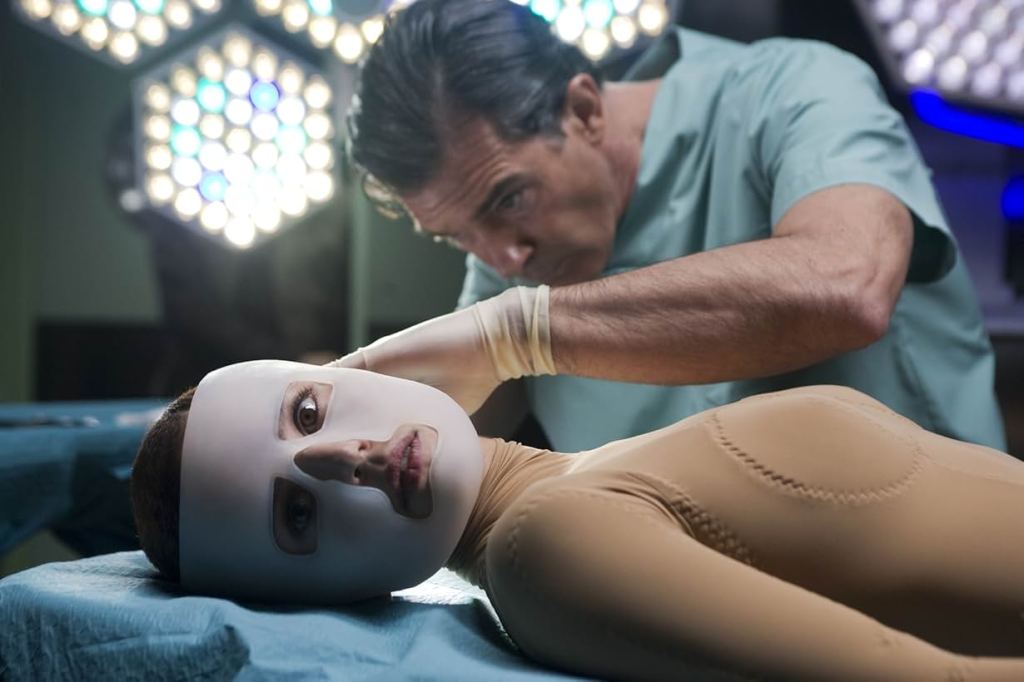
Pedro Almodóvar’s The Skin I Live In (2011) is a haunting exploration of identity, power, and the boundaries of autonomy through the lens of body horror. By centering its narrative on the transformation of Vicente into Vera, the film offers a profound meditation on the relationship between gender and the body, challenging viewers to confront unsettling questions about control, identity, and societal norms.

At the core of The Skin I Live In is the forced transformation of Vicente, a young man, into Vera, a woman meticulously crafted by Dr. Robert Ledgard. This act of physical alteration is not merely cosmetic but existential, raising questions about the interplay between body and identity. Can one’s sense of self remain intact when the physical form is irrevocably altered? Vera’s external beauty masks the erasure of Vicente’s identity, underscoring the fragility of the connection between appearance and selfhood. This transformation also forces Vera to perform femininity under duress. Her graceful movements, composed demeanor, and adherence to Robert’s ideal of womanhood highlight the performative nature of gender. Yet, moments of rebellion—such as her quiet defiance in her interactions with Robert—suggest that identity cannot be wholly overwritten, even in the face of extreme coercion.
Robert’s role as the “creator” of Vera’s new form places him in a position of patriarchal dominance. His obsession with crafting a perfect skin, ostensibly to honor his late wife Gal, extends beyond scientific ambition into the realm of control. By transforming Vicente into Vera, Robert asserts his power over not just a person but their very essence, turning Vera into a living embodiment of his grief and obsession.
This dynamic reflects broader societal structures where gender roles are often imposed rather than chosen. Vera’s existence as a constructed ideal highlights the violence inherent in attempts to mold individuals to fit societal or personal expectations. The film’s climactic reversal, where Vera reclaims agency by killing Robert, serves as a chilling commentary on the destructive nature of such control and the potential for resistance.
Few films confront the violation of bodily autonomy as viscerally as The Skin I Live In. The forced transformation of Vicente into Vera is an act of profound violence, stripping away not only physical autonomy but also psychological integrity. This violation echoes real-world struggles for bodily sovereignty, particularly in marginalized communities, including those facing gender-based violence or forced medical interventions. The film’s body horror lies not in overt gore but in the existential terror of losing control over one’s own form. The pristine, almost sterile aesthetic of Robert’s laboratory contrasts starkly with the grotesque implications of his experiments, heightening the emotional impact of Vera’s plight.

Robert’s obsession with creating “perfect” skin for Vera speaks to societal pressures surrounding beauty and femininity. Vera’s flawless appearance embodies an unattainable ideal, yet this beauty is revealed to be a facade, masking layers of pain and trauma. Almodóvar critiques the objectification of women’s bodies by showing how Vera’s external perfection is achieved through violence and control. This subversion of beauty norms forces viewers to reconsider the value placed on physical appearance. Vera’s beauty does not bring her freedom or happiness; instead, it becomes a tool of her oppression. In one poignant scene, Vera’s reflection in a mirror becomes a site of confrontation, where she is forced to reconcile the image she sees with the person she knows herself to be.
Vera’s journey is steeped in trauma, from the initial abduction to the invasive procedures that redefine her existence. This trauma is inextricably linked to her altered gender, positioning the film as a metaphorical exploration of gender dysphoria and societal violence against trans and nonbinary individuals. The film’s depiction of the psychological toll of forced transformation invites empathy and understanding for those navigating the complexities of gender identity in a world that often prioritizes conformity over authenticity.
The film’s ending offers a moment of catharsis when Vera reveals her true identity as Vicente. After enduring years of imprisonment and transformation, Vera returns to her family’s shop and, in an emotionally charged scene, declares, “I’m Vicente.” This revelation is a powerful reclaiming of self, emphasizing the indomitable connection between identity and memory. Despite Robert’s efforts to overwrite Vicente’s identity, the essence of who they are remains intact. This final act also underscores the film’s central theme: the resilience of identity in the face of erasure. By asserting their true self, Vera/Vicente dismantles the power dynamic Robert sought to enforce, transforming a story of victimization into one of survival and defiance.

The Skin I Live In is a masterful blend of psychological drama and body horror that interrogates the boundaries of identity, autonomy, and power. By examining the relationship between gender and the body, Almodóvar forces viewers to confront uncomfortable truths about societal norms and the violence inherent in attempts to control others. Vera’s final act of reclaiming her identity offers a glimmer of hope amidst the horror, reminding us of the resilience of the human spirit even in the face of unimaginable adversity.




 NightTide Magazine
Leave a comment