
By Caroline Miller
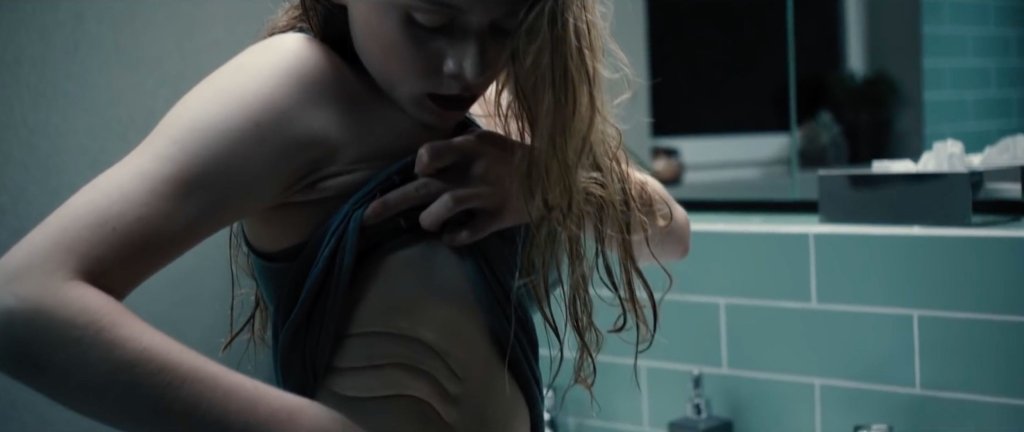
What is more befitting of body horror than puberty? Lisa Brühlmann’s 2017 feature film directorial debut, Blue My Mind, takes a nibble of that theme and takes it to the next level. The film tells the story of Mia (Luna Wedler), who discovers that there is more to her own body and history than she ever imagined. It begins when she gets her first period and develops a taste for raw fish. Soon, strange bruises appear on her legs, which slowly spread to her entire lower half. Things only elevate from there as she balances her social life, hiding her changes, and trying to uncover the truth.

Blue My Mind takes the concept of a monster transformation and balances it with a coming-of-age story, along with a bit of mystery and teen drama. Honestly, it’s a very good first step into the horror genre because of this. The body horror in question is more muted and framed in a smaller scale, and therefore more realistic, setting compared to a larger scale Hollywood blockbuster.
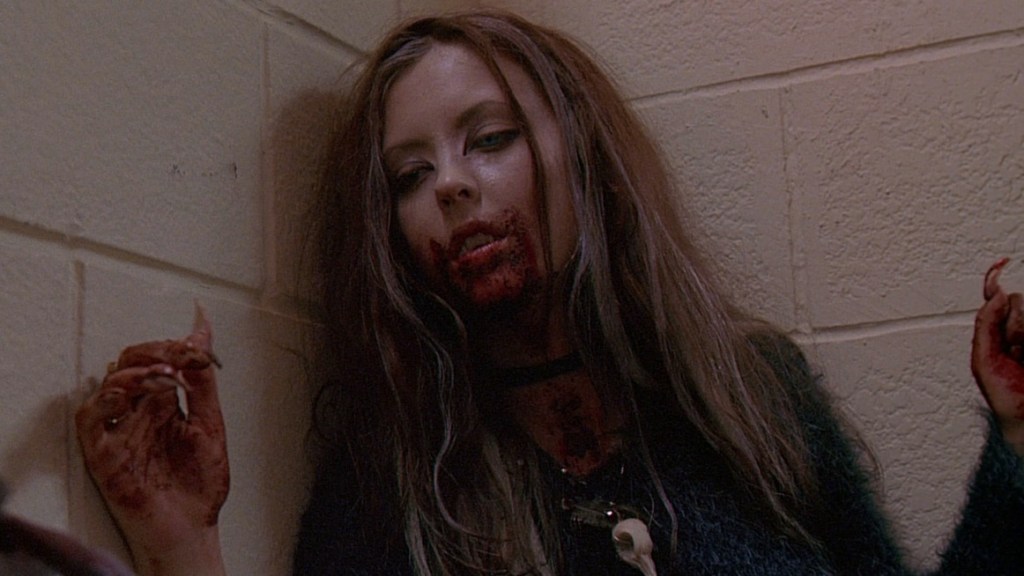
Compare Mia’s transformation to the titular Ginger of Ginger Snaps (2000). When Ginger (Katharine Isabelle) first falls under the effects of lycanthropy, her shift in behavior is framed to mirror typical teenage rebellion. She’s more outgoing, sexually active, and aggressive. She’s also more quick to brush off any hints of her sister Brigette’s (Emily Perkins) concern about the “dog attack” by saying it’s just her period. Bridgette knows something is wrong, however, and her arc in the film is to save her sister from her transformation.
While Ginger Snaps and Blue My Mind both frame their monsters around puberty, Ginger Snaps fully paints the werewolf as a monstrous disease that needs to be cured. Blue My Mind, on the other hand, treats the mermaid transformation as something more ambiguous. While the changes themselves are horrific, they’re introduced at first in an almost curious light until webbing forms in between Mia’s toes.

Another factor that sets Blue My Mind apart from Ginger Snaps is the support system. Mia doesn’t have a Bridgette for most of the film. She only has herself to explore these changes happening all over her body. Unlike Ginger, she tries to go to a doctor but runs away when the doctor tries calling her parents. Mia also walls herself away from her parents emotionally when she tries to confront them about her potentially not being their biological child. When she asks her mother why there are no pictures of her when she was pregnant, her mother brushes her off and leaves. Because of this interaction, Mia decides she only has herself to rely on.
This quiet side of Mia’s internal struggles mirrors the experiences many people can recognize—navigating the confusion, shame, and alienation that often accompany puberty and bodily changes, particularly for those socialized in environments with rigid gender expectations. A lot of us are given ibuprofen and a hot water bottle, and a lot more of us are told to “tough it out” and to “not bring it up”. Of course, we want to tell them that we’re in pain, scared, and don’t know what to do. But the adults around us tend to shrug and say either “I did it, you can do it too” or “Don’t talk about that around me, that’s dirty and you should be ashamed.” So, we suffer in silence, because it’s the only option we have.
With only herself to study and navigate these changes, Mia not only hides her blemishes with bandages and long pants, but she even resorts to self-harm. In one particularly uncomfortable scene, Mia snips the webbing between her toes with a nail clipper. In another scene, she plucks the odd scales growing out of her legs. This can be interpreted as either a teenager watching their new physical changes happening right in front of them, or as the real, actual self-harm that young adults often pursue when they have no other perceived outlet for their pent-up frustrations.
Like so many of us, Mia grows ashamed of her body the more it changes. She shuts herself away emotionally, chasing whatever escape she can find from her reality. At the beginning of the film, she is introduced to a group of teens in her class led by a girl named Gianna (Zoë Pastelle Holthuizen). Seeking her approval, Mia agrees to the various dares and suggestions of Gianna. To Mia, Gianna and the other girls of this group are free to be themselves. But this is far from the case upon closer inspection. It’s soon revealed that the girls do these in order to feel good in their own bodies, they are stumbling lost confused, and ashamed just like our heroine. Mia is soon pressured into doing drugs and pursuing sex with the boys at her school. It becomes the only way she can feel good about her body.


Luna Wedler and Zoë Pastelle Holthuizen in Blue My Mind (2017)
Mia’s pursuits of denial come to a head when she goes to a party and is taken advantage of by a group of adult men. Gianna, who started out as a source of Mia’s pursuits, becomes her only savior, the Brigette to Mia’s Ginger, and comes to her rescue. After running home, Mia’s transformation completes, and she wakes up from an intoxicated stupor with a fully formed tail. After spending the entire film trying to hide this side of herself, Mia is forced to finally face it head-on and without any sort of cover or distraction.
Body horror is a section of the genre that is often paired with the unnatural. Why do we, as the audience, find it scary? It’s because we see things that are contorted and forced into shapes that we deem incorrect. The most popular stories usually involve taking something alien or paranormal and exposing it to some poor normal human being. This exposure, obviously, causes the body horror (and the suffering) upon our poor main characters. The suffering is then ended with either a sad mercy kill, a last-minute rescue, or banishment of some kind. What sets Blue My Mind apart from this typical formula is that the body horror in question ends up becoming the most natural thing to Mia. What starts as a strange curiosity shifts into a horrific nightmare, then a quiet acceptance, and finally an embrace of this terrifying new reality.
As we are born into this world as human beings, we live through our very own levels of body horror. Our physical selves grow, change, distort, and take new shapes. We live in fear of these changes, and some of us prevent or fight them off as best as we possibly can. Sometimes our bodies give us a warning, and we try to pretend it’s not real at first. Maybe we do this because we’re ashamed of what these changes might be, heart disease, diabetes, or some sort of disorder. Maybe we’re ashamed of these changes. There’s a scene where Mia runs out of the doctor’s office and collapses on the sidewalk weeping. How many people watched this movie and felt seen by Mia because a test result came back positive and they were finally free from the mind trap they’ve been in or negative and their worst fears have come true for them?
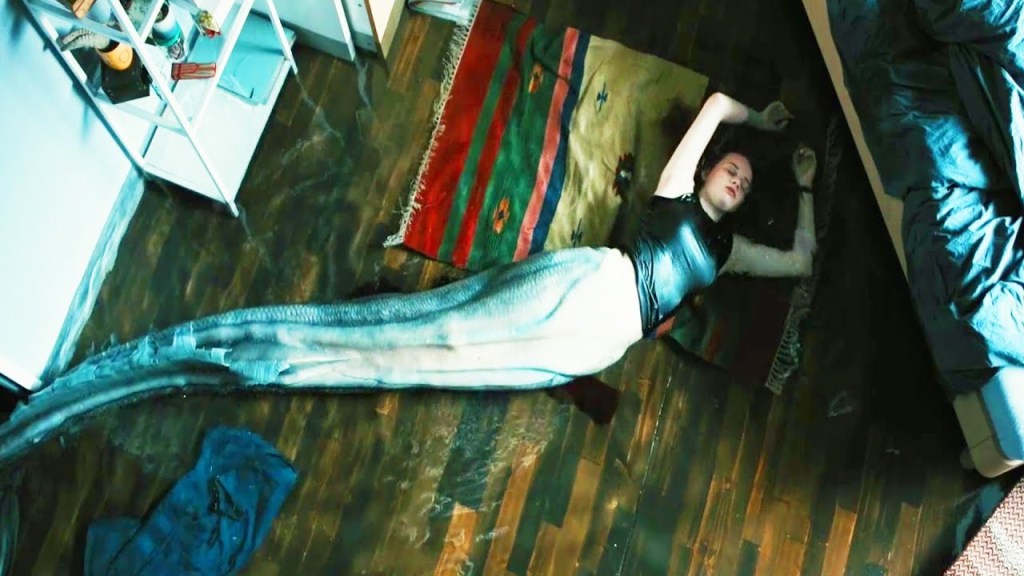
This is what makes Blue My Mind stand out to me as an entry in the body horror subgenre. A lot of us are living our own body horror stories. We experience symptoms that cannot be treated. When we try to seek help, our loved ones or professionals can’t understand what’s wrong. So we’re forced to endure and are told it’s only natural. The most steadfast factor in our living body horror is its inevitability. You’re only getting older, and frailer, and you’ll never be the same again. We can only hope that someday our realities can have their own sense of beauty, like a mermaid’s tail.


 NightTide Magazine
Leave a comment