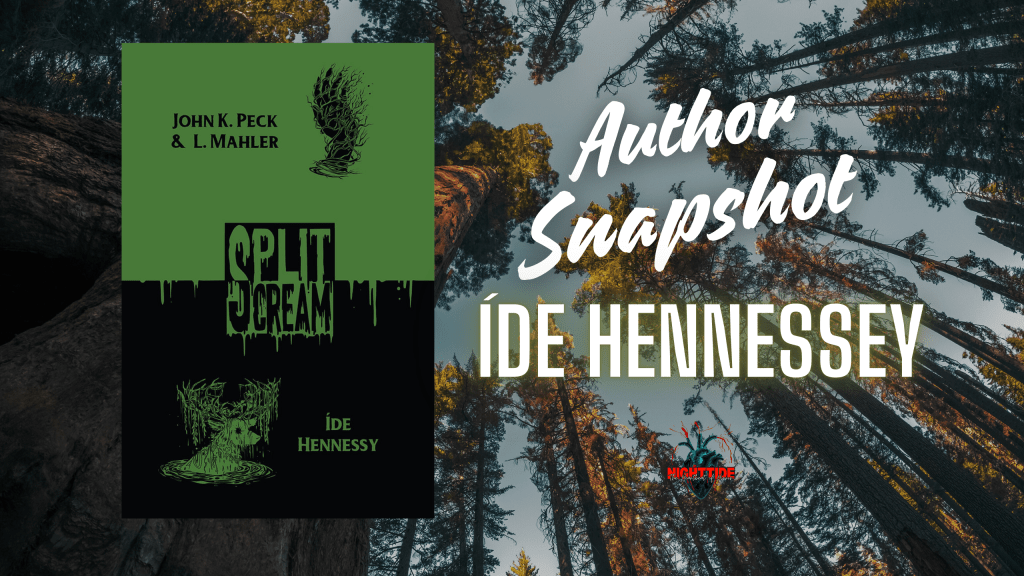
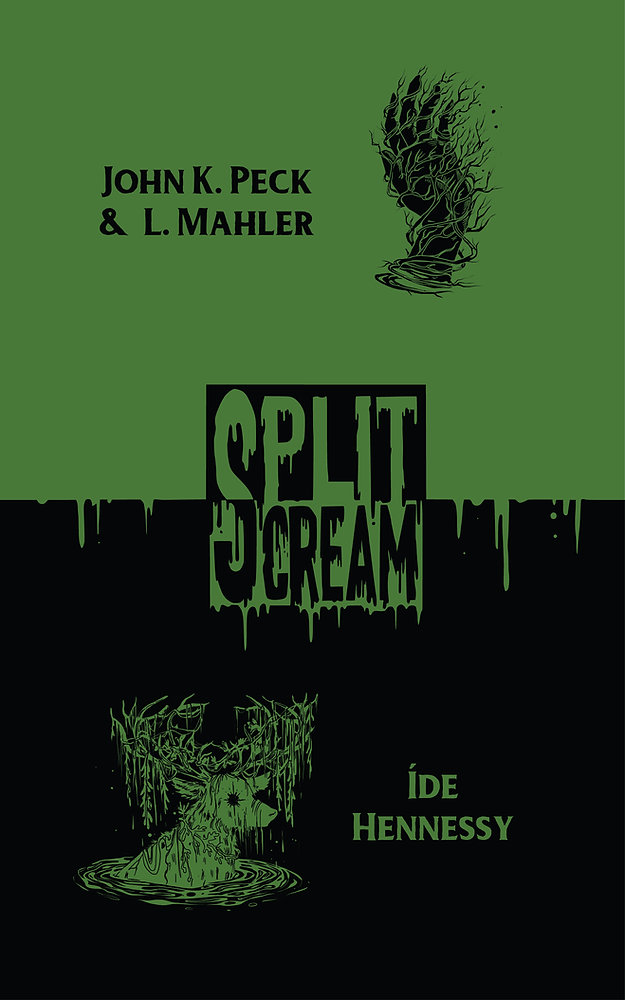
NightTide sits down with the author of Sequoia Point for Split Scream Vol. 7 by Tenebrous Press.
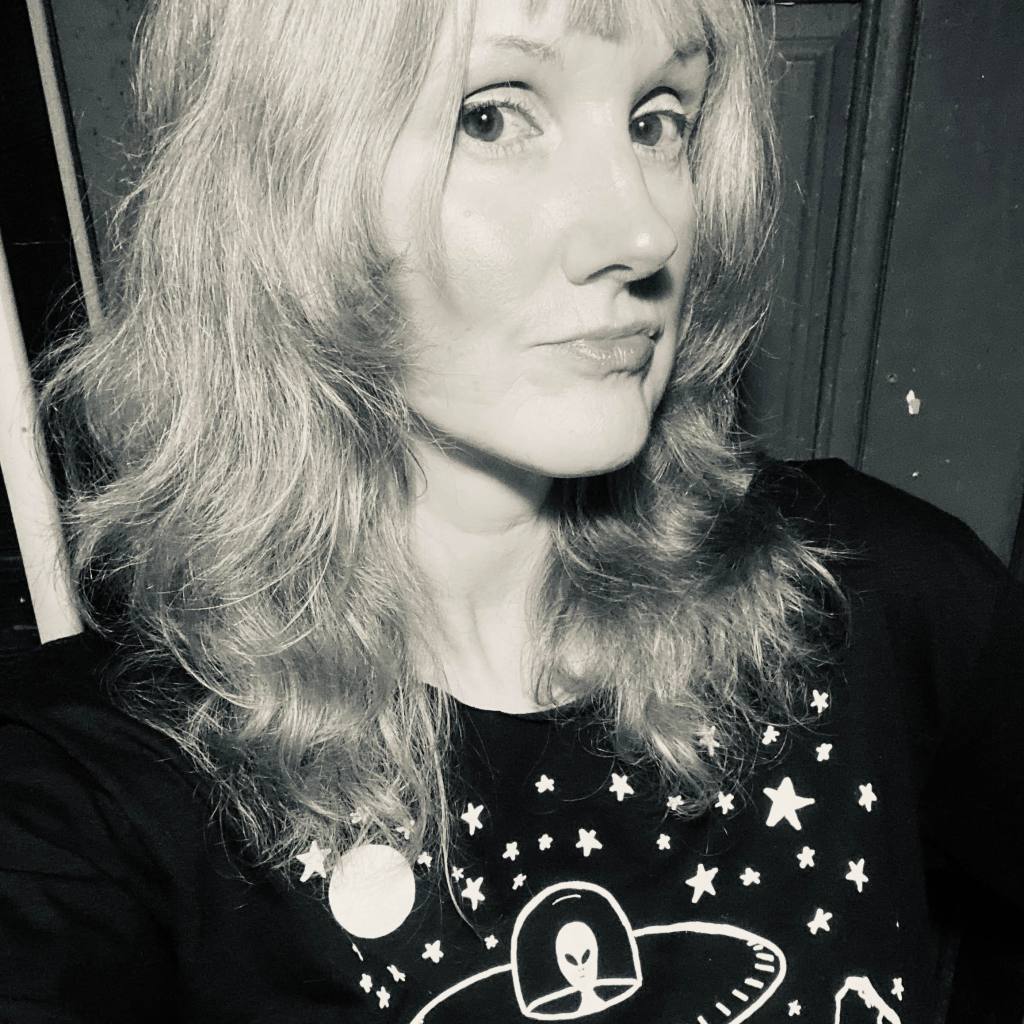
Íde Hennessy (she/they) lives in Humboldt County, California with her partner and three special needs cats who can see ghosts. Her short fiction has appeared in Strange Horizons, Reckoning, Cosmic Horror Monthly, Dark Matter’s The Off-Season: Coastal New Weird anthology, Fusion Fragment, Flash Point SF, King Ludd’s Rag, and more. Her novelette “Sequoia Point” will be released by Tenebrous Press in March 2025 as the second half of Split Scream Volume 7. She also occasionally records and performs with darkwave band Control Voltage, as Vibra Steel. You can find her at idehennessy.com, on Bluesky as ideofmarch, and on Instagram and Twitter as ahennessyvsop.
Sequoia Point
California’s rugged “Lost Coast” has long been a treacherous place where dreams—and people—go to die. Meg’s adrenaline junkie husband had been so drawn to Sequoia Point’s beaches that he’d requested his ashes be scattered on their black sands. Reeling after his death and a miscarriage, Meg decides to put down new roots in this strange place.
What she finds is a van-life conspiracy theorist seeking refuge from 5G radiation; mysterious packs of roving dogs; cryptic talismans on doors; and a mute woman who looks exactly like her. When a mudslide cuts the town off from civilization, Meg must overcome her debilitating fears to unravel the mysteries of Sequoia Point.
What was your first published work?
The first place to publish me was actually McSweeney’s Internet Tendency, twenty years ago under a different name. I took a long break from submitting stories while I was in college, then starting up two ill-advised passion businesses (a video store, followed by a movie theatre bar). I was still working on an as yet unfinished sci-fi novel, but not submitting anything. When Covid closures happened, I was forced to take some time off, and I started writing short fiction again. My first speculative publication was in Cosmic Horror Monthly in March 2023.
Is there a story inside that you have seeds of but can’t seem to connect that’s dying to get out?
I’ve been working on my apocalyptic sci-fi novel so long, I keep having to change the plot when the present dystopia catches up to it. This is the risk of writing near-future sci-fi! If you’re not quick, it’s no longer fiction.
How do you handle a rejected story?
I like to send my stories to places with notoriously swift rejections first, instead of publications where I feel they have more of a chance. It helps me move beyond the point of excitement with a new story, to looking at it more critically. I’m a compulsive editor, so I’m usually re-reading and making little tweaks between rejections. I’m not sure if I can recommend this. I end up only writing five or six stories a year, but those stories go through grueling edits.
What does literary success look like to you?
I’ll probably keep moving the goalposts until it’s something like “having a trilogy of novels turned into a TV series” or “quitting my day job.” I’m not sure which of those is less realistic. The smaller, more reasonable voice inside me is just happy when people are reading are my work.
Do you read your book reviews? How do you deal with bad or good ones?
I don’t think I’ve had any bad reviews—yet!—since reviewers for shorts tend to only highlight things they enjoyed. I’ve had stories in a few recommended reading columns and blogs, and I’m ready for the new adventure of reading one-star reviews that publishing longer work will bring. I realize especially with genres like New Weird, I’m going to alienate some readers, and that’s fine as long as others appreciate what I do. I write horror for soft weirdos like me, and I know they’re out there.
What is the most difficult part of your artistic process?
Having ADHD makes it hard for me to write in short spurts. I need to block out a couple of hours to really get myself to focus, so finding that time isn’t easy. I have to be in Hardcore Writing Mode, with noise-canceling headphones, my synth-wave focus playlist, and a cat sleeping next to me.
As in most times, the truth is stranger than fiction, what has been the hardest scene or chapter you’ve had to write, if you were channeling personal experience?
I have a folk-horror (sort of) story coming out in Chthonic Matter Quarterly later this year, called “A Body Is Horror,” and there are some scenes that were psychologically brutal for me in that one. It’s a story inspired by gender-based medical gaslighting and having a rare disorder in a poor, rural community. It’s not at all gory, but re-reading the doctor’s office scenes still makes me anxious.

What inspired your latest work?
My novelette in Split Scream was inspired by the odd history of Shelter Cove, California, and the treacherous drive to get there. It was also inspired by dating people who were more adventurous than I am and trying to bridge that divide as a disabled person who’s easily injured. Having a connective tissue disorder can give you a heightened sense of self-preservation after a while when really minor missteps can take months to recover from. So, things like skydiving and rock climbing do not compute for me. I wanted to explore that dynamic more in fiction.
If you could tell your younger writing self anything, what would it be?
I’d tell my younger self to read and write whatever you want to, whether it’s generally frowned upon by English professors or not. I had a phase in my twenties of trying to write slice-of-life literary realism that bored me while dreaming of sci-fi horror.
Best advice you’ve ever gotten from a fellow writer?
I get a lot of good advice in Discord groups for writers. Some magazines and presses have Discord servers, and I recommend joining them if you’re in a rural area like I am and don’t have local opportunities for writing groups in your genre. I recently got some advice from R.A. Busby to wildly change the font, font color, and font size of my manuscript while revising, to see things I missed in the first editing pass. This was really helpful, and I never would have thought of it myself. In less technical advice, I’ve always liked Cyril Connolly’s quote, “better to write for yourself and have no public than to write for the public and have no self.”
What is your go-to comfort horror/Sci-Fi book?
I’m not a re-reader, just because my TBR list of new books is always growing. I love discovering new-to-me writers. I do have a comfort genre, though — end-of-civilization sci-fi, oddly enough. I’m one of those people who immediately looked for the movie “Contagion” during Covid lockdowns.
If you were to genre-hop, which genres would you most like to try writing?
I tend to write all genres as if I’m writing a mystery and dropping clues to the ending, so I think I’d go full Jessica Fletcher and try a murder mystery, with a twist of New Weird.
Split Scream Vol. 7 can be pre-ordered here!
 NightTide Magazine
Leave a comment