By Elizabeth Broadbent
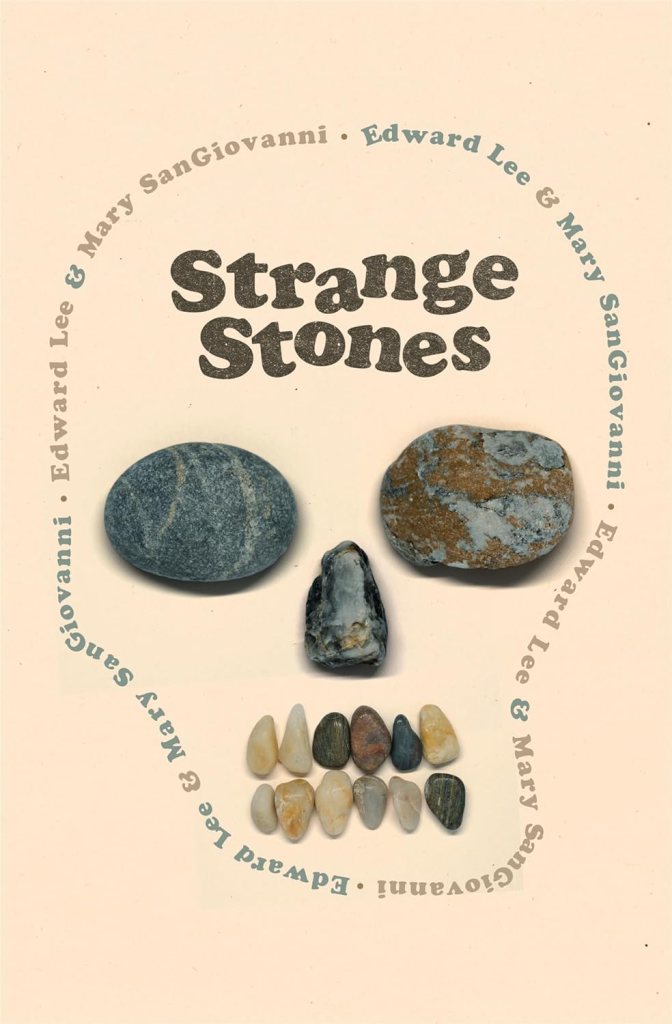
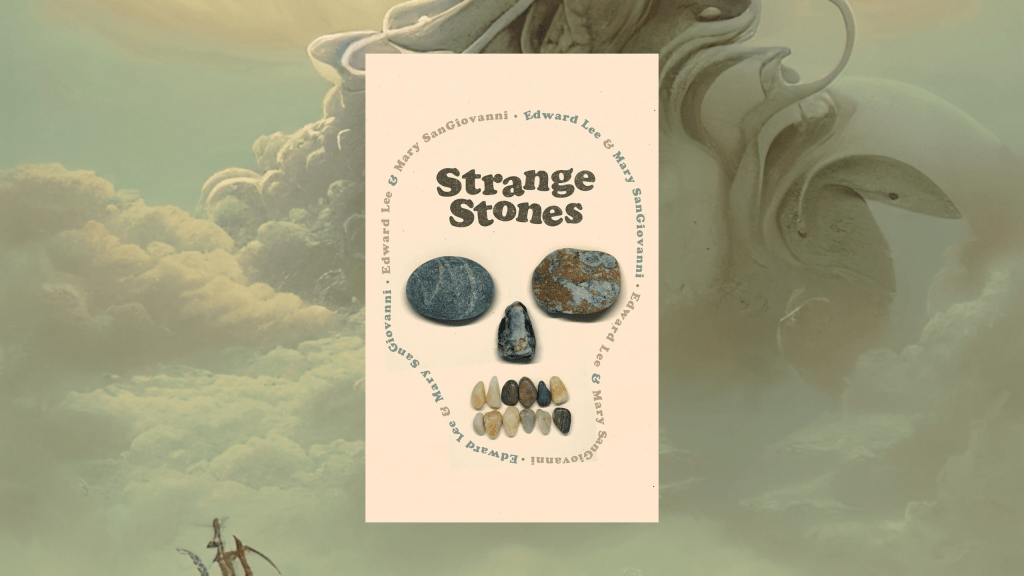
Strange Stones
Cult authors Edward Lee and Mary San Giovanni’s novel follows an insufferable horror-con lurker as he spurns the wrong woman and is cursed to a monstrous dimension full of Lovecraftian creations.
Professor Everard, weird fiction scholar and proclaimed critic of H.P Lovecraft’s works, is no stranger to making people mad. Giving convention presentations on the triteness and melodrama of Lovecraft’s work pays the bills, though. Sometimes he even gets laid.
When he angers a beautiful but dangerous witch and devotee of Lovecraft’s work, she casts a spell on him, sending him to a dimension where Lovecraft’s works are very real – and very deadly. Everard must find a way through this alternate dimension to get home, before the worst of Lovecraft’s horrors prove what a master of monstrosities he really was.
Edward Lee’s humorous transgressive style meets Mary San Giovanni’s literary touch to carve out the Lovecraftian dimensions that is Strange Stones.
In many ways, cosmic horror is a genre uniquely suited to the feminine—women have always faced an indifferent world that was not created for us. Edward Lee and Mary SanGiovanni run with that idea in Strange Stones (out now from Clash Books). In the grand literary tradition of turning Lovecraft against himself—like “The Ballad of Black Tom” or Lovecraft Country—the novel sends a horny academic on a nightmarish magical mystery tour through the author’s greatest hits as revenge for objectifying women. A wickedly clever slice of feminist cosmic horror, Strange Stones pulls off this central conceit with panache.
Professor Robert Everend is an unlikeable jackass. His popular academic screeds on horror writers have scored him plenty of tail at conventions, so he’s penned Over-Rated: The Life of H.P. Lovecraft. Miscalculation: he’s grossly misjudged the crowd’s worship for the patron saint of cosmic horror. A panel roundly and hilariously eviscerates him while he stares at women’s breasts, but it’s not a total loss; he manages to charm a super-sexy goth chick. Everend harbors dreams of getting lucky. Instead, Asenath doses him, and Everend winds up lost in Lovecraft land.
Spoiler alert: you really don’t want to wind up lost in Lovecraft land.
Explicitly, Everend lands himself there as a result of his behavior: he sees gorgeous Asenath as a piece of ass, and she sends on a Dantean tour of Lovecraft’s hell for it. Strange Stones is funny. It’s clever. It’s alternately gorgeous and ick-inducing. But it’s also a political novel with plenty to say about feminism in publishing in general and horror in particular. A sexual revenge tale that looses Lovecraftian horrors as revenge for female objectification, Strange Stones uses Everend both as a richly realized main character and a trope. We know this guy. We’ve met him at horror cons. His misogyny becomes the horror world’s as a whole—just as we know him, we know how indie horror treats women. Lee and SanGiovanni unleash cosmic horror upon him as punishment. I’d be lying if I said it wasn’t satisfying.
Lee and SanGiovanni also pull off something nigh impossible by penning a feminist novel without an ever-present female character. While she’s an unstoppably strong female lead, Asenath spends most of her time offstage; we follow the wisecracking, rapidly-regretting-his-misogyny Everend. He’s also forcibly feminized throughout the novel. His dosing is a peculiarly feminizing act—women are usually the ones who get drugged, not men. There’s a trigger warning here for attempted SA, and bone-shuddering sex scenes in which Everend’s masculinity is threatened mimic and exaggerate the sexual horrors women regularly witness. He’s menaced by the monstrous, by attempted r*pe, by dismemberment. By forcing Everend into a feminized role, Lee and SanGiovanni highlight the cosmic terrors faced by women without actually needing a woman present.
Even better: the horrors are beautiful. This is a novel that revels in setting; Lee and SanGiovanni adapted Lovecraft’s style for the modern reader and make his shuddering ickiness absolutely lovely. Their prose sings. Come for the plot and the politics; stay for the beauty. This language doesn’t quit.
Strange Stones is a brutal takedown tale, hilarious and horrifying in turns, with a message the indie horror world desperately needs to hear. Peak cosmic horror, peak feminism. This one earns a permanent place on the shelf.

 NightTide Magazine
Leave a comment