By Monica Ferrall
“If you do this, they will never stop being afraid of you.” It’s not a horror quote, but it rings out like something out of Mary Shelley’s Frankenstein. I imagine Mrs. Bates screaming it at Norman before he invades Marion Crane’s shower; I hear it running through Angela’s mind before she beheads Paul at the end of Sleepaway Camp and I hear it whispered gently to every preteen girl about to become a living host of Satan. It’s the quiet warning for every character who’s been Othered, itching to act on rage, about to be simultaneously cheered on and condemned, to be understood and made an example of all the same, right before becoming message board fodder as presumptuous fans debate the justification that turns an action into an overreaction.

As Frankenstein proves, while horror holds the power to monstrificate, it also holds the power to reveal the society behind the monster: the one that shaped it and neglected it. Horror is, for the monster in all of us, like looking into a mirror; we’re horrified but we can’t look away. The more deeply we look, the more flaws we see, and the more we sit in the discomfort of wanting to change. Horror introduces the monster, and if we’re paying attention, just when we think we can defeat the monster, we recognize the society that created it and understand in all its gravity, why it can never be defeated. Why it will creep back time and time again for one last scare? Horror reflects the damage of minimizing our truest identities; it reflects the grief of ostracization.
This is the second installment on the legacy of the Hays Code. The first introduced the invisible and buried queer in discussion with the supernatural, this installment will focus on the trope of the villainous queer and the development of the slasher film.
The invisibility of the queer in film, as discussed in part I, is harmful, largely because it leaves visibility open to only stereotypes. When we consider the trope of the villainous queer, it is all the more hurtful because it is the representation the outside world picks up on. While the invisible queer plays only for the queer audience, the villainous one plays for everybody – those familiar with queer culture and those to whom this will be their first introduction into queer folks.
But, to cast off these representations as negative is to oversimplify. To divorce them from their context is to divorce them from why these tropes persist and why they remain harmful. The point here is not to condemn but to consider why these tropes persist, what power they hold and what fears they betray.
A Killer in Women’s Clothing
To fully unpack the intricacy that is the ‘murderous man in a dress’ trope and why it’s been harder to kill than Michael freaking Myers, we must dig into three of the most famous examples (Norman Bates, Jame Gumb, and Angela Baker) and include a little bit of true crime.
Alfred Hitchcock’s Psycho (1960) gave life to, if not the first, then the most infamous, ‘villainous queer’ with the reserved and awkward Norman Bates. Norman Bates, in order to assuage his own guilt of matricide, has taken on the identity of his mother, “housing” both personalities in his brain. The two personalities alone (an aging mother and her doting son) are benign, but together, they form a dangerous mind, an unrestrained killer…and one that hides in plain sight. Norman Bates represents an update to the parable of a wolf in sheep’s clothing. And as clear as the text is that Psycho is merely a story about a boy and his mother, the subtext rides the coattails of 1950s psychology: the same psychological theories that ascribed homosexual tendencies to the ‘smothering mother’. To say that Bates had an unhealthily close relationship with his mother was to say he deviated from heteronormativity. As if homophobia wasn’t misogynistic enough, we must not only despise the effeminate man but also the mother who made him that way.
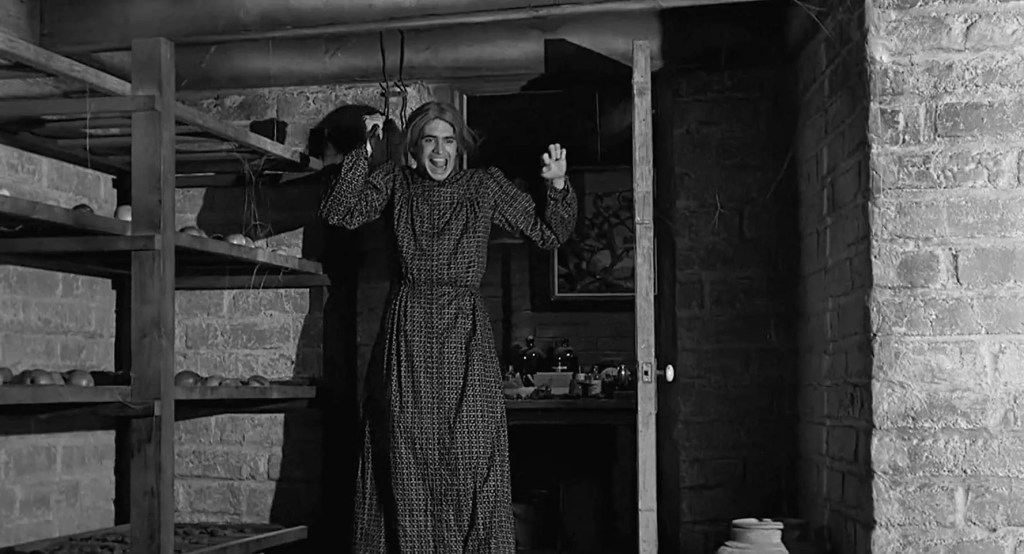
Directorial intent aside, this film, as a product of both the Hays Code and a homophobic society, uses transphobia to mortify the viewer. Norman’s wig and dress illustrate the unhinged mind that is shortly revealed in the voiceover. In this way, Psycho answers the coded queerness that lurks throughout monster movies. Here Norman Bates is coded queer not by queer viewers, but by heteronormative viewers. As Hitchcock is highly specific in clarifying that Norman Bates is not a ‘transvestite’, it makes it all the clearer that, to the uninitiated, he is homosexual. If he were able to operate in the heteronormative world, he wouldn’t transgress, but because he cannot, he becomes violent.
In 1980, the psychologically unsound themes would repeat – a doting mother and a young son clouding the same brain, but inspiring nowhere near the same cultural frenzy as Psycho. Friday the 13th (1980) became a cult hit, but not because of the gender-bent reveal of the killer. In fact, it plays very little into the legacy of the franchise. As much as we remember the unsettling scene in which Pamela Vorhees reveals her killer identity, echoing in her son’s voice ‘kill them, Mommy” — as soon as she’s beheaded, her story becomes Jason’s. Unlike Bates, her gender transgressions are enacted in voice only, never in body. The visual element of Vorhees dressed up as her son is never exploited, nor is her gender variance. As soon as Pamela reveals herself, she presents as strictly “female”. She ditches the hockey mask, jacket, and even the machete. She fights Alice hand to hand, unable to wield even a symbolic phallus. And then…her persona is abandoned. Her legacy is overtaken by the spectre of an 11-year-old boy. Whereas Norman Bates haunts us decades after the twist reveal, the angry middle-aged woman fades into a footnote. The image of her is not worth repeating.
Is it that simple? That a man in a dress strikes fear into the patriarchy in a way a woman in a hockey mask never will? As further analysis will reveal, a woman transgressing gender lines defines its own genre (as we dig into the possession film in part two), but it doesn’t seem to have a solid place within the killer in disguise trope. To fully unpack that, it’s time to examine the truth. That is the truth behind the ‘true’ story that started it all.
The “true” story of Ed Gein casts an illuminating backdrop to the stories that he has inspired and the cultural consciousness that fuels them. While the true story of Ed Gein is a horror story in its own right, it’s the sensationalized version of Ed Gein’s story that informs the cultural obsession. To set a few things straight: Ed Gein was a grave robber. While he re-purposed human remains in unthinkable ways (and yes, he likely did wear a mask of human skin), he was not a serial killer in the way his onscreen interpretations are. Also contrary to popular belief, he expressed no desire to be a woman, his mom or otherwise. This gender variance was an insidious detail – one of speculation only – that became replicated enough times in the media that it overpowered the story; so in line with the cultural consciousness that it could not be drowned out by fact or reason. It’s also the detail the horror films exploit.
A man in woman’s clothing. If it sounds transphobic, it should. Horror certainly reflects the significant transphobia that permeates past and present. Though to cast the idea out as merely transphobic is to oversimplify. Stare a little longer in the mirror and these films give us a well of information about societal fears.
As life changed drastically following World War II, horror became the playground for all gender-related fears to play out. And it’s no coincidence that slashers and the paranormal film — two of the subgenres to play with gender the most – often play out in the domestic space. It’s the threatening not only of lives but of domestic spheres – the American family, the American dream.
The tragic life of Ed Gein follows an era not only marked by cruelty and loss but changing domestic roles. As men fought abroad, women joined the workforce. And when the men came back, many women didn’t rush back to the homestead. They enjoyed having jobs and contributing to society outside of the house. But the men weren’t content with becoming househusbands. Or society wasn’t content to let them. The gender roles didn’t swap. Rather, the gender role of the women expanded while the gender role of the man remained confined.
And just while Hollywood was rinsing its hands of the Hays Code, America fell into the midst of the Red and Lavender Scares. Not only did McCarthy consider all homosexuals untrustworthy, but anything other than the nuclear family was a threat to democracy. Both the Second World War and the war against communism were fought in the kitchen, with a husband and dutiful wife at the helm. Gender roles were politicized, and economized. As such every horror film containing gender play also contains threats to a family’s economic status. Now that we understand the stakes — a deviation of heteronormativity is an attack on capitalism and democracy – we can see why breaking these gender roles was so consequential.
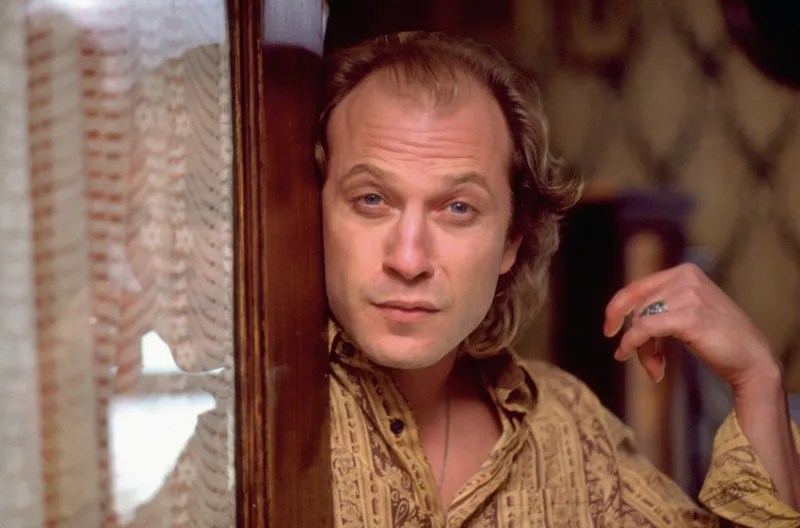
This ostracization, this societal grappling with the reconstruction of gender roles is most profoundly evident in The Silence of the Lambs (1991). Though it wouldn’t grace the screen until long after the decline of McCarthyism, its status as one of the most prolific (read “Oscar-worthy”) horror films of all time speaks its resonance with cultural fears regarding gender roles.
The Silence of the Lambs (a double-edged sword if there ever was one) simultaneously gives us one of the most queer-coded heroines and one of the most offensively transphobic portrayals. In one corner, we have Clarice, fighting for a place in a ‘man’s world’ at the FBI headquarters. While she has the job, she doesn’t have the respect. She’s always out of the loop, never calling the shots. When she does get the chance to interview Hannibal Lecter, it is only so her male colleagues can use her as a pawn. In the other corner, we have Jame Gumb, or “Buffalo Bill”, the effeminate serial killer making a suit of human skin. Gumb is the ultimate displaced male. Comparatively, the no-less-disgusting cannibal, Hannibal Lecter, is dignified in that he can maintain his profession. Lector’s a renowned psychiatrist and his supposed affluence and education allow us to look past his serial murders. Yet Gumb does not earn the same dignity. Gumb lives in the basement of a shoddy house. He’s seen as uneducated, and economically put out. He has a profession – he’s a dress-maker – but it is a ‘women’s profession’. The message is clear: A man in a woman’s world is despicable, whereas a woman in a man’s world is merely tiresome. While Gumb is a “freakshow”, Starling is allowed to exist in both worlds because she poses no real threat.
Notably, while both Psycho and Silence of the Lambs go out of their way to clarify Bates and Gumbe’s sexuality explicitly — that is to explain that neither of them are transvestite or transexual as was the nomenclature of the time — it acts as mere plausible deniability. It allows audiences to partake in the monstrification of the trans body without being explicitly ‘transphobic’. Perhaps this is part of the trope’s draw, the subjugation in and of itself.
As much as this clarification does little to negate the still-evident transphobia, the insertion of the lines hints at a much deeper fear – not only of queerness but of women yielding the power of a man. Right down to the literal knife that both Bates and Gumb use (it is a man’s weapon after all.) Post WWII, these shifting gender roles and women in the workforce became a situation to control. Faced with disruption, the patriarchy lashed out, finding ways to restrict how much money a woman could make, what sort of jobs she could take, etc. The ‘killer man in the dress’ signifies more than transphobia; it signifies a man emasculated without family, without vocation (this is especially true in Texas Chainsaw Massacre (1974)) and perhaps, it signifies a woman with the brute strength to overpower a man.
While transphobia certainly contributes to the phenomenon, it’s worth looking deeper. As Carol Clover notes of the monstrification of the female in Men, Women, and Chainsaws, we must also note of the villainous queer: that “We have as much to learn…from what [they] are meant to conceal as from what they are meant to represent”. This is exactly the context in which to analyze the more recent instances of the trope, most notably Insidious: Chapter 2 (2013). Insidious merits deeper analysis, since it falls under the supernatural queer umbrella, which we’ll discuss in part two — but for now, a quick look at the possession of Josh Lambert. The father of the household, Josh becomes possessed by “The Bride in Black”, the spirit of a man forced into effeminacy for very Norman Bates-esque reasons. Josh Lambert is not exactly father of the year before he becomes possessed; Insidious is at its core a story of parental fears, specifically in failing your children and passing on your worst qualities. Though it’s interesting to note that when Josh is possessed by the Bride in Black, he does not become effeminate like the Bride is purported to be. If anything Josh presents more “masculine”. His voice deepens, his cadence harshens. Josh’s possession covers up his passive nature with an overcorrection – the Bride in Black’s gender variance perhaps a mask for his own. If Josh were possessed by a more heteronormative spirit, the stark contrast of their personalities may be too much to lay bare, lest we confuse Josh’s inadequacies as a man with his inadequacies as a heterosexual.
The Horror of Forced Gender Roles
Repeatedly, the societal mirror that is the horror genre seems to understand the psychological, emotional, and physical horror of having gender roles forced upon oneself in visceral detail. This is best explored in the beloved and controversial Sleepaway Camp (1983).
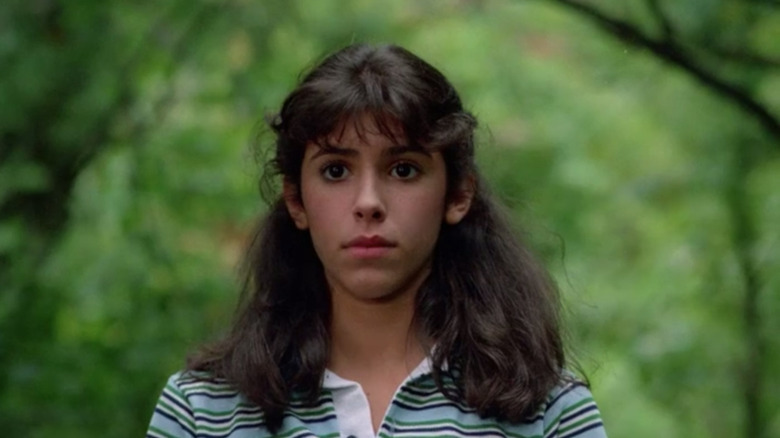
Sleepaway Camp is in many ways a re-imagining of Mary Shelley’s Frankenstein, though perhaps not on purpose. As Frankenstein tells an allegory of folks society has othered, and the real monstrosity is the scientist who created him, so does Sleepaway Camp tell the story of a child who struggles to fit either gender binary and is ridiculed for it, all because their adoptive mother forced a new gender upon them. The real horror in Sleepaway Camp is the stepmother and her selfishness as Angela (she/her pronouns) answers her struggle to fit in with the girls without being teased and fit in with the boys without being kissed – with violence.
As low-bar of a slasher film Sleepaway Camp may be, it hits two philosophical arguments that more determined films fail to get right. First, Sleepaway Camp fully aligns the audience with the killer. While most slashers begin with the killer’s POV, they switch halfway through, once a few likable characters have been established. Traditionally, we go from watching a bimbo or pervert get their just desserts via machete, to a heart-breaking kill of a more beloved character, to preparing for the big fight with the Final Girl, only to see the killer vanquished. Sleepaway Camp, on the contrary, features no Final Girl. From start to finish, we sympathize with the murderers as they kill pedophiles and bullies. And despite an ending that cannot be ignored, this is exactly why Sleepaway Camp sometimes gets credit for using the ‘cross-dressing killer’ trope positively, because we stay aligned with the queer character and root for them as they avenge.
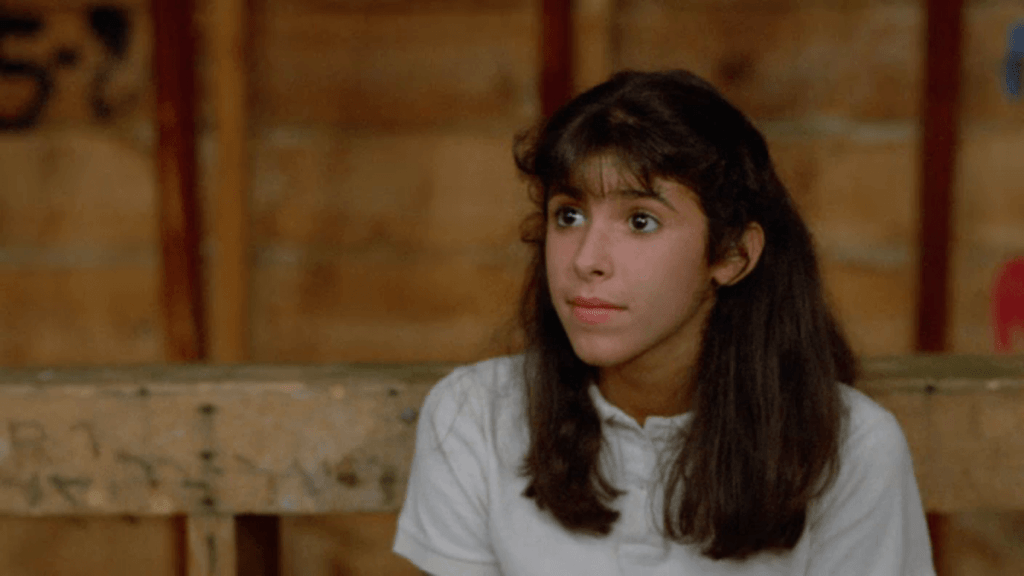
The people Angela punishes in Sleepaway Camp is another significant detail that adds depth where other films fall short. Again, in the traditional slasher, victims transgress moral behaviors like drinking and premarital sex and we see them murdered for their indulgences. In Sleepaway Camp, we see them murdered because of their maleness or because of their femaleness. While that seems like an affront, it signifies Angela’s own lack – that she can exist in neither world – thus marking her as sympathetic and justified rather than simply retributive. For example, the cook is killed because of his ‘male’ sexual perversions and desire to assault pre-pubescent girls, and another is killed because his ‘friends’ won’t check to see if he’s drowning. The females, on the other hand, are killed after making assertions about Angela’s delay in hitting puberty and her assumed consequent jealousy of their bikini bodies. Intentionally or not, Sleepaway Camp provides commentary on the toxicity of both gender roles and the confinement every character feels within them – not just Angela. Angela herself fits into neither world, which is the real horror of the film. The construct of the gender binary (on top of the pressure the stepmother imposes to have a boy and a girl) is what causes Angela’s destruction. Had Angela existed in a world where they didn’t have to be labeled a girl or a boy — or perhaps just been allowed to be a boy — there would be no violence.
The Frankenstein story plays into the film’s final moments. The film ends with Angela naked, holding the severed head of the boy who romantically pursued her, as the camp counselors close in. And most hauntingly of all, they don’t scream “Oh my god, Angela’s the murderer!”, they scream “Oh my god, Angela’s a boy!” This moment exposes society’s toxic fixation on gender roles and genitalia as if what’s in her pants is far more important than morality itself.
The final shot is markedly unsettling. Lest we weren’t sure how we were supposed to feel about Angela’s gender identity – it is undercut with a shrill violin accompaniment and jarring camerawork, the reveal is not just Angela’s sex as it were, but the reveal of a trans body covered in blood, a horrible facial expression drawn out reminiscent of Munch’s The Scream. The image also can’t help but draw a comparison to Ota Benga, the Mbuti man forced to bare his filed-down teeth at visitors in the Bronx Zoo. Like Frankenstein, like Ota Benga, the real horror is what society has done to Angela. If Angela is monstrous — it’s because we made her that way. All too evidenced by the focus of the camp administration on Angela’s genitalia, as opposed to the severed head at her feet. Sleepaway Camp’s ending accompanies the shock of genitalia with the grotesque, as Buffalo Bill/Jame Gumb dances with a disembodied scalp on their head for their full frontal reveal, and Angela holds a severed head. Both images of full frontal nudity are accompanied by bloody, disembodied body parts giving the viewer no choice but to view with disgust.
The fascination with genitalia and use of full frontal nudity as a visual assault within horror is not exclusive to the queer body, of course. In horror, the body becomes the visual translation of the mind, whether it be pure or monstrous. While full-frontal nudity sometimes represents and foreshadows vulnerability, it also signifies the monstrous…a warning of something more dangerous. In recent examples, both Nosferatu (2024) and Barbarian (2022) use full frontal nudity to convey a primitive mind, one we see to be more animalistic than human. Even the nudity of the bathtub lady in The Shining (1980) predicts her predatory nature.
Phallic and Vaginal imagery is used predatorily as well, often victimizing characters: The infamous tree root in The Evil Dead franchise, the vaginal-like slash that appears on Max Renn before he can be brutalized by Videodrome in Videodrome (1983).
Horror engages with the space between two genders in the same way it often engages with disability. It deviates from the ‘norm’ to jar the audience. It presents these bodies as grotesque and invites us to stare. Though horror uses the human body as an object of disgust in endless ways, this exploitation of the trans body is perhaps the most dehumanizing.
The culture of homophobia compounds. The more society fears gender variance, the more the individual struggles with their own identity through art. The more the art reflects a world that fears The Other and must be overcome. And as we know with horror films, the hero doesn’t always win.
Note: I am a queer ciswoman with an analysis that is limited to my research and point of view. If you’d like to read more about queer representation in horror from a BIPOC or transgender perspective, I highly recommend Robin R Means Coleman’s Horror Noire: Blacks in American Horror Films from the 1890s to the Present. I also recommend checking out Laverne Cox’s documentary Disclosure for a more in-depth look at transgender representation from transgender folks within the film industry.

 NightTide Magazine
Leave a comment