By Audriena Comeaux

Kasi Lemmon’s Eve’s Bayou (1997), a film from the 90s featuring a star-studded cast, remains a timeless work in both Black cinema and horror. With performances by Samuel L. Jackson, Meagan Good, Jurnee Smollett, and Diahann Carroll, it delves into themes of family, betrayal, and superstition, all wrapped in the mystique of voodoo.
While officially categorized as a drama, Eve’s Bayou incorporates rich elements of horror: fortune tellers, premonitions, curses, and voodoo spells. These supernatural elements are woven into the fabric of the Batiste family’s life, influencing their decisions and interactions. Set in Louisiana, a region rich with cultural and historical ties to Black folklore, the film invites viewers into a world where belief in both prayer and superstition coexists.
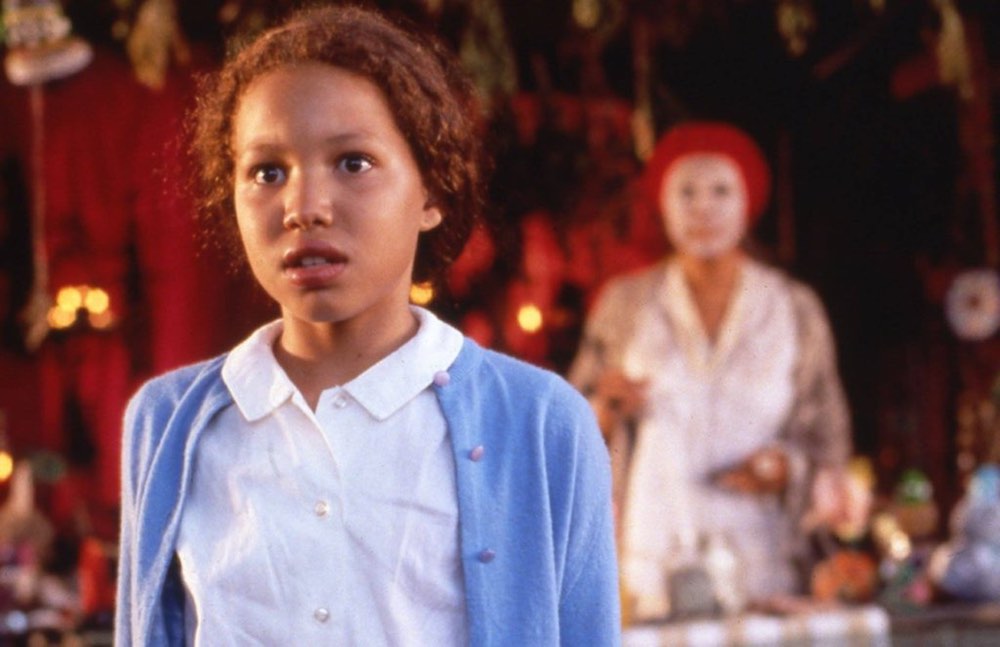
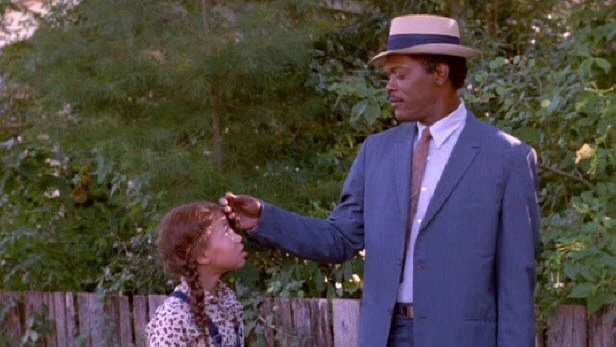
Jurnee Smollett (Full House, Jack, Birds of Prey and the Fantabulous Emancipation of One Harley Quinn) stars as Eve Batiste, the middle child in a complex family dynamic. Her father, Louis (Samuel L. Jackson), is a charismatic but flawed figure, while her mother, Roz (Lynn Whitfield), struggles with a growing emotional distance from him. Tensions within the family deepen as Eve’s older sister, Cisely (Meagan Good), competes for their father’s affection. Their emotional turmoil is amplified when Eve witnesses a betrayal, her father’s infidelity at a family gathering, which sets in motion a chain of events that will change everything.
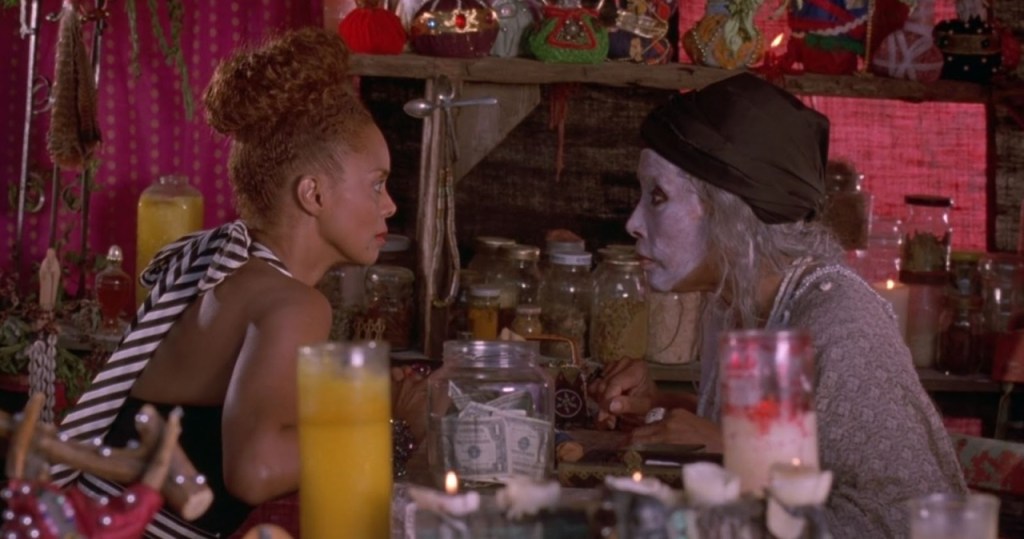
As the story unfolds, Eve’s Aunt Mozelle (Debbi Morgan), a well-known fortune teller, becomes an important figure in Eve’s understanding of her world. Mozelle practices voodoo, a practice she insists is only used when necessary, and her presence throughout the film adds a layer of mysticism. Mozelle’s interactions with clients, including her own use of voodoo spells, evoke a sense of both awe and caution, as Eve begins to question the power of these rituals.
In a pivotal moment, Eve’s family visits another fortune teller, Elzora (Diahann Carroll), who delivers a chilling prediction: Roz’s children are doomed, and Mozelle is cursed, doomed to lose every man she loves. The curse looms over the family, making Eve’s already fragile world feel even more uncertain.
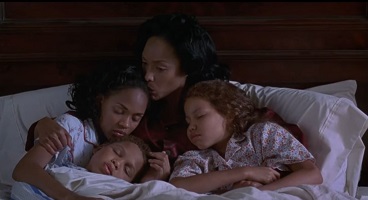
In an attempt to regain control, Roz and Mozelle take drastic measures, locking their children indoors in an effort to protect them. However, the growing tension, particularly Cisely’s adolescent rebellion, becomes undeniable. As she sneaks out for a makeover and defies her mother, the film touches on themes of autonomy, generational conflict, and the fear of an uncertain future. The film takes a darker turn when Cisely experiences a controversial and deeply unsettling encounter with their father, leading Eve to seek revenge. Driven by the need to confront her father’s actions, Eve visits Elzora, who performs a voodoo ritual that curses her father. This curse leads to Louis’s tragic death, setting off a series of events that leaves Eve to grapple with her role in the destruction of her family.
The performances in Eve’s Bayou are nothing short of extraordinary. The child actors, especially Smollett, deliver incredibly nuanced performances that elevate the film’s impact. As Eve learns of her father’s death, her grief, confusion, and guilt are palpable. She begins to question her sister’s version of events and uses her aunt’s gifts to discern the truth. This emotional turmoil reflects a broader theme of the film: the search for truth, both personal and familial, amidst a web of lies, manipulation, and superstition.
What makes Eve’s Bayou stand out is its ability to blend elements of horror and drama, creating an experience that is both unsettling and deeply human. The film’s handling of Voodoo and superstition is not exploitative but instead serves as a cultural lens through which the characters navigate their challenges. The supernatural is not treated as a mere plot device but as a vital part of the characters’ lives, something they rely on for both protection and retribution.
This thematic focus on Voodoo is significant in the context of Black horror cinema. While Voodoo and superstition have often been used in film to stereotype or marginalize Black characters, Eve’s Bayou is different. The film respects the cultural and spiritual significance of Voodoo, presenting it as a tool for survival, empowerment, and justice. The characters who practice it do so with intention, and the rituals are portrayed as both sacred and dangerous. In this way, Eve’s Bayou stands alongside other influential films like Candyman and Child’s Play, which also incorporate elements of Black folklore and spirituality. These films, much like Eve’s Bayou, challenge the mainstream portrayal of Black characters and introduce cultural practices that are often overlooked or misrepresented in mainstream horror.
Candyman, for example, centers on a tragic Black figure, a slave murdered and forgotten by history, whose revenge is fueled by the desire to be remembered. In Eve’s Bayou, the title character, Eve, is named after an ancestral figure who used voodoo to protect her family’s land. Both films share a connection to the supernatural and a deep sense of cultural heritage, allowing Black horror narratives to explore themes of vengeance, identity, and legacy.
The portrayal of voodoo in both Candyman and Eve’s Bayou is integral to the storytelling, giving these films a richness that goes beyond the typical horror tropes. These cultural elements are not just plot points but reflections of the characters’ lives, histories, and struggles. As these films have shown, horror can be a powerful vehicle for exploring cultural identity, as well as universal human fears.
Eve’s Bayou also presents a meditation on the complexity of family relationships and generational trauma. As Eve struggles to understand her father’s betrayal and the role she played in his death, she must confront the legacy of secrecy and pain that has been passed down through the generations. This emotional undercurrent is what makes the film so impactful—it’s not just about the supernatural events that unfold but about the deeper psychological and emotional journeys the characters undergo.
The film’s use of superstition and folklore also speaks to a larger conversation about the role of Black people in horror. While voodoo has often been depicted as a villainous force, Eve’s Bayou challenges this trope by presenting it as a complex, multifaceted practice. The voodoo rituals in the film are not inherently evil but are used to address real human suffering. This reframing of the practice aligns with the film’s broader goal of presenting Black characters in a nuanced light, where their beliefs and traditions are respected rather than caricatured.
In considering the legacy of Eve’s Bayou, one must also acknowledge its role in shaping how Black horror is viewed in both mainstream and niche audiences. The film offers an alternative to the often one-dimensional portrayals of Black characters in horror films. It presents a diverse range of characters with distinct personalities, motivations, and complexities. This focus on character depth is part of what makes the film so powerful, it’s not just the supernatural elements that resonate, but the emotional and psychological complexity of the characters.
The film also highlights the importance of family and community, with the Batiste family at the center of the narrative. In the end, it is Eve’s relationship with her family that drives the emotional core of the film. Her journey of self-discovery and reconciliation is what ultimately makes the horror of the film so poignant. The haunting final scenes of Eve’s Bayou leave viewers with a lingering sense of ambiguity. The film never fully reveals what truly happened between Cisely and her father, leaving it up to the audience to interpret. This open-endedness allows for a deeper exploration of the themes of memory, truth, and trauma.
Eve’s Bayou is a film that continues to resonate with audiences, both for its rich cultural context and its exploration of universal human emotions. It is a rare example of a horror film that balances supernatural horror with deeply human stories. By blending themes of family, betrayal, and cultural heritage, the film not only entertains but also challenges audiences to reconsider the role of Black characters and cultural practices in horror.
Eve’s Bayou is a groundbreaking film that offers a unique and powerful perspective on Black life, superstition, and the horrors that lie within the human experience. Its legacy in both Black cinema and horror is undeniable, and it continues to be an important work in the genre. The film’s significant portrayal of voodoo, combined with its emotional depth and stellar performances, ensures that it remains a timeless classic in horror history.

 NightTide Magazine
Leave a comment