“I’m an English teacher, not f’n tomb raider.”
By Kristie Felice
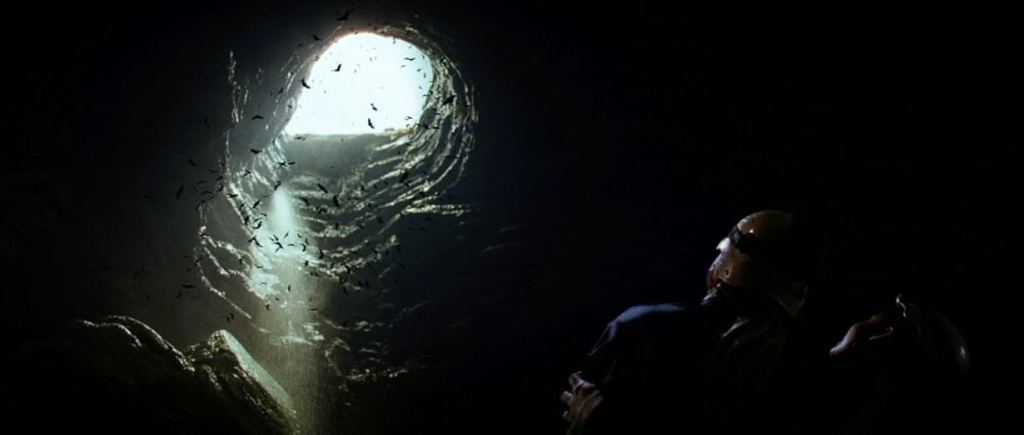
No one I know that has seen The Descent (2005), has forgotten it. We all remember the claustrophobic atmosphere and the terrifying creatures that commanded the dark cave a group of six women discovered by accident. And yet, it has been twenty years since the film was released.
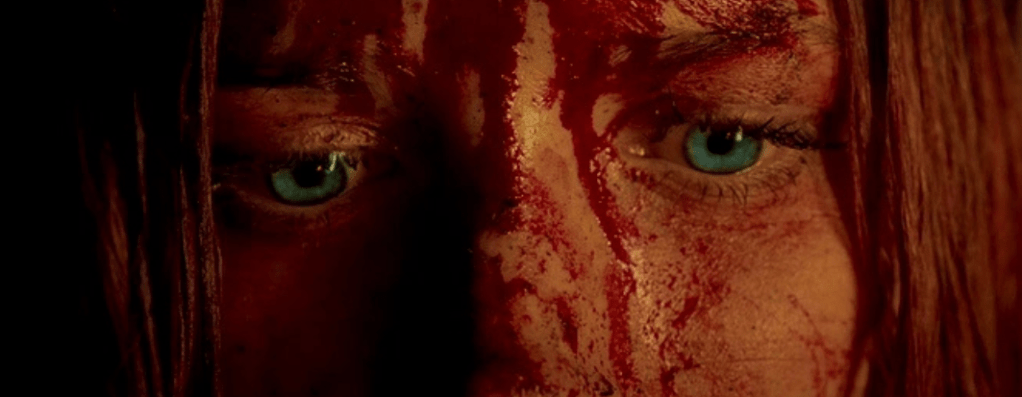
The British horror-thriller opens with a quick lesson of who our major players are in the story. It doesn’t take long at all before we sense there’s some tension in this friend group that one of our leads, Sarah (Shauna MacDonald), doesn’t seem to be privy to. This opening sequence tells us everything we need to know without doing too much. There’s no drawn out character development in the beginning, we just get thrown into this world. It sets the stage for the dynamics between the characters and also gives us a baseline for what to expect from this film. Written and directed by Neil Marshall (Dog Soldiers), the film does not wait around to pull viewers in. After witnessing a bloody, metal rod spike through Sarah’s husband Paul (Oliver Milburn) in a car accident, it’s evident we are in for something special. Marshall takes us on a simple, yet effective journey into the depths of an uncharted cave and all you can do is hold on for the ride.
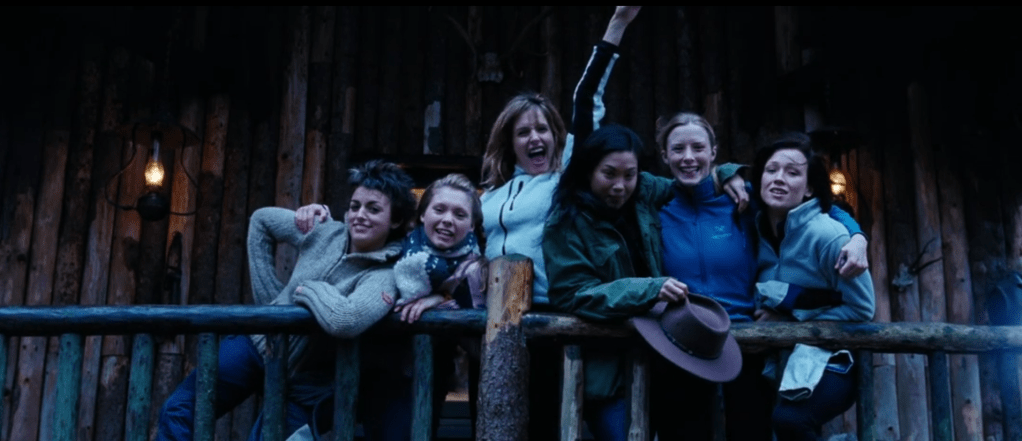
The Descent picks up one year after Sarah lost her husband and daughter in the accident and she meets up with her friends, Juno, Beth, Holly, Rebecca and a newcomer to the group, Holly. Juno (Natalie Mendoza) has invited everyone to check out a well known cave called Boreham Caverns in the Appalachian Mountains, serving as a way to get everyone back together again. We see Juno leave the cavern map in the car and it is later revealed, after their way in collapses behind them, that the cave is indeed uncharted and she wanted them to discover it together. Juno is a layered character. She is a villain in some ways, undeniably flawed. She, along with the other women in this film, are very strong and intelligent women, something you don’t normally see in horror. I admit, I am one to complain about how men write female characters, especially in horror films. But Marshall did his homework. He captures the nuances between these friends, the conversations, it all felt so genuine and authentic.
Once Juno’s mistake is exposed, she attempts to support her error by claiming they could name the cave after Sarah. Sarah, who just overcame her extreme anxiety after getting stuck in a tunnel and now hearing that Juno brought them into a cave system that no one has charted before, she’s not in the mood to hear anything Juno has to say. The elephant comes into the room after Beth chastises her from bringing Sarah into the cave after all she’s been through and she responds with, “We all lost something in that accident.” In the opening scene, Paul helped Juno out of the whitewater raft, and the tension between Paul and Sarah showed us that there was something suspect going on between the two of them. Juno is grieving. She lost her lover and the relationship she had with Sarah. Her bringing them into the cave was more about her response to that grief and her unresolved trauma. Grief that Sarah is still in the dark about. Marshall’s descent is not only about the cave, it’s about his characters too.
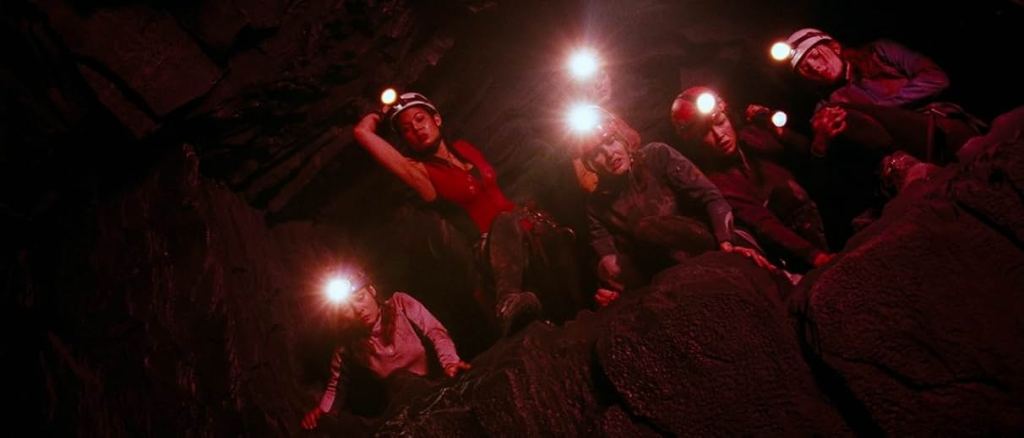
When watching this film for the twentieth time, I’m sure, you start to pick up on things. Like moving things in the background, things that are lurking. These women didn’t come into this cave prepared enough. We witness them fail time and time and again at escape because of it. They don’t have enough rope, or hooks. These women aren’t dumb, they were set up to fail because of Juno’s lack of communication. And just when you think things can’t get any worse as they travel throughout the tunnels looking for a way out, Holly gets injured. Sarah tries to explain to the group that she’s been seeing someone, or something in the cave with them. But no one is listening to her. She has gone through a lot, after all. This is the one trope that I didn’t like to see in this film. But hey, it was 2005. Without much light, they have to rely on Holly’s video camera’s night vision to look around (as a fan of found footage, I enjoy this addition!). While panning the camera, we get our first close-up glimpse at what Sarah’s been seeing, a creature Marshall calls a crawler, standing right behind them.
For most of the film, the women are not only trying to find a way out, but trying their damnedest to not get eaten and torn to shreds. There’s a lot of that in this film, by the way. Bodies are dragged, stretched, torn, and broken. These women do not go out easily. And that is one of the things I enjoy most about Marshall’s writing here. It’s a brutal road to survival for these women, most of which succumb to the fierce nature of the crawlers. Marshall described them as cavemen that didn’t come up from underground. “They’ve evolved in this environment over thousands of years. They’ve adapted perfectly to thrive in the cave. They’ve lost their eyesight, they have acute hearing and smell and function perfectly in the pitch black. They’re expert climbers, so they can go up any rock face and that is their world.” In an interview with Sunday Mail with John Millar, Marshall went on to say, he’d kept the creatures hidden from the group right up until the last moment. “I wanted to see what the effect would be. It really helped build up the tension and anticipation.” Cinematographer Sam McCurdy uses the darkness as a tool, a way to make us feel like we are in this cave too. He, along with Marshall worked in tandem to produce scenes full of tension and nightmarish dread.

When Sarah and Juno are the final two standing, these women go into warrior mode. I love Sarah’s character arc as she’s literally fighting to live. Sarah has already survived what should’ve been the worst moment of her life, a moment that should have broken her, yet she’s still standing. The choreography and emotion these actresses display (in the dark!) is astonishing. In the final showdown, Sarah sees Juno for who she really is and leaves her alone to fend for herself while she takes the final climb out. When Sarah makes it to the truck, she takes off, screaming and finally free from the hellscape behind her. Once she’s put enough miles between herself and the cave, she pulls over and wails, feeling the loss of her friends and the person she was before she went into that cave. The Descent was released in the UK a year before we saw it here in the US and it ended quite differently than it did here. In the original ending, Sarah vomits and she sees Juno’s ghost before she wakes back up inside the cave, about to be taken over by the crawlers. In the US version, we don’t get any of that. Instead the film ends after Sarah sees Juno’s ghost. It is reported that Lionsgate felt that the original ending was too bleak for American audiences, something we tend to see with US versions of foreign films (i.e. See No Evil). Even with the change to the ending, The Descent has still left its mark on the horror genre.
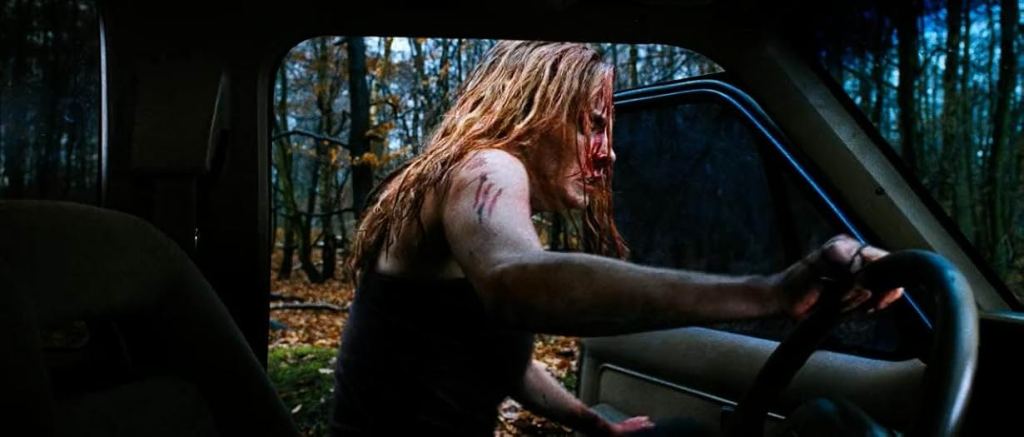
With its simplicity in storytelling and strong female characters, The Descent continues to make an impact on horror. The crawlers are terrifying on their own, but combined with the ever-growing tension, darkness, and claustrophobic setting (that they built by the way), The Descent is a masterclass in creating a horror film that stands the test of time. It flips horror expectations on its head and delivers a powerful, nail biting experience and dynamic performances from its female-led cast. There are themes of grief, trauma, survival, and friendship. The film balances all of this with action and horror, never really faltering. In my opinion, The Descent is one of the best horror films ever made.
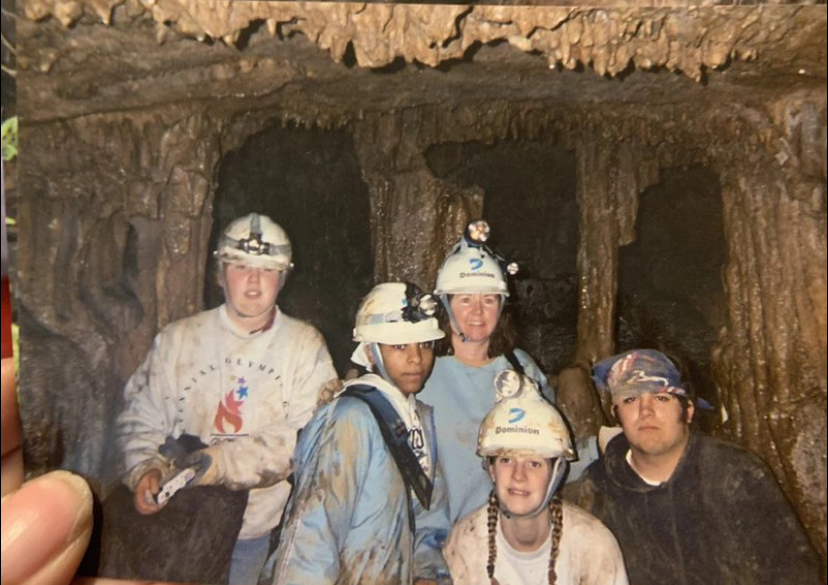
A picture of me in high school inside a cave after seeing The Descent that summer. Let’s just say, I wasn’t having the most fun.

 NightTide Magazine
Leave a comment