By Mo Moshaty
“This is incredible. Here we are: privileged, independent, the hope for the future right here at this table, and not one of us knows what we’re gonna do with the rest of our lives.” – Arch
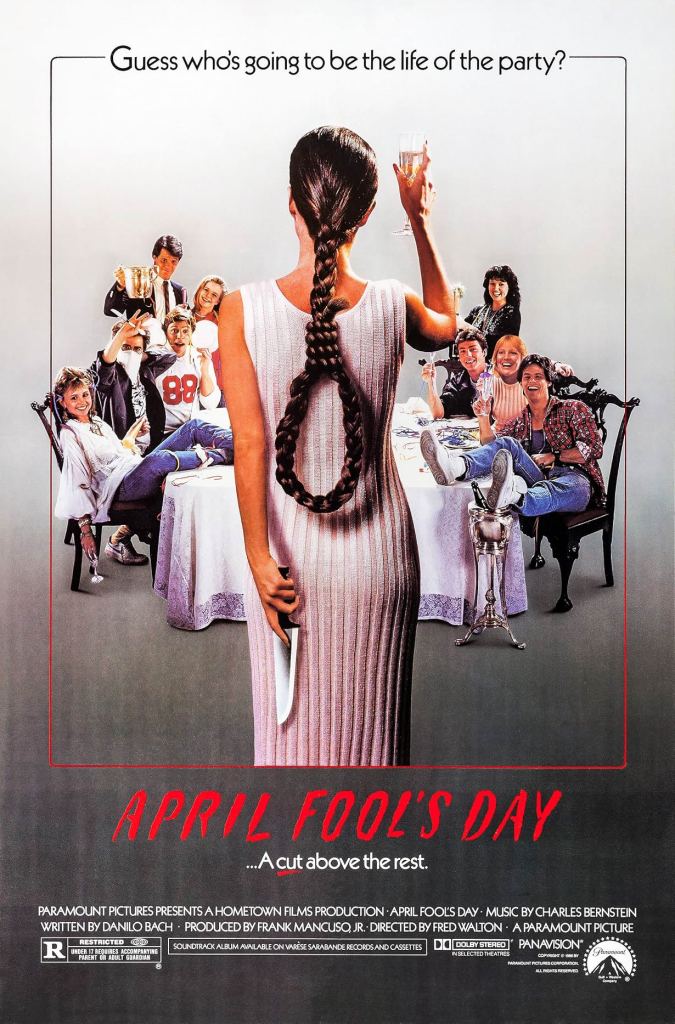
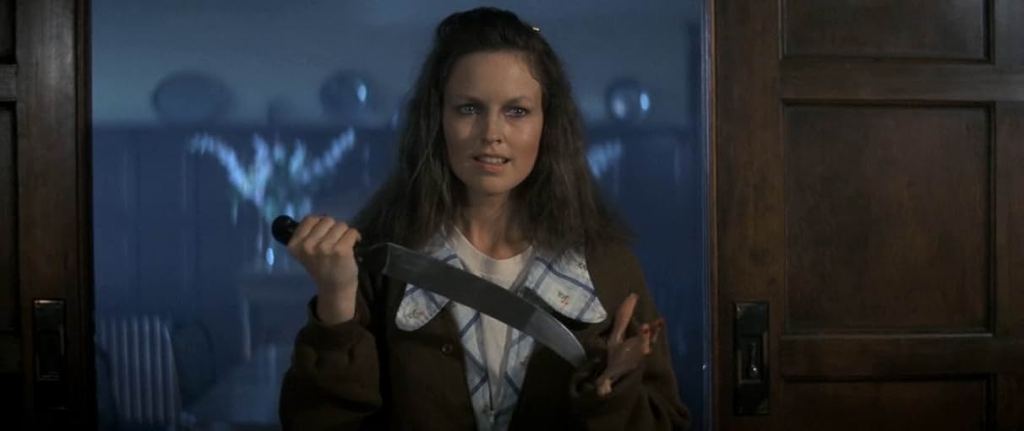
Danilo Bach and Fred Walton’s April Fool’s Day (1986) is a slasher film with a wicked sense of humor, released during the golden age of slasher films. It lures the audience into thinking they’re watching another Friday the 13th-style bloodbath but flips the script with a shocking, and oddly refreshing, twist. We follow a group of college friends who take to gathering at their wealthy friend Muffy St. John’s mansion, for a fun and for some, sex-filled weekend.
One by one, they seem to have been brutally murdered….or were they???
Starring some bright, learned and up and coming young thangs: Jay Baker,
Deborah Foreman, Deborah Goodrich, Ken Olandt, Griffin O’Neal, Leah Pinsent, Clayton Rohner, Amy Steel and Thomas F. Wilson, its surprising it wasn’t a blast-off box office success. But I’m incredibly happy that it tuned into a slice of cult cinema that was truly ahead of it’s time in the meta-horror genre.
Horror fans love a good twist and April Fool’s Day (1986) delivers it in spades, or should we say trick candles? Unlike its blood-soaked slasher contemporaries, this film pulls off a magic trick of its own, setting up a classic horror scenario only to yank the rug out from under the audience. But like any good prank, the story behind the joke is just as interesting as the punchline.
If you thought the film played it too safe in the end, you should know that it nearly took a much darker turn. In an alternate ending that was actually filmed (and then buried by a Paramount), Muffy’s supposedly dead twin brother, Skip, actually does kill her for real after the prank reveal. The intention was to leave the audience wondering if they’ve been fooled twice, but ultimately the studio decided to keep the films playful spirit intact, ensuring that April Fool’s Day would be remembered as a cheeky genre outlier rather than another tragic slashfest.
When April Fool’s Day hit theaters, it grossed a respectable $12.9 million, which, well, solid didn’t exactly put in the same put it in the same league as horror heavyweights like A Nightmare on Elm Street or Friday the 13th. However, time has been kind to this unconventional horror comedy and thanks to its incredibly unique premise, it has since gained a devoted cult following. Horror fans have reassessed it as an early sample of meta-horror or a film that slyly deconstructs genre tropes years before Scream made self-aware slasher flicks all the rage.
The film’s producer, Frank Mancuso Jr, was the driving force behind several Friday the 13th sequels, and believe it or not, April Fool’s Day almost got that same treatment itself. Tentatively titled April Fool’s Day 2, the follow up would have explored Muffy’s new murder mystery business, where guests became part of an even deadlier game. Sounds promising, right? Unfortunately, the idea never got off the ground, likely due to the film’s mixed reception at the time. A 2008 remake attempted to revive the concept, but much like an unconvincing gag, if fell flatter than a flan in a cupboard; lacking the wit charm and originality of the 1986 classic.
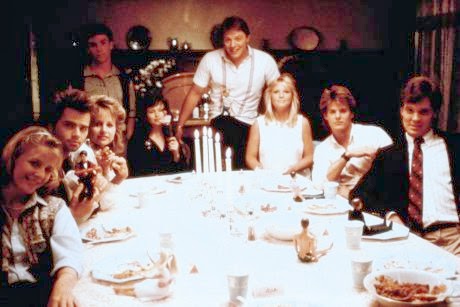
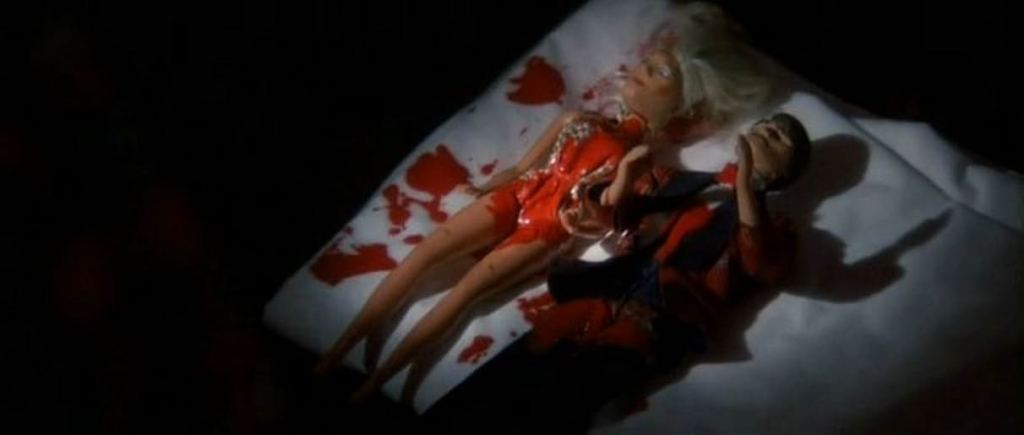
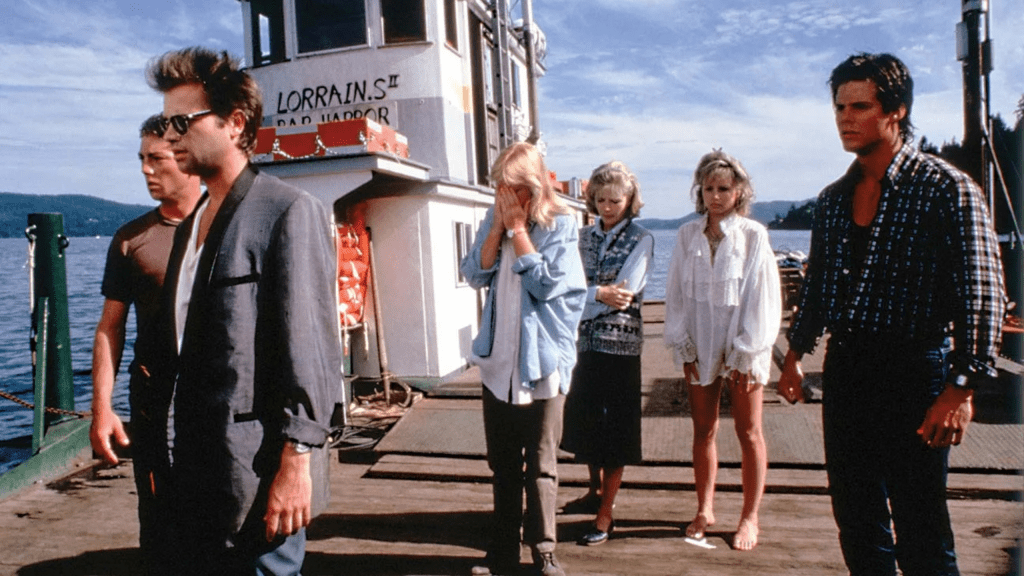
Tom Wilson, Jay Baker, Deborah Foreman, Deborah Goodrich, Griffin O’Neal, Ken Olandt, Leah Pinsent, Clayton Rohner, and Amy Steel in April Fool’s Day (1986) Paramount Pictures
And in a nice change of pace from people hating the absolute guts out of their co-stars, I think one of the reasons April Fool’s Day works so well is the natural chemistry among its cast. Deborah Foreman (Muffy), Amy Steele as Kit (Friday the 13th Part 2) and Thomas F. Wilson as Arch (Back to the Future’s legendary Biff Tannon), bonded before filming and it shows. Their camaraderie makes the final prank reveal all the more believable because, chile, only a ride or die could go through something like that and still want to hang out afterward.
Before Scream gave us self-aware horror on a silver platter, April Fool’s Day was already deconstructing the genre. The film sets up a classic slasher archetypes, the Final Girl, the nymph, the prude, the prankster, the outsider, etc., only to turn them completely on their heads. Instead of punishing characters with gruesome deaths, it lets them live, using audience bias and expectations against them in a wocka wocka cheeky way. And while April Fool’s Day doesn’t have a true killer, it does toy with the idea of an unexpected antagonist. Horror loves a seemingly harmless character turning out to be the deadliest of them all. Case in point: Carrie White & Angela Baker.
But 80s horror wasn’t just about creative kills. It often served as a mirror to the anxieties and social structures of the time. April Fool’s Day blends psychological horror, slasher tropes, and whodunit mystery subtly commenting on wealth, racial privilege (because..ahem…most 80s horror casts are predominantly white kids), and power dynamics.
Let’s take a look at the psychological horror and the privilege factor. The film setting being a posh weekend retreat for affluent white college kids, reflects the excess of the era. These characters assume they’re untouchable, but the story, albeit playfully, strips away their safety net, challenging the notion that privilege equals immunity from consequences. These kids can’t buy, bribe or stiff shoulder anyone into doing their bidding, or keep them safe.
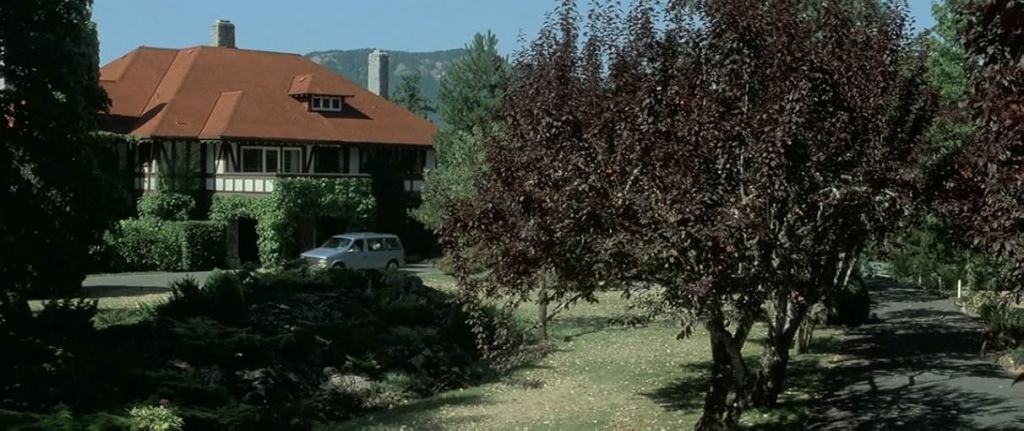
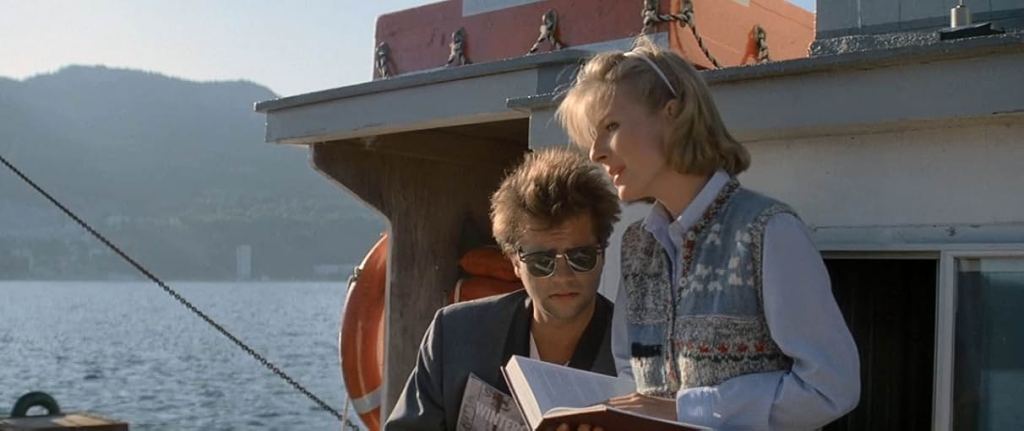
The slasher element really speaks to rebellion and punishment. The 80s slasher craze often reinforced conservative values, punishing teens for partying, having sex, drinking or generally having a good time. April Fool’s Day initially appears to follow this formula before pulling the ultimate reversal, suggesting that horror itself is a construct, something to be manipulated. What fun!
And our Agatha Christie-esque whodunnit shines some light on trust and betrayal. The film leans into the 80s obsession with identity and deception. With social cliques at an all-time high during this era, April Fool’s Day plays with the fear of betrayal among friends, the fear of no longer belonging or invited, mirroring teenage anxieties about popularity, trust and survival in an increasingly competitive social landscape.
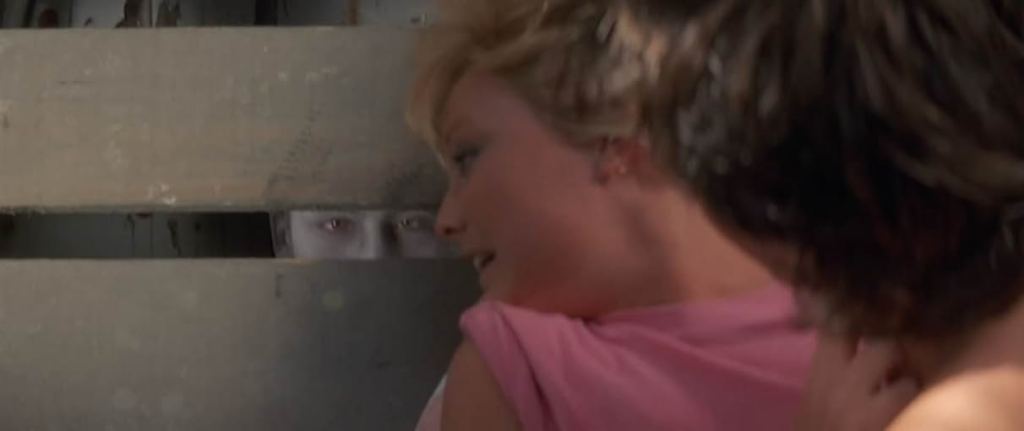
Not bad for a dare-to-be-different horror flick. April Fool’s Day made horror fun without needing gallons of fake blood. By blending slasher elements with a whodunnit mystery and a healthy dose of cultural satire, it stood out as a genre-bending experiment that was ahead of its time. So is it a horror movie? A comedy? A mystery? The answer is yes. And that’s exactly why we’re still talking about it nearly four decades later.

 NightTide Magazine
Leave a comment