
By Mo Moshaty

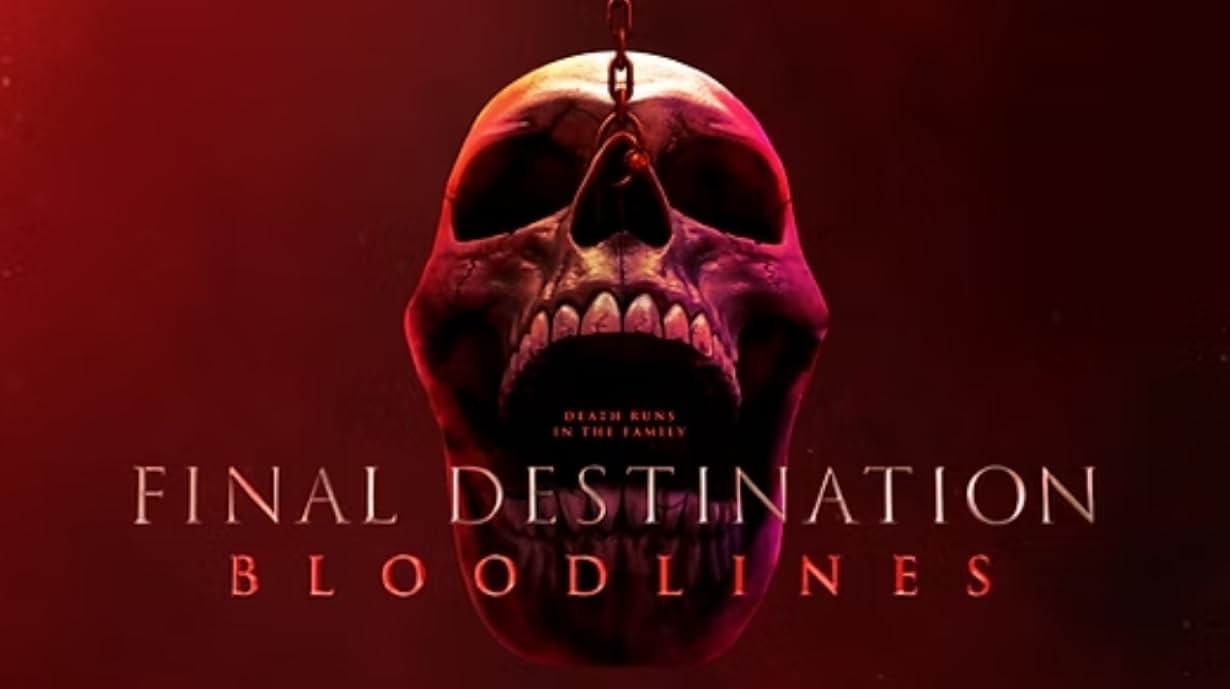
Final Destination: Bloodlines ⭐️⭐️⭐️⭐️⭐
Plagued by a recurring violent nightmare, a college student returns home to find the one person who can break the cycle and save her family from the horrific fate that inevitably awaits them.
In horror, generational trauma is the houseguest that never leaves. It lingers in the attic, seeps into the basement, and haunts the family photo albums, always just out of sight, but shaping everything. Most films let it simmer in glances and silences, but Final Destination: Bloodlines says, “What would happen if trauma didn’t just haunt you emotionally, but came at you with an actual flying rebar?”
Here, inherited dread isn’t just a metaphor. It’s mechanical, malevolent, and on a mission. In the cruel twist, the one person in the family who saw it coming, the so-called “crazy lady” everyone whispered about, was the only one who was actually right. Whoops!
Bloodlines rewinds the franchise clock to 1968, when Iris Campbell (played in flashbacks by Brec Bassinger and in the present by Gabriel Rose), narrowly escapes a tower collapse thanks to a premonition. But surviving a disaster in the Final Destination universe doesn’t mean you actually beat death, it simply means you’ve annoyed it.

Fast forward to the present and her granddaughter, Stefani (Kaitlyn Santa Juana) is getting psychic leftovers: nightmares, visions and the creeping sense that she is on borrowed time. With her brother Charlie (Teo Briones) and the extended Campbell clan (Richard Harmon, Owen Patrick Joyner, Tinpo Lee, Rya Kihlstedt, April Telek, Anna Lore) circling the wagons of denial, Stefani starts pulling threads and finds herself staring down the same metaphysical hit list that haunted her grandmother. Toss in a lore-deepening return from Tony Todd’s death whisperer William Bludworth (now with origin story vibes) and what you get is a film that doesn’t just play the franchise’s greatest hits, it remixes them with generational guilt, family secrets, and a very pissed off Mr. Death.
But Stefani’s fight to uncover the truth isn’t just a battle against death. It’s a battle against silence, denial, and a long tradition of women in horror being ignored until it’s too late. This isn’t new territory, we’re just tired of not getting to be loud about it. From Hereditary to The Babadook, we’ve seen women dismissed, gaslit, and sidelined until the walls start bleeding. In Hereditary (2018), Annie tries to connect the dots of her family spiritual route while everyone else shrugs and simply eats dinner. In The Babadook (2014), Amelia’s grief is so raw, and no one wants to touch it until it turns into a hat wearing demon. The Others (2001) practically marinates in the tension of a mother trying to hold the line between faith and madness while no one listens. Even in The Exorcism of Emily Rose (2005) we watched a young woman’s experience reduced to courtroom debates instead of existential horror. These women weren’t hysterical. They were the historians of trauma, just not the kind anyone wanted to hear. While these stories have long warned us of the danger of dismissing woman’s voices, Bloodlines stands out for giving those voices the power to rewrite fate, thanks in no small part to the film makers who understand both the genre’s legacy and its future.


Director Zach Lipovsky and Adam B. Stein pull a slick, stylish pivot with Bloodlines, grounding the film’s gnarlier set pieces with a surprising emotional core. Writers Guy Busick and Lori Evans Taylor give them mythology room to breathe and expand (and rip and bleed) and the cast, particularly Santa Juana, Bassinger and Rose, anchor it with believable desperation. It’s the rare horror entry that rewards fans without pandering and adds depth without ditching the fun.
Catch it in US cinemas on May 14th and in UK cinemas for May 16th. But maybe call your Nana first, she might know something.

Mo Moshaty is an acclaimed horror writer, lecturer, and producer whose work combines visceral storytelling with the psychological insight of her Cognitive Behavioral Therapy background. She has lectured internationally, including as a keynote speaker at Nightmares from Monkeypaw: A Jordan Peele Symposium (Prairie View A&M), No Return: A Yellowjackets Symposium (Horror Studies BAFSS Sig), The Whole Damn Swarm: Celebrating 30 Years of Candyman (University of California), and with the Centre for the History of the Gothic (University of Sheffield). Mo has also presented at the BFI, Miskatonic Institute of Horror Studies, and Final Girls Berlin Film Festival’s Brain Binge on women’s trauma in horror cinema, Cine-Excess on The Creepy Kid Horror Subgenre and Mother/Daughter Trauma in Horror, and Romancing the Gothic on Cosmic Horror’s Havoc on The Body Electric Her short film, 13 Minutes of Horror: Sci-Fi Horror, won the 2022 Rondo Hatton Classic Horror Award for Best Short Film. As a core producer with Nyx Horror Collective, Mo co-created the 13 Minutes of Horror Film Fest and partnered with Shudder in 2021 and 2022, while also establishing a Stowe Story Labs fellowship supporting women creatives over 40+ in horror. A member of the Black Women in Horror Class of 2023 and featured in 160 Black Women in Horror, Mo’s short fiction appears in A Quaint and Curious Volume of Gothic Tales (Brigid’s Gate Press) and 206 Word Stories (Bag O’ Bones Press). Her debut novella, Love the Sinner, was released July 5, 2024, with Clairviolence: Tales of Tarot and Torment released in October 2025. The first of her five-volume non-fiction series, The Annex of the Obscure: The Afterlife, will be released in 2027 from Tenebrous Press. As the Editor-in-Chief of NightTide Magazine and founder of Mourning Manor Media, Mo champions marginalized voices in horror. Under her leadership, NightTide plans to launch a film festival in 2028, furthering her mission to reshape the genre through inclusivity and representation.
Leave a Reply