By Ray Walton

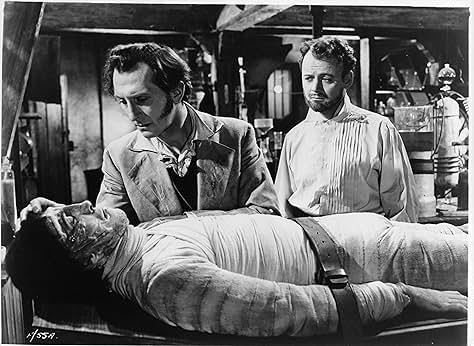
The Curse of Frankenstein (1957) ⭐️⭐️⭐⭐
While awaiting execution for murder, Baron Victor Frankenstein tells the story of a creature he built and brought to life – only for it to behave not as he intended.
Watch on: Prime Video
In 1957, The Curse of Frankenstein marked a seismic shift in horror cinema, ushering in the bold, blood-red era of Hammer Horror. It was the studio’s first color horror film and its first foray into Gothic reimaginings, quickly establishing the visual and thematic trademarks that would define the genre for decades: vivid gore, moral ambiguity, and a distinctly British chill beneath the melodrama. With Peter Cushing making his debut as the calculating Baron Frankenstein and Christopher Lee in his first major screen role as the creature, the film set the stage for one of horror’s most iconic duos. Audiences were stunned, both by the visceral brutality and by Hammer’s refusal to sanitize the source material for comfort. This wasn’t a story of misunderstood science; it was about obsession, ego, and the wreckage left in their wake.
While I think the original is a better movie, there are some things that the remake does better. The character of Victor Frankenstein has significantly more depth here. I understand that back in 1931, they had to please the censors and give Victor, who is painted as a “hero” and gets his happy ending. Here, Victor is portrayed as the true monster. His creation never asked to be brought to life. We know from the beginning that he has to deal with consequences for his actions, while Victor goes unscathed in the original. While Christopher Lee is no Karloff, he succeeds on providing his own spin on the monster, also delivering a sympathetic performance. It’s clear in both versions that the monster doesn’t know any better than to kill an innocent child. The manhunt in the original is replaced is a character study of who the real monster is. While it’s hard to top Karloff, Hammer managed to deliver their own solid take on the story.



 NightTide Magazine
Leave a comment