
By Brian Finnerty
It takes a village to raise a child, they say. But as Mindy Vogel knows all too well in ‘Little Bites’ (2025), for many caregivers, that village never materializes. Many are left to navigate these challenging waters alone. Writer/Director Spider One leans heavily into the metaphor of physical wounds (bites in the case of this film) to represent the psychological and physical toll that parenting can take on a person.
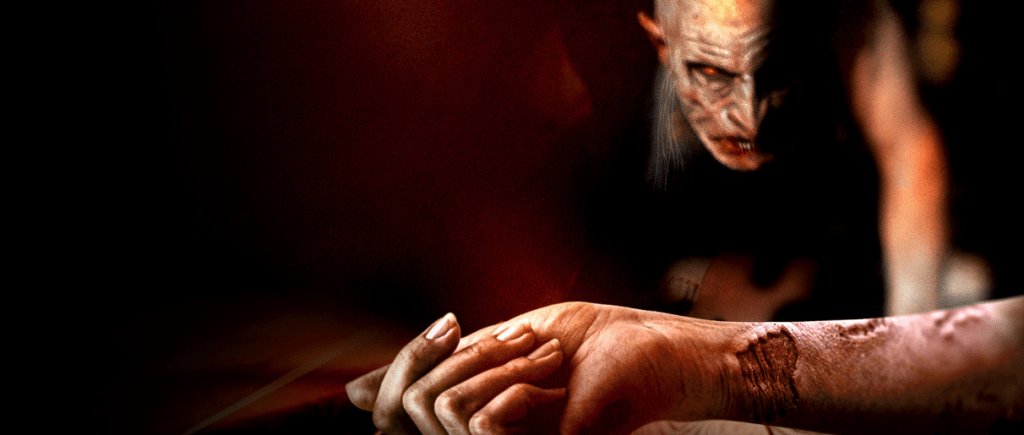
In a perfect world, the burden of raising a child would be divided across many. A spouse. Loving grandparents. Friends, family, and neighbors. In such a case, a small and superficial “wound” here and there may be an inconvenience or minor shock to the system, but ultimately bearable and commonplace. In a pivotal scene halfway through the movie, Mindy removes her clothes to gaze upon her body in a mirror. Here, the viewer sees that these small wounds (these “Little Bites”) take on a very different perspective when the burden is carried by one person alone. Scratches, scars and bite marks that would seem relatively unremarkable alone become a transformative form of body horror when contained to just one body.
Spider One’s film ‘Little Bites’ follows the story of Mindy Vogel (Krsy Fox). She is the widowed mother to her ten-year-old daughter, Alice (Elizabeth Phoenix Caro). Still struggling to come to terms with the death of her husband and buckling under the pressures of a troubled past that is hinted at but never explicitly detailed, Mindy finds herself held hostage within her own home by a monstrous being named Agyar (Jon Sklaroff). He is vampiric in nature, feeding off of her flesh and blood. Ultimately, he has his eyes set on making a meal of young Alice. But in the meantime, Mindy is more than willing to sacrifice her own body, one bite at a time, to protect her.
The movie mixes many metaphors throughout its runtime. At times, Agyar appears to represent how caregiving can figuratively or even literally transform one’s body. Sometimes in ways that are quite violent and painful. The film suggests he may be a stand-in for addiction, mental illness, or a history of abuse, all of which can significantly impact one’s ability to parent and always threaten to trickle down to the next generation. Ultimately, the movie intentionally leaves its meaning vague, encouraging the viewer quite effectively to project their own struggles in child-rearing onto the characters of Mindy and Agyar.
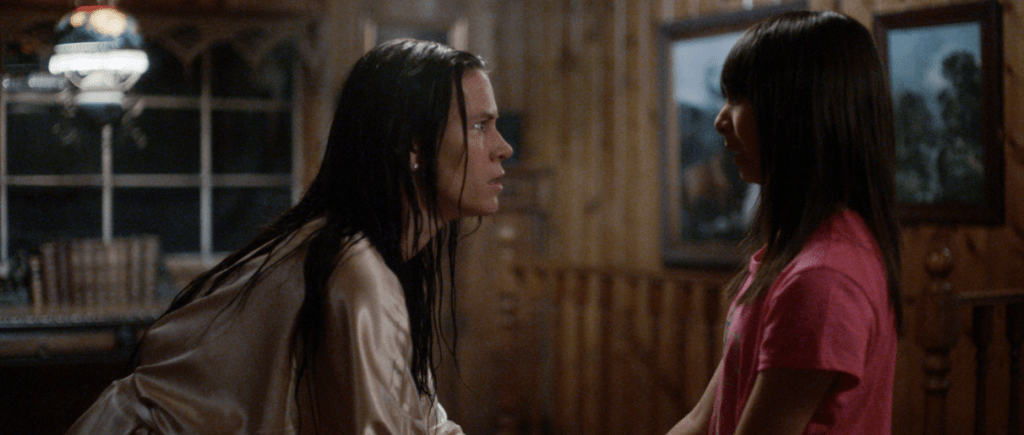
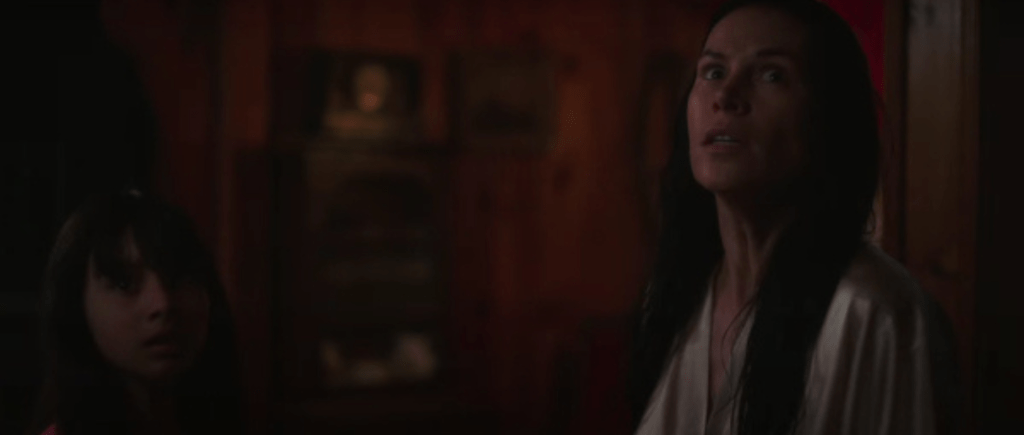
The viewer’s first shot of Mindy is frighteningly familiar to any caregiver, even before the demonic presence is introduced. She sits in her dark bedroom, exhausted in body, mind, and soul, but unable to sleep. Dark circles surround her eyes. Her hair is stringy and unwashed. She wears an old, unflattering bathrobe that is all function and no fashion. She perches on the edge of her bed clearly anticipating something. When the ringing of a distant bell sounds, signaling that she is needed, her eyes well with tears. The movie immediately evokes feelings of the newborn stage of parenting. A time when caregivers push themselves to the breaking point of sleep deprivation and stress management in order to be available to their child at all times.
Some look back on these times with affection and fondness. These individuals are usually those who have a variety of internal and external resources to support them. They have that proverbial village to back them up, allowing the luxury to find the bright moments in an otherwise dark and stormy stage of life. ‘Little Bites’ is more interested in exploring the experiences of those for whom parenting pushes them to their limit. At no point does the film suggest that Mindy does not have powerful and unwavering love for her daughter, Alice. But it also has no interest in ignoring the painful sacrifices that Mindy has had to make in order to raise her daughter alone. By aging Alice to ten years old, the movie suggests that perhaps the stresses of that newborn phase never truly go away. They change. Or perhaps it is the caregiver who changes and adapts. But the challenges continue to exact a toll nonetheless.
Agyar’s appearance and mannerisms in the film underscore the mundanity and inevitability of the painful side of parenting. While he is clearly inhuman and demonic in appearance, his face and body hold enough humanity to allow Mindy and the viewer to spend time with, and actually relate to him. This is shown in their interactions, which, while painful and damaging, also hold a level of intimacy and interpersonal relationship that subverts how monsters are typically used in the horror genre.
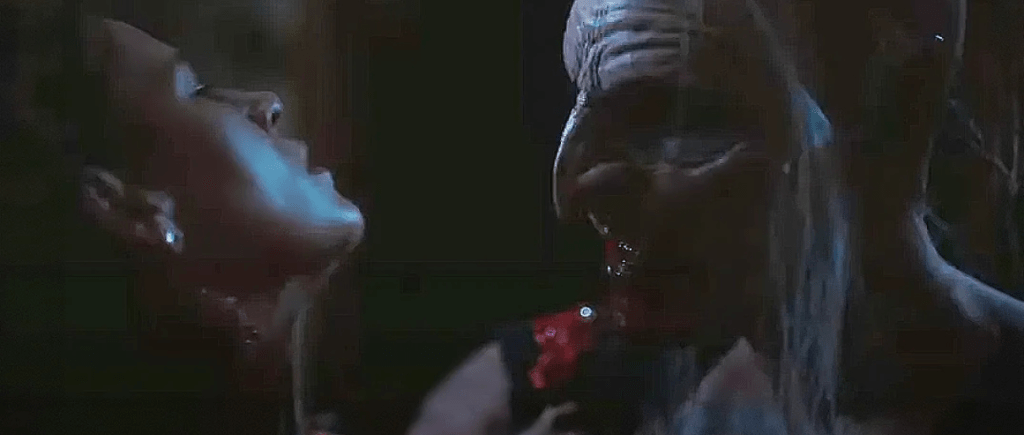
Agyar and Mindy have several lengthy and philosophical discussions during the film. They share space in his basement room together, at times lying on the floor beside one another. In one scene, he even drapes his head across her lap in a way reminiscent of how we might imagine her daughter would when cuddling with her mother. Agyar rarely raises his voice. His speech is calm and gentlemanly in nature. He speaks about devouring Mindy and Alice in a way that assumes it is inevitable. It is the natural progression of their relationship rather than something to be fought against.
This tension is similar to the way that our society does not allow space for mothers and other caregivers to talk about the pain and the darker side of raising children. To give birth and raise a child is natural and assumed to be the goal of most people, particularly women. Our culture tends to gaslight women who speak about the difficulties of parenting by suggesting that there is something wrong with them. They are not as grateful as they should be. They are not doing it right. They are not trying hard enough. Mindy confronts Agyar for manipulating and fooling her in a similar fashion when she tells him, “I let you convince me that my sacrifice was my power. That the more I give of myself, the safer she’d be…All these little bites. All this slow suffering. What a deception it’s been.”
The trauma of parenting is not the only theme centered in ‘Little Bites’. The movie also explores the strength and resilience inherent in parent-child relationships, and specifically, mother-daughter relationships. Three generations of women are represented in the film by including Mindy’s daughter, Alice, as well as Mindy’s mother (Bonnie Aarons), who is notably not given a name. At the outset of the film, Mindy has sent her daughter to stay with her grandmother to keep her safe while she seeks a solution to her challenges with Agyar. All parents and caregivers need time for respite and rejuvenation. But the film also reminds us that time away from one’s child cannot be the only solution to the challenges of parenting. True growth and healing must happen within the relationship between Mindy and her daughter, not by sending her away.
Mindy’s mother believes that she is supporting her daughter through bitter truths and tough love. She encourages Mindy to ignore or suppress her own pain to care for her daughter. At one point, she says to her, “Life doesn’t care about your problems. Life doesn’t stop to ask if you’re okay…Your job is to take care of that little girl, not yourself.” During another tense exchange between the two characters, her mother attempts to communicate her love for Mindy by saying: “If it involves you, it’s always about me. I don’t know if you’ve realized this yet, but no matter how old you get, I’ll always think of you as my little girl.”
On the surface, both of these conversations are an effort by her mother to express her love and support, as harshly as they may be delivered. They represent common advice given to parents. Put your child first. Always. Your job is to keep them safe. But caregiving is more nuanced than that. A third mother in the movie, Ellenor, played by genre legend Heather Langenkamp, makes a brief appearance to lay out a more nuanced understanding of a mother’s role. She shares her personal philosophy of motherhood with Mindy, consisting of three stages. Stage one: You stand behind them. Stage two: You stand in front of them. Stage three: You stand beside them.
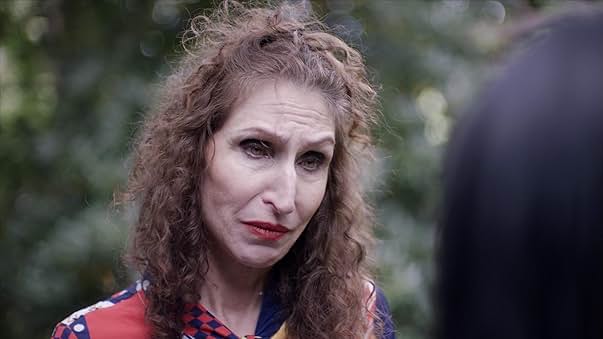
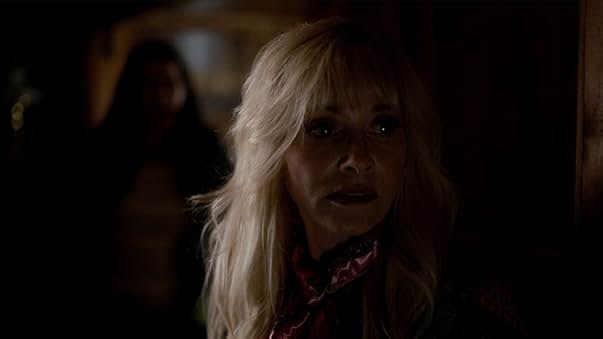
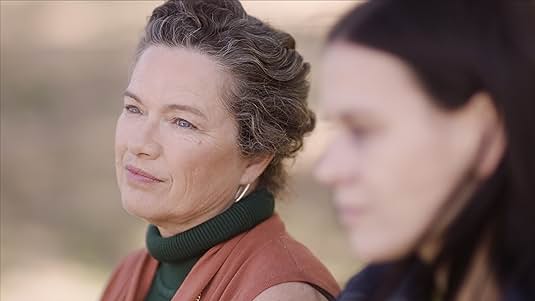
Bonnie Aarons, Heather Lagenkamp, Barbara Crampton and Krsy Fox in Little Bites (2024) OneFox Productions
The advice from Mindy’s mother represents the first two stages of this process and the two stages at which many caregivers find themselves stuck and burnt out. When children are young, it is true that their needs come first, frequently at high cost to their parents. And as they age and begin to explore the world, they must be protected and kept safe (seen as “my little girl”) so that they can continue to develop and evolve through taking risks, knowing that their parents will do their best to protect them. Mindy’s mother sees it as her job to push her daughter into one of these roles, but never takes the time to stand beside her and try to see the challenges she faces from Mindy’s perspective. This isolation is compounded by the arrival of Sonya Whitfield (Barbara Crampton), a CPS worker whose well-meaning but procedural scrutiny threatens to expose the horrifying reality Mindy is desperately managing. Sonya’s presence—like her mother’s judgment—embodies the societal tendency to assess mothers without truly understanding the invisible burdens they carry. Together, these women frame Mindy not in terms of support, but surveillance.
However, to remain forever in these stages can lead to an arrested development for the child and parent alike. Langenkamp’s character advocates for a more equitable relationship between mother and daughter. One in which the child no longer takes more than they give, and the mother no longer sacrifices themselves in an eternal cycle that leaves them depleted. Instead, she chooses to imagine a future where mothers and daughters can stand together. Which is exactly what Mindy and Alice do at the climax of the film when they vanquish Agyar using his own methods of mastication against him.
In a mid-credit sequence, we see Alice return home to visit her mother. She is a young adult now. We only see the briefest glimpse of their future relationship as her mother opens the door to greet her. But in that moment, we see hints that they have found a way to balance all three stages of the mother-daughter relationship. Mindy will always be there to support her and to offer a home for her to return to. But in doing so, they will see one another as equals. They can support one another and stand beside one another, battling their demons in whatever form they may appear.
Little Bites can be seen on Apple TV, SHUDDER and Prime Video





 NightTide Magazine
Leave a comment