
By Charlotte Armstrong
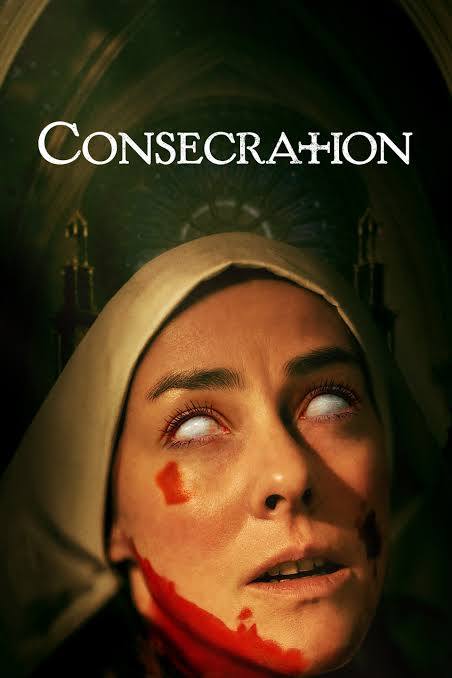
Consecration ⭐️⭐️⭐
After the alleged suicide of her priest brother, Grace travels to the remote Scottish convent where he fell to his death. Distrusting the Church’s account, she uncovers murder, sacrilege and a disturbing truth about herself.
Consecration arrives as another entry in the increasingly crowded “nunsploitation” subgenre. Christopher Smith’s film distinguishes itself through stunning Highland cinematography and attempts to subvert familiar religious horror tropes, but this psychological thriller prioritises atmosphere over scares, with mixed results that will likely divide audiences.
The film follows Grace (Jena Malone), an ophthalmologist who travels to a remote Scottish convent following her priest brother’s suspicious death. Smith weaves together themes of faith, feminine power, and the corrupting influence of religious institutions, though the execution proves more ambitious than coherent. What starts as a simple investigation spirals into increasingly bonkers territory that ultimately reveals Grace’s true identity: a centuries-old fallen angel who escaped imprisonment, now aging in human form while the church seeks to recapture and re-entomb her.
Malone’s performance provides much-needed grounding. It’s no small feat to sell a character arc that spans centuries and dimensions while keeping the audience invested in Grace as a person rather than just a supernatural plot device. The supporting cast, including Danny Huston as the enigmatic Father Romero, also deliver strong performances despite working with thinly-written characters that feel more symbolic than fully realised.
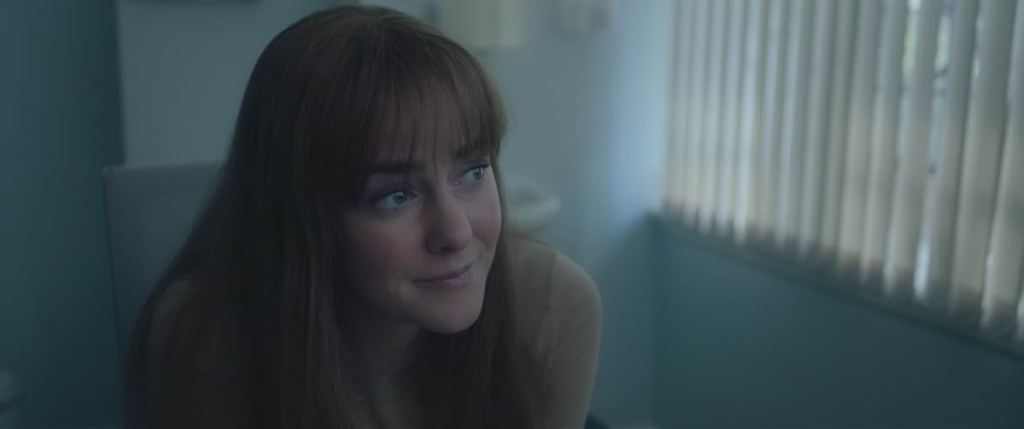
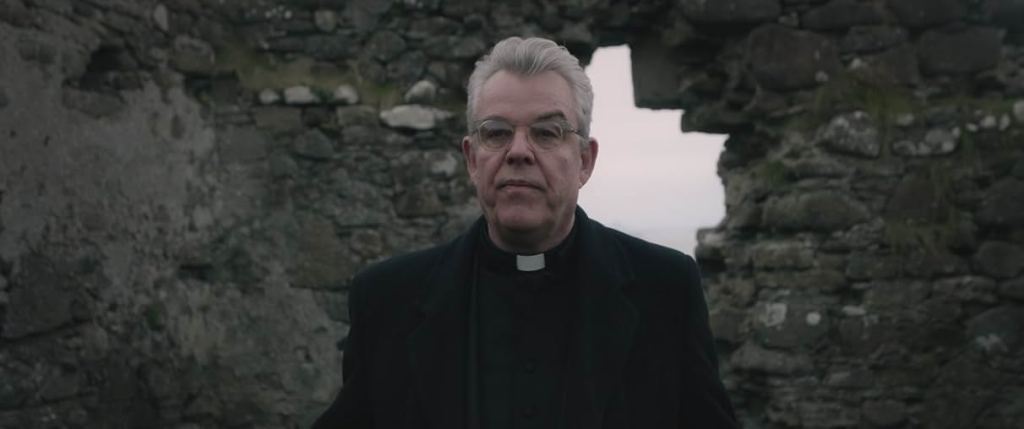
Jena Malone and Danny Huston in Consecration (2023) AGC Studios
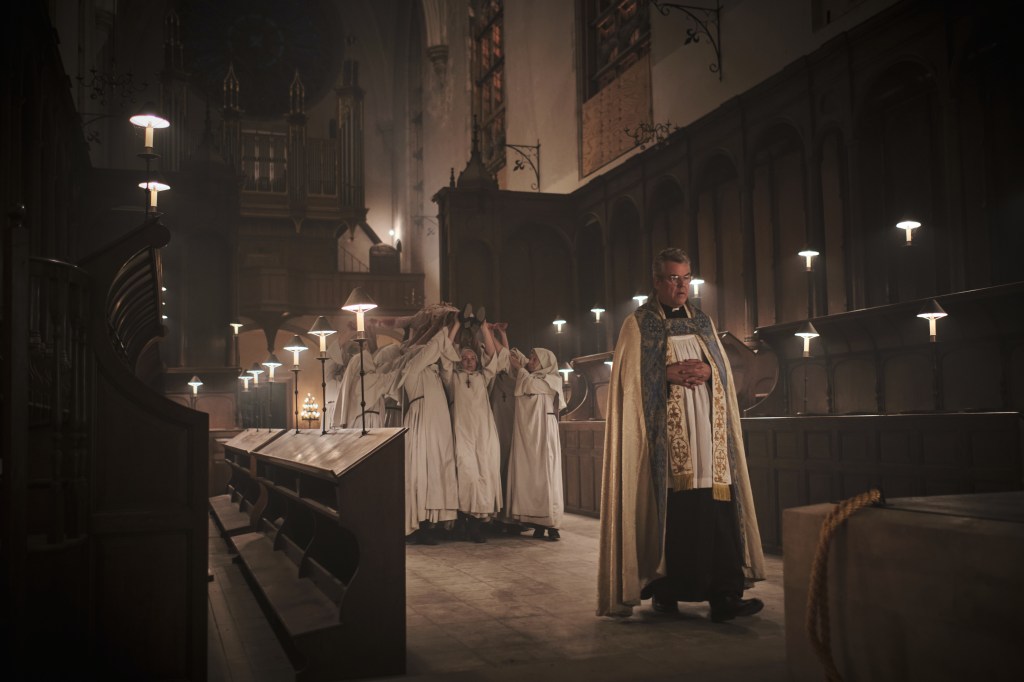
The Scottish Highlands provide a breathtaking backdrop that Smith and cinematographer Piers McGrail exploit to great effect. The stark beauty of the landscape contrasts effectively with the claustrophobic convent interiors, creating an atmosphere of isolation and unease. The production design makes expected use of religious iconography, some of which proves genuinely striking – nuns lying face down in the church, or throwing themselves off cliffs in fragmented, replaying sequences that feel deliberately confusing. Smith’s exploration of sight as a visual metaphor begins cleverly with blurred camera work but becomes heavy-handed, with repeated references to eye injuries, second sight, and utterances of ‘peekaboo – I see you!’ that feel increasingly forced.
Throughout the film, Smith flirts with complex theological territory, clearly trying to grapple with dualities of faith versus reason, darkness versus light. However, the film is caught between wanting to be a serious arthouse piece and needing to deliver genre thrills, and this tonal indecision undermines what could have been genuinely intriguing ideas. The horror elements prove disappointingly restrained for genre enthusiasts – refreshingly, it avoids contorting figures, cracking limbs or demonic possessions, but offers little genuine tension in return.
Consecration ultimately feels like a film that wants to critique institutional religious power whilst exploring genuine spiritual questions, but never quite commits to either approach fully. For viewers seeking atmospheric, slow-burn supernatural drama with philosophical pretensions, Consecration offers enough visual beauty and conceptual intrigue to warrant consideration. But those expecting traditional scares or narrative clarity will likely find themselves frustrated by this muddled but occasionally striking film.




 NightTide Magazine
Leave a comment