
By Chris O’Halloran

Gone are the days when we could all aspire to a big, detached house complete with creaky floorboards and a spooky attic. These days, we’re lucky if we can secure a townhouse to call our own. Since our living situations have changed so dramatically, shouldn’t our ghost stories evolve too?
When we think of “haunted house”, the picture of a dilapidated mansion comes to mind—Victorian, preferably, up on a mist-covered hill. But let’s be honest, I don’t know anyone with a Victorian bungalow, let alone a Victorian mansion. My friends and family live in narrow townhouses lined up like books on a shelf (or prisoners awaiting a firing squad). They ride tin-can elevators down old apartment buildings with their giant dogs. They’re raising children in cramped basement suites.
Reflecting this reality is what I had in mind when I wrote Pushing Daisy. Because even if you live in a one-bedroom apartment with laminate floors and no secret passageways, the dark still finds a way to feel wrong. Despite living in a modern rowhome that nobody died in, I still see faces peering at me from the corner of my eye, disappearing behind a corner when I turn to focus. I still fear looking into my closet after a nightmare. I still climb the stairs a little faster at night, convinced a long-limbed creature with a grin full of daggers is on my tail.
If any of that sounds familiar, you’re in good company. Below are some terrifying stories that haunt the homes we actually live in—the condos, the townhouses, the apartments above questionable laundromats. Ghosts, after all, don’t care about square footage.
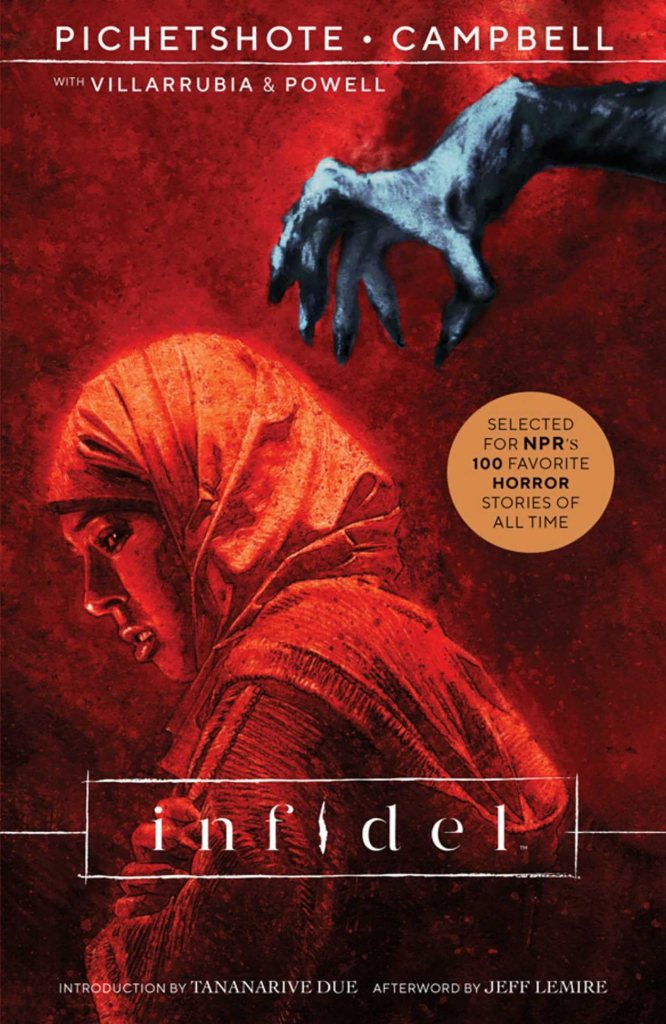
Infidel by Pornsak Pichetshote
HOWLS (The Horror-Obsessed Writing and Literature Society) read this graphic novel back in 2022, and it was universally loved. Praised for its unflinching look at racism in a blended community occupying an apartment building, it pulled no punches in showing the various aggressions—micro and macro—that minority populations suffer from and how that hatred can infest a building.
The hard truth is that discrimination comes from every direction. From the roof of the apartment building to the sub-basements, but also from neighbours and family alike. Nothing feels more modern than Pichetshote’s depiction of these pervasive issues. He captures that everyday discomfort, but also the everyday joy that comes from living among diverse cultures.
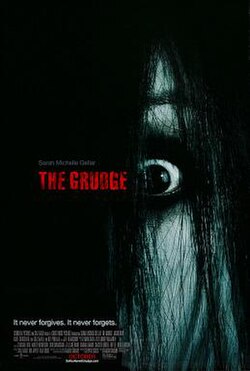
The Grudge
The American remakes of Ju-On: The Grudge and Ringu seemed to define childhood terror for so many of my generation. One of my strongest movie-watching memories is of watching The Ring with my mom at our family computer. We were huddled close to the computer monitor when Samara crawled through the TV in the movie, and I could’ve sworn she was climbing out onto our desk. Mom must have felt the same because we fled our little house and ran to the neighbours without even locking the door.
The Grudge specifically showed us that no space was safe. An apartment, a hotel that rents by the hour, even a hospital—a place of healing! Wherever you went, the curse followed. It also introduced a sound effect any kid could make to induce terror in friends and family. All you had to do was drop your jaw and croak deep in your throat to send your buddies—or mom—into a panic.
Candyman
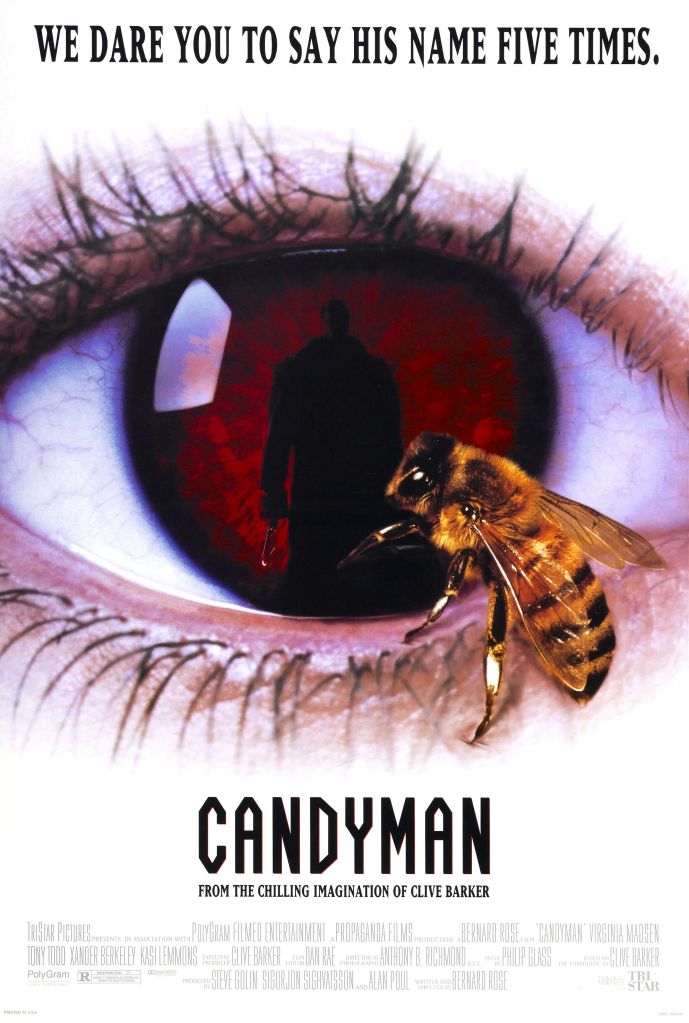
Something is haunting the Cabrini-Green Homes in Chicago: a presence that appears when you chant his name five times in front of a mirror.
Candyman. Candyman. Candyman. Candyman. Let’s leave off that last one, just to be safe.
Our hook-handed spectre haunts the housing projects that are as far from a Victorian mansion as you can get. The looming buildings are not symbols of wealth, nor an ostentatious display of status. They are occupied by those victimized by systematic oppression. Single-parent families having to rely on food stamps, and folks working multiple jobs just to get by.
Candyman has no sympathy, though. Born the son of a slave, he was gruesomely murdered by a lynch mob when he fell in love with and impregnated a wealthy white woman. He was covered in honey, attacked by bees, and set on fire after the bees stung him to death. You can’t blame him for wanting a little vengeance on the residents who now occupy the site of his demise.
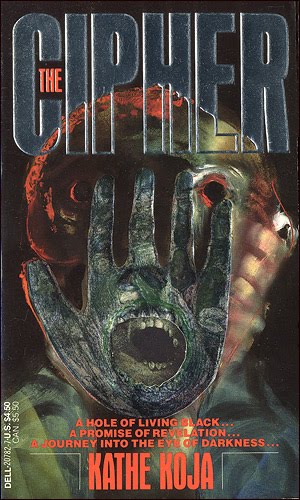
The Cipher by Kathe Koja
Party kids in the ’90s were a special breed, or at least that’s what the beginning of The Matrix: Reloaded taught me. Grungy and dirty, The Cipher delivers the unique discomfort of that era when a mysterious “funhole” appears in the storage room of a rundown apartment building. After a series of experiments designed to figure out this black hole, it soon draws a crowd of artists and their followers that overwhelm our protagonist, Nicholas.
While not haunted by ghosts per se, Koja’s novel explores the suffocating terror of infestation. Hangers-on, leeches, the dirtiest individuals of the ’90s scene, finding an attraction and swarming it. Soon, Nicholas finds himself in an apartment building haunted by the people he can no longer stand. Soon, the funhole ends up being the least of his problems.
Horrorstör by Grady Hendrix
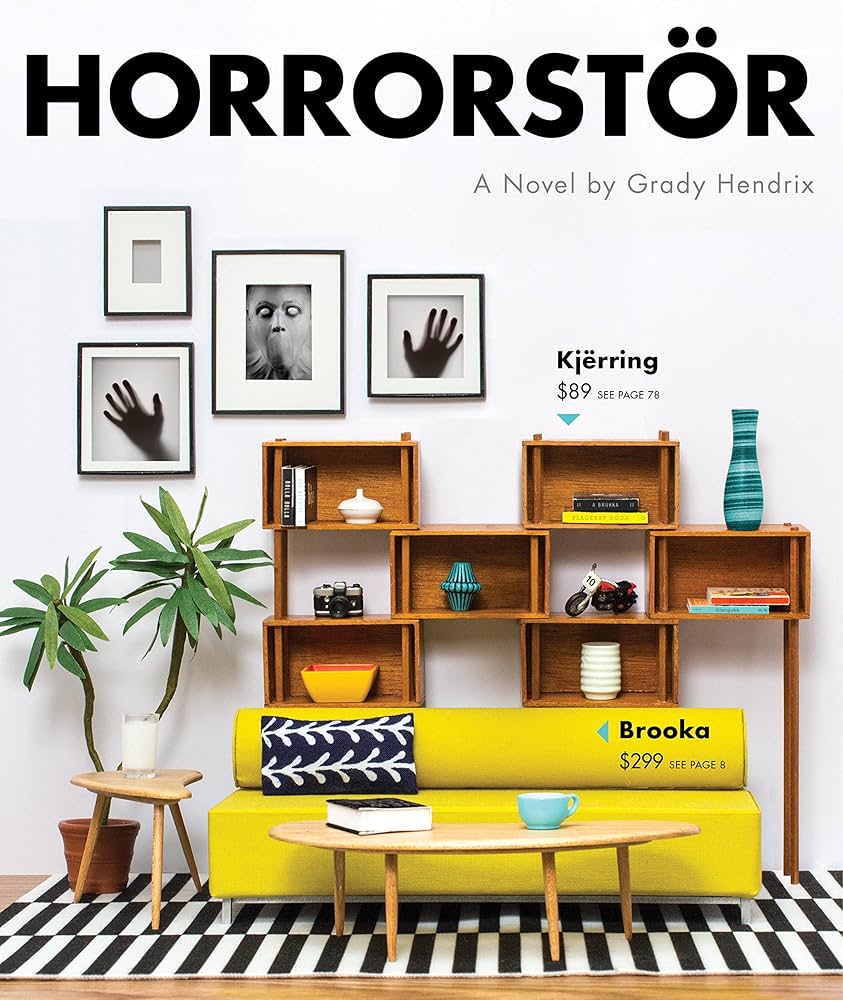
Haunted Ikea. You’d be hard pressed to find a more unique, two-word pitch. It’s all you really need to know! Grady Hendrix is so proficient at delivering comedy and emotion in equal measure. His mind conjures up horrifying images that make you laugh at how bonkers they are before recoiling at the madness of it all.
In Horrorstör, the Ikea mainstays we’ve all come to know and love evolve into ruinous torture devices while murderous, faceless entities roam the arrowed pathways of a fictionalized Ikea like stampeding herds of water buffalo in the Serengeti.
Hendrix captures the labyrinthine nature of Ikea, sending the reader on a dizzying journey that mirrors my last quest to get a new Malm dresser. He doesn’t touch on the dubious nature of meatball meat or the strange soda concoctions offered at the concession, but you gotta save something for the sequel.
The Devil in Silver by Victor LaValle
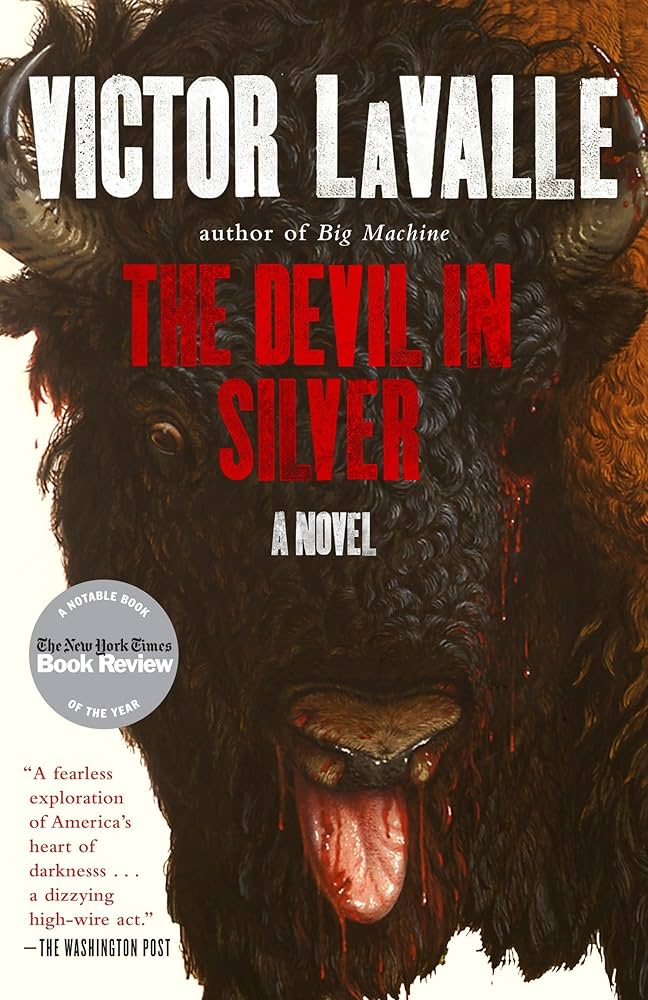
In The Devil in Silver, Victor LaValle puts us in the head of Pepper: a big, rough-and-tumble man accused of a crime he didn’t commit. He’s been thrown in the psychiatric ward of New Hyde Hospital and intends to get out and clear his name as soon as possible.
As these things tend to go, however, nothing is as it seems. On his first night, he’s visited by a being with the body of an old man and the massive head of a bison. Although solitary by nature, he reaches out and discovers that the other residents of the ward have seen this violent monster as well.
Pepper rallies the other patients in order to fight back. They will no longer be terrorized by the creature haunting the psychiatric ward. This confinement is ending one way or another.
Wounds: Six Stories from the Border of Hell by Nathan Ballingrud and The Worm and His Kings by Hailey Piper
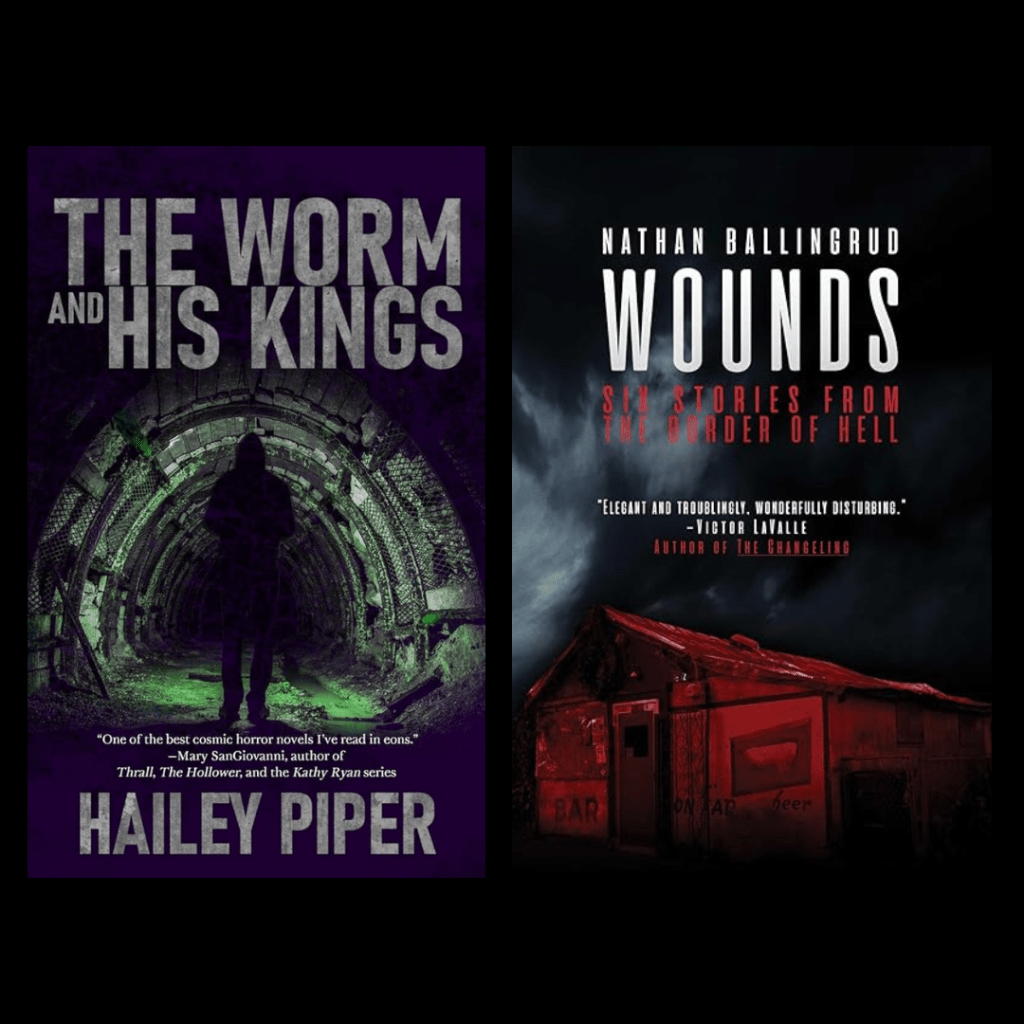
One story in this collection, “The Maw”, features a character who works with unhoused people and discovers a literal hellmouth in an abandoned part of the city, implying that the city’s forgotten are both witnesses to and victims of a supernatural blight that others ignore.
Finding yourself living on the city streets is troubling enough without having to worry about something otherworldly haunting the alleys. Like Hailey Piper’s The Worm and His Kings, these hauntings are used as a metaphor for the danger the most vulnerable of us can find ourselves in.
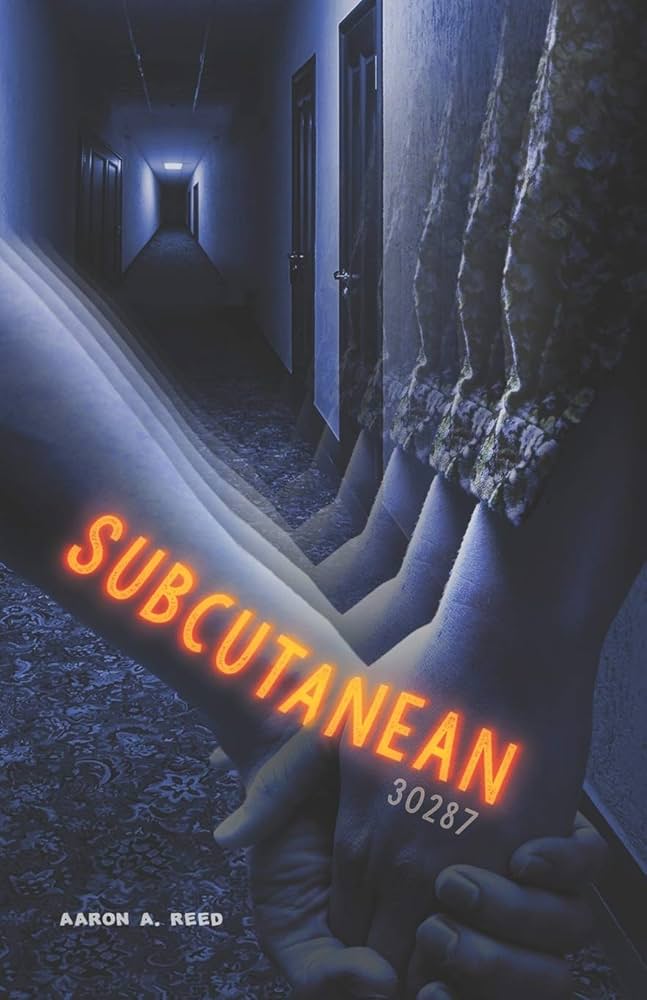
Subcutanean by Aaron A. Reed
This novel goes beyond Choose Your Own Adventure. When you buy Aaron Reed’s Subcutanean, he generates an entirely new version of the book. This means that the version you hold in your hand is unlike any other in existence. Trippy? Wait until you start reading.
Orion and Niko find mysteries within the basement of the house they share together. It takes them through winding labyrinths that shouldn’t exist—that would extend beyond the limits of the house.
At least that’s what my version was about. You’ll have to get your own seed to find out. In Subcutanean, we’re haunting dimensions, baby. And things are about to get weird.
Linghun by Ai Jiang
It takes a village.
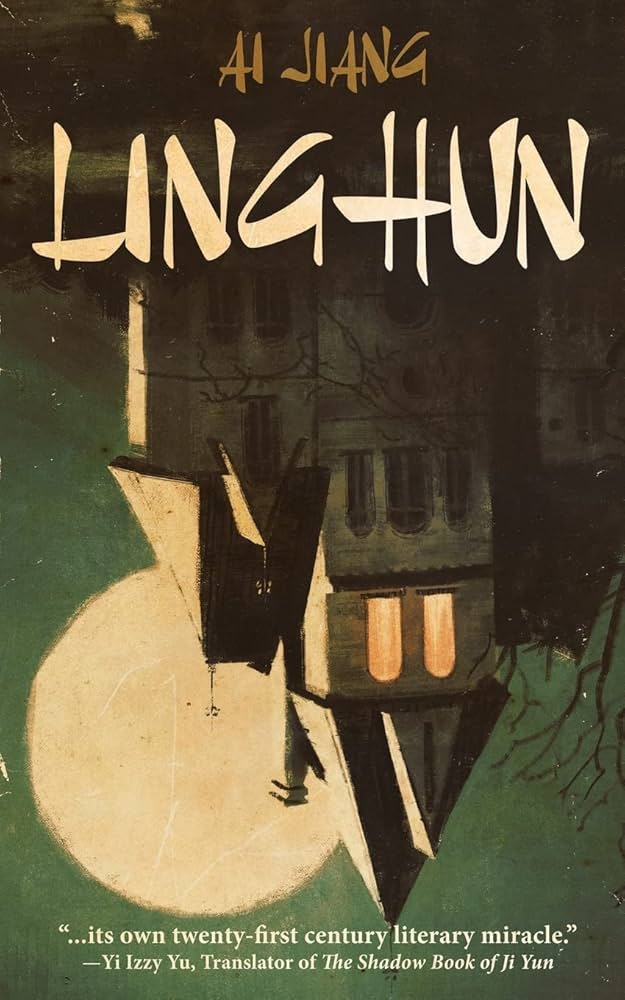
In Ai Jiang’s Linghun, that village doesn’t just raise the young; it raises the dead. HOME is the small town where the deceased return as spirits. Not malevolent, not dangerous, but not harmless.
Grief haunts HOME. When you’re unwilling to let go of those who’ve passed on, you overlook those who remain. Loved ones fall to the wayside. You become a caretaker for ghosts.
Though the spirits here are very much real, there’s no denying the metaphor that underscores the entire novella, masterfully written by Jiang. No modern author writes the forgotten better, and the theme of loneliness is so present, it makes the heart ache.
What If…The Basement Suite
I’ve yet to discover a horror story set in a basement suite, but if you come across one, please do let me know. What setting has more potential for horror than one where you’re literally living beneath the people who own your home? Constantly under scrutiny. Afraid to make too much noise. Hearing footsteps so often that you can’t tell the difference between a spectral being creeping around, or the teenager upstairs walking softly to the kitchen for a glass of water, and trying not to wake their parents.
Maybe that’s the next story! Until then, however, please take the time to check out Pushing Daisy from Lethe Press—and try your best not to look into your neighbour’s garage the next time you’re watering your flowers.
 | CHRISTOPHER O‘HALLORAN (he/him) is the Pushcart Prize-nominated, factory-working, Canadian, actor-turned-author of PUSHING DAISY, his debut novel from Lethe Press that Publisher’s Weekly calls “an intimate horror story that masterfully combines psychological and supernatural terror” in a starred review. His shorter work has been published by Uncharted Magazine, Kaleidotrope, NoSleep Podcast, Cosmic Horror Monthly, Brigid’s Gate, Dark Moon Books, and others. He is editor of the anthology, Howls from the Wreckage. Visit COauthor.ca for stories, reviews, and updates on upcoming novels. |



 NightTide Magazine
Leave a comment