
By Mo Moshaty
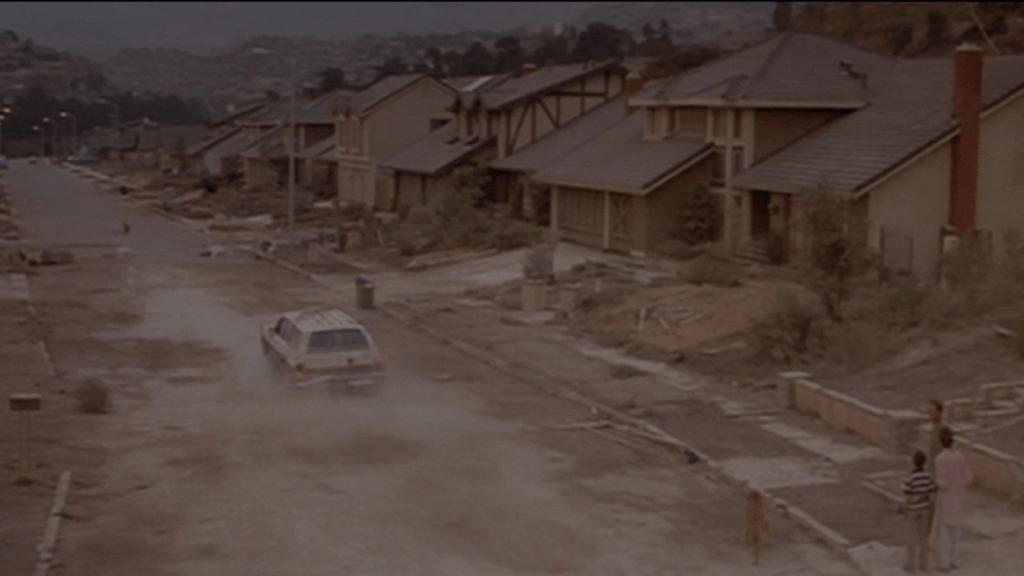
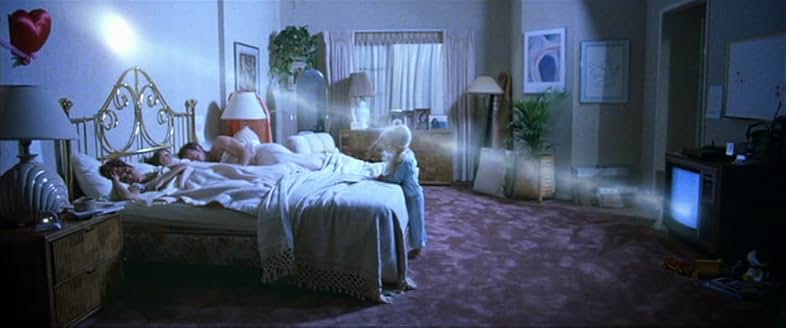
The Poltergeist franchise begins with an image so mundane it’s nearly invisible: a suburban family asleep in a cul-de-sac that looks like every suburban dream America ever sold. A place where the grass is uniform, the neighbors wave, and the houses rise like cloned organisms from the California dust. This is a neighborhood designed to soothe, stabilize, and assure.
But in horror, the most polished surfaces hide the deepest wounds.
The Freeling family is presented as the ideal: a father with a dependable job, a mother who radiates warmth, children who feel safe enough to fall asleep on the floor watching static. But even before the ghosts come, this is already a story about generational trauma, about the unspoken burdens families carry, the cycles they reenact, and the past they think they’ve outrun.
In Poltergeist, the house is not the only thing built on hidden bones.
The family is, too.
Keeping Up With the Joneses (Even When the Joneses Are Dead)
The first film centers on a suburb that shouldn’t exist. Cuesta Verde is built on stolen land, a cemetery uprooted for profit. “It’s not ancient tribal burial ground,” Steven insists. “It’s just people.”
Just people.
Just bodies.
Just history.
This mindset is the real horror: the American insistence on burying the truth under convenience.
In the world of Poltergeist, every lawn sprinkler, every manicured hedge, every wallpapered nursery is part of the same cultural delusion, that the past can be landscaped away. The Freelings’ belief that they can thrive in this place is tied to their desire to appear intact, successful, normal. They perform the aspirational bliss of suburbia with practiced ease:
- the perfect house
- the stable income
- the friendly neighbors
- the unspoken agreement that everything is fine
But “keeping up with the Joneses” comes with a cost: the family must suppress any hint of instability, and instability is exactly what generational trauma needs to grow.
When Carol Anne (Heather O’Rourke) first speaks to the television static, she is not just calling the dead. She is calling the buried.
The Patriarchal Collapse: A Father Who Cannot Save His Family
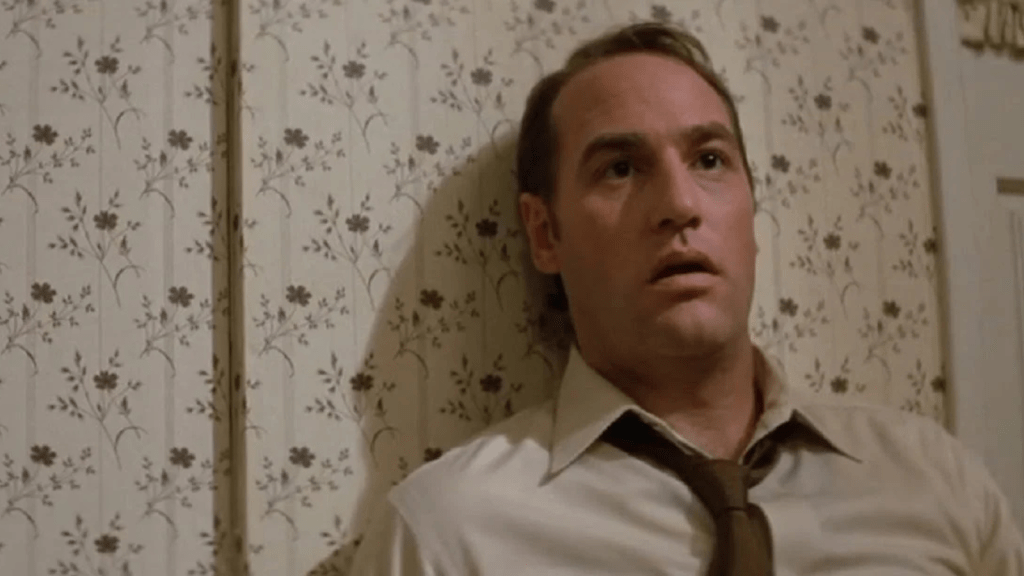
At the center of this aspirational image stands Steven Freeling (Craig T. Nelson), the archetype of the easygoing American father. He sells real estate, spreads confidence, and radiates the kind of wholesome masculinity that believes it can shield a family by sheer moral presence. His certainty is his armor. His naivety is his downfall.
As the haunting intensifies, Steven’s inability to protect his family becomes increasingly painful. Every tool patriarchy promised him, logic, strength, authority, control, turns out to be useless. He cannot interpret the signs. He cannot keep Carol Anne close. He cannot negotiate with forces that do not care about his role as father or provider. He is a man taught that safety comes from his presence, and suddenly his presence means nothing.
The more the haunting escalates, the more Steven retreats into the strategies patriarchy teaches men to rely on: denial, rationalization, forced optimism. But generational trauma is not defeated through avoidance. His collapse is not an indictment of his character but a revelation of something much deeper: patriarchal authority cannot protect families from the harm they inherit.
And like so many fathers in trauma narratives, his inability to name what is happening becomes part of the family’s danger. Patriarchy fails not because Steven is a bad man, but because patriarchy is not built to confront the supernatural, or the emotional. In the face of the unknown, he becomes the least equipped person in the house.

The Mother Who Knows First: Maternal Intuition as Survival
Diane Freeling (Jobeth Williams) moves through the haunting with an instinct Steven lacks. Her recognition of danger is immediate and intuitive, not because she is supernaturally gifted but because she’s emotionally connected. In the logic of horror, and of trauma narratives, mothers often occupy the liminal threshold between disbelief and belief, between the rational world and the psychic one. Diane enters this space seamlessly.
She listens closely, adapts quickly, and believes without needing proof. When Carol Anne vanishes, Diane does not collapse under the weight of impossibility. She becomes the one who maps the new terrain, understanding almost instantly that this is not a crisis that can be reasoned with. It must be felt, navigated, and ultimately confronted.
Diane’s greatest act of survival is her willingness to cross into the supernatural realm to retrieve her daughter. She descends into the rotting underworld of the house because she refuses to abandon Carol Anne to a force born from buried history. In this moment, the traditional structure of the family inverts: the mother becomes the savior, the father becomes the witness, and the patriarchy that promised protection dissolves entirely.
Her intuition is the generational breaker. She is the one who refuses to pass the wound down to her children without a fight. When Carol Anne is taken, Diane does not defer to the police or the church or the husband. She does what mothers in generational trauma stories always do: she goes in after her child, even when the world insists she shouldn’t.
Her willingness to enter the in-between, is the core of the franchise’s emotional truth.

“This House Is Not Clean”: When the Experts Arrive
The arrival of Dr. Lesh (Beatrice Straight) and her ghost-watching team marks a turning point. Their presence signals that the haunting has reached a scale the family can no longer deny. In the film’s generational trauma framework, they act like therapists, stepping into the space where the family’s coping mechanisms have failed.
They give language to what the family cannot name. They map the shape of the wound. They bring with them the tools of those who have seen this before, and, importantly, the capacity to believe immediately.
Tangina Barrons (Zelda Rubenstein), the medium who ultimately takes control, becomes the film’s truth-teller. She enters the home like an elder, a survivor of many hauntings, and the keeper of the language needed to pull the family through the trauma. Her declaration that “This house is clean” is less a statement of fact and more a statement of hope; a belief that the ritual has worked, that the threat has been expelled, that the story can end here.
Of course, it hasn’t. The dead are patient. Trauma is patient. And the Freelings’ story is far from over.

Trauma Travels: The Curse Follows the Freelings
The sequels transform metaphor into certainty: changing houses does not change history. The haunting is no longer tied to Cuesta Verde or its buried dead. It is tied to the Freelings themselves, specifically to Carol Anne, who becomes the gravitational center of the franchise’s trauma.
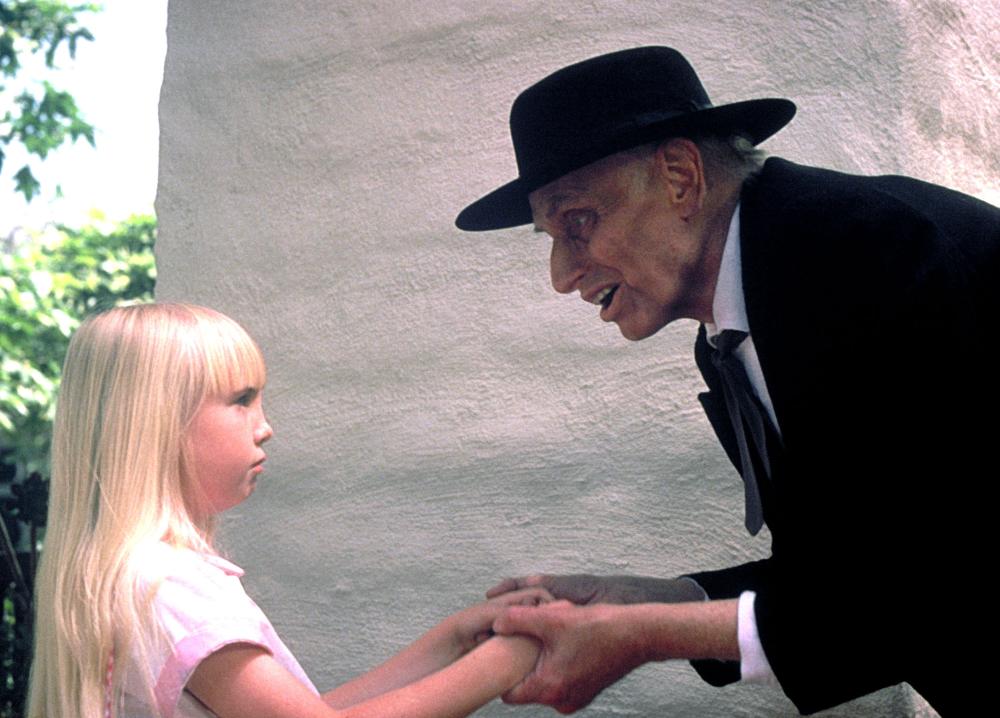
In Poltergeist II, Reverend Kane emerges as the embodiment of inherited harm; the rigid, patriarchal zealot whose fanaticism destroyed his flock and who now seeks to claim Carol Anne. Kane is the past given shape. He is the abusive ancestor, the generational threat, the history the family does not want but cannot escape. His fixation carries a disturbing familiarity: he speaks like a father insisting on obedience, a priest demanding devotion.
By Poltergeist III, Carol Anne’s trauma reverberates outward into her extended family, pulling her aunt and uncle into the nightmare. The haunting no longer resembles a ghost story. It resembles an intergenerational contagion, one that spreads not through houses, but through bloodlines. Mirrors fracture into alternate selves. Reflections distort into trapped, wounded identities. Trauma becomes something that reaches out from behind the glass, grabbing the next person in view.
At this point, the message is unmistakable: trauma does not care where you live. Geography cannot save you. Denial cannot protect you. What you do not face returns twice as powerful.
Across all three films, the central truth is not that the Freelings are haunted by external ghosts. The central truth is that the haunting is internal, familial, and inherited. Their fear of losing control, their reliance on patriarchal stability, their performance of suburban perfection, their denial of buried history; all of these fractures existed before the supernatural arrived.
The ghosts merely make the fractures visible.
“You Moved the Headstones But You Didn’t Move the Bodies“
This line, screamed in anguish and disgust, is the franchise’s thesis and the blueprint of generational trauma:
You cannot cover the past with a prettier story. You cannot deny harm simply because acknowledging it is uncomfortable. You cannot erase what shaped you.
The bodies, literal and metaphorical, remain. The truth remains. And the past always returns.
The Freelings lose their home because the foundation itself was a lie. They lose their safety because it was never real. They lose their stability because it was built on denial.
The ghosts are not monsters. They are consequences.
Poltergeist is remembered for its visual spectacle: the static, the closet vortex, the imploding house, the ooey-gooey pool bodies, but its emotional core lies in its honest depiction of a family crushed under the weight of inherited harm. It is a story of patriarchal collapse and maternal resilience, of experts who can guide but not save, of denial that metastasizes into catastrophe.
It is a story about the past returning until someone is brave enough to stop running.
In the Poltergeist universe, no one ever fully does. The family flees, rebuilds, relocates, and reinvents, but the haunting follows, reminding them, and us, that trauma is not a place. It is a lineage. It travels with the blood. Their house may explode into light and dust, but the ghosts remain, whispering the truth the family cannot bear to say aloud: haunting is not a possession, it’s an inheritance.

 NightTide Magazine
Leave a comment