By Mo Moshaty

Across cultures, the solstice has never been treated as just another date on the calendar. It has been marked with ritual, story, and collective attention. Horror thrives here not because something terrible happens, but because nothing happens quickly. The solstice asks people to wait in the dark and see what survives the waiting.
That question has always been fertile ground for fear.
Anthropologically, the winter solstice functions as a threshold. Time feels briefly unstable. Normal rhythms loosen. The line between past and future blurs just enough to unsettle people. This is why solstice traditions tend to involve ritual rather than celebration alone. Ritual gives shape to uncertainty.
Psychologically, extended darkness does its own quiet work. Orientation falters. Sleep becomes unreliable. The mind starts filling gaps with memory, anxiety, and imagination. Horror rooted in the solstice understands this well. It rarely rushes. It allows dread to accumulate the way darkness does, minute by minute, while everyone insists they are fine.
Waiting becomes the point.

Cold in horror rarely behaves like a jump scare. It wears people down. The body adapts while the psyche negotiates new limits. Hunger dulls decision-making. Isolation amplifies every thought. Time stretches. Things get strange and irritable.
This is why winter horror so often overlaps with trauma narratives. Fear unfolds gradually. The threat feels inescapable because it is environmental rather than antagonistic. There is nothing to fight, only something to endure.
The solstice frames endurance as a test without clear rules, which is often where horror feels most honest.
Literature has long understood the solstice as a psychological pressure chamber.
In Michelle Paver’s Dark Matter, the Arctic night becomes a presence that watches rather than attacks. Terror grows through isolation and observation, through the creeping sense that something has learned your habits. The cold does very little. The waiting does everything.
Stephen King’s The Shining places winter inside a cycle. Snow traps the body while time loops and inherited violence resurfaces. The horror unfolds slowly, which is precisely why it feels inevitable.
Similarly, The Terror by Dan Simmons strips survival of romance. Winter offers no lessons, no moral clarity, and no reward beyond persistence. Authority collapses. Certainty freezes. Endurance becomes exhausting rather than heroic.
These stories share an understanding that fear deepens when nothing changes for too long.
Graphic horror excels at winter dread because still images resist urgency. Panels hold time in place. White space becomes oppressive. Silence stretches.
In Cullen Bunn and Tyler Crook’s Harrow County, seasonal cycles bind folklore to inherited trauma. Winter preserves rather than resolves. The past does not stay buried because the ground never fully thaws.
The Nice House on the Lake by James Tynion IV and Álvaro Martínez Bueno frames catastrophe through calm (at first) domestic space. The horror emerges from suspension. Time refuses to move forward. The solstice logic is unmistakable. Nothing progresses, yet everything feels wrong.
Here, the longest night becomes a formal structure rather than a setting.


When Ritual Is Mistaken for Horror
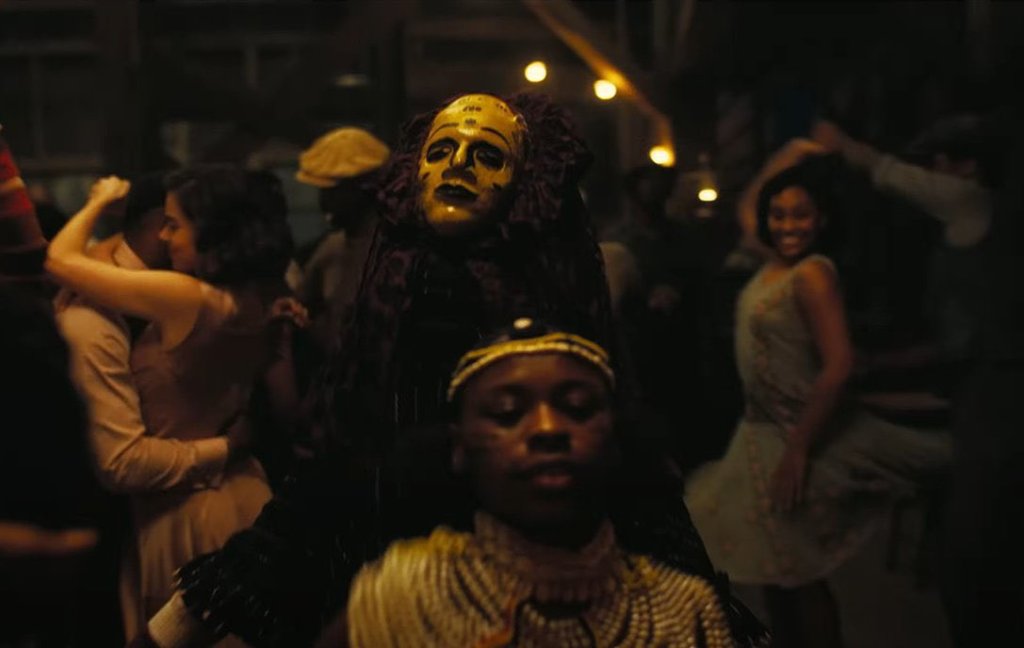
In parts of Europe, winter festivals such as carnival emerged from the same impulse that shapes solstice ritual more broadly: the need to confront seasonal darkness rather than ignore it. Long before masquerade became spectacle, masks, costumes, and public performance were used to symbolically banish winter’s hardships and invite the return of light and productivity. Disguise offered a temporary release from social order, allowing communities to externalise fear and excess before restoring balance. When these traditions are viewed through modern horror aesthetics, attention often lingers on the masks themselves rather than on the practical logic behind them. The unease they provoke says less about danger than about discomfort with rituals that acknowledge how fragile order feels during the longest stretch of the year.
Western horror culture has a long habit of mistaking unfamiliar ritual for monstrosity. When practices are removed from their cultural frameworks, they are frequently reframed through fear rather than understanding. What reads as barbaric or threatening often reflects the anxieties of the observer, not the intention of the ritual itself.
Ritualized endurance, whether expressed through cold, physical exertion, or symbolic inversion, functions as a form of care. It preserves memory, reinforces continuity, and offers structure in moments when survival feels uncertain. Labeling these practices as horrific reveals discomfort with communal vulnerability rather than evidence of inherent violence.
Horror, Ritual, and the Colonial Gaze
Modern horror aesthetics inherit a visual language shaped by colonial fear of ritualized bodies. Masks become monstrous. Blood becomes savage. Endurance becomes barbarism. Horror has always been very confident about what it finds threatening.
Ritual, by contrast, assigns meaning. Horror often withholds it.
Winter solstice rituals are collective and purposeful. Solstice horror tends to isolate, removing community and context until endurance feels punitive. Survival becomes solitary. Fear deepens accordingly.
The distinction matters because horror frequently borrows ritual imagery without acknowledging the structures that give those rituals coherence and care.

The solstice also carries spiritual weight. Rituals meant to coax light back into the world speak to anxiety about absence, abandonment, and unanswered devotion.
Films such as The Blackcoat’s Daughter frame winter as spiritual silence. Belief persists without reassurance. Meaning collapses inward. Terror emerges through neglect rather than invasion.
The longest night becomes a test of faith without feedback.
Winter solstice horror rarely offers catharsis. Light returns eventually, but survival leaves marks. Persistence carries consequences.
This may explain why the solstice continues to haunt horror across media and cultures. Fear does not always need spectacle. Sometimes it only needs time.
The longest night reminds us that endurance can feel unsettling when stripped of meaning. Ritual answers that discomfort by offering structure and community. Horror lingers where those supports are absent.
Waiting, it turns out, can be terrifying all on its own.

 NightTide Magazine
Leave a comment