
By Ray Walton
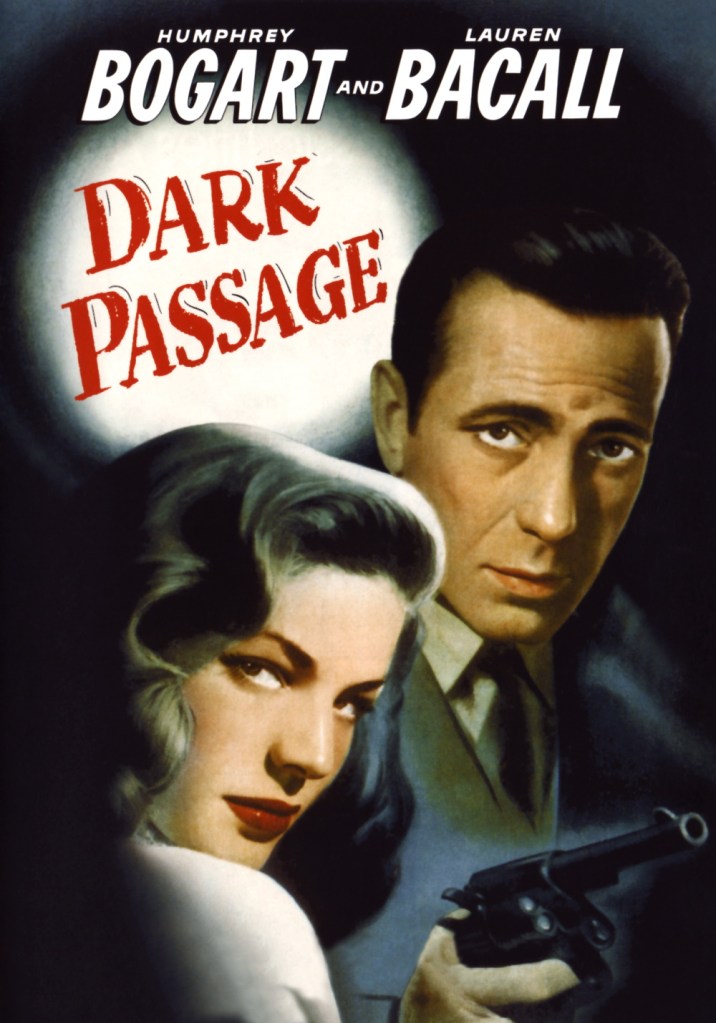
Dark Passage (1947) Director: Delmer Daves ⭐️⭐️⭐️⭐
A man convicted of murdering his wife escapes from prison and works with a woman to try to prove his innocence.
Released in 1947, Dark Passage stands as one of the more formally adventurous entries in the classic noir genre. Directed by Delmer Daves and starring Humphrey Bogart and Lauren Bacall, the film experiments with point-of-view camerawork during its opening act, aligning the audience directly with its fugitive protagonist.
Arriving in the postwar period, when identity, guilt, and reinvention loomed large in American cinema, Dark Passage reflects anxieties about selfhood and erasure. Its unusual structure, shifting from a subjective to an objective perspective, mirrors its central concern: what happens when a man attempts to escape not only the law, but also himself. The film’s formal risks set it apart from more conventional noirs, marking it as a quiet outlier within the genre.
After the mediocrity of The Two Mrs. Carrolls, it was refreshing to return to a much higher-quality Bogart noir. What struck me immediately was the film’s opening act, roughly the first forty minutes, shot entirely from Vincent’s point of view. While Lady in the Lake used this technique for an entire film (to mixed effect), it works remarkably well here, especially given the story’s focus on altered identity.
Because Vincent undergoes plastic surgery, the point-of-view approach makes narrative sense rather than feeling like a gimmick. Even when we finally see an image of Vincent before the surgery, the film does an impressive job of making Bogart appear like a different person entirely. That transition feels purposeful rather than distracting.
The supporting cast elevates the film even further. Lauren Bacall’s chemistry with Bogart is effortless, and Agnes Moorehead steals every scene she’s in, a reminder of why she earned the title “The First Lady of Suspense.” The way early characters reappear later in the story helps the plot cohere, rewarding attention rather than rushing toward resolution.
Watching Dark Passage, I couldn’t help but notice echoes of later crime stories, particularly Tales From the Crypt’s “You, Murderer,” which seems to draw clear inspiration from the film’s structure and themes. It’s one of the more unconventional noirs of its era, and its offbeat path makes it a welcome change of pace.
Why tonight?
Because this is a noir about becoming someone else, and winter is a season built for disappearance.

 NightTide Magazine
Leave a comment