By Mo Moshaty
Horror loves a finish line.
The monster is burned, stabbed, banished, or sealed away. The house collapses. Dawn breaks. A survivor breathes: shaky, bloodied, technically alive. Smash cut to credits.
These endings reassure us that something has been resolved. Order, however provisional, appears restored. The narrative tension is released, the audience is granted permission to exhale, and survival is offered as a moral and emotional conclusion. The problem is that horror’s idea of “resolution” is often cosmetic. The danger has passed, but the damage has not.
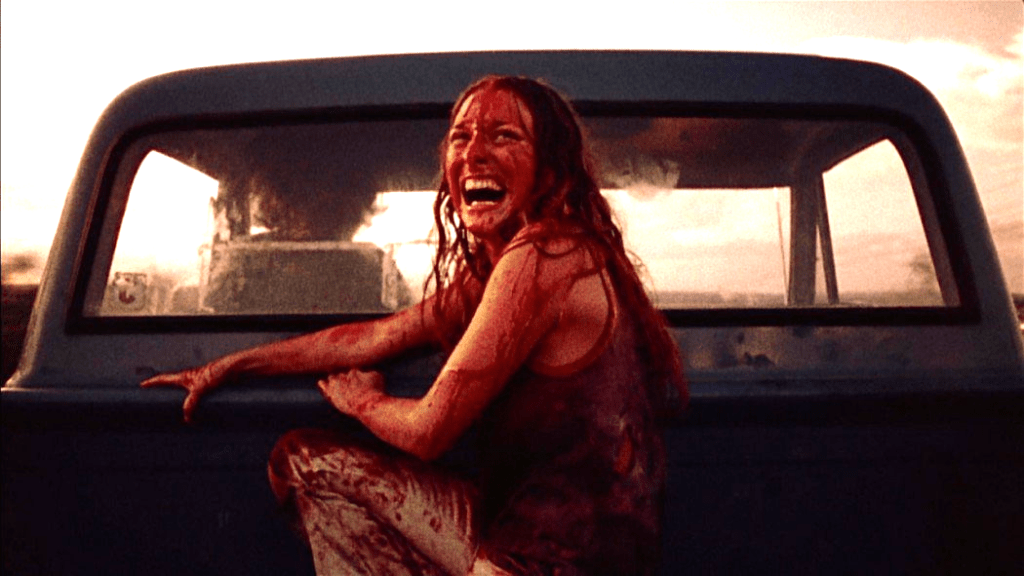
Consider the closing moments of The Texas Chain Saw Massacre (1974), where survival is portrayed as a frantic and relief-filled escape rather than a state of safety. Sally lives, but the film’s final image is not relief, recovery, or even silence. It is hysteria. Laughter that borders on rupture. Survival, here, looks less like triumph and more like psychological fragmentation. The film does not mistake her endurance for wholeness, even if its cultural legacy often does.
Similarly, Halloween presents survival as a provisional pause rather than an ending. Laurie Strode is alive when the credits roll, but she is visibly undone; breathless, shaking, disoriented. Michael Myers’ disappearance suggests that evil is not conquered, merely deferred. And yet, the narrative still asks us to read Laurie’s survival as victory, as if remaining alive is synonymous with being okay.
This is one of horror’s most persistent sleights of hand. Survival is treated as evidence that the system works; that the rules of endurance, vigilance, and moral fortitude are sufficient. The genre congratulates itself for letting someone live, while quietly sidestepping what living actually entails afterward.
Horror treats survival the way capitalism treats burnout: as proof that the system works.
The survivor is alive, therefore the story is complete. What comes next: the insomnia, the hypervigilance, the disintegration of trust, the slow and uncinematic work of recovery, is not horror’s concern. The credits roll not because the trauma has ended, but because the genre has reached the limits of what it is willing to imagine.
Survival, in horror, is not an ending. It is a convenient stopping point.
If survival is horror’s preferred endpoint, recovery is its logistical nightmare.
Recovery does not escalate. It does not crescendo. It does not reward the audience with splash, bang, boom, or catharsis. It is slow, recursive, and often invisible. It looks like missed sleep, cancelled plans, hypervigilance mistaken for irritability, and the exhausting labour of convincing yourself that the danger is, in fact, over.
None of this fits comfortably into a three-act structure.
Horror is built on rupture. The sudden intrusion, the violation, the moment when reality breaks. Recovery, by contrast, is a practice. It repeats. It stalls. It backslides. It resists clean visualisation. There is no montage for learning how to sleep again. No triumphant score for the first night someone eats without nausea, or walks into a familiar space without scanning for exits.
From a narrative perspective, recovery is inconvenient because it refuses to perform.
It asks the story to linger after its most exciting elements have passed. It demands attention without offering momentum. Worse still, it destabilises the idea that trauma can be “overcome” through endurance alone. Recovery implies dependency, on time, on care, on other people — and horror, as a genre, is far more comfortable with isolation than interdependence.
This discomfort isn’t accidental. Horror privileges clarity of threat over ambiguity of aftermath. A monster can be named, chased, and contained. Trauma cannot. Once the threat dissolves into memory, anxiety, and behavioural change, the genre loses its antagonist — and with it, its organising logic.
So horror cuts away.
The credits do not roll because nothing remains to be said. They roll because what remains resists narration. Recovery exposes the lie underpinning survival narratives: that danger is external, temporary, and conquerable, rather than something that reshapes the interior landscape long after the external threat has gone. In refusing to imagine recovery, horror isn’t being cruel; it’s being honest about its limits. But that refusal comes at a cost. It trains us to accept survival as sufficient, endurance as heroic, and silence as closure. The unspoken message is clear: if you lived, the story owes you nothing further.
Recovery is inconvenient because it asks horror to stay when it would rather leave.
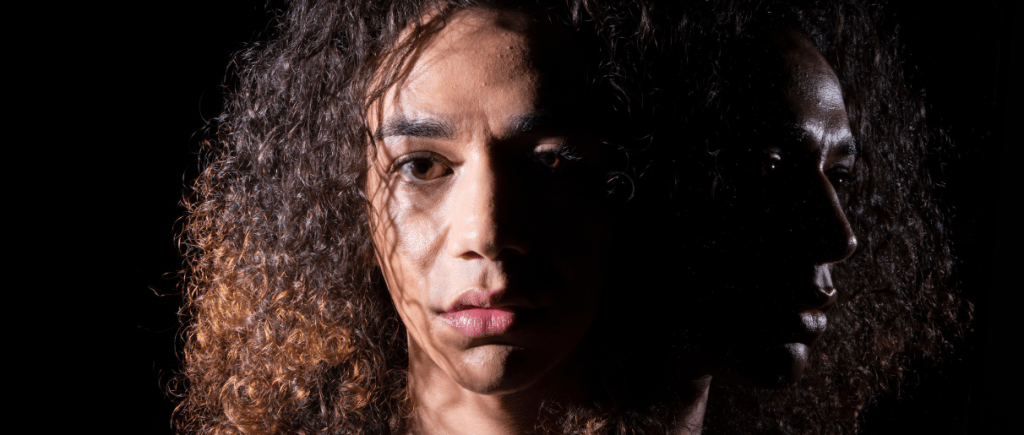
Once survival has done its narrative work, the survivor is rarely allowed to remain human.
In horror, survivors function less as people than as symbols. They stand in for endurance, morality, or narrative order restored. Their interior lives are not the point. Their continued existence is. The genre asks them to live so that the story can stop asking questions.
This is most visible in how survivors are framed at the end of horror films. They are screaming, silent, shaking, or staring into space. These images gesture toward damage, but they do not require engagement with it. The survivor’s body becomes proof of survival, while their mind is treated as an inconvenient footnote. The Final Girl is perhaps the clearest example of this symbolic flattening. She survives because she follows the rules, because she is observant, because she endures. Her suffering is legible only insofar as it confirms her strength. Once she has fulfilled that function, the narrative releases her. What she needs afterward is irrelevant. What she feels is extraneous. Horror celebrates strong women, but it often refuses to imagine what strength looks like once the screaming stops. Strength is framed as resistance under pressure, not vulnerability afterward. Care is not heroic. Need is not cinematic. Healing does not advance the plot.
There is also a gendered expectation embedded in this symbolic treatment. Survivors are praised for their resilience but quietly expected to absorb the cost. They are permitted terror, but not aftermath. They may be changed, but they must not require accommodation. Survival is the reward. Asking for more risks breaks the spell. This symbolic logic extends beyond the Final Girl. Survivors of haunted houses, possession, invasion, and catastrophe are allowed to live, but not to linger. Their trauma is aestheticised, then abandoned. Horror invites us to witness their breaking point, but not the slow reconstruction that follows.
What makes this particularly striking is that horror often knows better. It frames survival as destabilising. It shows us characters who are visibly undone. And then it stops. The survivor remains suspended in an eternal moment of escape, frozen between danger and recovery, never required to become a person again.
In treating survivors as symbols rather than subjects, horror protects its own momentum. But it also reproduces a familiar cultural pattern. We applaud endurance. We mythologize survival. And then we look away when surviving turns out to be complicated, ongoing, and deeply unglamorous.
Survivors are allowed to live. They are rarely allowed to live well.
Despite its resistance to imagining recovery, horror occasionally tells the truth by accident.
These are the moments when a film does not set out to explore the aftermath, but cannot fully suppress it either. The genre’s discomfort leaks through in tone, structure, or final image. Survival happens, but it does not feel victorious. The story ends, but nothing feels resolved.
In The Babadook (2014), the monster is neither destroyed nor banished. It is contained, managed, and fed. The film resists the fantasy of eradication and instead gestures toward coexistence. Grief does not disappear. Trauma is not cured. It is acknowledged as something that must be lived with, not conquered. The horror lies not in the monster’s presence, but in the recognition that it will not go away.
Similarly, Lake Mungo (2008) treats survival as an extended condition rather than an endpoint. The terror of the film does not peak in confrontation, but in revelation. What haunts is not an external threat, but the knowledge that something was missed, misunderstood, or left unresolved. The characters live on, but they do so inside a landscape shaped by absence and regret.
These films don’t offer recovery narratives in any conventional sense. There is no healing arc, no return to normal. Instead, they present suffering as a quiet, compromised state. Life continues, but it does so under altered conditions. The horror is not defeated. It is absorbed.
What makes these examples striking is not that they imagine recovery, but that they refuse to lie about its nature. They don’t frame survival as triumph. They do not suggest that time alone will repair the damage. They allow the ending to feel uneasy, incomplete, and emotionally unresolved. Horror often claims that it cannot show recovery because recovery is uncinematic. These films suggest something else. It’s not that recovery cannot be shown, but that recovery is unsettling. It destabilizes the fantasy that trauma has a clean edge, that danger can be isolated, and that survival restores order.
When horror accidentally tells the truth, it does so by lingering where it is not supposed to. It stays with discomfort. It allows damage to persist. And in doing so, it reveals something quietly radical: survival does not end the story. It changes the terms under which life continues. Living after trauma is not an epilogue. It’s the second act that the genre rarely wants to write.

Horror’s refusal to imagine recovery isn’t just a genre habit. It reflects a broader cultural unease with care itself.
We’re comfortable with stories of survival. We admire grit, persistence, and the ability to keep going under pressure. These qualities are narratively tidy and easy to applaud. What we struggle with is what comes after. Ongoing need makes people uneasy. Visible damage disrupts the fantasy that strength is self-sustaining. Care exposes dependence, and dependence complicates the myth of individual triumph.
Horror mirrors this discomfort with remarkable fidelity.
Its survivors are praised for their resilience, but rarely offered support. They are permitted terror, but not maintenance. The genre accepts pain as long as it remains kinetic. Once that pain slows down, once it requires accommodation rather than confrontation, horror loses interest.
This mirrors how care functions culturally. We celebrate people for surviving disasters, abuse, illness, and violence. Then we quietly expect them to return to productivity, normalcy, and emotional stability. Survival becomes a social contract. You lived, therefore, it wasn’t that bad, homie, and now you’re expected to function.
Horror reinforces this logic by treating survival as closure. It reassures us that living through something is enough, that continued life equals resolution. The work of care is displaced offscreen, imagined as private, inconvenient, or someone else’s responsibility. It’s not accidental that horror struggles most with depicting care when that care would need to be collective. Recovery rarely happens alone. It requires time, infrastructure, patience, and other people. These are not forces horror knows how to personify. There is no antagonist to fight, no ritual to complete, no single moment where care is finished.
So horror defaults to what it knows. It pedastalizes persistence under threat and ignores what it means to live afterward. The survivor is praised for holding on, for getting through, for not breaking completely. What they might need next is beyond the genre’s scope.
This isn’t because horror lacks empathy. It’s because care challenges the fantasy that suffering is temporary and survivable through will alone. Care insists that damage leaves marks, that healing takes time, and that no one gets through untouched.
Horror, like culture at large, prefers to look away from that truth. It tells us that if you survived, you should be grateful. It doesn’t ask what surviving costs or who is expected to absorb those costs quietly. Persistence is celebrated. Support is implied. And the survivor is left to manage the rest alone.
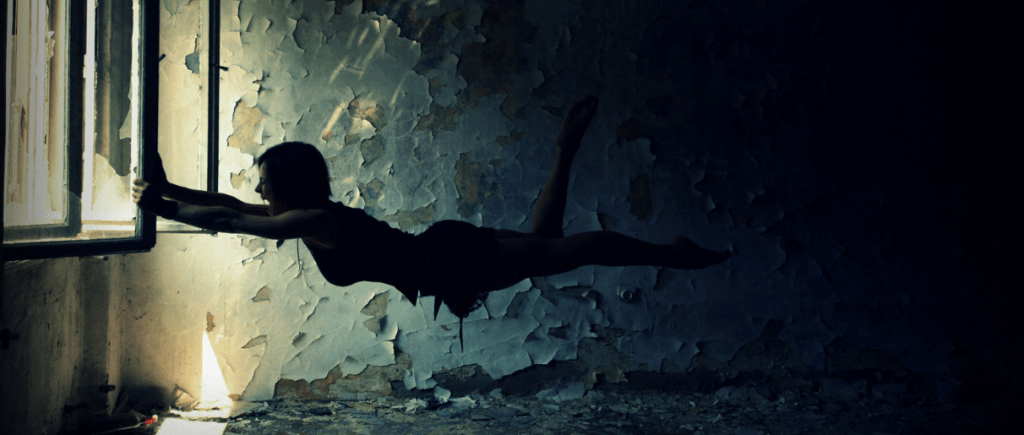
By cutting to black at the moment of survival, the genre mistakes continuation for resolution. Being alive is treated as a conclusion rather than a condition. The story ends not because the harm has been addressed, but because the genre has reached the edge of what it knows how to show. This is where horror quietly sells itself short.
Horror understands fear, violation, and collapse and shows it with incredible dexterity. It knows how trauma enters a body and fractures a life. What it struggles with is what happens when the danger is gone, and the person is still altered. That space is messier, slower, and far less obedient to narrative logic. It refuses to be dramatic on cue. It unfolds in small decisions, stalled days, and half-progress that doesn’t photograph well.
So horror leaves.
The loss here is imaginative. When recovery is excluded, horror limits its own emotional vocabulary. It reduces survival to a finish line instead of recognising it as a starting point. It flattens people into symbols and treats ongoing life as an administrative detail rather than a story worth telling. And yet, the absence itself is revealing.
Horror’s inability to imagine recovery mirrors a wider discomfort with lives that don’t snap back into shape. We prefer stories where damage is temporary, where getting through something proves that the system works. Horror reflects that preference back to us, sometimes uncritically, sometimes with visible strain.
Horror already knows the truth it avoids. It’s best endings feel wrong on purpose. They linger. They ache. They deny peace. They suggest that something important has been left unresolved. In those moments, the genre gestures toward what it cannot fully articulate. Living after trauma is not neat. It is not triumphant. It is not a reward….and to most of us, it wouldn’t be interesting, heart-thumping, or terrifying enough to stay tuned for.
It is simply life, changed.
Horror falters because it pretends that survival is enough. By refusing to stay with what comes after, the genre reinforces the comforting fiction that danger is temporary and damage is containable. Perhaps horror can’t imagine recovery because recovery belongs to a different register of storytelling. Horror excels at rupture, not repair. Its power lies in showing us what breaks, not how it is put back together. But merely surviving is not an ending; it’s the moment the real work begins.


 NightTide Magazine
Leave a comment