
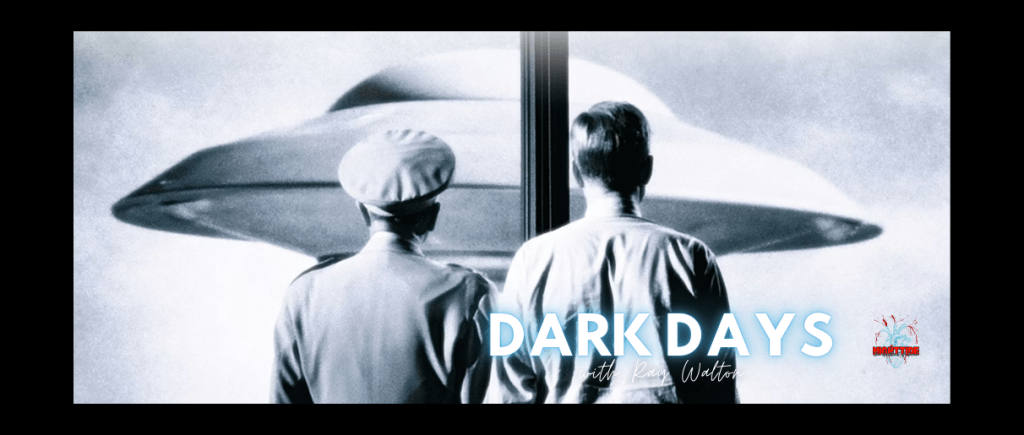
By Ray Walton

Earth vs. The Flying Saucers (1956) Director: Fred F. Sears ⭐️⭐.5
When aliens try to communicate with Earth, Dr Marvin and his wife learn about the species’ plan to invade Earth. Together, they must find a way to save the planet.
Released in 1956, Earth vs. the Flying Saucers arrives deep into the Cold War invasion cycle, when extraterrestrial threats became a favored metaphor for geopolitical fear, technological escalation, and loss of control. Produced by Columbia Pictures and featuring stop-motion effects by Ray Harryhausen, the film leans hard into spectacle, using destruction and repetition as its primary engines of tension.
Like many invasion films of the era, it operates in the long shadow of The War of the Worlds, borrowing its broad strokes while simplifying its philosophical concerns. The result is a film less interested in existential dread than in momentum, destruction, and the thrill of watching institutions fail loudly. Its legacy rests not in narrative innovation, but in its visual effects and its place within a culture increasingly fascinated by skies that no longer felt safe.
This movie is clearly a knockoff of The War of the Worlds. While I would give both films the same rating, I found myself slightly more entertained by this one. At least here, I was not constantly comparing it to stories I felt were handled better in episodes of The Twilight Zone. Ironically, there is still a connection, since footage from this film was later reused in the Twilight Zone episode “To Serve Man.”
I really enjoyed Hugh Marlowe in this. He comes across as an actor who never half-commits, whether he is in a prestige picture or a B-movie. His performance made me want to seek out The Day the Earth Stood Still, just to see him in a different kind of science fiction role.
The aliens themselves look silly, but not laugh-out-loud silly like some of the designs in The War of the Worlds. The story is not particularly memorable, but it moves quickly and delivers enough spectacle to stay engaging. The stop-motion effects are the real highlight, giving the film its energy and identity.
If the goal was to imitate a popular alien invasion movie, this one at least succeeds in being entertaining while it does so.
Why tonight?
Because some fears do not need depth to be effective, only scale.




 NightTide Magazine
Leave a comment