By Mo Moshaty
Like Paula Cole sang:
“Where is my prairie song? Where is my happy ending?”
Horror often promises an ending. We’ve exposed the threat, we’ve defeated the slasher, or we’ve explained their disappearance should they not be where they fell when they “died”. The living remain, and whatever damage was done is implied to belong to the past, if only a few minutes old. Some films are immune.
Some ask what happens after the horror and who’s left holding the horror bag? Not the terror itself but the obligation tied to it. The belief and the consequences that have to be carried by someone. This is where After Horror begins to look less like recovery and more like inheritance.

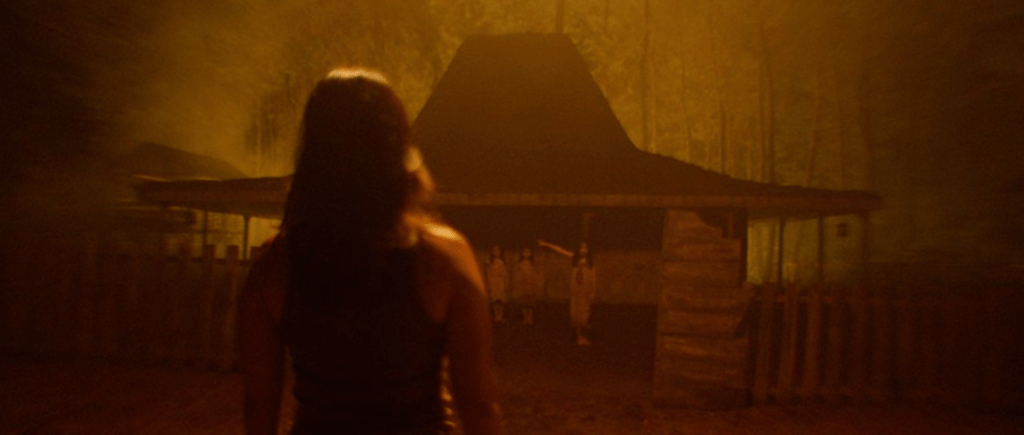
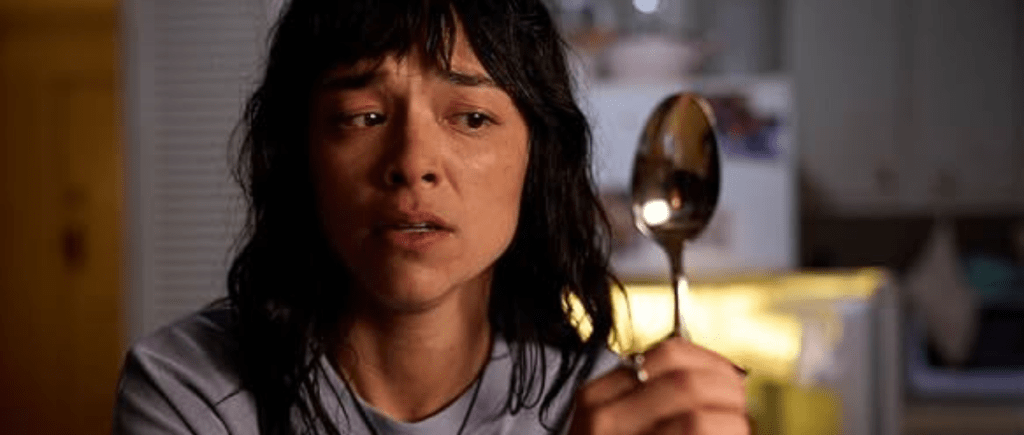
In The Medium, horror isn’t interrupting a life flow; it’s a role passed down through generations, framed as tradition. The burden doesn’t arrive through choice (generational traditions are literally letting dead people run your life), but through expectation. Belief is a supposed long-inherited thing, way before consent was possible, and it usually shows up wearing duty’s coat.
The film makes this transfer seem ordinary, not framing it as cruelty but “just how things are.” It’s continuity for posterity’s sake. The horror isn’t in the possession but the assumption that someone will step forward and carry what others no longer can. The After Horror here is ritualized. The damage persists because stopping it would require breaking structures that are treated as sacred.
Care and obligation are most families’ burdens, but here they become indistinguishable. The cost of belief is absorbed into daily life. What’s left behind consumes the people maintaining it.
It’s also worth noting that The Mediumis one of the films we’ll be returning to in The Shadow Syllabus, under the lens of The Possessed. Its inclusion here is intentional. This is a film that reframes possession not as performance, but as inheritance. Belief, obligation, and spiritual labor are passed down long before we can pass the plate, and possession begins to look more like expectation. As After Horror, The Medium shows how damage is preserved through structures designed to protect, where care and duty become inseparable, and possession is simply the name given to what has already been claimed.
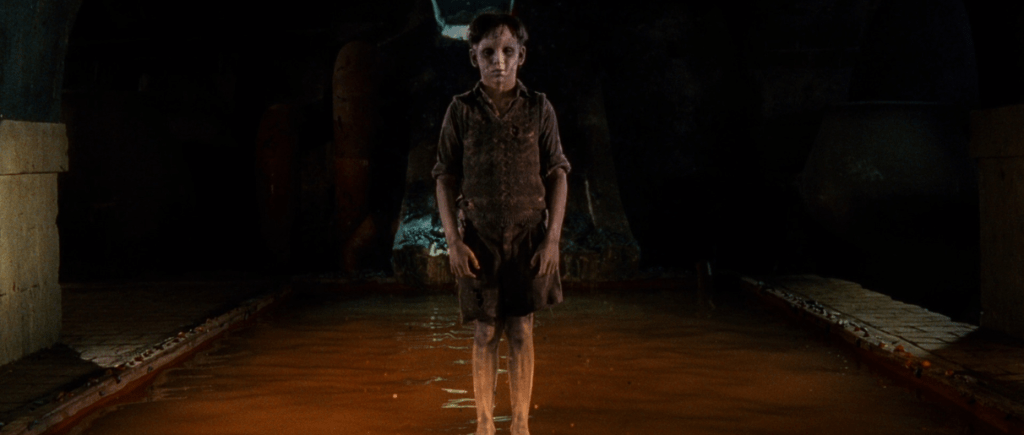
What makes The Devil’s Backbone so heartbreaking isn’t the presence of a ghost, but the conditions that made a ghost necessary in the first place. The orphanage exists in a state of suspended aftermath, stranded between a war that still rages on and a future that offers no protection. An unexploded bomb sits in the courtyard like a monument to delayed catastrophe. Violence has not finished its work. It has simply paused.
The children who live here are already casualties of history, haunted because they have been abandoned by every structure meant to safeguard them. Fathers are gone, loyalty is punished, and care is dolled out in bite-sized pieces. Asking these children to understand their losses would be horrific; asking them to move past them would be impossible.
Santi’s ghost is evidence of violence that was hidden, minimized, and allowed to go on because it was inconvenient (and dangerous) to confront. His presence refuses the idea that time alone can exonerate harm. He still haunts because no one was made to answer for what was done to him. This is where After Horror becomes unmistakably structural. The children don’t inherit fear so much as responsibility. They are asked to live with the consequences they didn’t create and cannot undo. Survival offers them proximity to loss, not an explanation. Grief is normalized.
Even the film’s acts of resistance carry this weight. When the children fight back, they do so with tools made from what remains. Broken glass. Sharpened sticks. Fragments repurposed into defense. What gets passed on in The Devil’s Backbone is memory alongside the trauma. The obligation to remember what history would rather leave submerged. Santi lingers to insist that what happened mattered.
This is why the film’s After Horror doesn’t go away when the villain is gone. The children leave the orphanage, but they don’t leave the past behind…how could they? They carry it with them as knowledge. History remains alive. The damage has been acknowledged, even if it has not been healed.
In The Devil’s Backbone, inheritance is the natural consequence of violence that was never accounted for. Horror doesn’t belong to the dead alone; it’s passed forward to the living, asking them to remember what others didn’t dare to face.
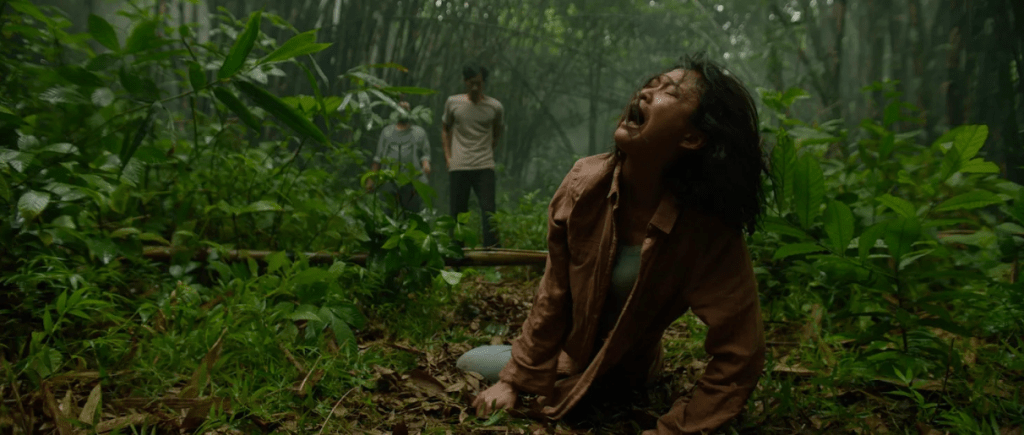
Impetigore, on the other hand, understands that inheritance doesn’t always feel like giving a drawn out explanantion. Sometimes it arrives wearing the atmosphere’s coat, cloaked in silence. As a village already organized around a secret it has decided to live with.
From the moment Maya returns to her ancestral village, it’s clear that she is not entering a mystery so much as stepping into a destiny that’s been waiting for her. The horror doesn’t need to gather momentum; it’s already rearing to go. Homes are shuttered. Birth has stopped. Violence has been normalized through violent ritual. Whatever curse exists here has been metabolized into daily life.
This is After Horror as community practice.
The minuscule amount of agency Maya is given is devastating. She didn’t have any part in the harm she’s being asked to account for, and she doesn’t benefit from the violence that secured the village’s survival. And yet, she is positioned as its necessary endpoint, which happens to women alot in horror…looking at you, Murders in the Rue Morgue.
Inheritance here isn’t symbolic; it’s sadistically logistical. Someone must pay for what was done, and she just so happens to be available. The village’s cruelty is framed as simple maintenance, and the terror is allowed to continue, not because no one knows better, but because caring to do better would require collective reasoning. Guilt has been redistributed across generations until it no longer feels personal, just familial duty.
Like The Devil’s Backbone, the film treats children and descendants as the final custodians of the damage they did not initiate. But where Backbone asks its children to remember, Impetigore asks its inheritor to absorb. One body offered in place of many, and any body’ll do.
There is no aha moment here at the end. No, gee golly gosh, what have we been doing for generations?? Simply an acknowledgement that even if you do feel even a little bad, how can you just…stop? In Impetigore, After Horror is not about living with what remains when the past doesn’t ask to be remembered, but to be paid for.
Across these films, After Horror doesn’t belong to a single survivor but to families, communities, and belief systems that persist long after the original violence has faded from view. What unites these stories is that whatever is passed on is never just culture or tradition. It is an obligation shaped by harm. Care is entangled with expectation. Survival that arrives already compromised.
But there’s something particularly unsettling about horror that works this way, because it resists the fantasy of personal resolution. You can’t defeat what you didn’t create. You can’t heal what you were born into carrying. These stories aren’t interested in redemption arcs; they’re more interested in the cost of maintaining whatever ‘it’ might be.
What gets passed on isn’t always visible. Sometimes it looks like belief, or silence, or communal recognition. Sometimes it looks like love that asks too much. Inheritance can’t be escaped, only acknowledged, and once again, the terror simply changes hands.

 NightTide Magazine
Leave a comment