By Mo Moshaty
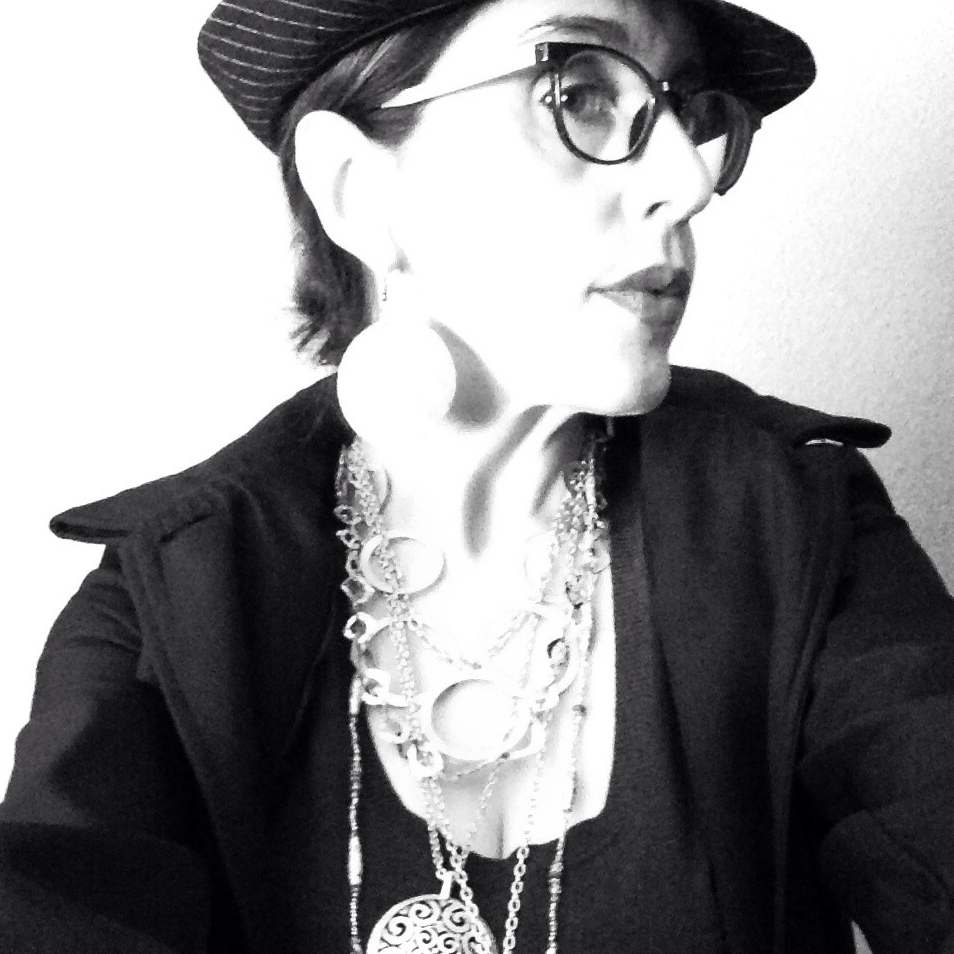
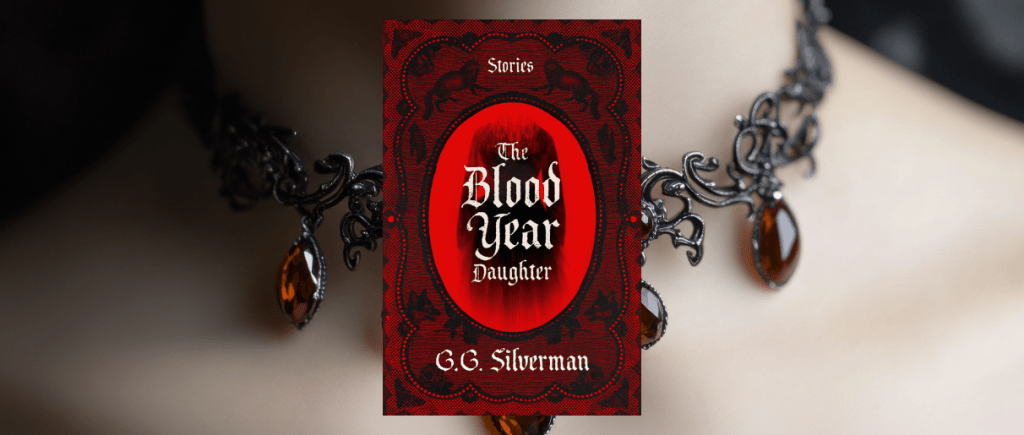
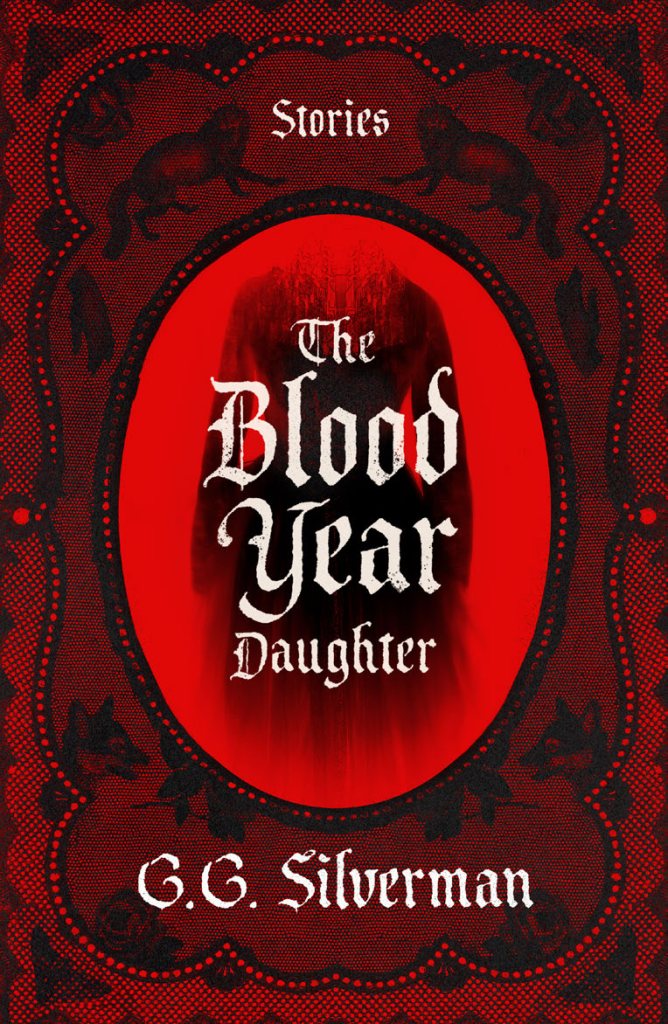
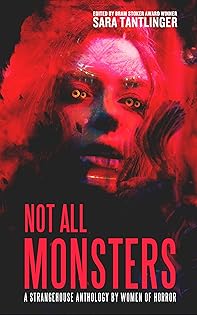
G.G. Silverman is a first-generation Italian-American writer. She is also disabled and the daughter of immigrants. Her short fiction has been nominated for the Pushcart Prize, Best American Short Fiction, and the O. Henry Prize, and has been adapted for short film with a Hollywood debut. Her work has also appeared in Bram Stoker Award-nominated Women in Horror anthologies and has been a finalist for the Speculative Literature Foundation’s Diverse Writers Grant, as well as the Barbara Deming Memorial Fund Award for feminist writing. The Blood Year Daughter (April 2026), a finalist for numerous awards, is her debut short story collection.
Gothic feminist fairy-tale horror, for fans of Kelly Link, Carmen Maria Machado, and Angela Carter
What was your first published work?
My first-ever published piece was a flash fiction story called “The House of Butterflies.” It was inspired by a conversation with a friend where I talked about my fear of expressing my monstrosity—my love of horror—in storytelling form. And my friend gave me wonderful reassurance that the world needs monstrosity as much as it needs levity. I channeled that into a story, and it won an award. It was a very validating experience in terms of learning to embrace my weirdness and authenticity. After that, I was hooked.
Is there a story inside that you have seeds of but can’t seem to connect that’s dying to get out?
I definitely have lots of stories in me that are waiting to be born. Sometimes letting them simmer in my head without any pressure to write them feels good. Sometimes I find that I need to have lived a little bit more for the solution to come. Otherwise, I do start putting them down in bits, a little here and there, otherwise they will never happen. I work on them regularly and try to build momentum. At that point, I try to let things flow intuitively, because if I try to force a specific outcome, I’m actually in the way of what really wants to be told, so when I’m stuck, it’s usually because I’m trying too hard, ironically. I want my writing to surprise me as much as I surprise my readers.
How do you handle a rejected story?
I like the boomerang method. When it’s flung back to me in rejection, I boomerang it right back out again. Usually, my rejection rate can hover around 40 per story, but I try to aim for 100 rejections a year. The more I submit, the better the odds.
What does literary success look like to you?
Right now, my idea of literary success is creating an artistic work I’m proud of that best represents me and my love of language, and creates a depth of feeling. I want people to be devastated when they read my work. I want people to linger in the sensuousness of words. I want people to feel something so deep that they know they have to do something about that feeling. And I want people to see my book as a cultural artifact that stands the test of time. I would be super honored if 20-30 years from now, people press my book in their friends’ hands and say, you have to read The Blood Year Daughter.
Do you read your book reviews? How do you deal with bad or good ones?
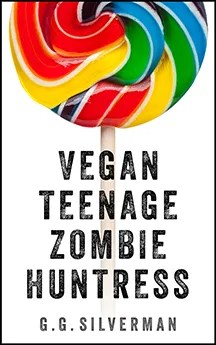
Many years ago, I self-published two teen zombie novels, and at the time, I read most of my Amazon reviews and some of my Goodreads reviews. While my reviews tended to be overwhelmingly positive, every author eventually runs into a head-scratchingly mean one at some point, and you just have to ignore it. But I do celebrate the good reviews. I’m honored every time someone takes time out of their busy day to say they loved a story I wrote. It’s a precious gift.
What is the most difficult part of your artistic process?
It’s a tie between having lots of ideas and deciding which ones to focus on, and going too hard at my writing. I can work so hard that I hit the wall from burnout, so now I’m trying to structure rest into my day as a must-have.
As in most times, the truth is stranger than fiction. What has been the hardest scene or chapter you’ve had to write, if you were channeling personal experience?
In my story “And the first shall go last”—the final one in my soon-to-be-released collection—while the story is fictionalized, I took a cue from college days at art school, where I was stalked by a classmate or two, and experienced sexual violence and threats of sexual violence in the Boston subway system while finishing my degree at night. I felt really unsafe, and unfortunately, it’s an all too common side effect of being female. If you’re in public a lot, you constantly live under the threat of sexual assault.
What inspired your latest work?
The Blood Year Daughter is a response to my experience of being female, being the daughter of immigrants, as well as being disabled. In it, I’ve channeled my rage, my feelings of monstrosity, and my feelings of Otherness. I’ve also channeled my desire for agency, my longing to be understood, and be in community. It’s also a hat-tip to my love of gothic literature and film, and to my Italian storytelling heritage. If you’re a hardcore Italian geek, you’ll notice a nod to Fellini’s La Strada (The Road), or to Italo Calvino’s documentation of the Italian version of the Bluebeard tale, SilverNose. My book is also a love letter to language and surrealism. Oh, and to dogs and wolf-girls. Wolf-girls, unite!
If you could tell your younger writing self anything, what would it be?
I would tell her that she needs to 100% embrace who she is, even if she’s weird. The biggest lesson I’ve learned, as an adult, is that authenticity does get rewarded, and if you’re too busy trying to be someone else, you’re missing out on an opportunity for deep fulfillment.
What’s the best advice you’ve ever gotten from a fellow writer?
One of my mentors, Alexander Weinstein, once said, banish your Inner Critic. Buy them movie tickets for the day, or tickets to an amusement park, and write your first draft unfettered. It’s great advice!
What is your go-to comfort horror/Sci-Fi book?
Angela Carter’s gothically glorious The Bloody Chamber. She was the master at taking fairy tales and reinventing them in feminist fashion, replete with lush, sensuous writing that makes me swoon. All hail Angela Carter!
If you were to genre-hop, which genres would you most like to try writing?
I’d love to get more into nonfiction. Right now, I’m writing my real-life experiences of The Strange on Substack. It’s a series called “Stranger Than Fiction,” and there I talk about things like reincarnation, psychic experiences, ghosts, weird confluences, and, because I live in the Pacific Northwest, Sasquatch does eventually factor in.
I’d also love to dip into sci-fi at some point and write a UFO story. I’m obsessed with UFO culture, and it would be very fun to put that obsession into a story. X-FILES FOREVER!
In G.G. Silverman’s debut fairytale-horror collection, The Blood Year Daughter, a woman builds husbands out of gravel and slaughterhouse feathers, two sisters eat cinnamon-scented pieces of their mother, and a charming doctor’s murdered brides whisper warnings to his newest wife.
Silverman’s women and girls escape smiling captors, draw blood to curse their loved ones, and wield fear to defend themselves in post-apocalyptic worlds. They ignore the insults of rotting Elderwomen filled with flies, resist marriage proposals, and fill themselves—joyfully—with multitudes of snakes. They are murdered and choose to live again.
Drawing from folktales, Silverman’s Italian roots, and killers both real and imagined, The Blood Year Daughter’s stories recall Kelly Link and Carmen Maria Machado. Spare and glittering as a spiderweb, sharp as a needle through a husband’s nose, they establish G.G. Silverman as a formidable voice in feminist horror and magical realism.

 NightTide Magazine
Leave a comment