
By Sharai Bohannon

This conversation is about institutional responsibility and racial harm in public spaces. Disability advocacy and racial accountability can and must coexist. NightTide stands by both.
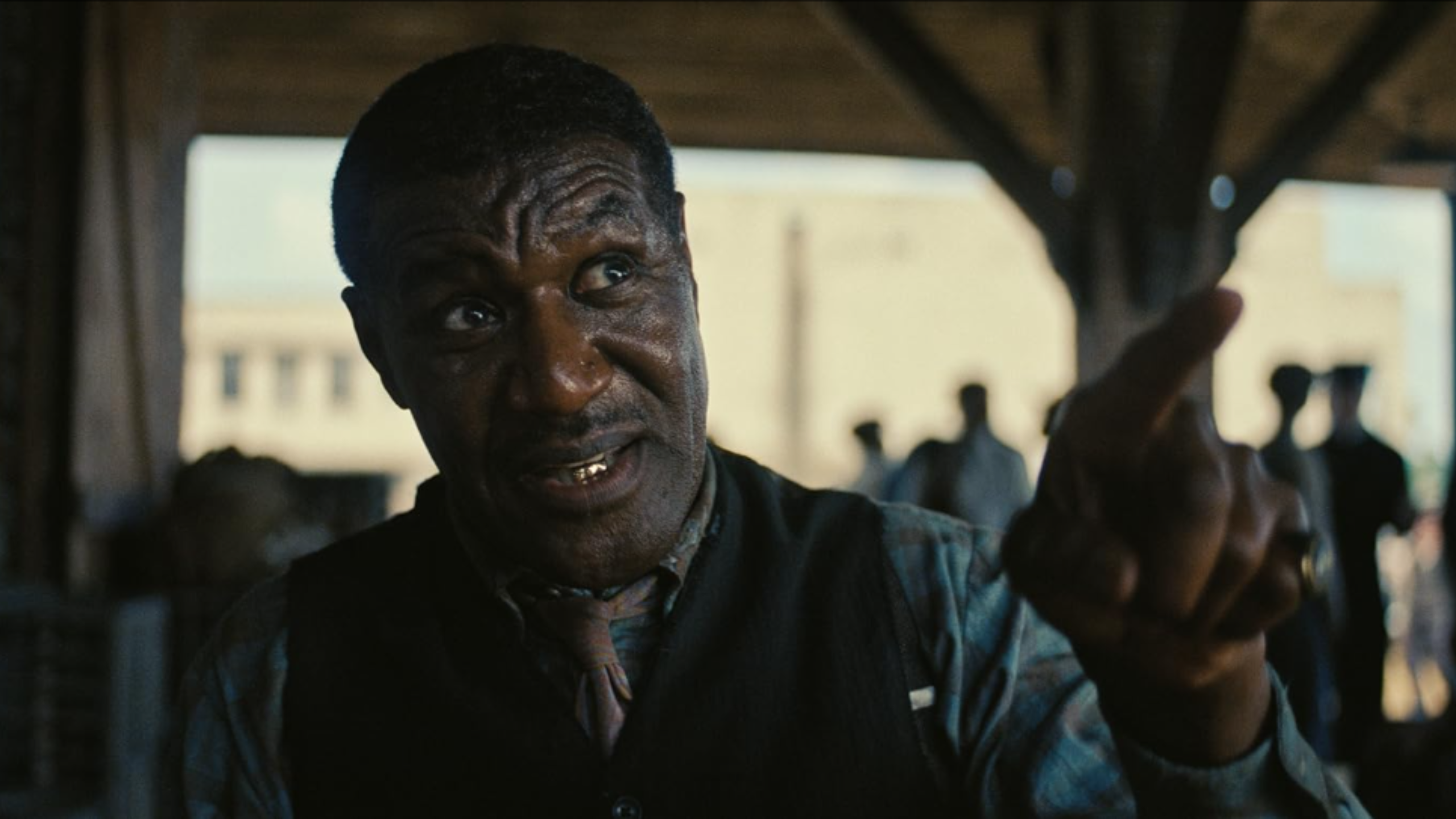
Sinners is easily one of the best films of this decade, if not the millennium. It continued Ryan Coogler’s streak of making art for the culture that crosses into mainstream. This is impressive because the film industry makes it ridiculously difficult for Black artists to tell the kind of stories we actually want to see. The main reason I checked out of award shows as a kid is that I called shenanigans after watching a couple of them. How do we live in a world where Denzel Washington has only two Academy Awards? One for Best Supporting Actor in Glory, and one for Best Actor Training Day. 12 Years a Slave is how Lupita Nyong’o got her sole Oscar, for a supporting role. These are two of the few highly skilled Black actors who deserve more awards for the dozens of stronger performances they have given the world. Sadly, the industry likes stereotypes and racial trauma porn. That is how they see us, and that is what they want to reward.
Black art that does not cater to the white gaze is not received well. Because criticism, like most things in life, is overwhelmingly filled with white men. That is why films like Tales From the Hood were panned and are just now reaching 60% on Rotten Tomatoes. Tales From the Crypt Presents Demon Knight sits at 45% on the site at the time of writing this. Meanwhile, the Black filmmakers who get the critics to admit they have made quality films have the internet after them. Look at Nia DaCosta’s track record and explain why she is somehow the villain among filmbros. Much like Coogler, most of her movies are based on IP, and all are bangers. Yet the trades paint her as a failure for things beyond her control. We are currently watching them treat 28 Years Later: The Bone Temple as the flop of that franchise, rather than investigating Alex Garland. Or listening to all of us who did not have a good time with 28 Years Later.
Everyone likes to pretend that things have improved for Black people at some point. I guess that is easy to do when you talk over us when we try to raise the alarms. This is a huge reason why many of us started podcasts during the pandemic. We got tired of listening to people who do not care to learn about the culture trying to tell us what Black excellence is. Especially when they are only highlighting movies that center whiteness and white saviors. We got tired of them missing the mark and telling us to be grateful for regurgitated stereotypes. We stopped waiting and started buying microphones.
Jordan Peele’s Get Out came out nine years ago and has caused many white critics to tell on themselves. Suddenly, whenever they see more than two Black actors in the film, or if the film mentions race at any point, “It’s like Get Out.” I hate it here, and I want to scream. Which is why I am appalled at the way the Sinners cast and crew have been treated. I am not surprised, though. I see the disrespect and know that no one is going to talk to their writers, interviewers, or change their practices. This would involve them addressing how they failed and maybe unpacking a bias or two. More importantly, no one cares if they hurt Black people and will not go out of their way to right these wrongs.

Sinners is one of those few Black movies that broke out of containment. It is not going down as “Black famous” because it is hard for people to “not get around to it.” That is the usual excuse for skipping films like His House and other movies with Black leads. Sinners is daring, smart, sexy, well-made, and it reset the culture. However, that did not stop it from falling prey to the same issues that all Black art meets in an overwhelmingly white industry. Sure, people say they are allies and want Black stories. Yet, those same people refuse to stand up for the creatives behind narratives they claim they want. They cannot be bothered to set their privilege aside to sit in the discomfort of knowing they are still happily benefitting from systemic racism. They cannot stop reflexively asking Black folks to shrink ourselves. They remind us that they only like the idea of us, but they do not actually want us. Being able to say you have a Black friend is more important than actually knowing Black people and actually treating us like humans.
The entire Sinners theatrical run and award campaign proves that. From Variety yelling the quiet part out loud in the headlines to BAFTA dodging responsibility for the slur heard around the world this weekend. Instead of celebrating the historic wins and side-eyeing BAFTA for somehow being whiter than the Oscars, we close down Black history month with the N-word. We also watched everyone fumble handling this horrific moment on so many levels, and taking a few days to apologize. This awful moment is why intersectionality is so important. This issue became very white and Black online.
Some framed the slur directed at Michael B. Jordan and Delroy Lindo while they were on stage through the lens of John Davidson’s condition (Coprolalia in Tourette’s), while the racial harm in the room received far less attention. Many Black viewers were left asking where the apologies were.
We have watched the cast of Sinners take a lot on the chin this last year. We watched non-Black Instagramers write the film off as a From Dusk Till Dawn knockoff. This is a wild way to confirm they are anti-Black and do not watch enough movies. We watched Timothée Chalamet take home Best Actor at the 31st Critics Choice Awards in front of Jordan. Jordan gave the performance of his career in Sinners, playing two different characters and two versions of one of those characters.
This is very much akin to Jamie Lee Curtis taking Best Supporting Actress at the 95th Oscars in 2023. That year should have belonged to her co-star Stephanie Hsu. Hsu was the actual supporting actress in Everything Everywhere All At Once, who gave a stronger performance, but got nothing. When white people dance around the racism of that moment and say things like, “It was more of a career win for Jamie,” they somehow forget Angela Bassett. Bassett also has a career and was nominated the year this confusing moment happened. No one wants to talk about that, though, because this is a post-racial world. Which is why the obvious trend of disrespecting POC, specifically Black people, at award shows will never die. This does not impact white people, so they do not want to do anything about it.

This is why all of us who actually care about intersectionality are not surprised. If anything, we are upset that we have come to expect this behavior. I am also annoyed that our non-Black friends are still playing catch-up. Sinners Production Designer, Hannah Beachler, took to Twitter to explain that the N-word was used three times that evening. She also rightfully called out the half-hearted apology to people who “were offended”. I remained unsurprised because Sinners is a reminder that these institutions do not know how to treat Black art or value Black artists. This is because these institutions run on systemic racism. Of course, no one cut the slur from the prerecorded award show. That’s because no one thought it was a big deal, but the outcome suggests otherwise. They spent those two hours doing anything but care about what happened on their watch. There was no content warning, nor was there anyone smart enough to edit the moment out before airing it, as they apparently “didn’t hear it”.
BAFTA is only the most recent entity to have its lack of intersectionality become its own downfall. Like many other institutions (and most films coming out of Hollywood), it was caught up in trying to get a cookie. That is why the powers that be forgot to see anyone in that room as human. They forgot that the N-word being hurled at beloved Black actors in a viral clip online is not the best way to close out Black history month. I doubt nary a Black disability advocate has ever been called for this event. Even if preparation was in place, the follow-through clearly fell short. Davidson himself told Variety that organizers and broadcasters were aware of his condition and had assured him any profanity would be edited out, and he later questioned why a microphone was placed so close to him and why more safeguards weren’t in place. Which is why pretending this is an isolated ‘mishap’ misses the bigger picture.
None of this started this weekend. Hattie McDaniel won an Oscar and had to accept it at a segregated table. Academy Award winner Sidney Poitier became a leading man by being “an acceptable Black”, but was expected to carry himself in ways that made white rooms comfortable. Halle Berry made history in 2002 and remains the only Black woman to win Best Actress. The stages get shinier. The speeches get longer. The pattern stays the same. BAFTA can kick rocks, but this problem is older than them. What exhausts us is not just the harm, but the expectation that we will swallow it, smooth it over, and thank the room for the opportunity to be there.
The reason so many Blerds are lovingly critical of the things we love is that most media we consume is three biases in a trench coat. Most media still ignore us completely, make us sidekicks, or kill us off. The industry does not want to unpack terms like colorism and anti-Blackness. No one really understands that the CROWN Act is literally us asking for people to stop discriminating against us for having hair. This world is upside down, and BAFTA fumbling the apology for the N-word ruining everyone’s weekend is another day that ends in y. Do you know how many Black people have had a supposed white friend drop the N-word? I lost count and also lost contact with all of those people. However, the most creative was a girl I hated who called me a niglet in college. She was dating my best friend, who failed the test when he said she was lucky that we are all friends, as he tried to move past it.
White audiences are insulated from the lived impact of racial slurs. This is in large part because they have the privilege of learning about racism from books. I assume that makes it more quaint and easier to romanticize what their great-grandparents were doing. All I know is that what happened at the BAFTAs should not have happened. It should have also been handled differently, and real apologies should have been the starting point. Unfortunately, it is now another reminder that award shows are some of the worst spaces to be Black in. As if we are not reminded of that every single year.
** At NightTide, we support and platform disabled creatives amongst all historically marginalized communities. Disability advocacy and racial accountability are not opposing positions, and they should never be treated that way. Institutional responsibility doesn’t vanish in charged moments. When harm happens in highly produced spaces, marginalized communities shouldn’t be expected to quietly absorb it. Intersectionality asks more of the institutions that claim to represent us: more preparation, more care, and better responses.


Sharai is a writer, horror podcaster, freelancer, and recovering theatre kid. She is the host of the podcast of Nightmare On Fierce Street, one-half of Blerdy Massacre. She has bylines at Fangoria, Horror Press, HorrorBuzz, and is Co-EIC of Horror Movie Blog. She spends way too much time with her TV while failing to escape the Midwest.
Leave a Reply