
By Michele Schultz
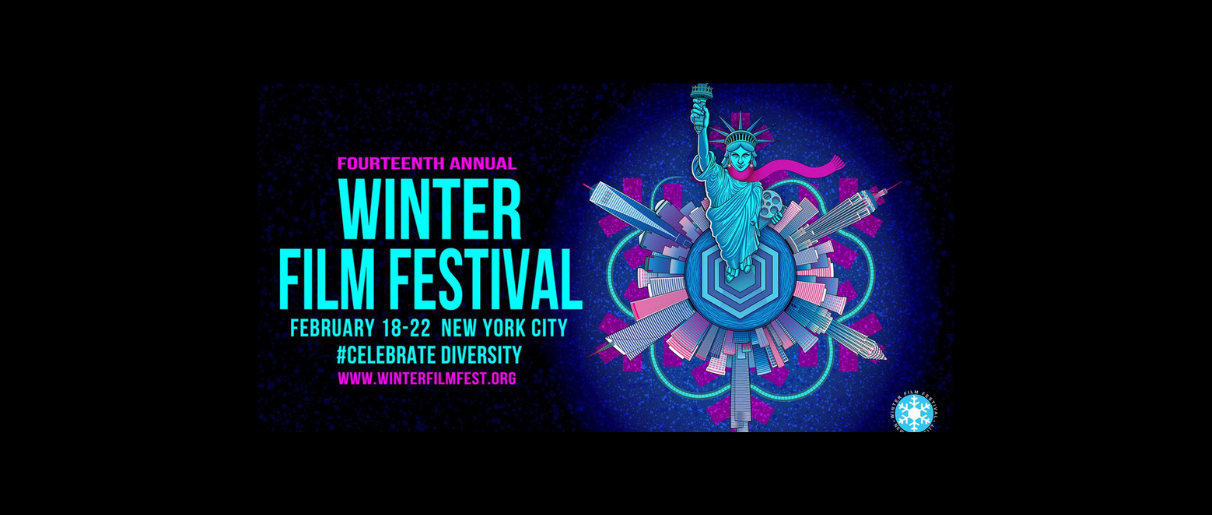
Forget the flu epidemic or the cold—New York City caught a different kind of chill! The fourteenth annual Winter Film Festival kicked off on Wednesday, February 18, with a networking bash before screening a diverse range of genres at Regal Cinema Union Square through February 22. Most notably, the spine-tingling horror shorts proved far more captivating than any snowstorm.
Winter Film Festival horror lineup was certainly a multi mega feature that held our attention: Tainted Love (dir. Youngho Gye); All Your Sisters (dir. David Daniels); Blossom Needs A Ride Home (dir. Tim Schwagel); Y.M.G. (dir. Alexandra Warrick); The Inspector (dir. Jandro Lopez); Bound In Rosemary (dir. Reanna Madson); Bury It! (dir. David Olonoff); Show Me How To Die (dir. Gerardo Maravilla); Don’t Leave Me (dir. Jennifer Saura); The Woman in the Bed (dir. Victor Mellors); The Binding (dir. Ryan Kennedy); Don’t Watch This (dir. Danny Pineros); Affordable Housing (dir. Eunice Levis, executive producer Wi-Moto Nyoka).

‘Don’t Me Leave’ director Jessica Saura said the focus was a psychological horror with supernatural elements, while the thematic exploration and the narrative center on a cultural anthropologist grieving her husband’s loss and delving into occult rituals, which Saura spoke about the production and use of lighting transitions to the protagonist’s journey, the narrative’s connection to mythology as Saura’s personal interest in horror, the inspiration, the film’s themes, lighting choices, and the future of filmmaking:
“I’ve always been attracted to making films about what frightens me! That impulse to translate the dark moments or fear of the unknown into pictures is something I’ve done as long as I can remember. It’s really about trauma, despair, denial, and the unraveling of what we think of as our rational minds and our empirical worldviews. We moved to more of a cool palette, and so we have a total shift with the greens and blues of the night sky. It’s a shifting landscape! I think all you can do as a filmmaker is make films that are stories that you feel are important to you to tell, and hope that there’s an audience out there that will appreciate them for what they are.”

Bound in Rosemary director Reanna Madson said the creative process and inspiration behind Bound in Rosemary, cover the integration of dance into film, particularly in the horror genre, the unique narrative choices, which explain the conceptualization of a dance possession, the use of lighting, the setting to enhance storytelling, the thematic elements of possession identity that Madson also touches on the role of humor in horror and the perspective:
“I really wanted to make a dance possession film where either we see it first started off with a similar idea of someone being possessed, and we just watch them, but then it slowly turned into a dance battle between the two people over the body so I think humor can belong in horror because it can make the funny parts more funny— the scary parts more scary, so I want it to be awkward when I wanted Rosemary to get a little cocky: ‘Hey, you can’t do the sequence, but I can, so this is why I should have your body.’ I feel like whenever we see possessions and stuff, one wins— that’s it! And I thought it was very interesting what happens if people have to share it? What happens next for this character? Now this character has two people living in their body— I feel like that could be a whole other film.”

‘Affordable Housing’ Executive producer Wi-Moto Nyoka said the primary focus on the creation and thematic elements of Affordable Housing, a horror comedy short that addresses the challenges of finding affordable housing to depict the absurdity and terror of apartment hunting in a big city. Nyoka discussed the interdisciplinary approach to filmmaking, including the use of hybrid animation and live-action, influenced by budget constraints and the desire to create a unique storytelling experience emphasized the importance of horror as a genre for addressing societal issues and fostering community through shared experiences as further explain the influence of silent film techniques, horror as a outsider art, and the future of horror:
“My commitment to telling this story, particularly as a horror comedy, is really to address the terror and the silliness of trying to find an affordable place to live. It feels like you are in weirdo upside down world— it feels like you’re inside an Acme cartoon where anvils and pianos can be dropped on your head, so it was very important for the unison to really capture this is what it’s like to look for an apartment in a big city on planet earth. Silent films really helped with that because there’s so much of that that is just expression, movement, and scoring. It is outsider art, so if you are an outsider for whatever reason, I do think you’re going to find yourself in this section. To me, it makes sense that a lot of these difficult or tender conversations would be addressed through horror and sci-fi, where we can build a world. I think it’s just about folks really wanting to come together.”

Part of the Cherry Picks critic community and contribute to digital publications (e.g., Drinks, Food, Life) and FanSided’s entertainment and lifestyle verticals like Culturess, TripSided, and 1428 Elm. With a background in retail merchandising, fashion marketing, and costume design bring a aesthetic storytelling perspective on horror.
When not writing, work in field operations for an entertainment provider specialize on theater out-of-home (OOH) marketing impact measurement.
Part of the Cherry Picks critic community and contribute to digital publications (e.g., Drinks, Food, Life) and FanSided’s entertainment and lifestyle verticals like Culturess, TripSided, and 1428 Elm. With a background in retail merchandising, fashion marketing, and costume design bring a aesthetic storytelling perspective on horror.
When not writing, work in field operations for an entertainment provider specialize on theater out-of-home (OOH) marketing impact measurement.
Part of the Cherry Picks critic community and contribute to digital publications (e.g., Drinks, Food, Life) and FanSided’s entertainment and lifestyle verticals like Culturess, TripSided, and 1428 Elm. With a background in retail merchandising, fashion marketing, and costume design bring a aesthetic storytelling perspective on horror.
When not writing, work in field operations for an entertainment provider specialize on theater out-of-home (OOH) marketing impact measurement.
Leave a Reply