
An Excerpt by Matt Rogerson
The following article features excerpts from the book ‘The Vatican Versus Horror Movies’, written by Matt Rogerson and published by McFarland & Company. The book can be pre- ordered here from the publisher, Amazon, Google Books, Barnes & Noble and all good
online booksellers, and will be published in January 2025.
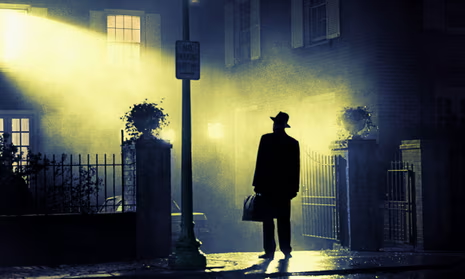
In 1973, Warner Bros and celebrated ‘New American Wave’ director William Friedkin released a film that would have repercussions on cinema in more ways than one.
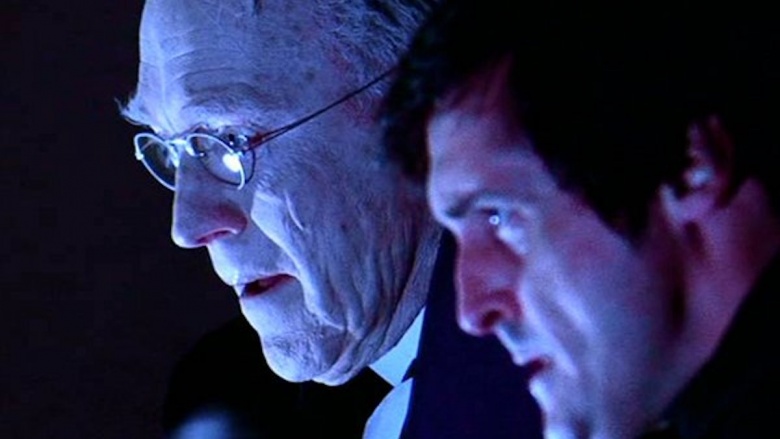
Five years earlier, the Satanic Horror subgenre was already sending ripples through cinema and ruffling the feathers of critics and censors, thanks to Paramount Pictures’ celebrated Rosemary’s Baby and Hammer Studios’ Dennis Wheatley adaptation The Devil Rides Out. Films with themes of Devil-worshipping cults and the coming of the Antichrist would soon enough dominate the drive-in circuit and city picture houses alike. The likes of Tigon British Films and their folk-horror titles Witchfinder General and The Blood on Satan’s Claw would leap in to fill the void left by a Hammer mis-step (the studio, despite holding the rights, did not produce a follow-up to their 1968 Wheatley hit until 1976’s To The Devil, A Daughter, by which time the ailing studio was already on its way out of business). Twentieth Century Fox and Paul Wendkos also capitalized on the burgeoning trend with 1971’s The Mephisto Waltz, while in Italy Liger Films would release Mario Caiano’s Shadow of Illusion (about a cult in Egypt who make ritual blood sacrifices to the deity Osiris) in the same year. But it would be in 1973 that Friedkin’s gritty adaptation of William Peter Blatty’s book The Exorcist, pitting a Priest of wavering faith and self-belief against the machinations of the demon Pazuzu, Dark Angel of the Four Winds, hit cinemas and changed everything.
In the US, The Exorcist became the highest-grossing R Rated film in history (a record it would hold onto for sixteen years), was nominated for ten Academy Awards (winning two, for Best Adapted Screenplay and Best Sound Mixing), and won gold in four of seven Golden Globe nominations it received. Legend tells us it also caused heart attacks and miscarriages at screenings and elicited localized mass hysteria in packed theater houses that would inspire journal articles on ‘cinema neurosis’ and the consternation of the religious right.
Friedkin takes what appears to be legitimate knowledge of the earnestly practiced spiritual ceremony of exorcism, intended to vanquish malevolent presences and endorsed by the Church, and mixes it with a vulnerable priest who finds his faith plunged into doubt, and a little girl who masturbates with a crucifix. The sacred and the profane is at home here, along with a good helping of apostasy. It is the film’s treatment of Roman Catholicism that lies at the heart of much of its praise, initiating a cultural conversation at the time that elevated the film from its (initially) mixed critical reception. The Exorcist inspired a slew of box office hits and grindhouse fare about demonic possession, the Antichrist and the Devil over the next decade.
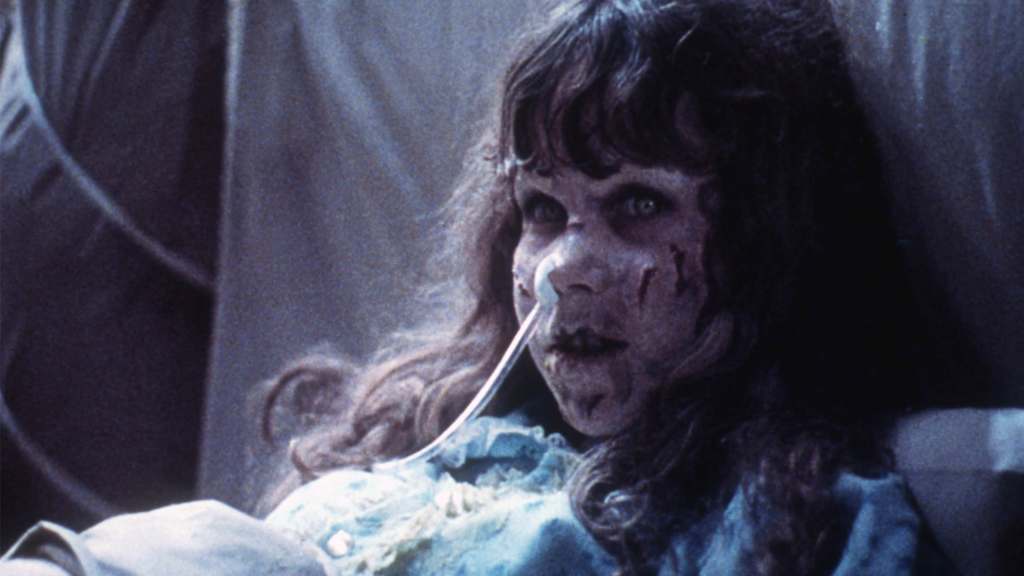
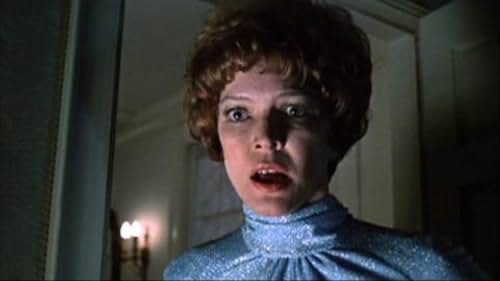
The Exorcist’s impact on cinema is undeniable. Regularly topping critics lists of the greatest horror films ever made, making it into the AFI’s list of key films of the first 100 years of cinema and Steven Jay Schneider’s 1001 Movies You Must See Before You Die, Friedkin’s movie has enjoyed a cultural significance that few horror movies do, and its inspiration is still felt in the genre, and indeed in cinema more widely, half a century later.
When speaking of the Vatican and of the horror movie, there is perhaps no more obvious example to link the Roman Catholic Church and the darkest of cinematic genres than The Exorcist. On one level, it is about The Vatican, pulling back the curtain on one of its most controversial of practices and making sport of the ultimate battle between Good and Evil.
The Segnalazioni Cinematografiche was the fortnightly film review pamphlet published by the Vatican and disseminated to Catholic congregations across all of Italy. It was a part of the Holy See’s many attempts to either control or influence filmmaking, and it had proven a powerful tool since 1935. Every film due to be released in Italy would be pre-screened and considered by the Vatican and, irrespective of what the State censor’s edict may have been, told the country’s Catholics what they could and couldn’t watch. 96% of the country’s people were Catholic at the time: if your local cinema owner or projectionist was, they would not agree to screen films their Church had objected to. Written by senior clerics, the reviews of horror films were usually dismissive (consisting of a few disgruntled insults) and carried a one-word verdict: Inaccettàbile.*
For several decades, that one word would spell a film’s doom in Italy.
When it came to Friedkin’s motion picture, however, the Vatican’s writer chose his words carefully. The dismissive tone that was employed for the typically wretched horror movie was missing, in its place a serious interrogation of The Exorcist’s aesthetics and its deeper moralistic value: “There is no reason to doubt the objectivity of the facts which, moreover, have numerous findings in the ancient and modern ecclesial chronicle and are preceded by rather explicit evangelical episodes on the ‘freedoms’ granted by Divine Providence, powers of darkness, puzzling mysteries and sometimes the perennial struggle of Good against Evil.”* The Vatican’s review affords the film far more respect than it did to any other kind of horror film, discussing its apparent realism in great detail.
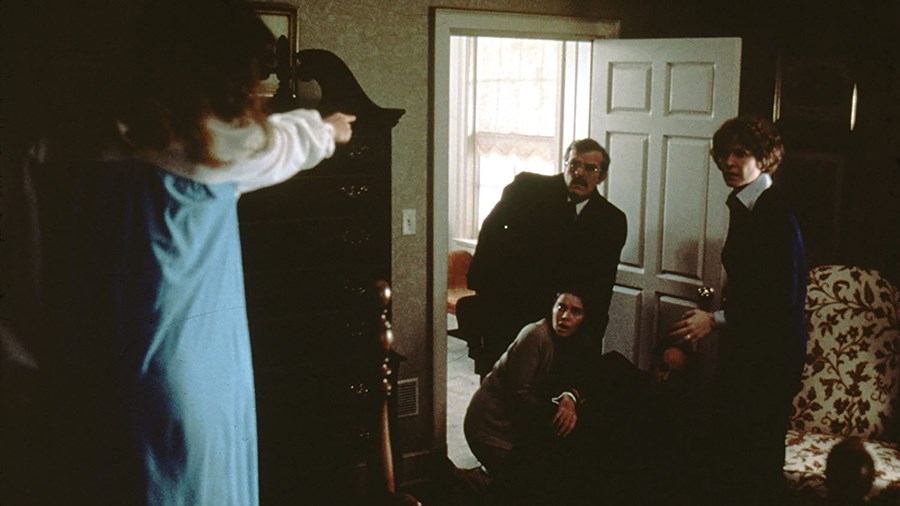
In the film, Friedkin and his cast played the exorcism set piece without bells and whistles, allowing the power of the situation to do the work and only resorting to a few very key special effects when the terror needed to be ramped up another level. Here, the reviewer recognizes that. In a detailed, two page review, the journal discusses “the reality of sin and evil in general; faith in absolute divine power and in the efficacy of sacramental rites; the difference in the scope of science and religion with the limits of the former compared to the latter; the importance of the priestly mission.”* The Segnalazioni Cinematografiche discusses the film as though it were a documentary, playing the role of interested intellect rather than executing its paternalistic duty as moral guardian. The Vatican’s writer’s intent, to interrogate the work’s value to the Church rather than criticize the risk it posed upon the Italian public, is unusual and interesting to see. Eventually, the writer turns to the point of the piece (his parochial duty): “On the other hand, strong reservations must be raised about the cinematographic form adopted which, in contrast to the positive substance of the themes, can induce spectators to aberrant emotional reactions and even to contrasting interpretations.”*
From here, the Segnalazioni Cinematografiche considers that the more visceral on-screen representations of exorcisms had contained “upsetting manifestations of Evil in all its brutality, (and) it is not admissible that excesses of fictional realism are reached such as to be disconcerting and traumatic, or such as to suggest hatred and piety together, such as to mix the obscene with the more composed and spiritual reflections, such as to instil horror and emotion together.”* Finally the gloves come off and The Holy See seeks to exert its authority, criticising the film from a moralistic standpoint: “As miserable as the state of a victim of Satan may be, the screen can describe it effectively even without resorting to deprecation, foul language, revolt, obscene and blasphemy. Questionable/ ambiguous.”*
The Segnalazioni Cinematografiche voices its concerns bluntly but stops short of rendering the film as unacceptable, aberrant or morally repugnant, all decrees it made about a large number of genre films. Crucially there is no outright ecclesiastical ban. The Vatican appears to understand that there is a benefit to depicting the priestly mission to vanquish evil onscreen, even in the most controversial horror film ever released. Perhaps seeking a closer connection to the public via this film (which had dominated at box offices everywhere it went), it ultimately allows its flock to make up their own minds about William Peter Blatty and William Friedkin’s Oscar-winning film. The Vatican’s critic opted to engage with The Exorcist, its content and its themes, and through discourse sought to present an intelligent critique rather than impose a strict sentence.
This continued throughout the subgenre, with the Vatican’s verdicts frequently more thoughtful and less damning than those of other types of horror. William Girdler’s Blaxploitation piece Abby (1974), which found a release in Italy before a Warner Bros lawsuit for plagiarism stopped it in its tracks, was noted to be “directed and interpreted for Black American circles…unquestionably one of the many…carbon copies of The Exorcist.”* The Vatican’s cleric was forced to contemplate the benefits and risks of the film’s “ambiguous mixture of Christianity and pagan magic in the attitudes and rites of the Protestant pastor.”* before delivering a verdict of “Questionable/ambiguous.” The film was reserved for adults of a certain moral maturity – again, avoiding an outright ban.
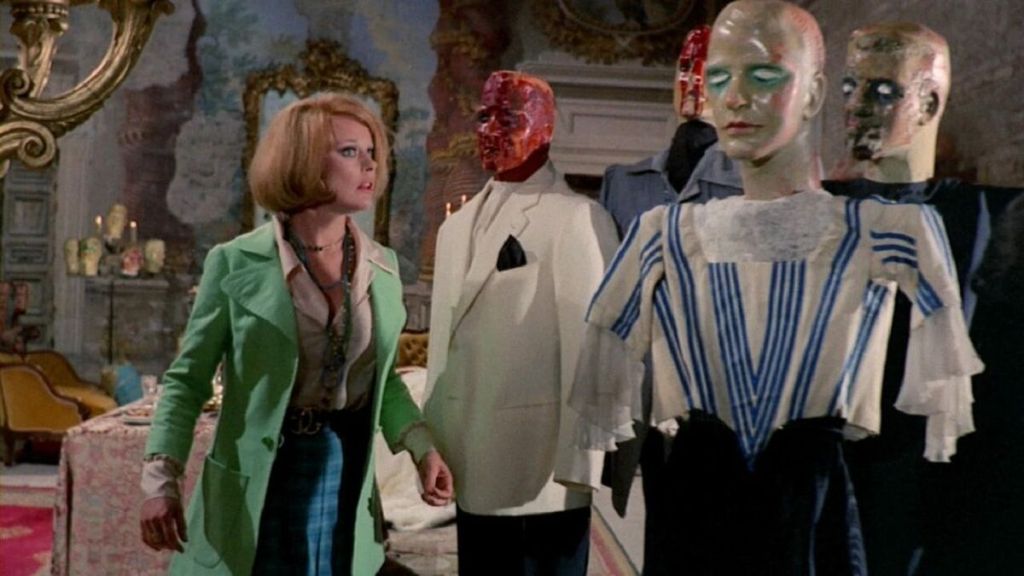
On domestic soil, Alberto de Martino’s The Antichrist, Mario Bava’s Lisa & The Devil and Ovidio G. Assonitis and Roberto Piazzoli’s Beyond the Door (all 1974) deviated from The Exorcist in daring to have the forces of good lose and the Devil prevail. This was a definite negative, and each film was dismissed swiftly and received a complete ecclesiastical ban.
Richard Donner’s The Omen (1976) was a commercial success, earning $60 million from a budget of $2.8 million and becoming one of the year’s top grossers. Where the doctrinal realism of The Exorcist earned the Vatican’s grudging respect, however, The Omen commits the sin of presumption, of conflating religion with superstition and, in doing so, loses something from its message in the eyes of the Church. It also has the forces of good succumb to the film’s evil. Much like the offerings of De Martino, Bava, Assonitis and Piazzoli, in this film the Church fails: its agent Father Brennan swiftly dispatched by the Morningstar’s evil machinations, leaving the child Damien’s lay father and an aetheist photojournalist to negotiate the supernatural element without God in their hearts. As a result, they too fail, and at the end of the movie the still alive Damien Thorne has been transferred into the care of the President of the United States of America and the First Lady, surely a sign of great success for the Devil.
The Vatican took note, honing in on the film’s flaws in its representation of religion and commenting that “Its danger lies in the presumption before the interpretation of Sacred Scripture; in the evident confusion between religion and superstition; in the caressing of morbid interests for all that is spiritual or parapsychological.”* Much like the exploitative domestic Satanic Horrors, the Church determined The Omen to have failed in its artistic and spiritual intent, and it is this that earned it an Inaccettàbile from the Church.
By the time of Damiano Damiani’s 1982 Amityville: The Possession, The Vatican had further considered its position on the role of these heroic priests battling terrifying evils in the latest grimy transgressions of the horror movie. Damiano’s film presents a battle for a single soul, as the heroic Father Adamsky fights the incalculable power of Satan for possession of Sonny Montell, in a film that borrows as much from Friedkin’s The Exorcist as it does Stuart Rosenberg’s 1979 The Amityville Horror.
In its positive review of Damiani’s film, the Segnalazioni Cinematografiche notes that “the positive element is to present the power of Evil as a reality…but not overdo it. The Church has the power to win.” This summation follows the thinking observed in the Holy See’s critiques of The Exorcist (where the Church prevails thanks to a heroic priest, who battles Pazuzu even in the face of a crisis of faith) and The Omen (where Church intervention fails, leaving lay persons to succumb to the evil). Where the Church no longer has the power to win, it is not being seen in the appropriate light. It may cause parishioners to question their faith, to doubt its power to protect them.
Damiani’s Father Adamsky, while he undergoes terrible tests in his battle with the evil of Amityville, never doubts his faith and, with God beside him, is unwavering in his constant battle. Here, we see a powerful yet holy protagonist, the Church as the ultimate good. A simple everyman-of-the-cloth, a depiction that Roman Catholicism can take pride in. The film, like many in the subgenre, was branded “Questionable” and avoided an outright ban.
The Vatican remains concerned about the representation of both good and evil in the films of the satanic horror subgenre. That the devil is presented as an evil God, rather than a creation of God turned rogue, with no real power of his own, remains a source of consternation for the Church. When priests and exorcism rites are used, The Holy See expects that true spirituality not be mixed with superstition, or be easily overcome by the occult. But, perhaps more than anything, it is the roles of priests as protagonists, as heroes victorious in these silver screen battles between good and evil, that sways the Church and causes its writers to look more closely at the themes and messages in these genre films presented to them for critique.
- Footnotes
- 1.Unacceptable
- 2.Segnalazioni Cinematografiche, vol 78, p77. Rome: Centro Cattolico Cinematografico. 1975. Translated from Italian by the author
- 3.Segnalazioni Cinematografiche, vol 78, p77
- 4.Segnalazioni Cinematografiche, vol 78, p77
5.Segnalazioni Cinematografiche, vol 78, p77
6.Segnalazioni Cinematografiche, vol 78, p77 - 7.Segnalazioni Cinematografiche, vol 81, p195. Rome: Centro Cattolico Cinematografico. 1976. Translated from Italian by the author
- 8.Segnalazioni Cinematografiche, vol 81, p195.
- 9.Segnalazioni Cinematografiche, vol 81, p195.
- 10.Segnalazioni Cinematografiche vol 82, p95. Rome: Centro Cattolico Cinematografico. 1976. Translated from Italian by the author
- 11.Segnalazioni Cinematografiche vol 94, p258. Rome: Centro Cattolico Cinematografico. 1983. Translated from Italian by the author

The son of a Video Nasties Pirate, Matt became a fan of genre cinema at a disturbingly early age. He writes about the intersection between Roman Catholicism and the Horror film. His writing features in House of Leaves Publishing’s Filtered Reality: The Progenitors and Evolution of Found Footage Horror, The Nottingham Horror Collective’s Last Closet on the Left volume 2, and Arrow Video’s upcoming release of Exorcist 2: The Heretic. Matt’s first two books, The Vatican versus Horror Movies (2024) and Fulci’s Inferno: Faith in the films of a Giallo and Horror Auteur (2025) are both published by McFarland & Co.
Matt writes genre film analysis and criticism, specifically the intersection between the Roman Catholic Faith/Church and the Horror film. His writing is usually semiotic analysis contextualized with Horror film directors’ own belief systems, and how they antagonized the Church. Basically, he’s the guy you go to when you want to know what the Vatican thought of certain horror films, and why.

 NightTide Magazine
Leave a comment