By Jonathan Helland
Most people avoid feelings of fear, disgust, and unease – horror fans seek them out again and again. We have all experienced the awkwardness of trying to explain why. There is no one answer – there are, in fact, as many reasons as there are horror fans.
But I have a personal theory that four of the biggest reasons can be mapped onto a handful of musical subcultures. I call it my “people who wear black” theory.

Not all goths, punks, metalheads, and emos are horror fans, of course. And not every member of these subcultures that does enjoy horror does so for the same reasons. That’s not the point I’m trying to make here. Instead, view this as an allegorical relationship. I don’t enjoy horror movies that celebrate the beauty of darkness because I’m a fan of Nick Cave and the Bad Seeds, but I do enjoy them for some of the same reasons.
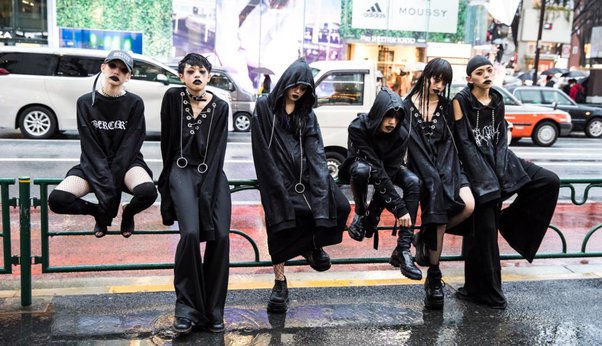
GOTHS: “There is a beauty in darkness”
People’s understanding of the gothic subculture has been eroded over the years, and goths are often mistaken for members of these other subcultures. The internet has exacerbated the tendency to label anyone in black fishnets and liquid eyeliner as goth, but the confusion goes back at least as far as my youth in the 1990s (it’s because people keep stealing our style.) When I say “goths” I’m specifically referring to fans of goth music (gothic rock, death rock, dark wave, etc…)
Goths are named for a style of music which is named for a style of literature which is named for a style of architecture which is named for a group of Germanic tribes famous for sacking Rome. Etymologically it’s a chaotic mess, but one that ties this subculture directly to the earliest predecessors of horror literature in the Dark Romanticism of the late 18th century.
Horror fans of this type crave that sense of romanticism. They want a touch of poetry in their horror, they’re looking for tragic heroes and even more tragic monsters in stories rich in atmosphere and style.
Recommended Song: “A Forest” by The Cure
Bauhaus’s “Bela Lugosi’s Dead” solidified and defined gothic rock in 1979, but The Cure might might have perfected it just one year later. A moody and haunting song in which the narrator is lured into a dark forest by the voice of a phantom woman, “A Forest” is a damn fine horror story in its own right.
Recommended Literature: The Devourers by Indra Das
NightTide readers might have expected I’d sneak at least one werewolf novel onto this list. Told (like many of 18th and 19th century gothic novels) as a series of nesting narratives, The Devourers is delightfully queer, romantic, and poetic. In a word, gothic.
Recommended Film: Only Lovers Left Alive (2013, dir. Jim Jarmusch)
Featuring beautiful, slightly androgynous vampire lovers (Tilda Swinton and Tom Hiddleston), being tragic, moody, artistic, and very much over it all, if ever a movie would leave black lipstick stains on its clove cigarette, it’s this one. John Hurt plays the Christopher Marlowe, for Siouxsie’s sake!
METALHEADS: “Evil is fucking badass!”
This is the oldest subculture on this list, reaching all the way back to 1970 with Black Sabbath’s self-titled album. (Appropriate to this list, their name was taken from a 1963 anthology horror film directed by Mario Brava.)
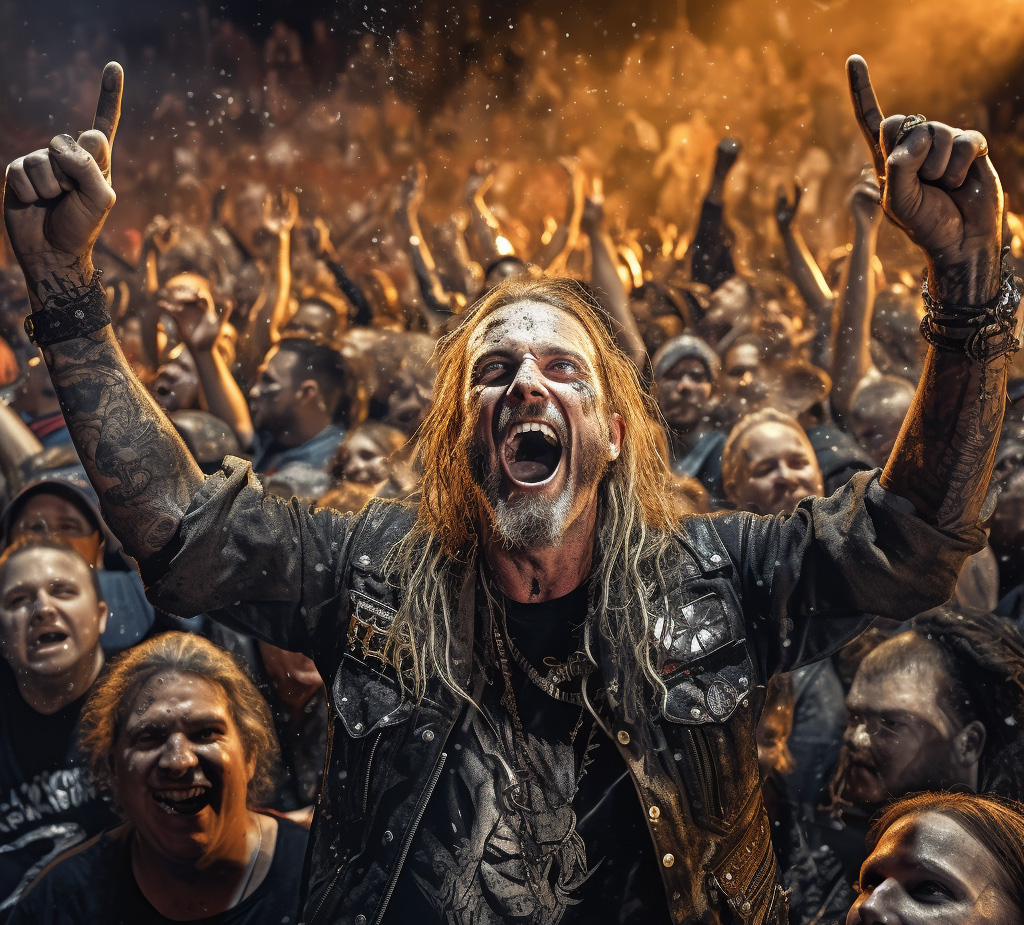
While metalheads are some of the nicest people you’ll meet, the aesthetic of the genre is one that glories in extremes–louder, harder, faster, and more brutal, and often with themes celebrating ultraviolence and pure evil. With the exception of a few Norwegians in the ’90s (IYKYK), this strikes me as being, if not always tongue-in-cheek, at least out of a sense of fun. They sing about Satan and the slaughter of innocents not because they wish harm on anyone, but because it’s fucking awesome.
Horror fans of this type are the same way – happy to cheer for the monster and applaud a bit of inventive gore rendered with practical effects.
Recommended Song: “Seasons in the Abyss” by Slayer
You’ll be spoiled for choice looking for metal songs with horror themes – this one is a six minute anthem by one of the big 4 thrash metal bands about experiencing the moment of death and passage into the afterlife.
Recommended Book: We Sold Our Souls by Grady Hendrix
Hendrix is far from the most hardcore or extreme of horror writers, but he is one who truly understands how much fun the genre can be. This particular book is a love letter to rock and roll and metal in particular – each chapter title is the name of a metal album.
Recommended Movie: Mandy (2018, dir. Panos Cosmatos).
When this film about a cult of killers warped by hallucinogens opens, it doesn’t seem to be very metal. Not until our protagonist (Nicolas Cage in top form) begins his revenge spree against the killers. From that moment on, things get more and more extreme, with a brutal series of killings you can root for with your hands in the sign of the horns. Suffice it to say, neither the live tiger nor the duel with chainsaws is sufficiently wild to serve as the climax of this film.
PUNKS: “Transgress against societal taboos!”
Punk rock has less of a direct tie to the horror genre (although “horror punk” is a thing), instead springing forth from the anger and powerlessness of working class youth in the ’70s. Whether it started in the US with The New York Dolls, or the UK with The Damned, punk rock has always been the music of disaffection, anarchism, and rebellion against the status quo.

Horror has always had its own rebellious side, and its willingness to transgress against society’s rules and taboos is a big part of the appeal of the genre for many fans.
Recommended Song: “Kill the Poor” by The Dead Kennedys
Honorable mentions to “Pet Sematary” by the Ramones (written, according to legend, in Stephen King’s basement) and to nearly every single song written by The Cramps, but those seemed too easy. The Dead Kennedys classic “Kill the Poor” is an updated take on “A Modest Proposal” that excoriates both the cold war arms race and the internalized classism of what was soon to be Reagan’s America.
Recommended Book: Tell Me I’m Worthless by Alison Rumfitt
Tell Me I’m Worthless is – like the best punk rock – shocking, transgressive, and deeply political. This book comes with every trigger warning and isn’t for the faint of heart, but none of it is for shock value (or, at least, not only for shock value). It’s a book with a message and that message is a big fuck you to “TERF island.” Tell Me I’m Worthless asks the question, “what if transmisogyny were a haunting?” and answers that question in the most unflinchingly disturbing way possible.
Recommended Film: The Platform (2019, dir. Galder Gaztelu-Urrutia)
There are many great movies that feature punks (Green Room, Return of the Living Dead), and many more that were made with the DIY, outsider artist ethos at the heart of punk rock (The Blair Witch Project, We’re All Going to the World’s Fair), but for this recommendation I’m leaning into the class consciousness and righteous political anger inherent to punk rock. The Platform is an allegory about about social and economic hierarchies. Not a movie about anarchism, but a movie that examines problems to which anarchism is the logical solution.
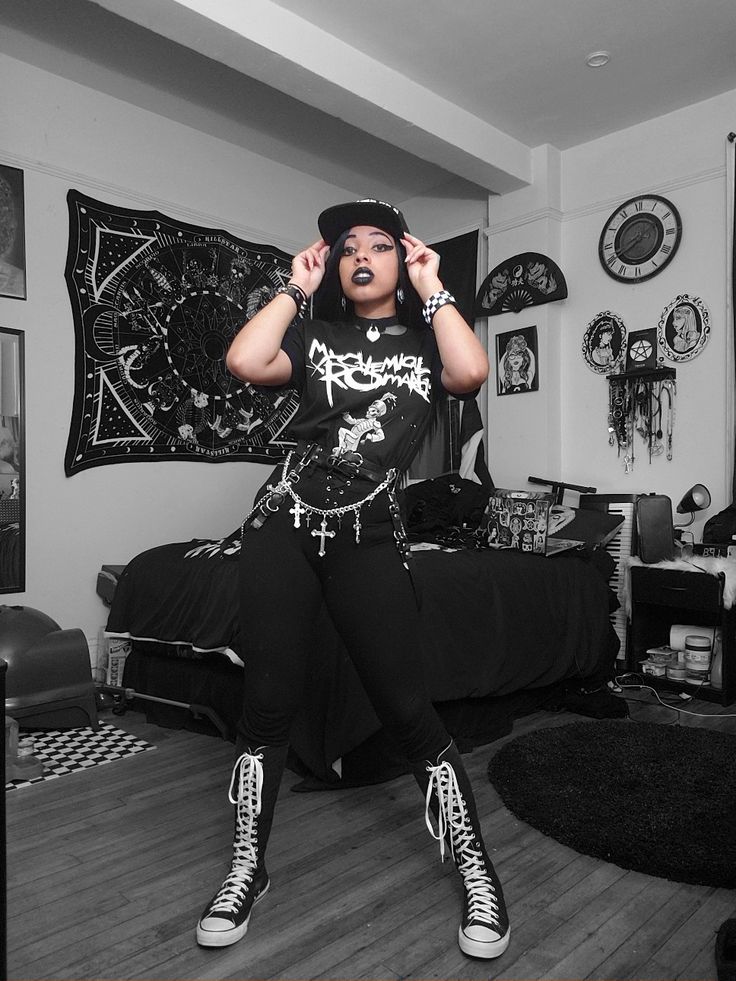
EMOS: “I just want to feel something, even if it’s bad.”
Emo is a direct descendent of punk rock, where instead of singing about politics, they sing about interpersonal relationships. Once-upon-a-time it was called “emo-punk” where the “emo” stood for emotional. Like gothic rock, emo has a strong connection to the ethos of romanticism, in this case a celebration of strong feelings and of the subjective emotional experience of the individual.
Horror fans of this type are looking for a strong emotional experience, and they don’t mind if those emotions are fear, sadness, or despair. Horror has always excelled at that particular task.
Recommended Song: “What’s It Feel Like to Be A Ghost?” by Taking Back Sunday
There are a plethora of emo songs I could have chosen about wishing death on your ex – my emo consultant compared them to murder ballads. But I decided to go with one that uses a more obvious horror metaphor, in this case to sing about emotional isolation and the difficulty in truly connecting with another human being.
Recommended Book: The Coldest Girl in Coldtown by Holly Black
Yes, this book is YA, and yes, you could call it “dark fantasy” instead of horror. But Holly Black is the Beethoven of YA authors and this particular dark fantasy involves a road trip with a vampire ex-boyfriend to a city of the undead. Emo is music written by and for the young (but it’s not a phase!), and The Coldest Girl in Coldtown perfectly captures how big things can feel at that age.
Recommended TV Show: Buffy the Vampire Slayer, Season 2 (Joss Whedon, 1997)
If you’re too young to worry about how much fiber you eat, you probably don’t remember how Buffy transformed television. The early seasons followed a simple formula: take a real life problem teenagers face and externalize it in the form of a monster. In the second season, the big problem (SPOILER FOR A TV SHOW OLD ENOUGH TO RENT A CAR) is the messy break-up between Buffy (Sarah Michelle Geller) and Angel (David Boreanaz), with apocalyptic consequences. And what could be more emo than a relationship that almost ends the world by ending?
This isn’t a perfect system – I prefer goth and punk music, but as a horror fan I’m goth + metal – but I hope it does give you something new to say the next time a well-meaning loved one asks how you can enjoy that macabre horror stuff? Or put your black band-tee, let your hair hang over your face, and repeat the mantra that unites us all: “you just don’t understand me, Ma!”
**- The author would like to express special thanks to David Quiroz and Stephanie Rizzo for advising me on metal and emo, respectively.

 NightTide Magazine
Leave a comment