By Christine Makepeace
“Today, everything seemed the same, but it wasn’t.”
When most people think of aliens, they tend to conjure up images of flying saucers and little green men. Of big, black-eyed, bipedal “greys.” They picture the otherworldly—the horrific—something decidedly not like themselves. 1978’s Invasion of the Body Snatchers, based on Jack Finney’s novel of the same name, asks the viewer to do the opposite—to consider a hidden invasion—one where everyone looks just as human as you. But as the proverb rightly points out, looks can be deceiving.
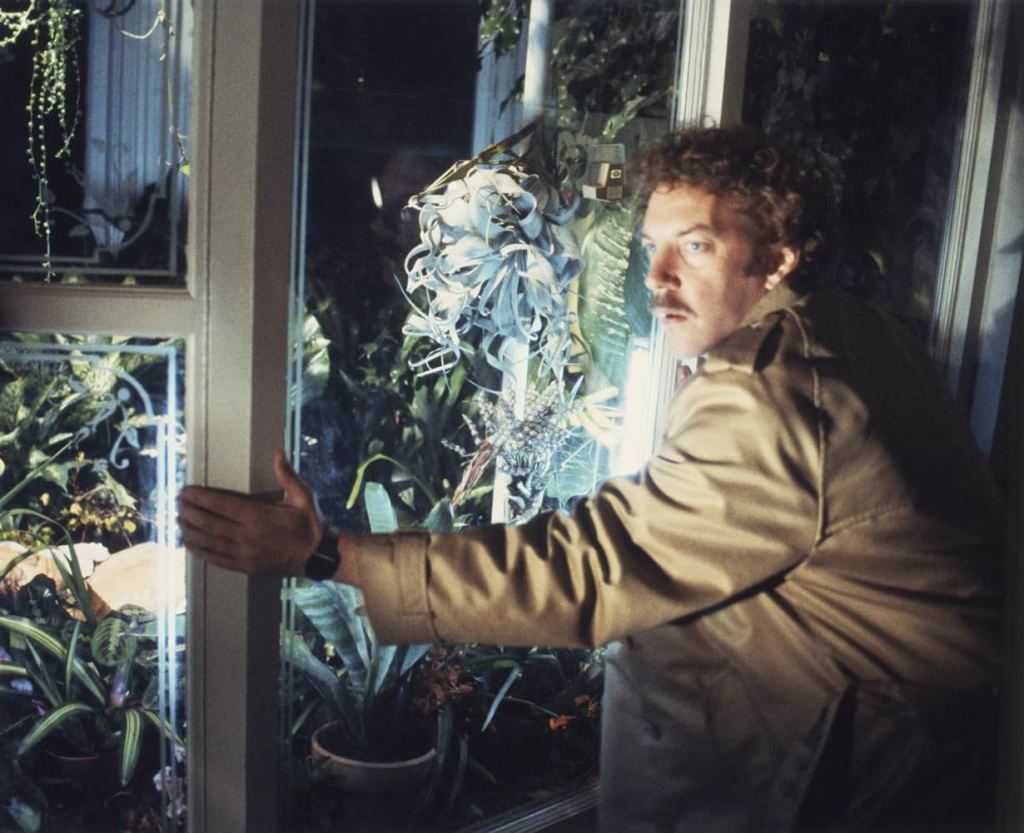
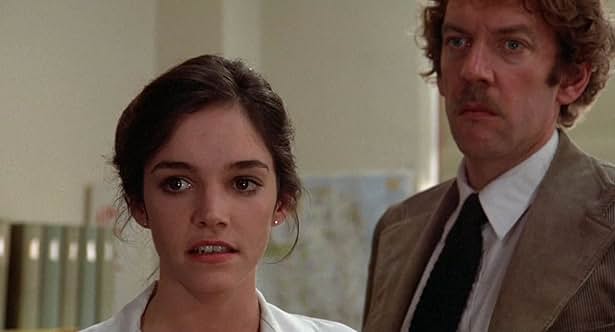
The ‘78 Body Snatchers adaptation presents us with two panicked and paranoid protagonists, Elizabeth Driscoll (Brooke Adams) and Matthew Bennell (Donald Sutherland), respectively. The pair work for the Health Department, and once things start getting weird, they’re quick to notice. Elizabeth in particular appears hyperaware, immediately sussing out bizarre behavioral changes with her live-in partner Geoffrey (Art Hindle). He’s distant and passionless, suddenly breaking established patterns. It doesn’t sit right with Elizabeth, and very early on she tells Matthew, “Geoffrey is not Geoffery.” She says he’s missing something—emotions or feelings. It’s such an absurd claim that Matthew struggles to take her seriously, chalking any strangeness up to more mundane causes, like Geoffrey “becoming a Republican.” Although Elizabeth remains steadfast in her paranoia, at this early stage, her concerns are simply unquantifiable. A feeling her partner has changed. And to a man of logic like Matthew, feelings aren’t facts.
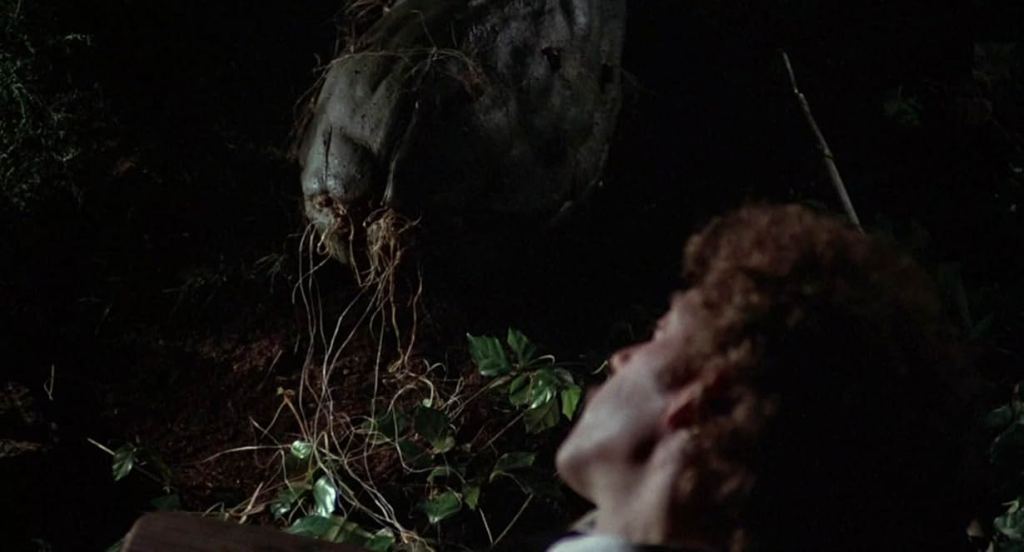
But Matthew’s disbelief does nothing to shield him from the changes happening all over town. People are acting…odd. It’s difficult to ignore their blank yet ever-watchful stares. Or the way they run down the street as if being chased. And echoing Elizabeth’s earlier concerns about Geoffrey, more people begin claiming their loved ones are “wrong” or “different.” A man of action, Matthew reaches out to his psychiatrist friend, Dr. David Kibner (Leonard Nimoy). They discuss the influx of wild claims, attempting to figure out a rational root cause for the epidemic of “hallucinations” that’s sweeping the city. For a time, Matthew and his friends remain convinced everyone is simply experiencing some kind of paranoid delusion. That is until Matthew himself witnesses actual bodies being snatched—absorbed and reconstituted into perfect “human” replicas. But revealing the plot does nothing to stop or slow the alien’s progress. Knowing makes it worse, turning Matthew, Elizabeth, and anyone else still human into fugitives. When the protagonists become outlaws, the focus of Body Snatchers changes, and a different story (and struggle) begins to emerge. Matthew and Elizabeth are no longer seeking answers or understanding; they simply want to escape the very personal, and targeted, alien attack. On the run, it becomes clear just how outnumbered they are. As hordes of pod people take to the street to hunt them down, the survivors are inevitably cornered and caught. Once the humans are clearly in the minority, the aliens aren’t shy about communicating their plans. Because these aliens don’t just show up and take. They’re actually quite pleased and forthcoming; they want to tell you just how awesome what they’re doing is. Multiple pod people, once friends and trusted colleagues, extol the joys of being snatched. It’s so nice to be part of something—to belong. They claim there’s no pain or fear. No hate. Pod-Dr. Kibner very clinically explains to Matthew that they’re simply “evolving into a new life form,” and that they’ll be “born again into an untroubled world.” They’re alluring promises, especially when they come from someone you trust.
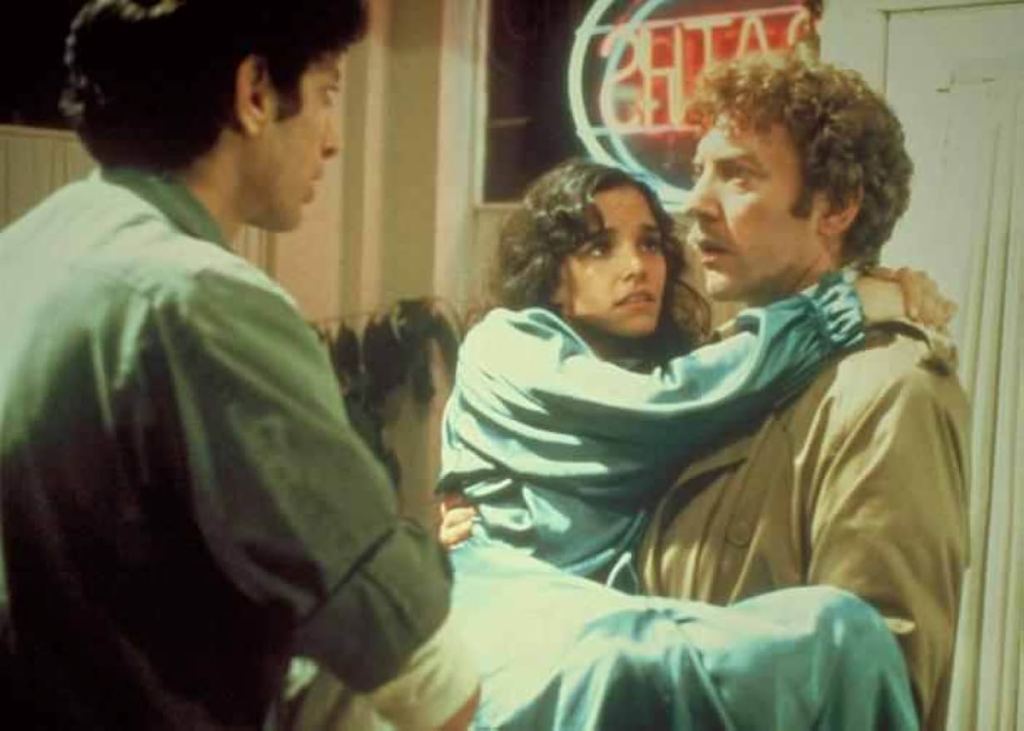
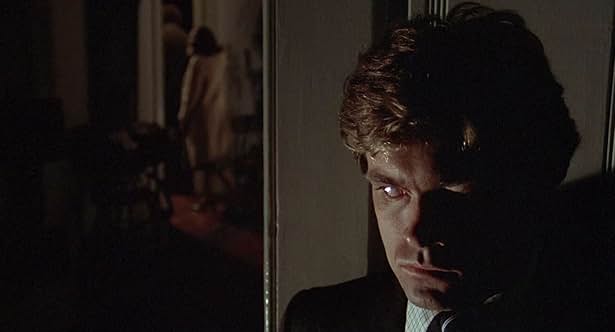
Donald Sutherland, Brooke Adams, Jeff Goldblum, and Art Hindle in Invastion of the Body Snatchers (1978)
But this calm and peaceful existence comes at a price, and Kibner reveals that fear and anxiety aren’t the only things lost in the snatch. You also lose love and compassion—all emotion. Geoffery assures them that “nothing changes,” telling Matthew and Elizabeth that they can “have the same life.” But that’s patently untrue. How would that be possible without feeling or emotion? It would be a life as hollow as the dried-out bodies of the snatched. The alien’s end goal may sound enticing—even benevolent. But it’s clear their only concern is their own survival and proliferation. Despite their subdued tactics and lofty promises, the aliens do not come in peace. They want to overwrite us.
Throughout the film, the same scenario repeats: a person cries and fights, gripping tight to their autonomy. Until they change. Then there’s that friend, that trusted colleague…that lover, looking you dead in your eyes, telling you it’s actually OK. The pod people were right. It didn’t hurt. It’s for the best. Just rest and you’ll be fine. It’s in these moments that the insidious nature of the alien takeover is clear. Their stolen visage softens us and makes us doubt ourselves. When the promises pour from familiar lips, we want to believe it. We may even welcome it.
Despite the exhaustion and hopelessness, Matthew and Elizabeth continue to fight. The thought of becoming like those they run from is too unbearable to consider. Because even though they’ve heard the promises of a more orderly life, they see from the outside what that life looks like. The pod people may be devoid of emotion and hate, but they are monsters. They shriek and claw in pursuit of the human suspects. In contrast, Matthew and Elizabeth seem to double down on love, admitting their feelings for each other. It’s this genuine affection and concern—this unselfish humanity—that pushes them forward. Ironically, their emotional reactions continuously aid in keeping them safe.
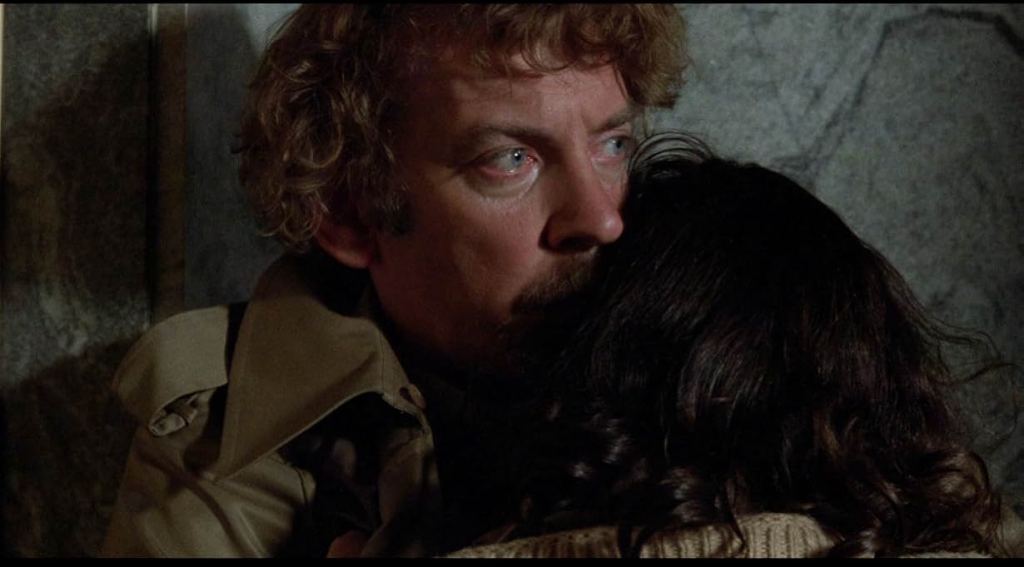
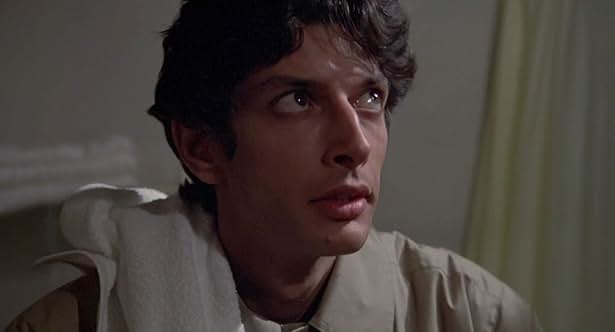
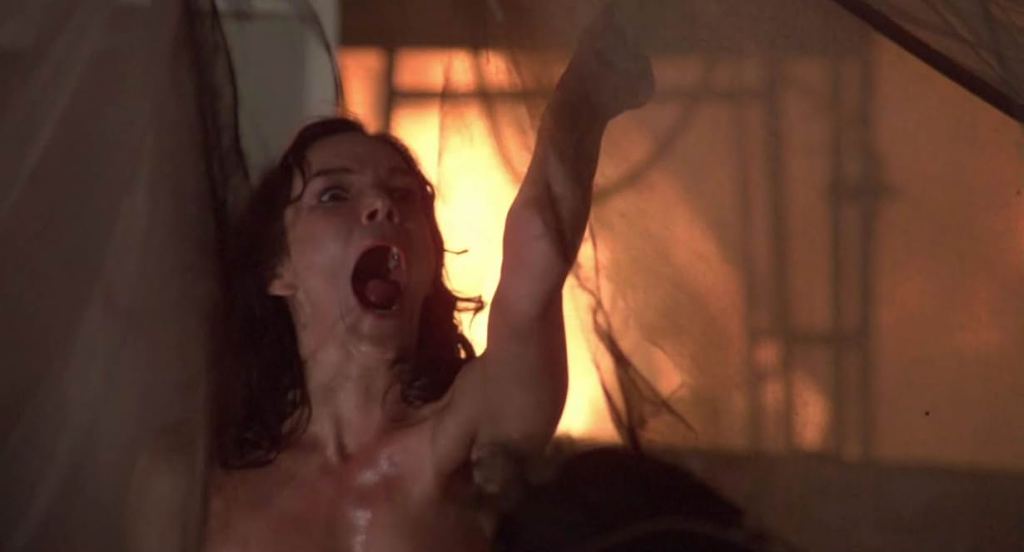
Donald Sutherland, Brooke Adams, Jeff Goldblum, and Art Hindle in Invastion of the Body Snatchers (1978)
The ‘78 adaptation, as well as most body-snatcher stories, asks us to not just survive the invasion but to evaluate what that survival looks like. Early in the film, Matthew’s friend Jack (Jeff Goldblum) laments the state of modern sensibilities saying, “Kibner’s trying to change people to fit the world. I’m trying to change the world to fit people.” It speaks to adaptation, what it means, and the different ways it can be approached. In order to survive, these aliens have become stealth assassins, slipping in unseen, undermining us from within, and then telling us it’s for our own good. They steal our humanity while wearing the stolen faces of friends. But despite the horrors, Matthew and Elizabeth found a reason to fight. Their affection—their love—drove their rebellion. Which makes love a rebellious act, and the ability to remove it a powerful weapon. Giving in to sugar-coated promises will always be easiest, but fighting is what keeps us human.

 NightTide Magazine
Leave a comment