
By Cynthia Gómez

When I first picked up Carrie, a book about a miserable teenager with no friends, I was a miserable teenager with few friends, and as I turned those pages it felt like Stephen King had taken my innermost thoughts and painted them onto a mirror, in blood. I discovered that book when I was thirteen and I read it alone in the library, or alone on a bench at lunchtime, its pages covering my face and its maze of red spots that the other kids tormented me for. Carrie and I, both with our “nests of blackheads,” as she described them, pockmarking our faces. I had so many pimples in those years that I joked, in my gallows way, that I didn’t even need to wear blush. Instead, I smeared on thick pancake foundation that still wasn’t thick enough, and I burned my $2 lip pencil into liquid eyeliner and sprayed my hair in waves high above my forehead, like the cool kids did, even though I was desperately, screamingly uncool.
The bullying I lived with was nowhere near as vicious as what Carrie endured, but the memories have left their stain: the other kids putting gum in my hair, trying to trick me into giving myself a hickey, turning my own name into a cruel joke about the pimples on my face. Worst were the days at school when my only friend was absent and I had to eat lunch alone, feeling as if my solitary shadow was following behind me screaming “LOSER! LOSER!” in tones loud enough to reach across the quad. I felt utterly seen when I read Carrie’s description of a red stain that she felt had been drawn around her since the first grade: “The red plague circle was like blood itself—you could scrub and scrub and scrub and still it would be there, not erased, not clean.” Both Carrie and I fought to find the way out – maybe by wearing the right outfit, by going to summer camp (like Carrie, I went to a camp one year where I was so miserable I begged to come home after three days.) I knew her mute horror at the idea of a life of awful solitude, at the prospect of “watching game shows and soap operas all day on television,” as I often did on my weekends alone.
And yet that red circle was something I had partly drawn around my own self. One of the “cool kids” helpfully told me once: “You think you’re better than everybody else.” I protested then, as I would now, that she had it exactly the opposite: I thought I was awful. And yet, she was also right. I was a bookworm kid raised by erudite parents, and, worse, I was impatient and critical and, yes, smug and superior. I rolled my eyes when other kids didn’t know things that I considered elementary, from vocabulary words to how birth control worked. I rolled my eyes right into my books: V.C. Andrews by age ten, Stephen King by eleven, Dee Brown before I was fourteen. My books did not judge, or throw spitballs at my head. Rather, they soothed and distracted. But I also hated my loneliness, and I loathed myself for it. And so I spent those early teenage years alternatively drawing that red circle around myself, and also desperately trying to scrub it off, or at least cover it up, in clothes that the cool kids wore: acid-wash jeans so tight I could barely breathe, giant earrings that turned my earlobes into two throbbing songs of pain.
It didn’t work, of course. I felt like I didn’t fit in anywhere. Not in my honors classes, where I was sometimes the only Latine kid, feeling sometimes like a little brown guinea pig. Or with the kids I shared no classes with, the kids I admired and wanted so much to be like (mostly Latine.) I couldn’t relate to them any more than I could to the white kids in my classes, and their conversations were woven with slang I didn’t understand and Spanish I was ashamed of not speaking. And I bristled at the idea of finding a home with the other outcasts. I was afraid of that red stain, that it would be so much more glaring and bright in the company of other kids with their own versions of it, crudely drawn. So I bounced from group to group, finding no home and no shelter, retreating into my copy of Carrie: a lonely child reading a book about a lonely child.
So, yes, I connected deeply to Carrie and her self-loathing descriptions of her own body. (Note that one of the things the kids teased Carrie for was for being fat, something that’s right there on the page but that every single movie adaptation writes out of existence, therefore engaging in a version of the very same fatphobia that Carrie’s classmates did.) Every teenage girl has to run her own version of the gauntlet; mine came when I developed relatively early and learned that my body was somehow both public property, for the boys to grope and whistle at, and also at the same time gross and smelly and ripe for ridicule.

Hating our own bodies isn’t just some regrettable, ancillary fact of life for teenage girls, by the way: it is a mandatory hazing ritual, a required initiation into adulthood. Because how much easier is it to oppress an entire group of people when they begin their adult existence by hating themselves? This self-hatred is also partly borne out of the revulsion we feel as we look at our future. It’s the yawning, looming horror of what it means to live in a world that hates women when we are on a forced march to become one1. But when we are children we don’t understand any of this, and so often we have nowhere for our hatred to go but back towards ourselves. Or the people, the fellow victims, who are closest to hand.
Imagine if we understood. Imagine what could happen if we knew where that loathing should really go, and why. But a world that hates girls and women isn’t the same world that wants them to understand that hatred, much less where it comes from, so there we are back where we started. And so our anger gets, so often, turned in precisely the wrong directions: if not inward, then on each other, or both. I’ve often said that, when children tease each other, all they’re doing is enforcing social norms on each other using the only powers they have so far: isolation and ridicule. (Stephen King wrote Carrie before the phrase “school shooting” had ever entered the lexicon. Such a naïf.) There is, after all, no bullying epidemic of kids teased for being straight. Or for being cisgender, or athletic, or able-bodied, or white. Only the ways in which their bodies, their very selves, deviate from those identities. When I went searching for a metaphor for this unconscious enforcing of adult roles, I thought of the Greek myth of Procrustes. Procrustes would torment his captives by placing them on a rigid iron bed: feet too long for the frame would be sliced off; feet too short would be stretched. Whatever was necessary, until every body conformed.
Before I ever picked up Carrie, I knew how the book ended, and yet, I remember feeling, along with Carrie, that tremulous, flickering hope as she walked into the prom. After all my desperate mornings in front of the mirror before school, I knew that feeling well, that hope that maybe her new dress, her corsage, could finally cover up that red stain. Or, if those weren’t enough, her date – a popular boy, athletic and cisgender and presumably straight – could buy her at least an evening of being accepted. I could practically feel that thing with feathers that fluttered in her chest when she for once felt welcomed, even admired, by her classmates. Oh, god, to have that hope drowned in blood.
I’ve read Carrie so often that I could quote entire passages. Seared hardest in my brain are those where she unleashed her fury on the town that had tormented her since her birth, and anyone else she could find along the way. The girl who did a “crazed puppet dance” as a live power line electrocuted her to death. The entire street littered with downed power lines and charred, blackened bodies. Carrie crashing a car into a wall, turning it – and its occupants, her cruelest tormentors – into a wall of flame. How many of us have daydreamed about having a power anything like what Carrie had? I know I did. The day another girl shoved me into a locker, I fantasized about the ability to give that right back to her, or worse. Dangling her in the air like a puppet, shrieking and terrified, finally at my mercy.
It was very well for that girl, and for me, that I didn’t have anything like Carrie’s powers. I am terrified by the idea of my mewling, petty, childish id having access to that kind of destructive ability. (Don’t dangle the One Ring in front of me, either.) But I discovered a way to play with that fear through my writing and to engage in a kind of safe wish fulfillment that feels deeply satisfying. (In Carrie, the bullies get turned into ash. In the real world, they get elected president.) I give my characters supernatural powers as they go up against greedy landlords, homophobes, sexual harassers, and brutal cops. And then I get to engage in my other fascination: moral dilemmas. What if, in wielding their powers, my characters unleash that monstrous id, one that comes to like the taste of revenge? There is, after all, a certain thrill of letting go of that desire to be good. How do my characters control these monsters once they’re unleashed – if it’s possible to control them at all? And what if those powers simply spring up, unbidden, leaving my characters to fight to hold onto their humanity, their very selves? In this way, Carrie White is still with me, a red-stained ghost running alongside my sentences, more than thirty years after I first discovered her. I have no way to thank Stephen King for this gift.

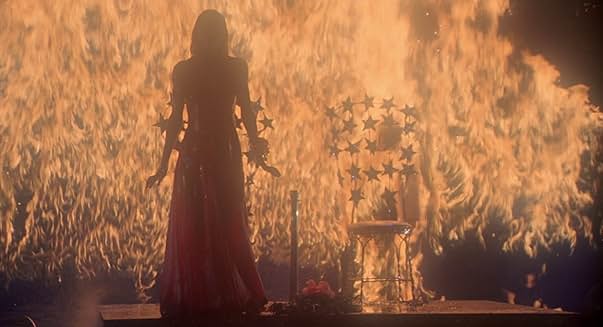
When I imagine Carrie, I see a blood-soaked teenage girl on a stage, her hope and her very humanity drowned in blood. I understand what my thirteen-year-old self didn’t understand, which is why Carrie could think of nowhere else to aim her fury when she finally let it break free. Nowhere beyond the faces surrounding her, the faces she knew, the little armies of Procrustes, grimly wielding the only power they had. Children work to punish any deviation from adult society’s roles, without knowing just what they were doing, or why. Much less how to escape that role-play entirely, how to escape the twin metal frames of tormentor/victim, destroyer/destroyed. And to say nothing of utterly demolishing a society that produces these roles, again and again, that stretches or slices us into conformity and punishes those who deviate and then tells us that this cruelty is just human nature, and can’t be helped.
Imagine what could happen if we knew where that hatred should really go, and why. Picture an army of us, the abject and the furious, wielding that dangerous understanding. Now, to that picture, add Carrie-like powers, coursing through our blood and erupting from our fingertips. Imagine what we could do. Imagine what we could burn to the ground. Imagine what we might build in its place.
- As I was writing this, I tried to imagine what it must be like for trans kids, facing the prospect of growing into an adult body that is … the wrong body. It’s why it’s a special loss that there aren’t more spaces for essays about Carrie from the trans perspective. ↩︎


Cynthia Gómez writes horror and other types of speculative fiction, set primarily in Oakland, where she makes her home. She has a particular love for themes of revenge, retribution, and resistance to oppression, and she loves to write dark and frightening things while cuddling with her shadow, aka her adorable little dog. Her work has appeared/will appear in Fantasy Magazine, Strange Horizons, Luna Station Quarterly, Nightmare Magazine, and numerous anthologies. The Nightmare Box and Other Stories, her first collection, was released from Cursed Morsels Press in July 2024. You can find more of her work at cynthiasaysboo.wordpress.com.
Leave a Reply to 5 Must Read Horror Articles 3 February 2024 – This Is HorrorCancel reply