
By Elizabeth Broadbent
I discovered Firestarter at a garage sale when I was nine or ten. I was about the same age as Charlie herself, and envious. I wished I could start fires with my mind. Before I read Matilda, I read King, and when I picked up Dahl, I found it mildly disappointing. Charlie was braver. Matilda’s parents felt cartoonishly mean; Charlie faced longer odds. Manipulated by forces beyond her control, I sympathized.

Who lets their nine-year-old read Stephen King? Even among elder Millennials who read his books by flashlight, that’s young. But my parents paid little attention to what I read, less than most even at that permissive age. They paid little attention to me in general—positive attention, at least. My mother was an abusive narcissist, and my brother was her golden child. An awkward, neurodivergent kid, I was the scapegoat. While only my volatile, alcoholic father hit me, my mother’s verbal and emotional abuse cut deeper and lingered longer. You didn’t have any friends at your old school, and you don’t have any now, she told me when I was eleven, depressed, and near-suicidal. You need to start realizing that this is your fault.
That year, I picked up Pat Conroy’s The Prince of Tides. I did not grow up in a house with poetry. I had never read Shakespeare; I had never seen prose that soared. Conroy’s language stunned me. I was hyperlexic. I had taught myself to read, and words had always fascinated me. I wrote my first poem in kindergarten. I kept a journal of song lyrics I loved. I had never read anything like Conroy’s lush, evocative language, nor had I ever encountered the concept of Southern Gothic. I tore through the novel.
My mother saw that I loved it, and she took it from me, the only book she ever confiscated. She said it was “too mature.” She was right—the end contains a viciously graphic scene of sexual assault—but it smacked of cruelty rather than responsibility. I had read King’s “Ladyfingers” and The Eye of the Dragon. I loved The Prince of Tides more than any book I’d ever read. If she let me read her explicit romance novels, why would she confiscate that one?
Because of Conroy’s language, because of that tang of injustice, I never forgot it.
I found the book again when I was sixteen, and I tore through it. I read Conroy’s Beach Music, and after a series of Ivy League rejections, I washed up in the Honors College at the University of South Carolina. If it was good enough for the protagonists in Conroy’s novels, I reasoned, it was good enough for me. There the genre of Southern Gothic opened up: Flannery O’Connor, Dorothy Allison, Alice Munroe, Carson McCullers, and Toni Morrison. I fell in love with William Faulker. During my MFA, I minored in Southern literature. And Southern literature inevitably means Southern Gothic.
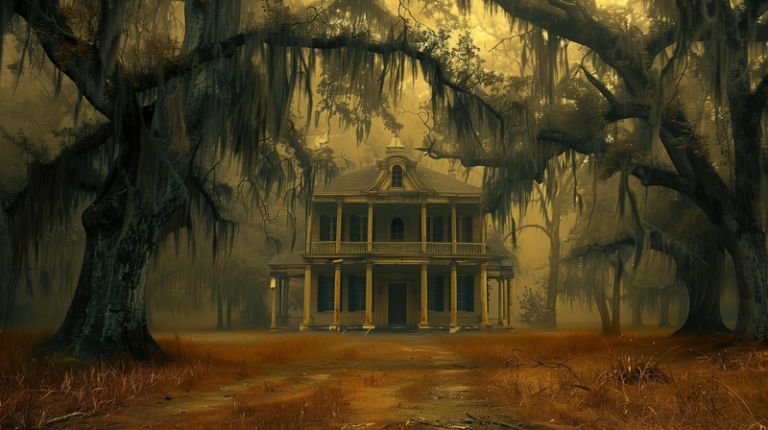
There’s a reason for that. As Faulkner says, in the South, “The past is never dead. It’s not even past” (Requiem for a Nun). It remains inscribed on our landscape. When my husband and I were first together, we would tell people, “We live in the first house up from the nearest corner where Nancy got hit by that drunk driver.” We meant Nancy Thurmond, Strom’s daughter, who was struck while crossing the street and died in the arms of the Democratic Lieutenant Governor. That accident had happened more than twenty years before Chris and I moved in. But when we gave those directions, every South Carolinian knew we lived at the first house up from the corner at Blossom and Harden. Even as recently as a month ago, I used that phrase to explain the location of that house.
The past lives on in our street names, all those names of Confederate generals—Maxcy, Pendleton, the inevitable Lee. In our county names. Of course, in South Carolina, we have a Laurens County, named not after John but his father Henry, former head of the Continental Congress and signer of the Declaration of Independence. Our statues persist. Our bastardized Huguenot pronunciations linger—mispronounce Huger (Hyoo-jee) Street as Hyoo-jer, or Gervais (Jer-vay) as Jer-vays and we know you’re not from here.
And then there’s the War, the dirty War, the omnipresent War and its battle flag. It glares from truck bumpers and license plates, from T-shirts and bikinis. From everything imaginable, really. Heritage, not hate, people say. In the South, the past lives in the present, or perhaps the present lives in the past. I can never quite parse it.
No shock, then, that this affects our literature. In Southern Gothic, the past always lurks beneath the surface, worrying the water, waiting to explode. In The Prince of Tides, my earliest favorite book, Conroy writes explicitly about child abuse inflicted both by his father’s hands and his mother’s narcissism (sound familiar?). When Tom Wingo’s sister Savannah nearly dies of a suicide attempt, Tom travels to New York to meet with her psychiatrist. Confronted with a recording of Savannah’s so-called ravings, Tom realizes she’s reciting a poetic history. By decoding this shared past, which stretches back beyond his birth, all the way to his father’s time hiding from the Nazis during World War II, Tom heals himself. Only by confronting our history can we move beyond it.

The same is true in Faulkner’s masterpiece, Absalom, Absalom!. A story within a story within a story, the narrative opens with Rosa Coldfield relating the tale of Thomas Sutpin, who “tore violently” a plantation from the wilds of Yoknapatawpha County. He took Rosa’s sister, Ellen, to wife; “without gentleness” begot a son and a daughter; served in the War; and died. But the past intrudes on Quentin Compson’s present both as he becomes a part of the story himself and as he relates the story to his roommate, Shreve, retelling and reimagining it. Quentin can’t help dragging the South up to the North with him; he can’t help his own desperate ambivalence. “‘Now I want you to tell me one thing more,’” Shreve says. “‘Why do you hate the South?’ … ‘I don’t hate it,’ [Quentin] said. I don’t hate it he thought, panting in the cold air, the iron New England dark; I don’t. I don’t! I don’t hate it! I don’t hate it!”
It might stand to reason that formerly abused children would loathe this sense of the pervasive past. After all, like the South, we can never leave our pasts behind. No matter how much therapy we have, they live on. You will never be good enough, that evil little voice says. You are worthless. You will never have friends, and it will be your fault. We tense at a harsh word; we cringe at a raised voice. Abuse lives on in the mental and physical.
But rather than drive me away, that sense of the past draws me in. I can use it. Southern Gothic allows me to reconcile my past and deal with it: like Conroy demonstrates, only by confronting our past can we begin to heal from it, and often, we can only do that slant. As an artist, how can I expect to meet that past but through my writing?
In fact, most of my writing includes failed families. Ink Vine’s Emmy has a narcissistic mother; Blood Cypress’s Lila has a whole wreck of a clan, from her disastrously mistaken brothers, caught in their own antebellum notions of femininity, to her vacant mother. Both of those characters are forced to confront the sweeping presence of past mores and their effect on the present.
But it’s in Ninety-Eight Sabers where the past becomes most present. The Trenholm family lives on a haunted plantation, among ghosts that remind them of their family’s racism; those sins tie into alcoholic Truluck Trenholm’s abuse of Sullivan, Ash, Rhys, and Olivia. “Worst of all,” the novel says, “their own ghosts lingered, most unquiet of spirits.” I actually began the novel, as I say in the afterward, the day after my own father died. Like Sullivan and Truluck, we were estranged. I didn’t realize until a month before the book’s publication that I had written a novel in lieu of mourning. The past is never dead.
Years of trauma therapy helped treat my Complex Post-Traumatic Stress Disorder (C-PTSD) brought on by a childhood of abuse. I do my best, but I struggle with loud voices, with rejection. I struggle with self-esteem. Who am I to deserve this, I wonder. The past comes back. I write about it, and try to reconcile it one more time. We can tell about our trauma sideways. Horror does that. We can look at fear sideways and conquer it. Call it a kind of therapy, maybe. With horror, we can face down imaginary demons and practice slaying real ones, perhaps even chip away at their power. Southern Gothic lets us look at our past. It’s never dead. But when we shape it into story, we snatch our power back. This is mine, we say, we formerly abused children, we who had our agency ripped away. I take my life back.
And we do it again and again, one story at a time.


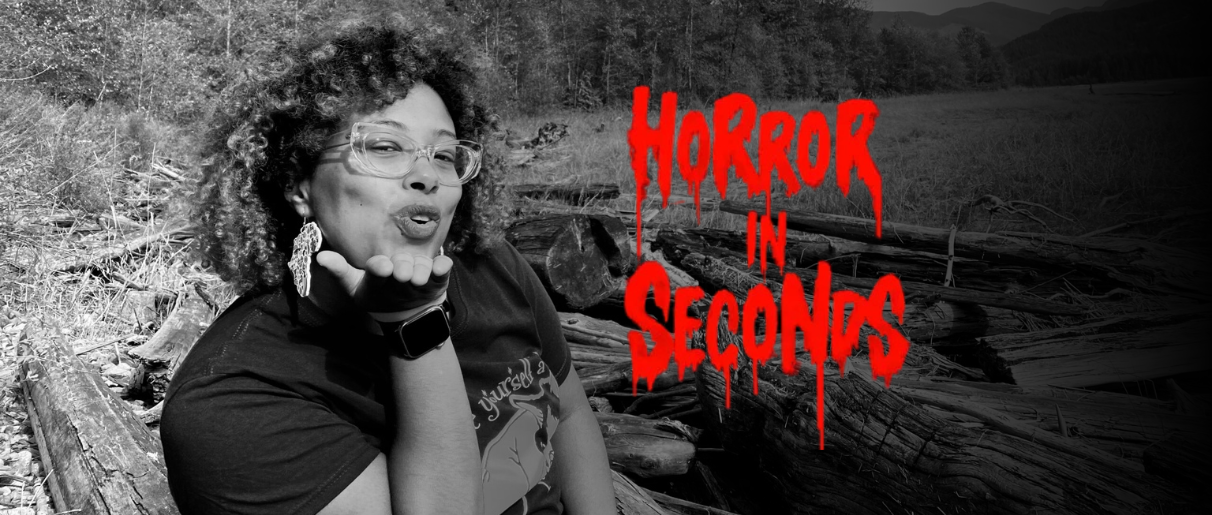
Elizabeth Broadbent escaped the swamps of South Carolina for the Commonwealth of Virginia, where she lives with her three sons, two cats, two dogs, flock of crows, and a very patient husband. She’s the author of Ink Vine and Ninety-Eight Sabers (Undertaker Books), as well as the upcoming Blood Cypress (Raw Dog Screaming Press, 2025), Tigers of Greater Antarctica (Sley House Publications, 2026), and Breaking Neverland (Sley House Publications, 2026). As a freelance journalist, her work has appeared in places such as The Washington Post, Time, Insider, and ADDitude Magazine.

Leave a Reply