By Mo Moshaty

Maggots, chimps and teen dreams, oh my!
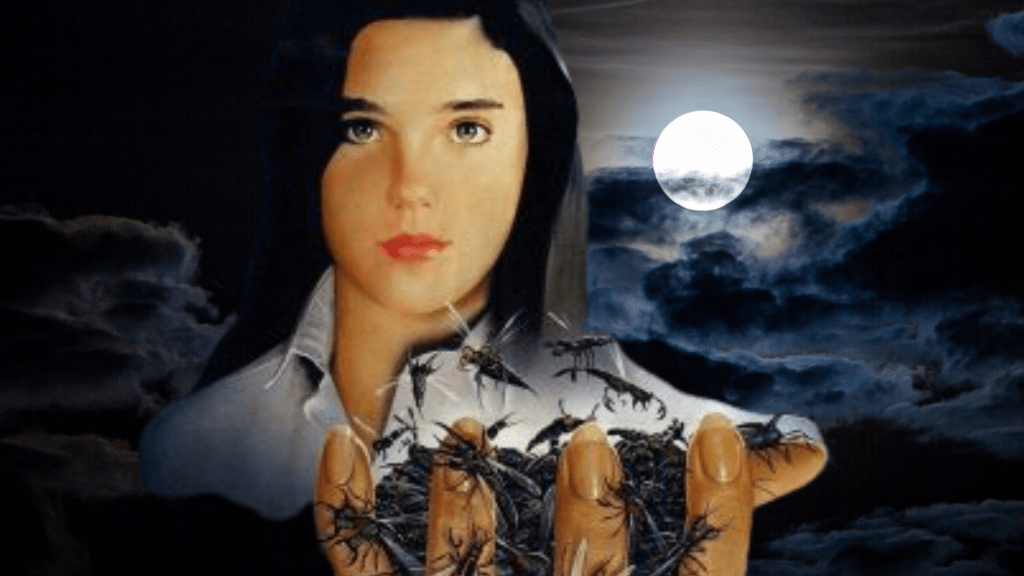
In 1985 Dario Argento gifted the world one of the strangest, most hypnotic horror films of his career: a film where a teenage girl talks to and controls insects, a razor-wielding chimp takes revenge and maggots wiggle across the screen in poetic harmony.
Phenomena (Creepers in it’s heavily edited US release) remains a fever dream of gothic sorts with giallo stylization and supernatural oddities, wearing a coming-of-age-story’s coat. At the center, the film is about a young girl’s journey through bullying, kidnappers and the horrors of absentee parental control. It also taps into the surreal, what-the-fuckery and beauty. As the film turns 40, it’s the perfect time to dive into how Argento’s insect-infested fairy tale continues to crawl under our skin, exploring themes of grooming, alienation, facial difference and the ever-present peril of being young, female and fearless in a world that demands submission. It’s central story has created a ripple effect in our latter female-centric horror in the concepts of alienation, bullying, isolation and transformation.
Black Widows
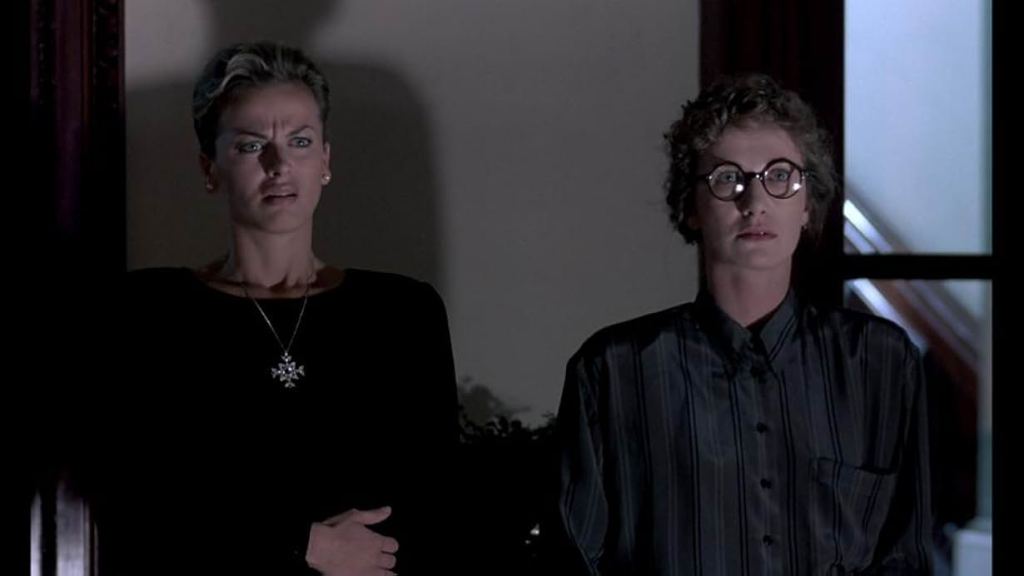
At it’s gooey center, Phenomena is all about control, who gets to wield it, who succumbs to it, and who breaks free of it. We begin with the weirdest first ten minutes of the film in the countryside and a vignette that seems to have nothing to do with the rest of the fim, but it’s a great precursor to know we’re headed into Crazytown. We’re introduced to the character of Jennifer Corvino (Jennifer Connelly) whose father, a famous American actor, is away filming and unable to care for her. Daddy’s busy, sweetheart, a Swiss boarding school should do ya just fine! In a place that’s meant to provide structure and supervision, Jennifer finds herself isolated and her encounters with the school’s caretaker, Frau Brückner (Daria Nicolodi), a woman whose seemingly protective nature masks a far more insidious intent. Rolling in the theme of gothic horror, Argento weaponizes trust, showing, early on, how authority figures can manipulate and entrap, making the real horror not just supernatural forces but the all-too-human predators lurking behind closed doors.
And make no mistake, Frau Brückner is a predator. Her manipulation of Jennifer echoes real-world patterns of grooming, where those in positions of authority use isolation, confusion, and deciet to trap their victims not to mention conditioning them to trust figures who’s sole mission is to harm them. This theme is particulary striking through the lens of Argento’s nightmarish atmosphere. Grooming and manipulation are nothing new for women in horror films and there’s no shortage of villains playing the long game in orchestrating their victim’s downfall. Suspiria (1977, 2018) transforms the concept of mentorship into a predatory process, as the all-female dance academy lures young women under the guise of artistic training while secretly grooming them for sacrifice.,The Company of Wolves (1984) reinterprets Little Red Riding Hood as a cautionary tale about predatory men, with the werewolf embodying the dangerous charm and calculated deception often employed by groomers. The Beguiled (1971, 2017) further explores this dynamic, showcasing how individuals in positions of power, no matter the gender, use isolation and psychological control to ensnare those who trust them.
On the flipside of this, Professor John McGregor (Donald Pleaseance) is Phenomena’s rare beacon of kindness in a world that seems determined to exploit or discard Jennifer at every turn. As a wheelchair-using entomologist (a lonely concentration in Switzerland, it seems), he’s an outsider in his own way, which might be why he immediately recognizes Jennifer’s uniqueness as something to be understood rather than feared. While the school’s headmistress (Dalilia Di Lazzaro) berates her and Frau Brückner lurks with ill intent, McGregor is the one person who actually listens to Jennifer, treating her with respect and curiosity rather than suspicion. Their relationship feels almost like a dark fairy tale inversion of the wise mentor guiding the gifted heroine. He provides Jennifer with the first real validation of her psychic connection with insects, framing it as something extraordinary rather than monstrous. His death is one of the film’s most tragic moments, not just because it’s brutally inevitable (this is an Argento film, after all), but because it leaves Jennifer completely on her own, forcing her to take everything he taught her and survive by her own instincts. McGregor’s presence might be brief, but his role is crucial, he’s the one character who encourages Jennifer to embrace her power rather than suppress it, making him a quiet but essential force in her transformation from lost schoolgirl to something far more intimidating.
Ladybugs
Horror has long placed young women at the center of its nightmares, but Jennifer Corvino is no ordinary damsel in distress. While Phenomena follows many conventions of the “final girl” narrative, it also subverts it, granting Jennifer an eerie, almost supernatural command over her environment. Her struggle is not just to survive but to wield the very thing that makes her different as a source of power, forcing the us to reconsider what strength in horror really looks like. And it looks like a supernatural bond with bugggssss.
Her journey through the film follows a classic horror trajectory: being displaced, threatened, and ultimately confronting the source of evil, but she defies the archetype by wielding her abilities rather than relying solely on luck, calculation or resilience. She’s placed in constant peril, from being drugged and locked away to being stalked through a gothic nightmare landscape, yet she remains active rather than passive. Phenomena blends the fragility of young women in horror with an unexpected empowerment, making Jennifer quite a fascinating protagonist.
Young women grappling with supernatural abilities often intersect with horror themes of alienation, power, and survival in horror. Carrie (1976) presents a tragic counterpart to Jennifer Corvino, both are ridiculed and isolated for their differences, but while Jennifer harnesses her powers early on for self-preservation, Carrie’s abilities explode in uncontrollable, vengeful fury when pushed to the brink. Thelma (2017) explores a young woman’s journey of self-discovery through supernatural abilities, weaving together sexual repression, transformation, and empowerment in a way that mirrors Jennifer’s evolving understanding of her psychic connection with insects. But, Ginger Snaps (2000) reframes transformation through body horror, using werewolf mythology to examine female power. These films, like Phenomena, engage with the idea of young women navigating a world that fears and misunderstands their power, turning their coming-of-age into a nightmarish metamorphosis.

Bombadier Beetle
If the horrors of Phenomena are rooted in the external: killers, madwomen, and a decaying mansion of death, then its emotional terror lies in Jennifer’s sense of isolation. Her psychic connection to insects marks her as different, and difference in horror often invites cruelty, othering and unfortunately, entrapment. In Argento’s world, alienation is not just a social struggle but a test of survival, and Jennifer’s ability to embrace her otherness is what ultimately allows her to outlast those who seek to destroy her.
Jennifer’s experience of being bullied at her boarding school highlights one of the film’s strongest psychological undercurrents: the alienation of young women who don’t conform. Let’s face it, her ability to communicate with insects makes doesn’t exactly make her a fan favorite, and her privileged background isolates her further. The bullying sequences, particularly when she is physically attacked by her classmates, emphasize not only how how young girls can be major assholes, but how cruelty from peers compounds the danger she faces in the film’s larger horror narrative. In many ways, Phenomena frames Jennifer’s struggles as a metaphor for the outsider experience, her bond with insects becomes both a symbol of her alienation and an extension of her identity, ultimately becoming the key to her survival.
Alienation and bullying in horror serve as catalysts for transformation, pushing outsiders toward either empowerment or destruction. May (2002) offers one of the most unsettling portraits of social rejection, where its protagonist is tormented for her differences, though May’s descent into violence contrasts with Jennifer’s survival and self-acceptance. The Craft (1996) comparably explores the loneliness of being an outcast, showing how a group of alienated girls (each for their own reasons) turn to witchcraft for power, reflecting Phenomena’s theme of supernatural abilities emerging as both a source of strength and further estrangement. While, Let the Right One In (2008) subverts the typical bullying narrative by introducing a vampiric bond, transforming isolation into an eerie but tender connection.
Firebug
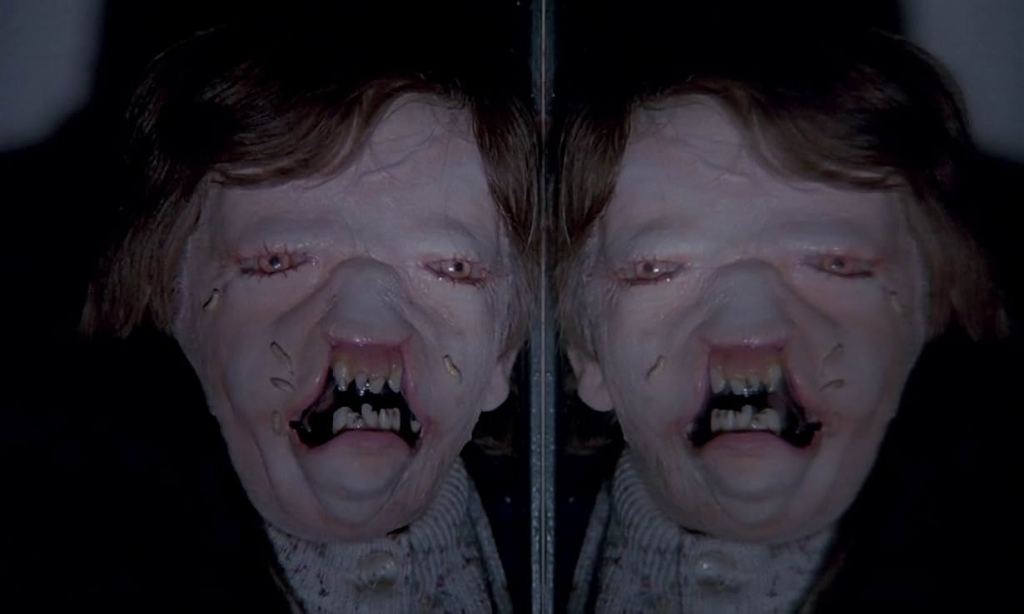
Argento is fond of crafting maniacal villains, but his victims have become monsters through suffering. Frau Brückner’s son Patua (Davide Marotta), hidden away like a dark family secret (per usual in the disgustingly archaic fashion of hiding away the “horror”), is both terrifying and tragic, a figure who embodies horror’s uneasy relationship with facial difference and morality. Phenomena challenges the notion that monstrosity is only skin-deep, asking whether the true evil lies in appearance or in the hands of those that shape a child’s fate.
The climactic reveal of Frau Brückner’s son adds a disturbing layer to Phenomena’s themes of horror, abuse, and victimization. Brückner’s son is not inherently evil; he’s been hidden away and shaped by his mother’s cruelty. His physical difference reflects the psychological corruption inflicted upon him rather than an innate monstrousness. Argento presents this difference as a tragic consequence of abuse rather than a straightforward symbol of villainy, complicating the audience’s perception of horror antagonists. The brutal climax, where Jennifer must confront both Brückner and her son, forces a judgement with the nature of monstrosity, who is truly monstrous, the child with the difference or the manipulative, violent mother who created him?
The portrayal of “disfigurement” in horror often serves as a means to challenge societal perceptions of beauty, monstrosity, and morality, exploring what it really means to be truly monstrous. Eyes Without a Face (1960) presents a chilling narrative about a young woman whose disfigurement (one she wouldn’t have had her father not almost killed her) leads to her confinement and manipulation, her agency is completely pulled from her and her new world outlook is screwed by being tucked away from the public. Phenomena is an exploration of those tragic consequences of abuse and the hidden monstrosity behind physical deformity. The Elephant Man (1980) complicates the idea of monstrosity, focusing on a man whose physical differences render him a target for cruelty, yet his humanity contrasts with the monstrous behaviors of those who torment him. The Orphanage (2007) takes this further by portraying a disfigured child not as a villain but as a victim of circumstance, subverting horror’s usual (and sometimes undignified) approach to facial and boy difference and offering a tragic twist on the trope. These films, like Phenomena, uses this theme to challenge viewers’ assumptions about beauty, monstrosity, and the true nature of evil, complicating the line between victim and villain.

Fairyfly
From enchanted landscapes to grotesque characterizations, Phenomena is steeped in the language of fairy tales. In Argento’s hands, the fable turns feverish and violent. Jennifer is a modern-day Sleeping Beauty, wandering through a dreamworld of deception, danger, and death, where the natural world is both her ally and her weapon. In this dark fantasy, growing up isn’t about finding a prince but about facing the human monsters who have always been waiting in the shadows.
Phenomena plays like a demented bedtime story, if bedtime stories were soaked in blood, bugs, and bad intentions. Jennifer is the lost girl dropped into a nightmarish world where the adults are either useless, evil, or about to be horribly murdered. Instead of fairy godmothers, she has an army of insects and a vengeful chimpanzee watching her back, because in Argento’s world, nature is more trustworthy than authority figures. The film’s fever-dream logic, where maggots spill like rain and the dead refuse to stay buried (cue scene where she’s swimming in remains), transforms the coming-of-age journey into something far more sinister. Phenomena reminds us that growing up isn’t just about finding yourself, it’s about surviving the monsters lurking behind every seemingly friendly face and that journey continues long into womanhood.
The use of surreal, dreamlike elements in horror often evokes the logic of fairy tales, where innocence is threatened by dark forces and transformation becomes both a rite of passage and a descent into madness. Black Swan (2010) embodies this feverish fairy tale, with its portrayal of a dancer’s psychological and physical transformation into her darker, more monstrous self. Valerie and Her Week of Wonders (1970) takes a similarly surreal approach, using fairy tale logic to blur the lines between reality and nightmare, much like Phenomena’s eerie, hallucinatory structure that immerses the viewer in Jennifer’s fractured world. Pan’s Labyrinth (2006) further explores this blending of fairy tale elements with real-world horror. Jennifer, like the young protagonist Ofelia, navigates a hostile environment where innocence and violence collide, forcing her to confront the external dangers in human form. The collision of the fantastical with the terrifying is beautiful to witness.
Phenomena stands as on of my Argento films. Its exploration of young women, their empowerment, and the dangers they face resonates deeply, setting the stage for a shift in how female characters are portrayed in horror. The film’s fusion of innocence, violence, and supernatural power has had a lasting influence on the genre, inspiring countless stories that follow young women through perilous transformations. Its themes of survival, strength, and the haunting consequences of abuse shaping the very fabric of how we see women in horror today.


 NightTide Magazine
Leave a comment