
By Mo Moshaty

28 Years Later: The Bone Temple (2026) dir. Nia Da Costa ⭐️⭐️⭐️⭐️⭐️
Dr. Kelson finds himself in a shocking new relationship with consequences that could change the world as he knows it, while Spike’s encounter with Jimmy Crystal becomes a nightmare he can’t escape.
28 Years Later: The Bone Temple moves with a patience that feels intentional. It doesn’t chase escalation or try to reframe the end of the world as something crashboombang. Instead, it lingers on what people do once fear settles into routine. How they organize themselves. How they decide what matters. How easily care, control, and belief begin to overlap.
That attention to people rather than premise is where the film finds its humanity. Under Nia DaCosta’s direction, with Alex Garland shaping the script, the world feels lived in rather than explained. Hierarchy doesn’t arrive fully formed. It grows out of small, understandable choices. Someone takes responsibility. Someone follows. Someone is relieved not to decide anymore. Humanity here isn’t heroic or fallen. It’s familiar.
And then, almost naturally, someone ends up in charge. No drama, just a voice that sounds steady and learned enough to trust or terrifying enough not to follow.
Ralph Fiennes’ Dr. Kelson marks the first steady voice with an ease that makes it clear this isn’t new. He’s been listening, watching, waiting, crafting, New Wave dancing, for years. Practice becomes credo.
Running alongside this is Spike, played by Alfie Williams, whose role feels central to the film’s emotional temperature. This is his journey now, leaving his philandering and grieving father behind. Spike notices things. He hesitates. He asks questions without always voicing them. He’s terrorized, shamed, alone, and a chosen survivalist…as anyone is in this particular day and age. When we left him, he’d encountered The Jimmies: multi-colored Power Ranger-esque choreographed menaces that save the day….for a few moments. We begin here with Spike wishing he’d hidden instead of joined.

And that idea of belonging as both comfort and compromise carries into The Jimmies themselves. Joining was attractive. They offer connection, purpose, and a sense of being led by something larger. They also reveal how easily loyalty becomes a substitute for ethics. Jack O’Connell gives his take on Jimmy Crystal a restless, searching quality; that lost soul quirk molded into a horrific messiah complex. He wants to be King. He wants to be right. A dangerous combination when that complex breeds into disciples.

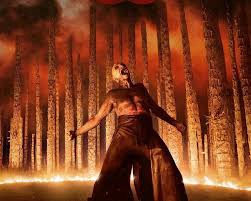
Even Samson, the Alpha zombie, played by Chi Lewis-Parry, fits into this same emotional logic. A body shaped by decisions made elsewhere, long before we meet him and his…appendage…again. In a film so attentive to systems and hierarchy, Samson feels like the proof of where those systems eventually land and how far with help, coaching, and the old-fashioned friendship, you can go.
What The Bone Temple offers, ultimately, is a reflection on humanity under pressure. People look for safety. They look for meaning. They look for someone to tell them how, what’s acceptable now, and what will keep you alive, no matter how heinous the action. And sometimes, they resist that too.
It’s a banger, plain and simple, and a work that pulls humanity, fear, festering trauma, and hope out of its characters.
Five stars from me.


Mo Moshaty is an acclaimed horror writer, lecturer, and producer whose work combines visceral storytelling with the psychological insight of her Cognitive Behavioral Therapy background. She has lectured internationally, including as a keynote speaker at Nightmares from Monkeypaw: A Jordan Peele Symposium (Prairie View A&M), No Return: A Yellowjackets Symposium (Horror Studies BAFSS Sig), The Whole Damn Swarm: Celebrating 30 Years of Candyman (University of California), and with the Centre for the History of the Gothic (University of Sheffield). Mo has also presented at the BFI, Miskatonic Institute of Horror Studies, and Final Girls Berlin Film Festival’s Brain Binge on women’s trauma in horror cinema, Cine-Excess on The Creepy Kid Horror Subgenre and Mother/Daughter Trauma in Horror, and Romancing the Gothic on Cosmic Horror’s Havoc on The Body Electric Her short film, 13 Minutes of Horror: Sci-Fi Horror, won the 2022 Rondo Hatton Classic Horror Award for Best Short Film. As a core producer with Nyx Horror Collective, Mo co-created the 13 Minutes of Horror Film Fest and partnered with Shudder in 2021 and 2022, while also establishing a Stowe Story Labs fellowship supporting women creatives over 40+ in horror. A member of the Black Women in Horror Class of 2023 and featured in 160 Black Women in Horror, Mo’s short fiction appears in A Quaint and Curious Volume of Gothic Tales (Brigid’s Gate Press) and 206 Word Stories (Bag O’ Bones Press). Her debut novella, Love the Sinner, was released July 5, 2024, with Clairviolence: Tales of Tarot and Torment released in October 2025. The first of her five-volume non-fiction series, The Annex of the Obscure: The Afterlife, will be released in 2027 from Tenebrous Press. As the Editor-in-Chief of NightTide Magazine and founder of Mourning Manor Media, Mo champions marginalized voices in horror. Under her leadership, NightTide plans to launch a film festival in 2028, furthering her mission to reshape the genre through inclusivity and representation.

Leave a Reply