By Mo Moshaty
The bait-and-switch technique in horror, especially when it comes to shifting the narrative’s focus, is a powerful storytelling tool. It plays a crucial role in subverting audience expectations while adding depth to the story’s emotional and psychological impact. By initially framing one character’s suffering, often that of a vulnerable woman or child, as the core horror before pivoting to another character’s internal turmoil, the film broadens its scope beyond physical terror, delving into existential and moral dilemmas.
This shocking switch forces the audience to question where their sympathies lie and whether the true horror is supernatural or deeply personal. It also allows the horror audience to explore trauma in more complex ways, using one character’s suffering as a gateway to the broader themes of guilt, obsession, and the consequences of desire.
Few films exemplify this narrative rug-pull as effectively as Audition (1999), a film that lulls the audience into a melancholic romance before pulling them headfirst into a nightmarish descent into psychological and physical torment. Let’s take a closer look at how Audition masterfully weaponizes the bait-and-switch to turn a tale of loneliness and longing into a shocking meditation on control, trauma, and the horrors of human connection.
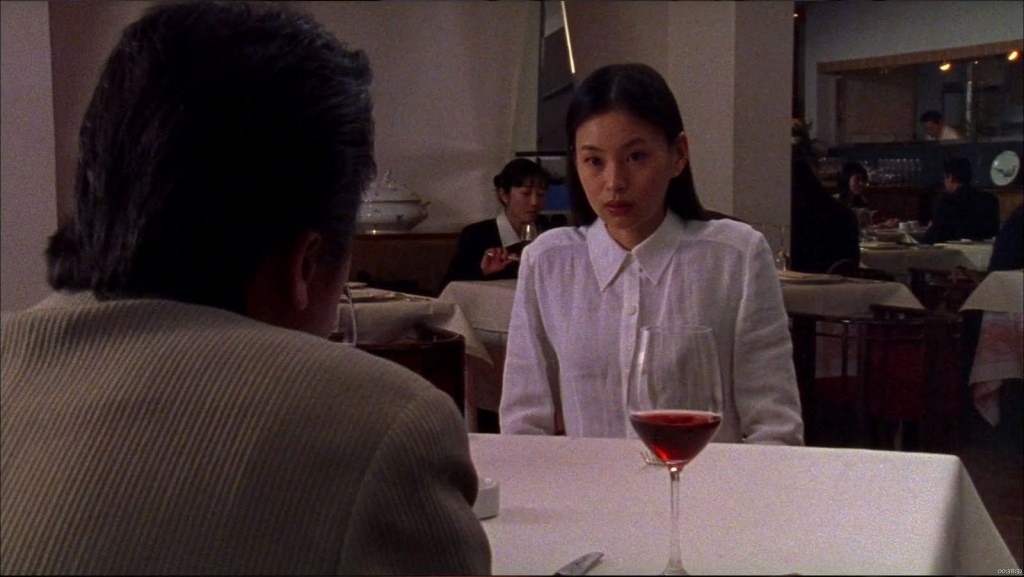
The film begins as a melancholic, slow-burning drama. Shigaharu Aoyama (Ryo Ishibashi), a middle-aged widower, is encouraged by his son Shigahiko (Tetsu Sawaki) and his best friend Yasuhisa (Jun Kunimara) to start dating again. In order to find the perfect woman, he sets up a fake movie audition where he meets Asami Yazamaki (Eihi Shiina), a quiet, elegant, and seemingly submissive young woman. As their romance unfolds in a delicate and restrained manner, it evokes the atmosphere of what could be a tender (errmm) May/December love story.
The Switch:
As Shigaharu falls deeper under Asami’s spell, strange details about her past begin to surface, and the film abruptly shifts from a quiet drama into a psychological and body horror where Asami’s true nature is revealed. She’s not a demure love interest, but a deeply traumatized and sadistic torturer. The final act descends into a nightmarish sequence of excruciating physical and psychological torment, with Asami methodically mutilating him in his own home. Spoiler!
Why It Works: It’s always interesting to see when you’re faced with a drama and something that seems like a romantic film at the forefront, to see a widower finally putting himself out there and finally willing to date again at the encouragement of his son, which is a wonderful thing to see. What’s interesting is how he intends to go about it: by auditioning hundreds of women, young women, much younger than he is, and much closer to his son’s age, so that we get The ICK Factor. But again, we’re heading into why it works. The first half of the film is slow and romantic and almost mundane, tricking the audience into believing that we’re watching a gentle love story before pulling out the rug. The transition is deliberately gradual. We slowly see both of them opening themselves up to love and learning about themselves. She is trauma dumping, he is gobbling it all up because he wants to feel like a saviour and a martyr in one. These slowly building hints of unease plunge the audience into full-blown horror. Once we get going, we don’t stop. Audition critiques Japan’s patriarchal dating culture: exploring themes of male entitlement and female revenge, which makes the horror feel disturbingly personal and inevitable.
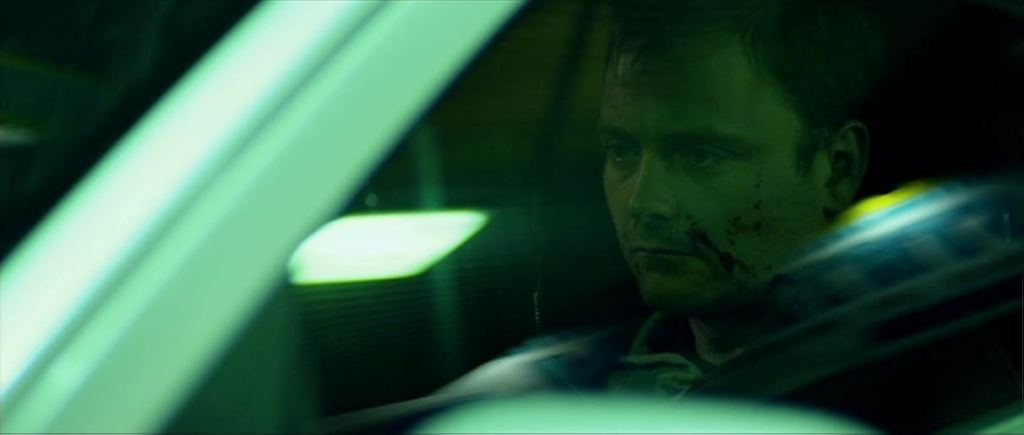
Kill List (2011) begins as a bleak and psychologically intense crime thriller, centering on Jay (Neil Maskell), a former soldier turned hitman struggling under financial strain and PTSD. His domestic life is falling apart. His volatile temper and the lingering trauma from a botched job in Kiev strain his relationship with his wife, Shel (MyAnna Buring), and their young son. At the behest of his best friend and fellow hitman, Gal (Michael Smiley), Jay reluctantly takes on a new job, a seemingly straightforward kill list provided by a mysterious client. As Jay and Gal worked through their assignments, the story unfolded as a gritty, grounded character study of a damaged man just trying to gain control of his life.
The Switch: Just as the film appears to be a standard crime drama, a deep sense of unease begins to creep in. The targets on the kill list, ranging from a priest to a librarian, respond to their executions with eerie acceptance, some even thanking Jay before they die. Strange symbols appear, cryptic references hint at a larger conspiracy, and Jay’s already fragile psyche begins to crack and unravel. As the assignments escalate in brutality, torture, and horror. The film takes a sharp left turn into folk horror. Jay and Gal unwittingly stumble into a terrifying web of occult ritual, secret societies, and human sacrifice, all culminating in an inescapable and devastating finale where Jay becomes the final pawn in this horrifying ritual.
Why It Works: Kill List methodically lures the viewer into a crime thriller before subverting their expectations with a slow-burning descent into existential horror. This transition is so subtle that by the time the folk horror elements set in, the audience is trapped in the same disorienting nightmare that Jay is. The themes of guilt, fate, and the inescapability of your past sins strongly permeate the film, and it’s reinforced by its suffocating atmosphere and cryptic storytelling. The film’s final gut punch, where Jay is unknowingly manipulated into murdering his own family as part of the ritual, seals its place as one of the most chilling examples of genre-blending horror. Kill List is not just a crime story gone wrong; it’s a meditation on self-destruction and the weight of violence and the terrifying realisation that some horrors are orchestrated long before we even know what’s happening to us.

At first blush, Sunshine (2007) presents itself as a high-concept sci-fi thriller. Set in the year 2057, the film follows a crew of astronauts aboard the spaceship Icarus II on a desperate mission to reignite the dying sun with a massive nuclear payload. Led by physicist Robert Capa (Cillian Murphy), the team, including Captain Kaneda (Hiroyuki Sanada), Mace (Chris Evans), and Cassie (Rose Byrne) face mounting technical and psychological challenges as they approach the target. This film initially unfolds as a tense, cerebral space drama exploring the themes of human fragility, sacrifice, and the pressure to save humanity.
Switch: The mission is straightforward until Sunshine takes an unexpected and horrifying turn. After intercepting a distress signal from Icarus I, a lost predecessor mission. The crew investigates and discovers that its Commander, Pinbacker (Mark Strong), has survived, though not as they expect. Consumed by his religious fanaticism, Pinbacker believes that humanity’s fate is to perish and that interfering with the sun’s demise is wholly blasphemous. As the story shifts from scientific realism to psychological and cosmic horror, and religious horror at that, Pinbacker stalks the remaining crew members, turning the final act of the film into a nightmare of madness, isolation, and existential dread.
Why It Works: Sunshine lures its audience into a complicated, philosophical sci-fi film before seamlessly shifting it into an unsettling horror. This sudden shift forces the audience to not just confront the physical dangers of space but the psychological and spiritual horrors that arise from extreme isolation. Pinbacker, embodying an almost Lovecraftian force of nihilism, transforms the film from a survival thriller into something much darker: an exploration of fanaticism, the fragility of sanity, and the terrifying insignificance of human existence in the face of the universe. The ending of the film balances hope with tragedy, cementing it as one of the most striking examples of bait and switch in modern sci-fi horror.

The Cabin in the Woods presents itself as a familiar slasher film. Five college friends: athletic Curt (Chris Hemsworth), bookish Holden (Jesse Williams), stoner Marty (Fran Kranz), flirtatious Jules (Anna Hutchison), and reserved Dana (Kristen Connolly), embark on a weekend trip to a secluded cabin in the woods. While partying, they discover a mysterious basement filled with strange artifacts and unknowingly activate an ancient curse by reading from an old diary, summoning the zombified Buckner family who rise from the grave to hunt them down. Up until this point, the film appears to follow a very well-worn and trite horror formula, positioning itself as the standard teens-in-peril slasher, and yes, Randy Meeks’ Rules to Survive apply here.
Switch:
It’s later revealed that the entire scenario is being orchestrated by a secret underground organisation, because aren’t they all, led by Sitterson (Richard Jenkins) and Hadley (Bradley Whitford), the group is manipulating events to ensure the characters’ deaths happen in a specific order, following horror archetypes designed to fulfil an ancient ritual. Their deaths are not just for shits and giggles but are part of a larger cosmic sacrifice to appease the ancient gods known as the Old Ones. Very crafty name. If the ritual is not completed correctly, meaning the characters must suffer and die in predetermined ways, the Old Ones will awaken and destroy humanity. What begins as a straightforward teen slasher transforms into a satire, a meta commentary on horror itself.
Why It Works:
Any film that can laugh at itself while knowing exactly what it’s doing in the horror genre is a complete win in my book. The Cabin in the Woods plays with genre tropes so effectively that you can’t help but applaud once its secret is finally revealed. It starts by embracing classic slasher clichés: the Jock, the Brain, the Stoner, etc., establishing the familiar setup of “young people in an isolated location” before subverting every expectation. The characters appear to fit these standard archetypes, but it’s later revealed that their personalities have been chemically altered by the organization, reinforcing how horror films force characters into predetermined roles.
What makes this even more brilliant is how the organization itself represents both horror filmmakers and the audience. As creatives, we dictate the fate of these characters, ensuring the same stories play out repeatedly to meet expectations. Are they going to get away? Is the killer who we think it is? What will they do next? We’re so deeply invested in the genre that we don’t always realize we’re being spoon-fed the same narratives, just dressed up in different packaging. The organization’s control room, filled with supernatural threats, mirrors the variety of horror subgenres, from cryptic monsters to zombies to animal horror, showing us just how formulaic the genre can be.
The film also suggests that horror narratives exist for a reason: to channel humanity’s fears and satisfy primal urges. And it’s not wrong. Horror, in any subgenre, is inherently cathartic. The film’s bleak ending, where Dana and Marty refuse to participate in the cycle and instead allow the world to end, serves as a commentary on breaking free from horror’s constraints, even at the cost of total destruction.
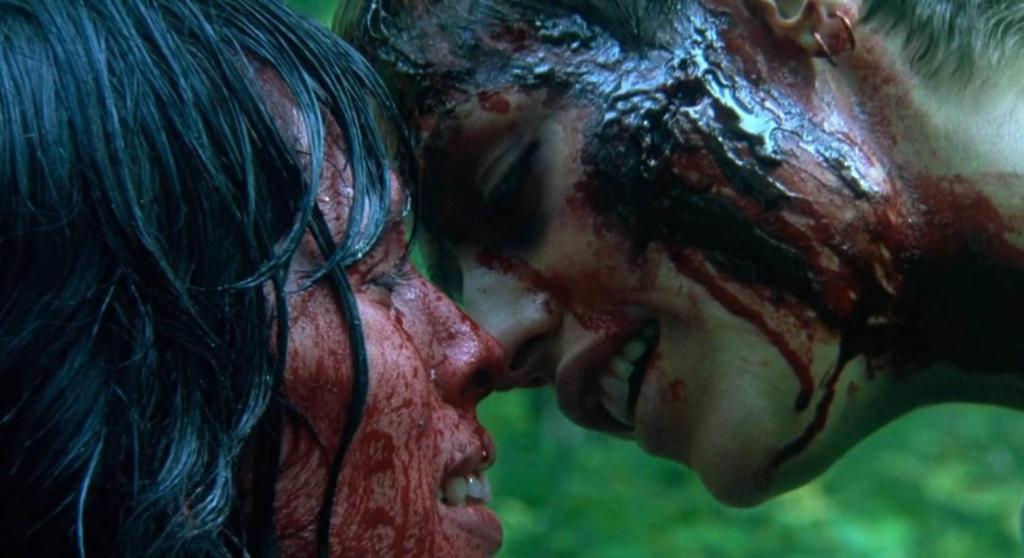
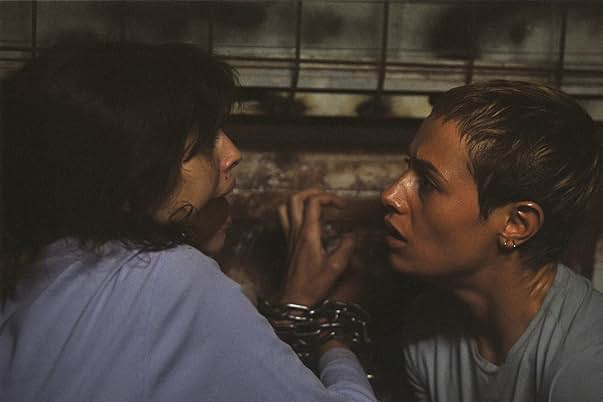
Haute Tension (2003) begins as a harrowing home-invasion slasher, delivering a relentless, violent thrill ride. Marie (Cécile de France) and Alex (Maïwenn), two best friends, travel to Alex’s secluded family home in the French countryside for a quiet getaway. That peaceful setting is truly shattered when a sadistic, silent intruder, Le Teur (Philippine Nahon), arrives in the dead of night, brutally slaughtering Alex’s family. With Alex bound and taken hostage, Marie emerges as the Final Girl, hiding, strategizing, and fighting for survival as she desperately tries to save her friend from the relentless madman. Everything plays out like a conventional slasher, Marie is the intelligent, resourceful final girl, evading a seemingly unstoppable force of evil as the film builds towards an inevitable showdown between the two… right?
Switch:
In a devastating final act twist, the film reveals that the brutal, hulking killer never actually existed, and Marie herself is the murderer. She suffers from dissociative identity disorder and has been unknowingly carrying out the violent rampage while projecting the existence of an external killer. Every moment of fear, every chase, every near escape was an illusion of a fractured narrative constructed within Marie’s mind to separate herself from the atrocities she was committing and to separate herself as Alex’s savior. This perspective shift forces the audience to re-examine every single scene, transforming Haute Tension from a straightforward slasher to a deeply disturbing psychological horror about obsession, lust, repression, and the fragility of identity.
Why It Works:
What makes Haute Tension so effective is its ability to manipulate the audience’s perception. By framing Marie as the film’s heroine, the audience naturally aligns with her and her struggle for survival, making the revelation of her true nature feel even more disorienting. The film also subverts the final girl trope in a deeply unsettling way. Marie isn’t just the survivor; she’s also the predator. This inversion adds the extra layer of horror as the audience realizes they’ve been rooting for the monster this whole time.
The film’s use of extreme violence also serves as a clever misdirection. The brutality of the murders, beheadings, throat slashings, the infamous oral sex scene with a decapitated head (blerghhh), and the scene involving a concrete saw reinforce the idea that this is a traditional slasher, distracting from the psychological horror piece at its core. Director Alexandra Aja leans into this grimy, unflinching aesthetic of classic grindhouse, shifting from physical terror to existential horror.
Beneath the surface, Haute Tension also explores the themes of suppressed desire and psychological breakdown. Marie’s obsession with Alex is subtly woven throughout the film, hinting at an intense, possibly romantic longing. The twist suggests that her repressed emotions manifest violently, transforming her into the very monster she fears. This underlying layer of psychological depth adds that tragic element to the story, making it not just a brutal film, but a deeply unsettling character study. Again, this twist forces the audience to re-evaluate everything they’ve seen, increasing that unsettling experience and making it one of the best bait-and-switches out there.

 NightTide Magazine
Leave a comment