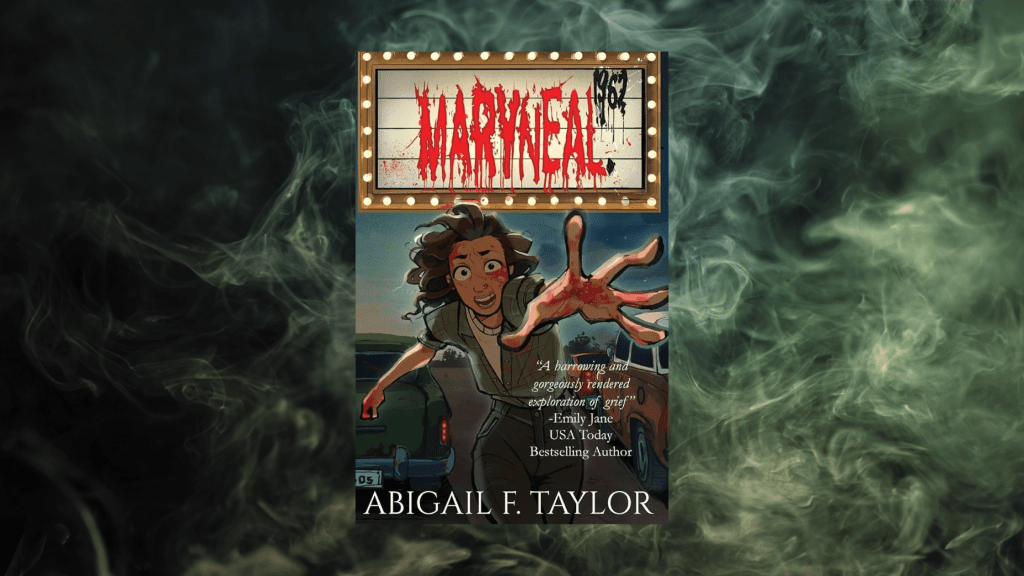
Abigail F. Taylor is an award winning Own Voices author from Texas. Her novella, THE NIGHT BEGINS, debuted with Luna Press Publishing Feb 2023. Her short stories and poems can be found in Writer’s Digest, Globe Soup, Fractured Lit, Sixfold Magazine, and Illya’s Honey, among others. She once spent a year working on the film set for The Dinosaur Experiment, and had a stint in religious studies. When she’s not writing, Abigail spends her time out in nature, practicing aikido, and cross stitching. She lives with four cats, a small dog, and a sassy rooster. You can follow her on her website abigailftaylor.wordpress.com
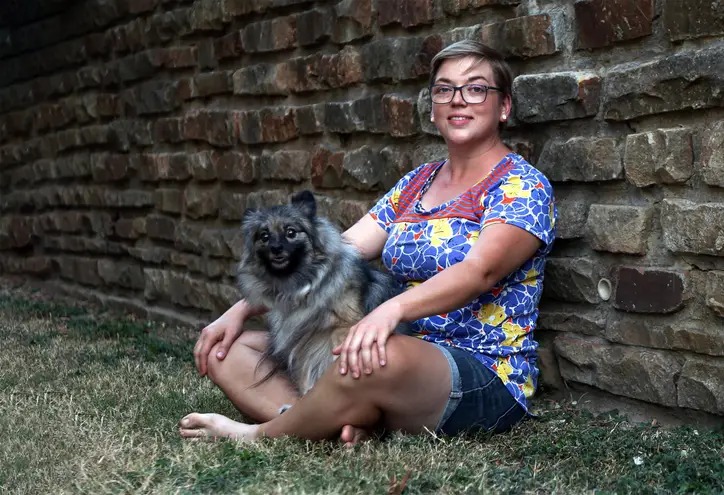
With a background as eclectic as her fiction, from religious studies to wrangling dinosaurs on film sets, Abigail F. Taylor brings a singular voice to Southern Gothic horror. We caught up with the author to talk about Maryneal 1962, small-town fear, and why sometimes the monsters we love are the ones we might have to kill.
1. What was your first published work?
“Enough” a poem I’d written and published with Illya’s Honey back in the summer of 2010. I’d taken it to a poetry workshop, and the editor happened to be there. She said send it in, and I did.
2. Is there a story inside that you have seeds of but can’t seem to connect that’s dying to get out?
Oh plenty! I’ve been taking a writing break to refill the well, and I can feel a lot of the stories I put a pause on germinating, waiting to get free. One particular story, I’ve been starting and stopping for about a decade. I just don’t have the skillset to tackle i,t but with each new story or novel I put out, I feel that much closer.
3. How do you handle a rejected story?
I am very dramatic for about five to ten minutes. During this time, I call in my writing friends and we decry injustice from our armchairs. Then, we just start digging for the next open call. It’s all part of the process. Writers should all be hunting for rejections. That’s how we get connected to others in the community and get eyes on our pages. There has only been one time when I had a deep and ugly cry about a rejection letter, and I gave myself the time and space needed to heal from that. Having a supporting network of friends certainly helped the process.
Maryneal, 1962 received several rejections, including from two major agents who are now no longer in the industry. So, there’s no harm in putting a book aside until the timing is right.
4. What does literary success look like to you?
In a lot of ways, I’ve achieved it! My success doesn’t look like I thought it would when I started fifteen years ago. My first book, The Night Begins, was published in 2023 and has received glowing reviews. My next two books, Maryneal, 1962 and A Home in Tishomingo, will be published within five months of each other. There are several short stories and poems scattered around various magazines.
I’m actively working on not moving the goalposts for myself and enjoying what life has brought me, and sometimes that can be hard when comparing my path to my friends’. I’m doing the work I set out to do, and that’s pretty fulfilling… although, I think peak success would be the ability to hide in the woods and swan about my cabin in a gloriously soft mumu while having no responsibility other than writing my next book. I think that’s every writer’s end game. Not necessarily to be a forest goblin, but to live exclusively off of book sales. It’s a lofty goal and I might never achieve it, but that doesn’t mean I’m not successful!
5. Do you read your book reviews? How do you deal with bad or good ones?
I’ve only seen good reviews. Yes, I read them, I enjoy hearing the reader’s experience! There’s only been one or two people who have given me middling reviews (so far),and it was for very personal reasons, which you can’t fault them for at all. Someone’s yuck is another person’s yum. I have a background in theater, so I learned early on to take what is constructive criticism and throw everything else out the window.
6. What is the most difficult part of your artistic process?
Knowing where to start. With Maryneal, 1962 I knew exactly what the inciting incident would be. With A Home in Tishomingo, it was the very last scene that came to me so crystal clear, the challenge was writing everything that led up to that point. Starts are hard and set the tone for myself as a writer and the expectations I’ll have for myself when it comes down to edits.
7. As in most times, the truth is stranger than fiction. What has been the hardest scene or chapter you’ve had to write, if you were channeling personal experience?
Maryneal, 1962, at its core, is a story about loss and grief. I’d written it to help process the murder of a friend. It was a very cathartic but difficult process for me to write the deaths in this book and how everyone responded to them. Then, nearly a decade after writing that first draft, I was in the middle of writing my acknowledgements and discussing the grieving process when I received a phone call that my partner had died. So, then those last final pages became the most difficult to finish.
8. What inspired your latest work?
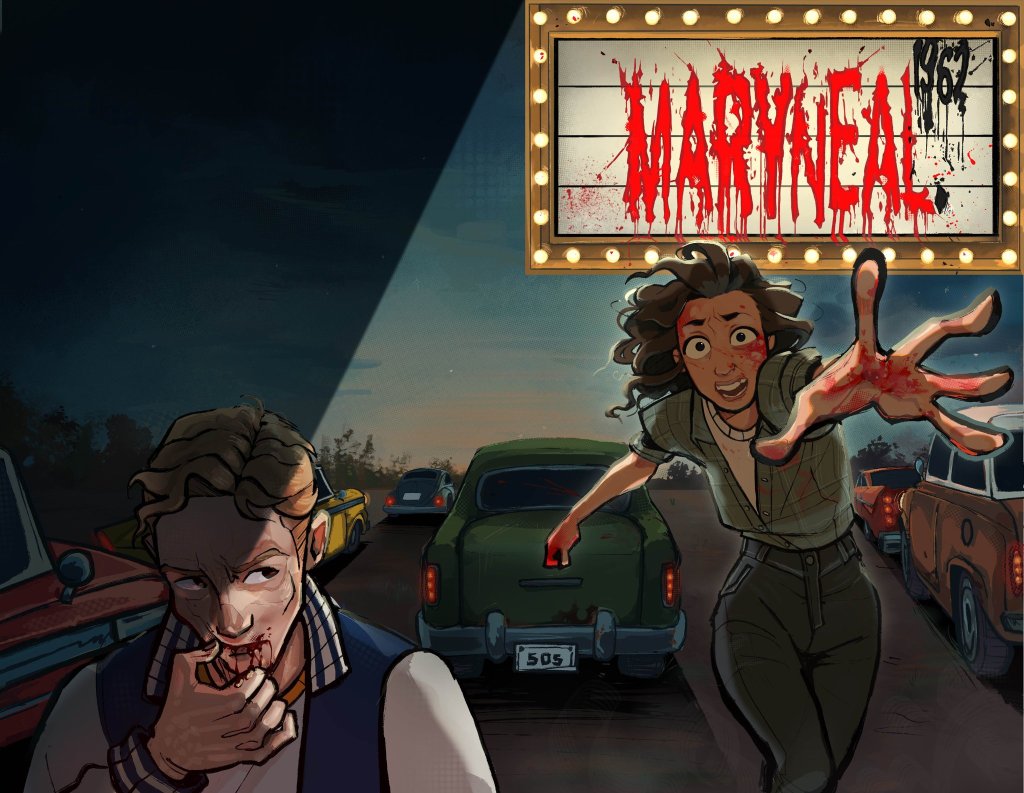
Maryneal, 1962 had inspiration from a lot of different sources. I wanted to explore the reason a community might become unincorporated or devolve entirely into a ghost town. Then there was the fact that, at the time of writing the first draft, young adult books with Indigenous representation were far and few between. I wanted someone like my grandmother: big and sturdy, goofy, beautiful. Someone who existed with confidence. Someone who navigated life as passing and how that shaped her. Luckily, we’re having a golden era in film and literature with incredible native stories!
My next book, A Home in Tishomingo, was inspired by my great-grandparents, an Irish Traveler and a Choctaw matriarch. I wanted to explore their relationship, the other women my great-grandfather involved himself with, how my great-grandmother battled mental illness, and how they struggled to survive during the Great Depression. Many of my stories flirt with or dive deep into my personal exploration of identity and reconnection.
9. If you could tell your younger writing self anything, what would it be?
I would also tell myself to let go and let God (something that I constantly have to work on). All you can do is write; everything else is outside of your control. So, don’t put so much pressure on yourself, kid.
10. What the best advice you’ve ever gotten from a fellow writer?
Two incredible poets sat me down and explained things when the editor at that writing workshop told me to submit my poem. Barrie Neller said, “Read more.”
My father sat me down and told me that there would be a future when editors would ask me to make big changes to my writing. It would be up to me to decide to follow through. I’m allowed to say no to a major edit if it risks the integrity of the work.
11. What is your go-to comfort horror/Sci-Fi book?
For Sci-Fi, The Inkheart Series by Cornelia Funke. As far as horror goes, I would have to say The Lord of the Flies by William Golding.
12. If you were to genre-hop, which genres would you most like to try writing?
I hope to go from sci-fi/horror into contemporary romance as a side hustle. Maybe one day I can reveal who I ghostwrite for, but it is not this day. I find that the story beats between horror and romance are very similar. It’s the tone that shakes things up. I’m excited to explore more historical fiction. Almost everything I’ve written has been set before the 1970s, but there is always the undercurrent of speculation and magical realism. Working with more of a literary and straightlaced approach to the genre will be a fun challenge.
**Keep an eye out for Abigail’s next book…
A Home in Tishomingo (Wild Ink Publishing)
They were promised that the west was a Garden of Eden as long as they had the courage to work the land, but their arrival came with a warning: High wind and sun! Plow at your peril!
In a dying town where infants are taken by dust pneumonia and birds make their nests from barbed wire, swearing off big magic is easier than it sounds, especially when you have two wives, children, and an extended family to protect. If Skunk’s learned one thing over the last twenty-five years, it’s that when the hardships of the Dust Bowl, poverty, and societal degeneration abounds, kin stays strong. When a long-owed debt comes due, Skunk will have to confront the cowardly behavior of his past, call once more on his dangerous power if he wants to secure his family’s safety, but as always– stealing from Death has its price. Set between 1910-1935, A HOME IN TISHOMINGO, follows the lives of Skunk Lowery and his mixed race, polyamorous family as they endure famine and hardship on the Oklahoma prairie.

 NightTide Magazine
Leave a comment