By Mo Moshaty
Horror has a way of putting kids through traumatic hoops. Some even shine in those horrors. They’re portable, photogenic, and prone to saying deeply unsettling things without meaning to — the perfect prop for a good jump scare. But in The Other (2025), Bring Her Back (2025), and Weapons (2025), the kids aren’t here to hand over ominous drawings or whisper about things on the walls. They are the story’s core, each carrying a trauma so heavy the adults around them can barely stand to face it.
And that’s the trick. They don’t. Instead, the grown-ups reframe it, rush it, or fold it neatly into their own narratives. The expectation is simple: the children will adjust to whatever bizarre new normal they’ve been handed, and they’ll do it quickly. Bonus points if they bounce back in a way that makes the adults look like heroes.
The three films in this series share DNA, but each distills a different version of the same truth. In The Other, a mute Black girl is adopted into a white suburban household where her new father is trying to reach her, and her new mother is spiraling into suspicion and possession paranoia. Bring Her Back drops two grieving siblings into the care of a foster mother who mistakes them for a chance to resurrect her own dead child and might actually be trying. Weapons leaves one boy standing after his entire class disappears and watches the town try to ring the truth out of a situation he reluctantly lies in the center of.
These kids aren’t passive victims. They know what’s happening, and they’re making choices about what to reveal, what to hide, and how to survive in worlds that keep reshaping them into something convenient. If horror teaches us anything, it’s that the monster in the basement is rarely as dangerous as the people upstairs insisting that everything’s fine.
Silence Isn’t Surrender: The Other
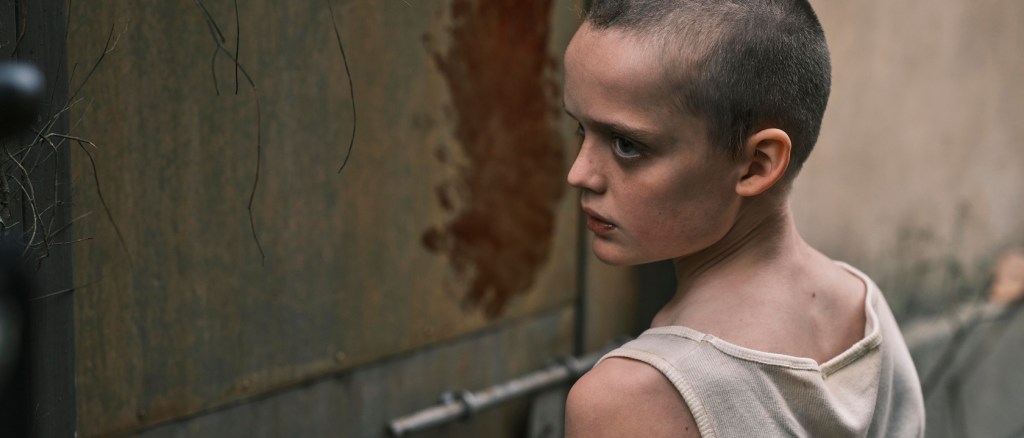
In The Other (2025), Kathelia (Avangeline Friedlander) arrives in her new home the way a person steps into a museum after hours: careful, alert, not touching anything she isn’t sure she’s allowed to. She’s 11, Black and mute, her voice locked away since the loss of her biological family. This is a multicultural adoption, but the warm press release version of that phase evaporates quickly. She’s moving into a white suburban home already heavy with grief and expectation, a space where the furniture hasn’t shifted in years and the air feels like it’s holding its breath.
Her adoptive father, Daniel (Daniel McTee), greets her with the quiet hesitation of a man trying not to scare a bird from his hand. Her adoptive mother, Robin (Olivia Macklin), throws herself into the performance of mothering as though it’s a competitive sport. At first, the effort seems completely earnest, but cracks form fast. Kathelia’s reserve, her refusal to “settle” on schedule, start reading to Robin as something darker. Soon the warmth is edged with suspicion and then outright paranoia. Robin begins to believe Kathelia is not who or what she claims to be.
Daniel and Kathelia, meanwhile, find each other in the negative spaces of the house: late night cocoa left outside her door, silent car rides, the shared understanding that neither of them feels entirely safe with Robin in the room. Their bond is understated with steady flicker of connection in the house otherwise fraying at the seams. The supernatural hums at the film’s edges. Kathelia speaking in a voice that isn’t hers; a subtle suggestion that she might be more than one thing at once: a chimera, a haunted vessel? Writer/Director Paul Etheridge keeps is unresolved. Is she possessed, or just surviving the possession of her identity?
Robins’s spiral is the film’s most unsettling transformation. Macklin plays her as a woman whose grief has curdled into something feral, clinging to the idea of a biological truth and willing to reject the child she committed to parenting if it doesn’t align with that fantasy. It’s monstrous, not in the horror cliche sense, but in the betrayal; the slow, deliberate withdrawal of love from a child who has nowhere else to go.
Kathelia’s silence becomes the film’s real engine. It’s not passivity. It’s the last space she controls, the one part of herself Robin can’t rewrite. In a home where everyone else is talking over her, diagnosing, accusing, consoling, her refusal to participate is its own kind of resistance.
By the end, The Other doesn’t give us a neat answer because there isn’t one. Whatever lives inside Kathelia, whether it’s grief, memory, or something older, will stay there. Death, here, is not an ending; it’s an extra presence in the room. And sometimes silence isn’t surrender at all. Sometimes it’s the only way to survive.
Children as Currency: Bring Her Back
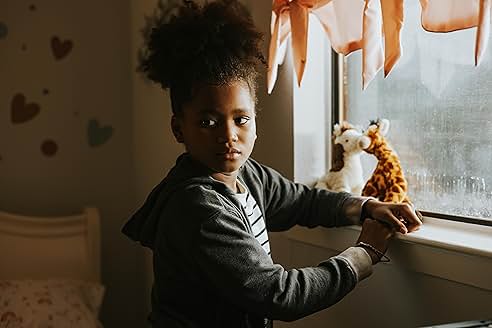
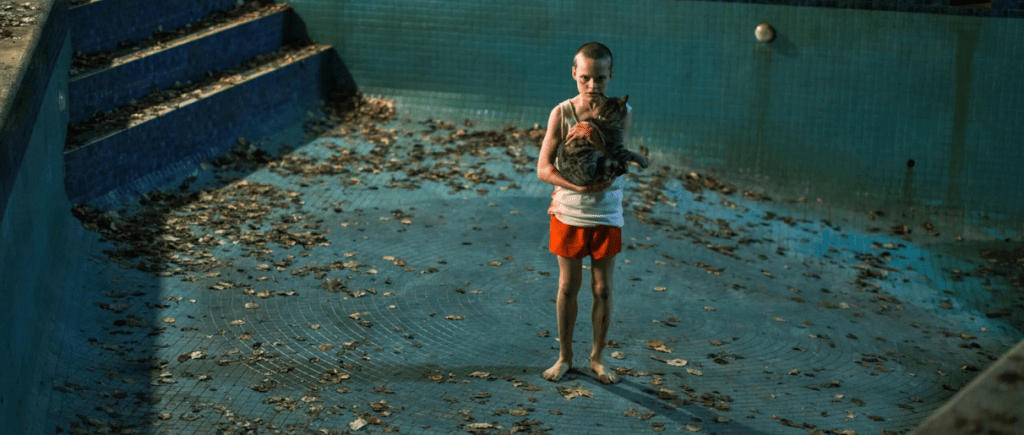
Grief is rarely tidy, but in Bring Her Back (2025), it’s weaponized. Andy (Billy Barratt) and Piper (Sora Wong) have just lost their father, a rupture still fresh and unprocessed. They’re placed with Laura (Sally Hawkins), a foster mother whose own loss, the drowning of her daughter Cathy, has festered into obsession.
At first glance, Laura is the picture of kindness. Her voice is soft, her gestures practiced, and she seems ready to give these siblings a safe place to land. But it doesn’t take long to see the cracks. Piper, blind and vulnerable, becomes the focal point of Laura’s attention. In Laura’s mind, Piper isn’t a grieving child, she’s her daughter, Cathy returned, the perfect vessel for a resurrection she’s convinced is possible. Andy, perceptive and protective, recognizes the danger but swallows his own grief to keep his sister safe. His mourning becomes active labor.
Then there’s Oliver (Jonah Wren Phillips), the other child in Laura’s care, and perhaps the film’s most quietly devastating figure. Oliver is less foster son than indentured servant, sent on errands and tasks that edge from unpleasant to outright dangerous. He is another vessel of Laura’s transference, but unlike Piper, who is destined for a twisted form of “love”, Oliver is a means to an end. His suffering, his terror, is simply the cost of Laura’s mission. When she sends him into work that could kill him, endanger him, destroy him, the casualness of it is chilling. And somewhere his real parents likely believe that he’s dead. The unspoken cruelty, the erasure of his life beyond her home, hangs over every scene that he’s in.
The house itself is Laura’s accomplice. Rooms are locked, as though grief has claimed them as private property. VHS tapes hum with ritual footage. The air is thick with the sense that nothing has truly moved on. Laura speaks the language of healing, but her actions betray the need to control, to possess, to force the past into the present, no matter the human cost.
When the supernatural elements do surface, moments where Oliver embodies something evil, where his insides crawl with unspoken terror, it feels less like a spiritual invasion and more like the inevitable consequence of a house that refuses to let the dead rest. The horror isn’t simply that Laura might succeed in bringing Cathy back, it’s the toll exacted on the living to make the attempt.
By the end, there’s no sense that the children are free in any meaningful way. Whether Piper has physically escaped Laura or not, whether Oliver has been found and returned to his parents or not, they leave carrying her imprint. Andy with the weight of having played proctor too long and paying the price, Piper with the blurred edges of her own identity, and Oliver with the knowledge that his safety and body was always negotiable. In Bring Her Back, children aren’t just characters, they’re currency, and they are spent recklessly in the pursuit of an adult’s closure, and the debt they inherit will follow them long after her death.
How To Weaponize Your Silence: Weapons
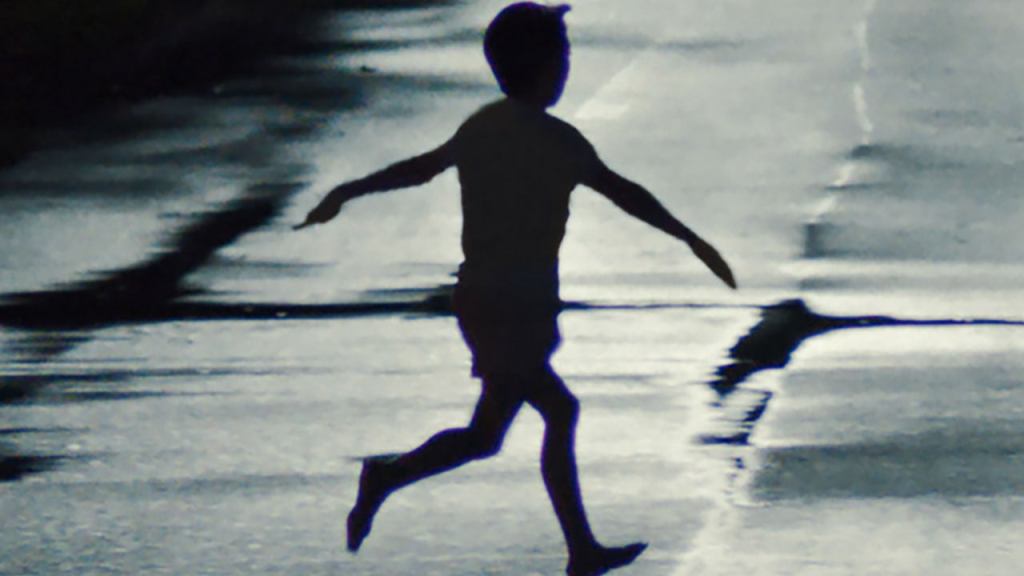
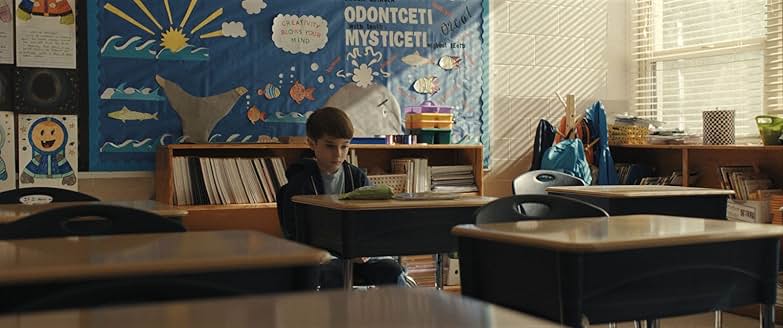
In Weapons (2025), the catastrophe happens before we even arrive. Seventeen third-graders vanish overnight. Only one, Alex Lily, (Cary Christopher) comes back. No signs of struggle, no ransom notes, no footprints in the frost. Just the fact of his survival and a tidal wave of questions.
The problem is, Alex doesn’t answer them. Not for the police, not for the reporters, not for the parents desperate for something, anything, to hold on to. This silence isn’t just frustrating, it’s suspicious. In the hands of lesser storytellers, this would set up a standard “kid cracks under pressure and spills the plot” arc. But here, it’s the exact opposite. Alex’s silence becomes his defining act of control.
The adults in Weapons operate on a simple economy: trauma in, answers out. The police see Alex as a witness. The media sees him as a headline. Even the neighbors, worried and curious, treat him like a walking answer key. His experience is public property, something to be mined, shaped and sold. And one would think, as curious as the townsfolk are, nobody seems to even care what the hell is happening at the creepy house at the end of the cul-de-sac, but I digress.
The only exception to this is his teacher, Justine Gandy (Julia Garner). She doesn’t push him; she doesn’t try to coax a confession out of him. She sits beside him like she’s willing to wait forever. And in those scenes, she meets Alex at eye level. It’s the rare visual cue that he’s being treated as a person rather than a narrative tool. But even in that moment, Alex does not defy the danger that holds him captive.
Zach Cregger tells the story in a fractured multi-POV structure that lets us see how absence becomes a kind of presence. Alex isn’t just surviving the absence of his classmates, he surviving knowing what happened to them. He’s the bearer of that truth, of the torment his parents carry and the presence in his life of his great aunt Gladys (Amy Madigan), a figure whose intentions are nothing short of predatory. Gladys holds him in her orbit like a spider keeps a fly, and Alex’s silence isn’t just defiance, it’s self-protection. He doesn’t once scream for help. He doesn’t tell anyone at school. He barely speaks above a hushed tone, even in the house, every word withheld is a brick in the wall between him and something far worse. That weight, the knowing, the fear, the constant calculation, is excruciating. And underneath it all, he’s not the hero of his own story. He’s a pawn.
The film never gives us the missing children in new exposition outside of their vegetative state, they remain a phantom limb, a Ring video track, their absence shaping every space they should be in. Alex becomes the physical embodiment of that absence and a constant reminder of what’s gone and what hasn’t been explained, making him both valuable and expendable.
Alex’s silence isn’t paralysis, but strategy in a world determined to twist the truth into something palatable. The only way to keep it intact is to keep it locked inside. This is where the title Weapons comes into its sharpest focus: Alex’s weapon is his refusal, his stillness, his hushed voice, his absence of panic. They’re all tools. They don’t protect him from everything, but they protect him from being rewritten.
Like The Other and Bring Her Back, Weapons ends without complete closure. We don’t know if Alex will ever speak his truth. We don’t know if the children, all of the children, will eventually do the same. We don’t know if his silence will save him forever or only for now. What we do know is that horror, as a genre, has always been comfortable putting children in harm’s way because it reflects something brutally real. Our cultural expectation that children will be resilient and survive whatever is thrown at them. That they will adapt, endure and keep moving no matter what it costs them. In Alex’s case, the cost is carrying an unbearable truth in silence, enduring the presence of something dangerous and living as a pawn in a story no one else will fully believe or understand.
And isn’t that the truth of every child who tells a story?




 NightTide Magazine
Leave a comment