By Kellen Marshall
How one pulp horror devotee and one snarky film critic resurrected one of Hollywood’s biggest failures.
Ever since the success of the Marvel Cinematic Universe, Hollywood studios have been trying to replicate that formula, with… let’s just say mixed results. But perhaps no attempted cinematic universe will go down in infamy more than Universal Studios’ attempt to reboot their classic line-up of the Universal Monsters, starting in 2017 with director Alex Kurtzman’s reboot of The Mummy, starring everyone’s favorite daredevil action star, Tom Cruise. The Dark Universe, as it was to be called, was envisioned as a more superhero action movie update on the original slate of classic monster movies from the ‘30s and ‘40s, such as Dracula, Frankenstein, and The Invisible Man. But from the get go, the film that was meant to be the jumping off point for this planned series was plagued with issues, ranging from constant reshoots to a rough cut of the trailer with incomplete sound accidentally being released in place of the finished one, prompting a veritable tidal wave of derisive memes to spread across social media, making The Mummy a laughing stock before it even had the chance to come out. And things only got worse when the film actually did release on June 9th, 2017. With a Rotten Tomatoes score of 15%, and grossing only $80 million at the domestic box office (worldwide $410 million) on a reported budget of $125-195 million according to Box Office Mojo, the film was dead on arrival, and with it, died any and all plans for future installments in the Dark Universe.
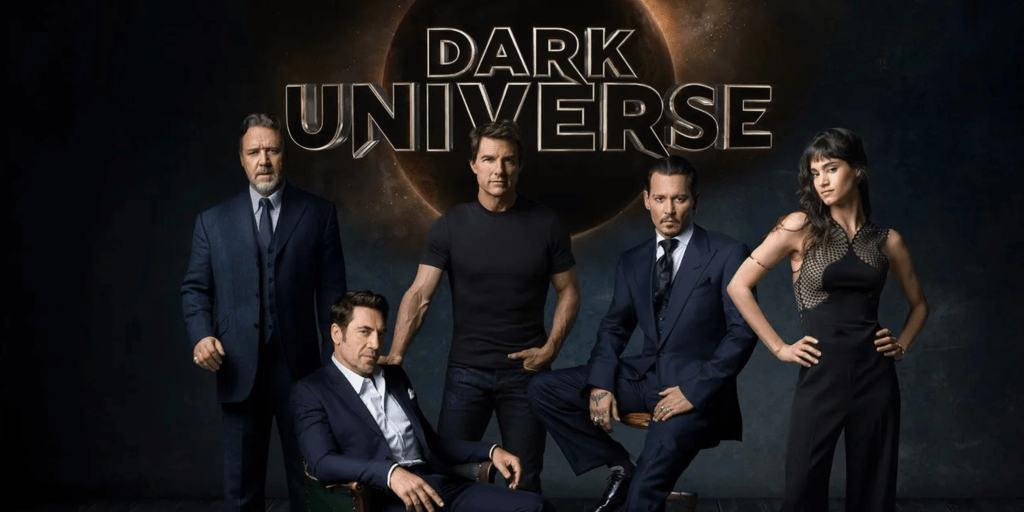
And oh boy, plans there were. Shortly before the film’s release, a photo was posted to the Dark Universe official social media accounts depicting Cruise along with his co-stars Russel Crowe (playing Dr. Jekyll and Mr. Hyde) and Sophia Boutella (playing the titular mummy, Princess Ahmanet), as well as Javiar Bardem and Johnny Depp, who were set to play Frankenstin’s Monster and The Invisible Man respectively, and had a caption boldly proclaiming “Welcome to a new world of gods and monsters. #Dark Universe”… To date, the only posts on the accounts are that photo and one showing the franchise’s logo.
The spectacular failure of this film and the cinematic universe it was meant to launch has become something of a legend in Hollywood, a calamitous cautionary tale of corporate hubris. A story that ends, not with a cultural juggernaut of a franchise that has each new entry gross a billion dollars within their first week, but one underwhelming action flick that will serve as an odd black mark on the otherwise respectable career of one of the industry’s biggest stars, and a pile of unrealized ideas condemned to be the subject of endless speculation by morbidly curious film fans… Or so it would seem.
On October 2nd, 2022, film critic Dylan Roth and horror writer/musician Dalton Deschain launched Are You Afraid of the Dark Universe, a podcast designed to take Universal’s failure of a franchise start-up and ask the question “what if it worked?” Under a now abandoned kayfabe of being commissioned by Universal to revive the Dark Universe where its one and only entry left off, each episode of Are you Afraid of the Dark Universe consists of the hosts or a guest -alternating each episode- pitching a new movie in the series, doing a live reading of the scriptment the pitcher for that episode has written, and a workshop discussion of the finer details of the film during the act breaks. And this is the part that I feel makes the podcast so special, because it is essentially a front row seat to two people writing an entire blockbuster film franchise by themselves. With each new episode, you hear Roth and Deschain bounce ideas off of each other, respond to constructive criticism, and find new and inventive ways of bringing the classic monsters into the contemporary film landscape (if you ever wondered what a slapstick heist horror comedy starring an invisible John C. Riley would be like, their take on The Invisible Man will satisfy that curiosity and then some). It is, without a doubt, one of the most comprehensive deep dives into the creative writing process I have ever come across.
It should be made clear that these “films” being pitched are not full, finished works; they are, in essence, first drafts of scriptments for the hypothetical movie the writer is pitching. Some sequences are little more than vague outlines, plot points are raised, only to be later thrown out, and in one instance, a major character’s death was undone at the last second, all in the name of making a better story. And it’s fascinating seeing how the series evolves in this aspect, as it slowly moves away from a thought experiment revolving around a failed film franchise, and becomes an established franchise in its own right, complete with fans and expectations from said fans that Roth and Deschain learn to navigate as the series goes on.
Leading up to their equivalent of Avengers: Endgame (out June 15th), I got the chance to talk with both of them to discuss how the podcast came to be this way, and the challenges they’ve faced and lessons they’ve learned since starting it.
Kellen Marshall: This podcast has been a huge inspiration for me as a writer, particularly one fascinated by how classic stories like the Universal monsters have been interpreted in such vastly different ways, but I want to know, what inspired you to turn reviving the Dark Universe, of all things, into a podcast, considering it was such a legendary failure?
Dalton Deschain: I think that was what drew us to it. You know, the kind of meme-worthy aspect of it. It was one of the biggest swings and misses in recent Hollywood history. Like they were so, so sure about it that they announced- obviously that cast photo that’s now infamous, they announced the slate of movies, and then just immediately canceled it as soon as that movie- it didn’t even like really bomb, it just underperformed, and so they canceled the whole thing. So, I really do think it became kind of a joke, which kind of makes it the perfect podcast setup, because you can kind of sell it as a joke and sell it as serious. We take it seriously, but we also know it’s a dumb, goofy idea, and so you can get people from both angles, whether you love The Mummy, like some of our fans do, or you hated it. We take The Mummy seriously because we have to, but we also kind of don’t take it seriously as people.
Dylan Roth: It’s just funny, because the pitch of it is a joke. And before we got started, we were wondering how much of a joke we were going to play it as, and Dalton was really confident, ‘in order for this to really work, we have to legitimately try our best,’ and it didn’t take very long for us to get really invested, and we imagine that’s the path a lot of our listeners have taken. Like ‘this ought to be a hoot. Oops, I care about this now!’
DD: And I think that’s how the best bits work. I am firmly of the belief that if you’re gonna make a bit stick, you have to take it seriously.
KM: What’s it been like seeing this show evolve, going from basically workshopping loose scriptments to more-or-less writing a full feature with every episode?
DR: Well, in terms of the growth of the format, it’s a dream come true for me. Growing it into how lengthy and detailed the scripts have gotten to do, for me, that just came from that’s the only way I know how to write anything, and I kind of dragged Dalton into doing that, which I think was for the benefit of the show.
DD: Well, I think it’s been really interesting because I think, as Dylan said in the last question, people have really come to care about this, and I think that was an aspect of it I didn’t really consider. Even when I was like, ‘we need to take this seriously,’ I still saw it as just a thought experiment of ‘how would monster movies fit in a cinematic universe,’ and it would really be more of an examination of cinematic universes in general and how to make them work and run smoothly. The thing is that when you try to make it work, sometimes it works, and you get invested, and so when we started getting fans who were writing their own fanfiction or had favorite characters, or really responded to the big emotional beats of House of Dracula, our first thing. Obviously, we were trying to do that, but for me at least, because I’m like, well, how do you make a movie work? Well, you get people to get invested.’
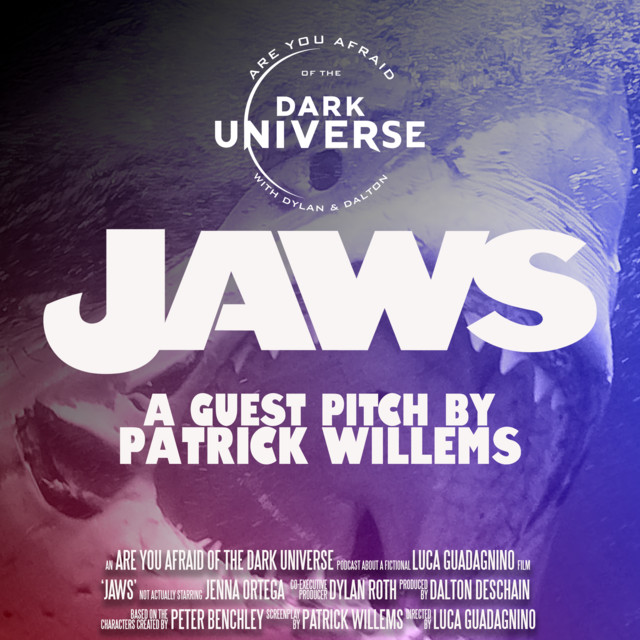
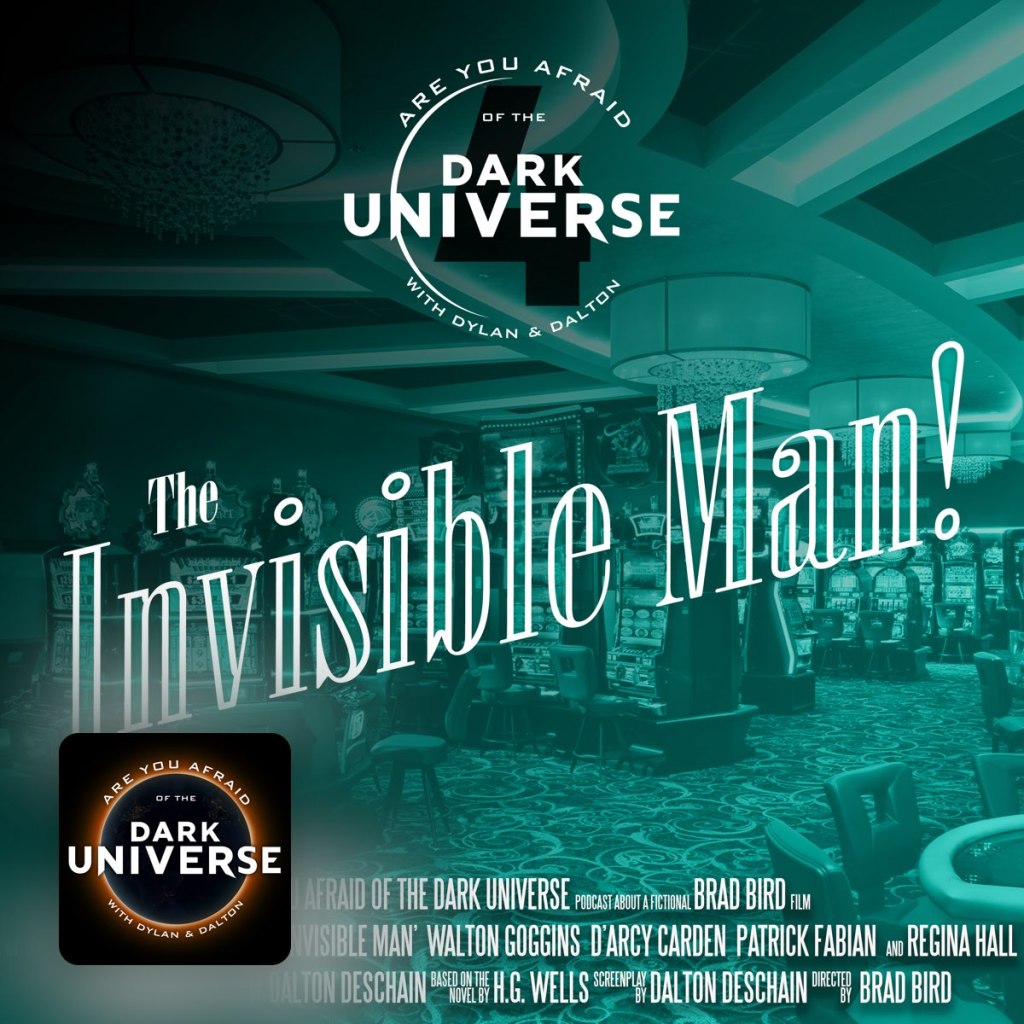
KM: I love how you set out to make sure each film has its own unique identity, not just from the other entries in the franchise, but from the ones they’re based on and their own real world, such as turning The Invisible Man into a slapstick heist comedy in the wake of Leigh Whannel’s take or Patrick Willems’ very psychological guest pitch for a Jaws reboot. Which you’ve mentioned on the show is a real challenge. What are some useful tricks and lessons you’ve learned when it comes to trying to balance the iconic hallmarks of the story you’re adapting with your own creative vision?
DD: My process is pretty similar for each of them, which is sort of identifying the elements that I feel are essential in the minds of the audience to whatever franchise or whatever this is, and you kinda gotta decide if you actually want to do that, because for, like Bride of Frankenstein I pivoted away from [a lot], but I still try to keep some iconography. There’s still the lightning strike at the top of the castle, you know? There’s still hallmarks that I try to keep, but identifying these hallmarks and thinking of ‘what is the least expected way I can give this to people?’ Because you don’t just want to hit the checkmarks and be done with it. If this is gonna happen, I need to make sure it happens in a way that they’ve never seen before; otherwise, there’s no point in doing it. The other thing I do is go back to whatever source material there is and look for what interests me that hasn’t shown up in an adaptation before. So I end up with this basket of essential tropes and unused pieces that I really like, and usually from that little basket of bits, I basically arrange them like puzzle pieces until a story emerges.
DR: I tend to start with an idea of a character, like what my take on the character’s gonna be, and sort of riff on from there. I’m a little more improvisational, but I’m starting to learn better the value of planning ahead. [laughs]
KM: It’s interesting comparing how openly queer and pointedly political many of the stories and characters in your Dark Universe, most notably Dalton’s take on Creature from the Black Lagoon and Dylan’s on The Wolf Man, are to real studio blockbusters who, even today, still struggle with meaningful representation and sociopolitical stances. Did you set out to try and “make the movies Hollywood is too afraid to” in that regard?
DD: I really don’t think we did. Because again, we were kind of coming at this from the framework of making these Hollywood movies. But we have the advantage of not actually having shareholders and CEOs and foreign markets breathing down our neck, and so the political and the queer stuff, I think, just comes out of us naturally. We live in New York City, all of our friends are queer, I’m queer, and we have a lot of political beliefs, and the fun of a podcast like this is the yes, and portion of it, so if we were gonna be like ‘Oh well, let’s shut down all of those ideas, because an actual Hollywood studio wouldn’t let us do that,’ that feels like we’re shrinking the possibilities of the podcast in a way that’s not fun. We’re writing the stories we want to write, and we have the privilege of not having anyone tell us not to write them.
KM: What’s the fanbase been like, and how have you dealt with the ways they respond to your work? Dalton, I remember you mentioning something about how they reacted to your Bride of Frankenstein pitch.
DD: I mean, even that was really mild. Our fanbase is really supportive.
DR: They are delightful!
DD: They are delightful, we love them. We luckily are not big enough to have annoying fans, I guess.
DR: [laughs] Yeah, we are in that sweet spot right now. I feel like we have the kind of fanbase that everybody wants, which is they’re very enthusiastic, and they give you feedback, and they’re gonna tell you like it is, but no one’s listening just to hate it. We have not reached that level, we are not popular enough, and likely will never be popular enough for it to be cool to dislike us.
DD: There was some criticism of Bride of Frankenstein on the Discord. I think it just wasn’t what people were expecting, but everyone was really respectful of it. They were like ‘this is why this didn’t work for me, these were the things I was hoping for and didn’t get,’ but a benefit we have as this sort of combo writing workshop and audio drama podcast is that we also get to justify our decision as we make them, and change them on the fly if they’re not working.
KM: You only allow movies that are either in the Universal catalog or in the public domain for this series, but what’s one in that category that you wish was eligible for a Dark Universe reboot?
DR: It’s funny that the movie that I think I’d most like to remake, I think actually is Dark Universe eligible, but just doesn’t really fit into our plans, which is They Live. I think there is so much that has changed culturally, in the ways that we consume media, and the ways that we volunteer to be brainwashed that are- The allegories of They Live probably don’t need to be touched, but I kind of want to play around with that.
DD: I want to say Psycho. It’s a classic horror movie that has so many things you could play with. Like, how would you twist the shower scene, or thinking Janet Leigh’s the main character, and of course, dealing with the gender of it all in maybe a more modern way. Almost guaranteed suicide in terms of people turning on the show, but yeah.
DR: Hitchcock and John Carpenter. Historically, extremely bestable filmmakers, right? Total hacks! [laughs]
Looking for your next horror-cinema binge listen? Check out Are You Afraid of the Dark Universe? — a podcast where horror writer Dalton Deschain and film critic Dylan Roth resurrect Universal’s failed Dark Universe and breathe new life into it. Each episode, they pitch brand-new monster movies, map out “phases” of this reimagined shared universe, and even draft partial scripts of what could have been.
Find Are You Afraid of the Dark Universe? on Spotify, Apple Podcasts, and wherever you get your podcasts.

 NightTide Magazine
Leave a comment