
By Elizabeth Broadbent
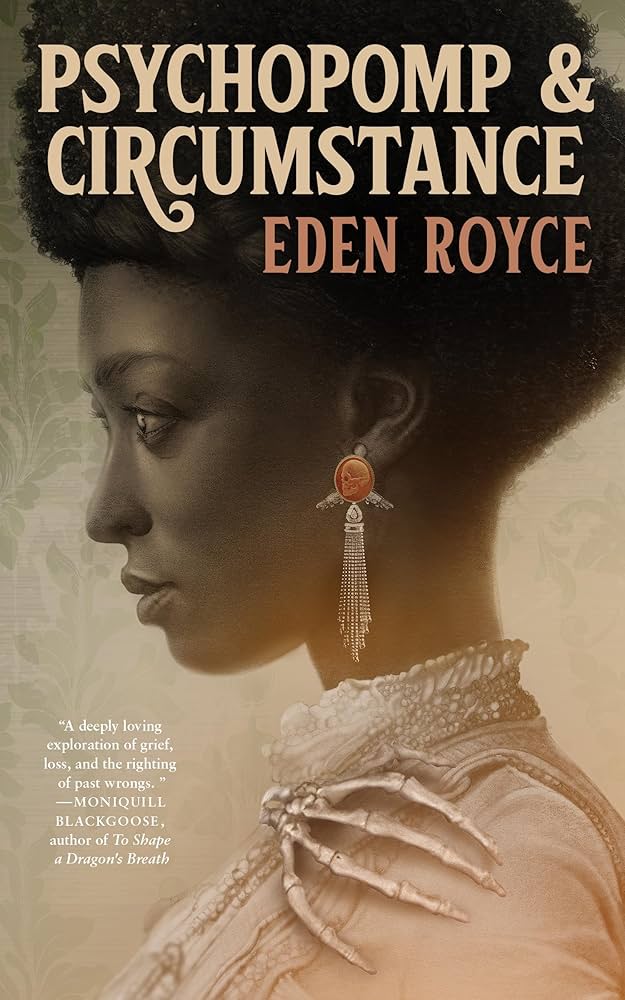
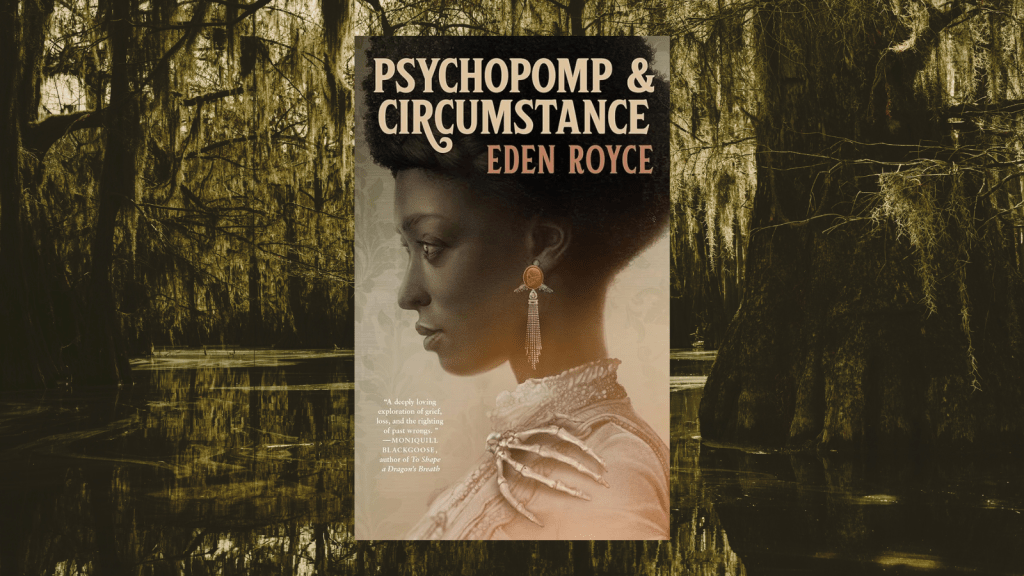
Psychopomp and Circumstance by Eden Royce ⭐️⭐️⭐️⭐
Phee St. Margaret is a daughter of the Reconstruction, born to a family of free Black business owners in New Charleston. Coddled to within an inch of her life by a mother who refuses to let her daughter live a life other than the one she dictates, Phee yearns to demonstrate she’s capable of more than simply marrying well.
When word arrives that her Aunt Cleo, long estranged from the family, has passed away, Phee risks her mother’s wrath to step up and accept the role of pomp―the highly honored duty of planning the funeral service. Traveling alone to the town of Horizon and her aunt’s unsettling home, Phee soon discovers that visions and shadows beckon from every reflective surface, and that some secrets transcend the borders of life and death.
Eden Royce has won two Bram Stoker Awards and a Walter Dean Myers Award this year—so far, and I’m probably leaving something out. She’s a powerhouse of contemporary speculative Southern Gothic, and her newest book, Psychopomp and Circumstance (out now from Tor) may be her best yet. Southern Gothic fans will swoon: Royce gives us family secrets and hidden letters. Dripping Spanish moss. A woman alone in a possibly haunted house. A magic messenger bird. Psychopomp and Circumstance isn’t your typical Southern Gothic because Royce isn’t a cookie-cutter Southern Gothic writer. Buckle up, buttercup. If you read her Bram Stoker Award-winning novella, Hollow Tongue, you know you’re in for a wild ride.
Set during Reconstruction, Phaedra (Phee) St. Margaret, a cossetted socialite in New Charleston, lives under the domineering thumb of her mother, who’s desperate to see her only daughter married off. Unfortunately, her sister Cleo’s never-quite-explained scandal, which led to banishment a decade before, makes finding a suitable husband difficult. When a messenger announces Aunt Cleo’s death, Phee impulsively agrees to “pomp” for her, or handle her death arrangements with legal ramifications, including planning her aunt’s service and seeing her body “done” properly. Phee has to travel to Horizon, where Aunt Cleo’s been exiled. When she arrives at her aunt’s house, Phee begins to discover that both pomping—and her aunt’s life—are more complicated than she ever imagined.
The best categorization I can gin up for Psychopomp is “alternate history, fantasy Southern Gothic.” I use “alternate history” because it takes place in New Charleston, and Phee’s designation in the first sentence as “a daughter of Reconstruction” posits a historical era. However—and this is a crucial part of Royce’s worldbuilding—she never over-explains. Royce understands what so many spec authors don’t: too much explanation bogs down the story. She gives us just enough, and it’s masterful.
Psychopomp also deserves the category of fantasy. “Tyefrins,” intelligent creatures with bat-like wings and quick tongues, carry messages. Hippocampi draw carriages through Charleston’s waterlogged streets. But the magic in this novel isn’t for show. Its casual use from the beginning signposts major plot points, turning on fantasy in beautiful, heartbreaking ways (yes, I cried at the end). Royce deploys her magic like her worldbuilding: she never overexplains. We don’t need the intricacies of a magic system in this particular book. Magic exists, and it works. Kudos to an author who understands that in most literary speculative fiction, readers can accept that and move on.
But it’s the title of Southern Gothic that Psychopomp and Circumstance most richly deserves. This novel has all its hallmarks: family secrets; the intrusion of the past upon the present; unsent and hidden letters; a sense of alienation; and decay behind a veneer of respectability. This novel is so rooted in the particularities of setting that it gave me a vicious case of homesickness (like Royce, I’m a South Carolina native). Royce is also a member of the Gullah-Geechee nation, and Psychopomp is rooted in Black tradition—both in ways I recognize, such as the social importance of “doing the body” right, and likely in ways that, since I’m white, fly right over my head.
At its heart, Psychopomp is a novel about a young girl writing her own narrative in a world determined to write it for her. Like its protagonist, it defies easy categorization, and that’s one of its greatest strengths. It brings along with it a cast of memorable characters, a strong sense of setting, and a well-woven plot that builds to a satisfying, heartrending conclusion. Royce has penned a must-read addition to recent Southern Gothic releases, and one that will stand in serious contention for next year’s rounds of literary awards.




 NightTide Magazine
Leave a comment