By Mo Moshaty

Fear is not the absence of knowledge. It is often the beginning of it.
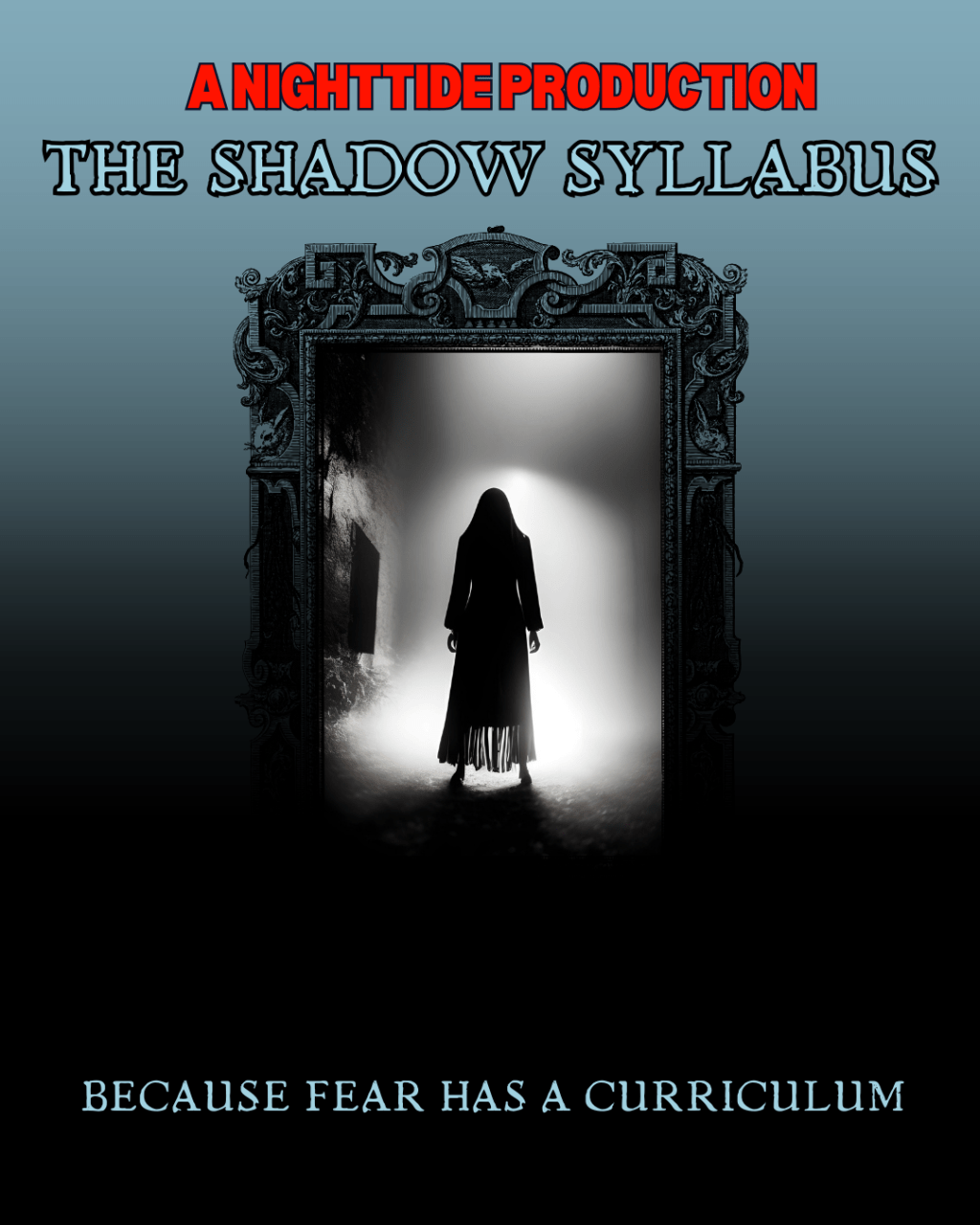
Long before fear was something to be avoided or explained away, it was something we learned from. Horror has always been one of our earliest classrooms, a space where grief, belief, power, and transformation could be explored when no other language felt sufficient. This January, NightTide opens that classroom with The Shadow Syllabus, a new monthly masterclass series created and led by me, writer, lecturer, and producer Mo Moshaty.
The Shadow Syllabus is not about mastery or authority. It is about curiosity. It is a place to linger with the strange, the uncomfortable, and the unresolved parts of horror, and to ask what they are trying to tell us. Each session takes one idea, a phenomenon, a fear, a story that refuses to settle, and looks at how it appears across cultures, histories, and cinematic traditions.
Horror is often treated as spectacle or shorthand. Something to react to, consume quickly, and thanks to some social circles, dismiss outright. But horror is also a record. It carries the emotional residue of the societies that created it. Every haunting speaks to history. Every monster reflects a boundary crossed or a truth denied. To study horror is to study how fear moves through bodies, communities, and time.
The Shadow Syllabus exists for those who feel that pull but want more than surface-level conversation. It is for viewers who sense meaning in what unsettles them. For creatives searching for deeper frameworks. For students and scholars who know horror deserves care rather than defensiveness. Most of all, it is for anyone curious about fear as a shared and global language.
This is not a rigid course or a closed canon. It is a living syllabus that shifts, expands, and listens. One that moves between cultures and forms, between the intimate and the collective. Film sits alongside folklore. Psychology beside ritual. The familiar beside the overlooked.
How the Shadow Syllabus Unfolds
The Shadow Syllabus is designed to move at the speed of thought.
Each session begins with a prerecorded lecture, released ahead of the live discussion. This gives the material room to breathe. Viewers can sit with it at their own pace, rewind, pause, or revisit moments that linger. Horror rarely reveals itself all at once, and this structure honours that slow unfolding.
The class then gathers for a live Q&A and conversation. This is where the syllabus becomes shared. Questions surface, connections are drawn, and the discussion takes on a life shaped by the people in the room. No two sessions end the same way.
After each class, participants receive a set of Study Notes. These aren’t assignments or summaries. They’re a small map of where we’ve been. A handful of key ideas, references, and suggested paths forward for anyone who wants to keep thinking once the room goes quiet.
The shape of the series is intentional. It enables global access, diverse learning rhythms, and deeper engagement, while maintaining an intimate and responsive experience. Above all, it keeps the work sustainable, so the syllabus can grow without losing its care.
January’s Lesson: The Possessed
We begin where belief meets the body. January’s Shadow Syllabus opens with The Possessed, a study of what it means to be taken over, not as spectacle, but as inheritance, negotiation, and resistance. Drawing from films such as The Wailing, The Medium, A Dark Song, and You Won’t Be Alone, and more, this session looks at possession as something shaped by culture, faith, and power. These are stories where the sacred and the intimate blur, where the body becomes a site of argument, and where fear asks a single, unsettling question: who do you belong to?
NightTide was built to make space for this kind of thinking. Slow journalism that allows horror to breathe. Writing that values care, context, and curiosity over speed or certainty. The Shadow Syllabus is an extension of that mission. A place to learn together, to look closely, and to sit with the things that haunt us long enough to understand them.
Because fear has always been a teacher.
And because learning in the dark is sometimes the only way forward.

 NightTide Magazine
Leave a comment