

By Damian Hex
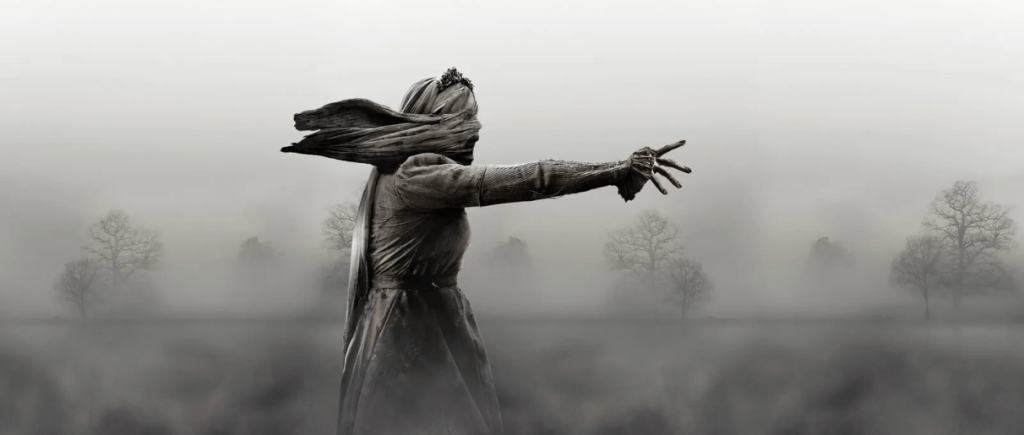
There are many instances in which the oppressor villainizes the oppressed to control the narrative. This control can come in many forms. For example, over time and through various retellings of folktales, we can observe how significantly an original story has transformed. Folktales are part of a larger body of work known as folklore. Every community has one, and its purpose is to preserve traditions that carry lessons and encapsulate a specific message within the community. La Llorona exemplifies this. I’m sure we all have seen and heard the versions where she is depicted as an evil entity that preys on children and innocent adults. I never understood why a mother who tragically lost her children would prey on other children.
Among many film adaptations, my favorite version is Jayro Bustamante’s 2019 La Llorona. The film focuses on the Mayan-Ixil genocide and the injustice that occurred, exploring how generational trauma affects both victims and aggressors. As a Guatemalan who has been a victim of racial injustice, sexual assault, and overall abuse of people who deem themselves superior, this film captured the message of this Latin American folktale.
The movie surrounds Guatemalan dictator Enrique Monteverde (Julio Díaz), accused of spearheading a genocide against the Mayan people from 1982 to 1983. The story took us to the present. Enrique, now an elder, lived with his wife, Carmen (Margarita Kenéfic), their daughter, Natalia (Sabrina De La Hoz), and their granddaughter, Sara (Ayla-Elea Hurtado), and was cared for by Mayan servants and a bodyguard. During this time, a trial was underway for the crimes Enrique committed. Ultimately, he was acquitted, forcing the family to hide in their home amid public outrage over the court’s unjust decision.

Before discussing the main events in the Monteverde home, I want to highlight the testimony of an elderly Mayan woman about her traumatic experiences under Enrique’s orders. She spoke in a Mayan dialect, and there was deep pain and sincerity in her voice, accompanied by a stillness that reminded me of my grandmother when she shared her own painful memories. The way the elderly woman wore a veil over her face, and how the other Mayan women did the same, made the trial feel more like a funeral ceremony.
Bustamante illustrated how a victim, blinded by loyalty, can coexist with their perpetrator. You witnessed Carmen and her friends leading a prayer, asking for protection for her family. Shortly after, you are taken to see the head servant, Valeriana (María Telón), who prays in Kaqchikel, a Mayan dialect, and also seeks protection for Enrique and his family.
We quickly understood that Enrique’s health was deteriorating, and soon after, something supernatural occurred at the family’s house. Enrique was in a trance-like state when he heard a woman’s cries. He then grabbed a gun and almost shot Carmen, mistakenly believing she was the woman in distress. The family assumed it was Alzheimer’s that was at play. While the servants knew it was La Llorona, Valeriana instructed them not to say a word.
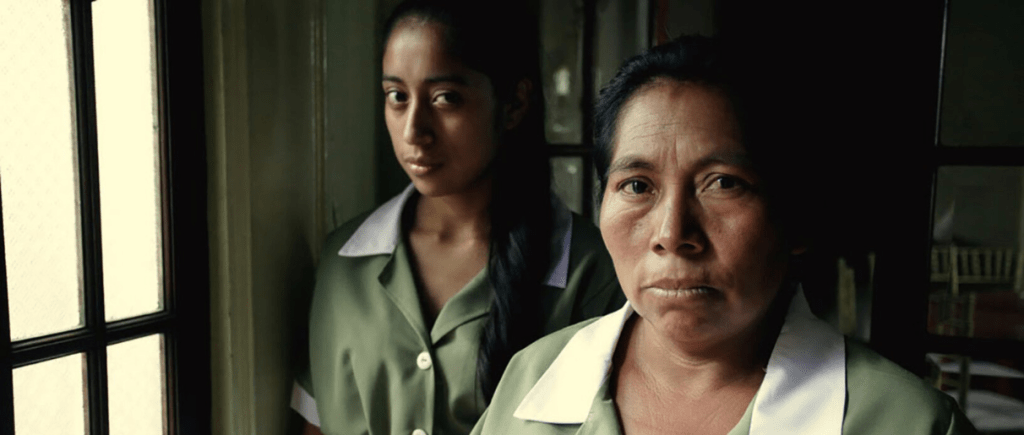
Most of the servants decided to leave out of fear, and the Monteverde family was offended, believing they were owed unquestioning loyalty because they were “generous bosses” who even allowed their servants to eat tortillas as an act of kindness.
Valeriana had served the Monteverde family for 27 years. I couldn’t help but reflect on how my mother and many of her siblings were sent to work as servants for other families, considering the physical and emotional toll it must have taken on them.
La Llorona offered much to take in at a slow pace. I don’t believe the film would have had the same impact if it relied on cliché scare tactics. Bustamante also framed shots in a way that made me feel as if I were part of the story. For example, when the family was heading home from court, people started banging on their van. I felt claustrophobic, seeing the family trapped inside and hearing their voices drowned out by the loud banging. The banging became more audible and angrier, so there was no choice but to hold my breath in anticipation. As soon as the van opened, blood was thrown at the family. It felt ritualistic, as if the angry people were summoning a supernatural force.
You would think that, during this traumatic experience (though the family clearly deserved it), they would focus on what matters. However, it appeared they were preoccupied with insulting the Indigenous people, calling them savages and thieves. Carmen made her disdain for the Mayans clear when she asked Valeriana whether any of her jewelry was missing from her person after she left the van and entered their home.
The wave that shifted the movie’s flow came when Alma (María Mercedes Coroy) was hired as a servant because the house was understaffed. The occurrences of supernatural events increased. My favorite moment that established Alma as someone to pay attention to was when the faucet turned on by itself in the kitchen while Valeriana was teaching her the house’s rules. You see how Valeriana panicked and rushed to turn off the faucet.

Alma was strikingly beautiful, with long black hair and a presence that commanded respect. She had a stillness that, whenever she was present, made the characters around her quiet, except for the little girl Sara.
The director used framing and lighting to heighten the sense that something was amiss. The double bed framed the scene where Valeriana and Alma prepared to rest. It felt vulnerable to watch Valeriana fall asleep. There was anticipation when the camera slowly zoomed in. Then we see a dark, ghostly silhouette ascend and realize it is Alma’s long black hair. This reveal did not make the scene less creepy as Alma was positioned upside down, peering at Valeriana as she slept.
As we learned more about the characters, we saw the themes of guilt, lust, denial, shame, and hatred recur throughout the film. Most importantly, Enrique’s true nature came to light. During one of Enrique’s trance-like episodes, he observed Alma sitting quietly in the pool outside at night, surrounded by fog like an apparition. She was then followed to the bathroom, and the first thing you saw was a flooded floor. Although Enrique was staring with desire at Alma as she sat naked at the edge of the bathtub, Alma stared back, unafraid.
Alma screamed to wake the family up, so they caught Enrique red-handed. The camera shot of his erection made me sick to my stomach. That same night after the bathtub incident, Carmen explained to her daughter, Natalia, that Enrique always had little control over his lust for women. Especially Mayan women. She also implied that Valeriana and Natalia were possibly related. Alma was instructed not to wear tight-fitting clothing as it was inappropriate. I can only imagine how many women across generations have been asked to dress modestly as a response to men’s actions.
We came to understand better why Carmen disliked Mayan people, especially Mayan women. When Natalia questioned her father’s character, she immediately upset Carmen. Carmen claimed that they were never raped during Enrique’s leadership and offered themselves willingly to soldiers. Instead, the soldiers, out of the “kindness of their hearts”, offered them jobs as servants.

During the family’s time trapped in the home, you can hear chanting, prayers, and strange sounds coming from outside. It became so severe that the family had difficulty sleeping. It felt like a ritual, as if the chanting was sealing the family in. Carmen had it the worst, as she soon began to have nightmares. In these nightmares, she dreamed of being a Mayan woman and was chased by soldiers along with her children. Every night, she would wake up and realize that she had urinated on the bed. She was offered adult diapers, which were humiliating.
The recurring theme of water in many forms was a strong indicator that a large metaphorical wave was to come. As mentioned earlier, everyone was negatively affected by Alma’s presence except for Sara. They bonded instantly and would play a game on how long Sara could hold her breath, which made Natalia uneasy. At one point, she believed Alma was trying to drown Sara while they were outside by a fountain.
The more time passed, the worse the family’s mental state became. Carmen could no longer bear being near Enrique, and Natalia realized that her doubts about her father’s innocence were justified. Every time the family looked outside, the angry people would stare right back with nothing but fury in their eyes. Their fury resulted in a broken window.
Enrique finally realized that witchcraft was done on him when he discovered that behind his bedrest were strange black markings. Valeriana panicked and confirmed that black magic was involved. She instructed the family on how to combat the curse that had been placed on them. So, they lit candles, spread salt on the floor, and prayed.
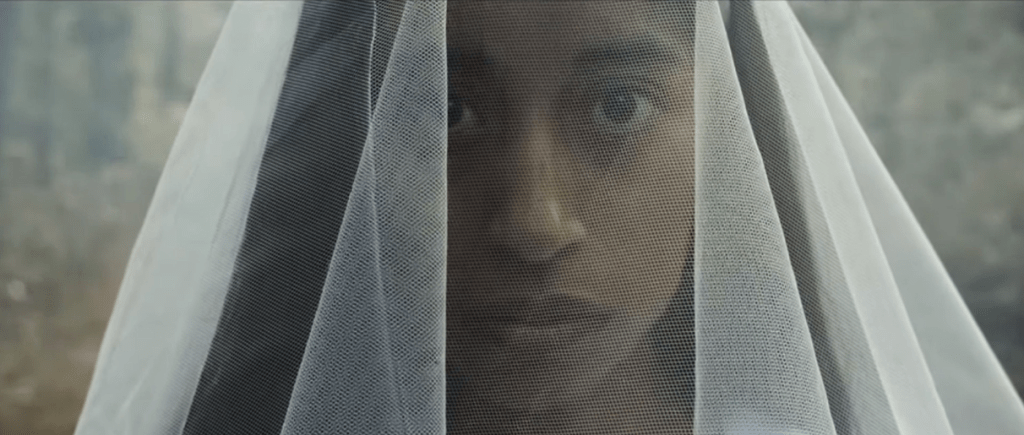
This was the climax. Indigenous people emerged in the yard like fog creeping in, while children appeared inside the house. Carmen became possessed, entering a dreamlike state in which we discovered that the dreams she was having were Alma’s memories. The dream revealed that Enrique was the one directly involved in the genocide. He instructed his soldiers to drown Alma’s children. The dreams confirmed what we suspected all along. Alma was La Llorona. The adults and children who appeared were the ghosts of victims. During the dreamlike possession, Carmen choked Enrique to death.
This is a cultural movie that played on superstition and folklore. Experiencing strange, eerie, and inexplicable phenomena reflects the extent to which the Mayans believed in external forces. My family shared many stories about hearing voices, seeing indescribable things, and even feeling a sense of dread. I have experienced things I could not explain. However, I’d rather not question it for my own sake.
La Llorona’s goal was to illustrate how intergenerational trauma can affect everyone involved. We can break our generational curse, and in my case, do it proudly while eating tortillas.



 NightTide Magazine
Leave a comment