
By Mo Moshaty
Pre-Code horror is often remembered for its brazenness; its willingness to flirt with taboo, to linger on bodies, to let desire, fear, and violence exist without apology…for better or worse.
But what really distinguishes the era isn’t what it shows, but what it assumes. Before censorship intervened to sand down the sharper edges of American cinema, these films operated from a worldview that felt startlingly honest about hierarchy, control, and expendability. They didn’t ask whether certain bodies mattered. They told us which ones did not.
There are many urgent and necessary conversations embedded in pre-code horror, particularly around race, colonialism, and xenophobic panic. Those films remain vital texts, and they deserve thoughtful engagement. However, I am deliberately stepping around that particular cluster, certainly not because I don’t care, but because I’m trying, quite sincerely, to preserve my nervous system, because they make me rage like hell.
So, today I’m going to focus on two films that reveal another deeply rooted anxiety of not only mine, but of the era: The fear of women who resist containment and the systems designed to correct, neutralize, and erase them.
Murders in the Rue Morgue (1932) and Dracula’s Daughter (1936) approach this fear from different angles. One cloaks its violence in the authority of science, and the other wraps oppression in the language of care. Together, they expose how early horror cinema framed women as problems to be solved, either through experimentation or through self-denial. In both cases, autonomy is treated as an error. The outcome, more often than not, is eradication.
The Comfort of Certainty
To understand what these films are doing, it’s worth briefly situating them within the cultural logic of the pre-Code era. This was a period marked by instability: economic collapse, shifting gender roles, rapid urbanization, and growing anxiety about modernity itself. Women’s increased visibility in public life, whether through labor, through sexuality, or the ever-dreaded independence, posed a challenge to traditional structures of authority. Horror cinema became one of the spaces where that anxiety could be rehearsed and resolved.
What distinguishes pre-Code horror from later iterations is its lack of pretense. There’s little effort to soften the implications of violence or to moralize outcomes in a way that reassures the audience. Power operates openly, hierarchies are assumed rather than questioned when women suffer, the films rarely pause to justify the why, and their suffering is framed as a natural consequence of transgression, curiosity, or simply proximity to male ambition. So fridging before fridging was “cool”.
This context matters because it clarifies why Murders in the Rue Morgue and Dracula’s Daughter feel so unsettling even now. They’re not merely stories about monsters; they’re case studies on how systems of knowledge and control rationalize the destruction of women while insisting on their own benevolence. The bubble of “I’m doing this for your own good” is constantly on the verge of bursting.
Knowledge as Weapons: Murders in the Rue Morgue
Murders in the Rue Morgue is frequently discussed for its distorted visuals, its feverish performances, and its nightmarish atmosphere. Beneath its expressionist surface lies a far more mundane horror: the casual certainty with which women’s bodies are treated as tools.
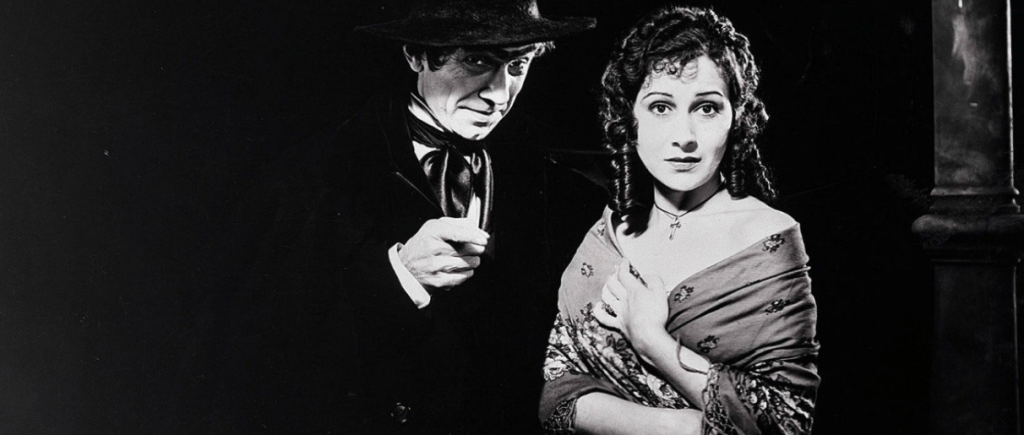
Doctor Mirakle does not operate from rage or lust. He operates from conviction, and his belief in his own intellectual authority grants him permission to abduct, experiment on, and discard women without remorse. They aren’t targeted because of who they are, but because of what they can prove. Their bodies become evidence in a hypothesis that matters more than their lives. What’s horrid is the film’s refusal to individualize these women. They’re nameless, interchangeable, and quickly forgotten once they’ve served their function. This anonymity isn’t incidental; it’s essential to the logic of the experiment.
To grant them interiority would complicate the narrative of progress. It would introduce doubt, empathy, or at most accountability. Gee whiz. None of which are compatible with Mirakle’s pursuit of knowledge. The laboratory emerges as a distinct, pre-Code space of sanctioned transgression. Within its walls, social norms collapse under the weight of scientific ambition. Violence isn’t framed as cruelty, but as necessity. The film doesn’t meaningfully interrogate this assumption; instead, it allows the audience to witness how easily intellectual authority can absolve atrocity. Smart guy gets away with things…ya dig?
The horror, then, doesn’t reside solely in the acts themselves, but in how normalized they appear. The women’s deaths are not positioned as moral ruptures but as inconveniences, unfortunate but acceptable losses on the path towards discovery, collateral damage, and knowledge becomes not only a weapon but an alibi.
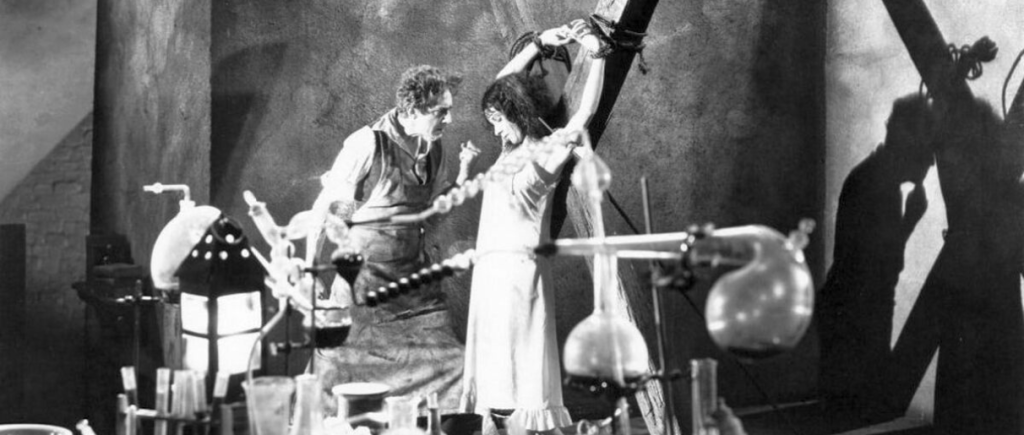
What Rue Morgue reveals with unsettling clarity is how women are positioned as means rather than ends. Their bodies exist to facilitate male understanding. Their pain is instrumentalized. They’re not mourned because mourning would imply injustice. This framing reflects a broader cultural logic in which women’s suffering is rendered abstract. You gotta think this is the era where claiming women were “hysterical” and you could put your wife away in an institution simply because she had an opinion for the first time this week. Their experiences aren’t valued in their own right, but only insofar as they can contribute to a larger narrative, whether that narrative is scientific advancement, social order, or moral correction. In this sense, Rue Morgue isn’t an outlier, but an unfiltered expression of a worldview that would later be disguised behind softer language and more palatable storytelling. You gotta think, this is the era where you could claim women were “hysterical” and you could put your wife away in an institution simply because she had an opinion for the first time this week.
The film’s conclusion does little to challenge this logic. Order is restored, the mad scientist is stopped finally, for fucks sake, and the narrative moves on. But there’s no punishment, and there is no resolution for the women whose lives were erased along the way. No remembrance, no memorials, no “gee, that’s really sad.” Their absence is the price of resolution.
From Experiment to Diagnosis: Dracula’s Daughter
Where Murders in the Rue Morgue externalizes violence, Dracula’s Daughter internalizes it. Countess Zaleska isn’t abducted or forcibly experimented upon. She seeks help. Her desire, coded clearly and deliberately as queer, is framed as a curse inherited through blood. Unlike Mirakle’s victims, Zaleska is articulate, reflective, and deeply aware of her difference, and she doesn’t seek power or domination, just relief.
This distinction marks a shift in how horror conceptualizes female transgression. Zaleska isn’t monstrous because she harms others, but because she can’t conform. Her hunger is treated as a pathological flaw that must be corrected. Sigh. The threat she poses is existential rather than violent, and she unsettles simply by existing outside whatever her acceptable norm of womanhood was perceived to be at the time. The film replaces the laboratory with the consulting room. Authority now wears the face of care, and medical discourse takes the place of scientific showmanship, offering the illusion of compassion, all while maintaining the same fundamental hierarchy. Zaleska’s desire is analyzed, categorized, and ultimately deemed incurable.
What makes the film really devastating is Alaska’s complicity in her own erasure. She internalizes the belief that she’s broken, and her longing isn’t to be free but to be “normal.” She wants to be cured. In the framework of this film, self-denial becomes a virtue, and survival is contingent upon compliance…just where we like women.
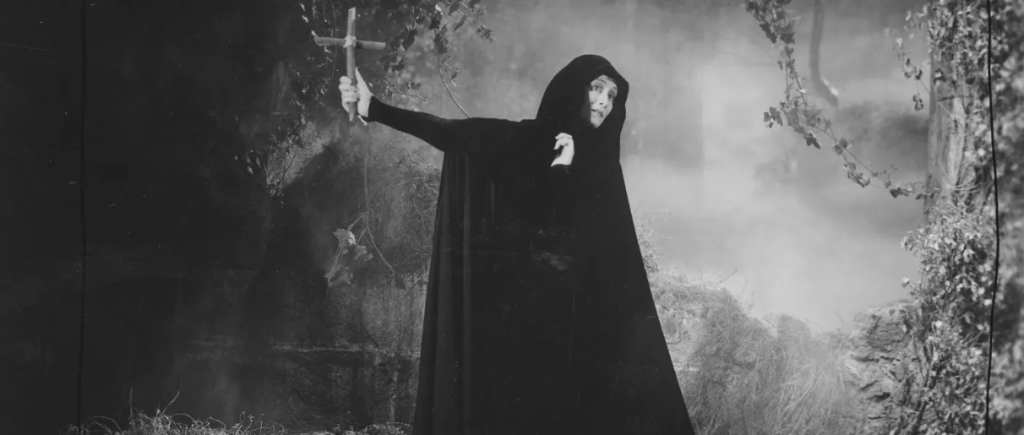
Dracula’s Daughter frames monstrosity as something passed down, unavoidable, and deeply gendered. Zalaska’s queerness isn’t a choice but an inheritance that she despises. The film offers no vision of a future in which she might exist without that shame, and her options are limited to repression or death. Unlike later horror narratives that flirt with redemption or subversion, Dracula’s Daughter remains resolute in its pessimism. Zaleska simply cannot survive being queer, and her death is quiet, almost merciful.
The system works as intended, the problem resolved itself, and the audience is spared the discomfort of imagining a world where she might continue to exist on her own terms.
This resolution is probably more chilling to me than the showmanship of Mirakle in Rue Morgue. There’s no overt brutality here, no screaming Mimis or madmen in laboratories. Instead, there’s an insistence that some desires are incompatible with life itself.
Taken together, Murders in the Rue Morgue and Dracula’s Daughter reveal two complementary strategies of control. In the former, women are destroyed because they are useful, and in the latter, a woman has destroyed herself because she is inconvenient. One film frames violence as progress, the other frames repression as care.
Both rely on the same underlying assumption: women exist to be managed. Their bodies are either tools or threats. Their autonomy is treated as an aberration, and when containment fails, elimination becomes inevitable. These films don’t ask whether logic is just; they just assume that it’s necessary. Horror emerges in the certainty with which systems of authority enact their will.
The arrival of the Production Code (Hays Code) didn’t eliminate these anxieties, though. It just taught cinema how to disguise them. Later films would soften violence through metaphors, romanticized repression, and offer redemption arcs that obscure the cost of conformity. What makes pre-Code horror disquieting is its refusal to pretend.
In revisiting Murders in the Rue Morgue and Dracula’s Daughter, we’re confronted with a cinema that doesn’t flinch from its own assumptions. Women who resist categorization aren’t misunderstood but corrected, and when the correction fails, they’re removed. They expose a worldview in which female autonomy is incompatible with order and desire, whether intellectual or erotic, and is something to be feared when it escapes male control. That these ideas are presented so plainly is what gives pre-Code horror its enduring power.
The monsters may change, the language may evolve, but the underlying question remains: who is allowed to exist without justification?
In these films, the answer is painfully clear.


 NightTide Magazine
Leave a comment