
By L. Marie Wood
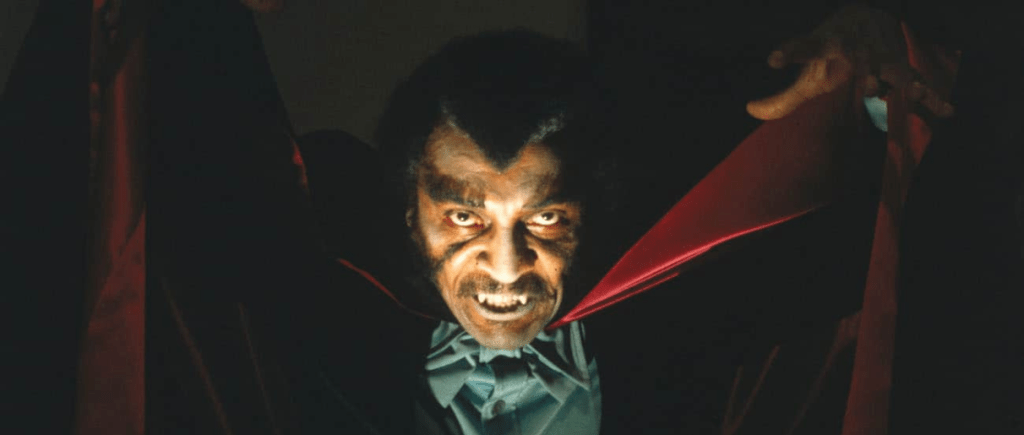
Blaxploitation films suffer from hindsight, but for debatable reasons. Many who scrutinize the produced works criticize the costumes, the language, and the levity while minimizing the imagery (Black people as doctors, lawyers, and scientists), the oral history woven into salable fiction, and the indelible mark made on modern media. While the films of this era were created for escapism, as is much of modern media, they were also opportunities for Black stories to be told, for Black people to be seen in the same ways that other cultures were, and for concerns that plague the Black community to be brought to light. This is different from films that focus on struggle and strife; they were moments of enlightenment through the lens of entertainment, the films themselves sometimes speculative at a subconscious level that required multiple viewings to unpack. For the horror genre at large, the Blaxploitation era was meaningful in ways that weren’t readily apparent, but had roots that anchored deep, taking up the mantle from pre-Depression race films. Not since Mellies’ 1896 short film, Le Manoir du Diable (The House of the Devil), which is credited as the first horror film ever, has there been a movie with the same overarching impact as Blacula (yes, Blacula). The 1972 film changed the way that horror was depicted on screen, donned the cloak of combating societal concerns in a way that has since become synonymous with the horror genre, and expressed Black excellence in a way that is most comprehensive when viewed in connection with its contemporaries.
Blacula is the first Blaxploitation horror film; although it is not the first time that Black roles existed in a horror film, nor the first Black horror film ever made. Early films with Black characters often cast White men in blackface. Additionally, Black roles were often that of the lazy, the shiftless, or, later, the aggressor. In response to some of the earlier films, there was a movement toward combating that message. Some films did so with moderate success, but it wasn’t until the 1940s that the first horror movie to have an all-Black cast and writer, called Son of Ingagi, would be released. At the same time, the genre was enjoying a surge in popularity; this was the era of The Mummy, Frankenstein, Dracula, Dr. Jekyll and Mr. Hyde. Literary classics were coming to visual life just as movies with Black casts were taking their first steps. Fast-forwarding decades reveals that the steps would, indeed, have been small ones, but those years did produce social conscience gems such as Night of the Living Dead. The slap felt around the world is still the subject of much discussion around race and inequality, but it wasn’t enough to solidify Black roles in mainstream movies.
Enter Blacula.
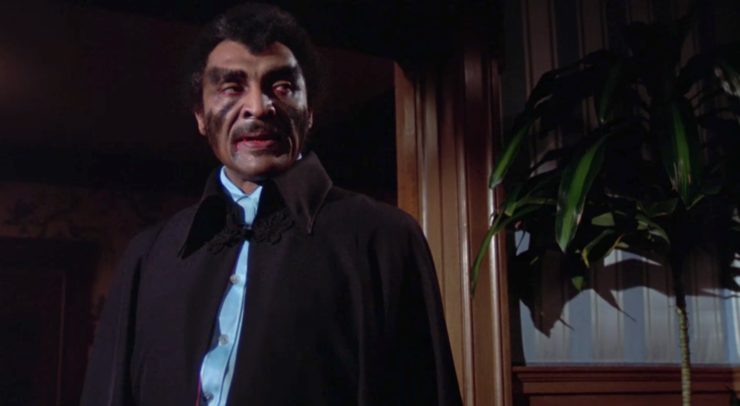
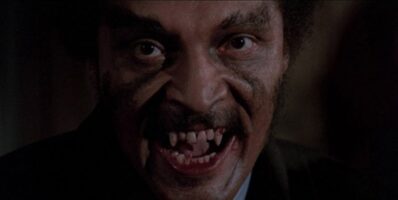
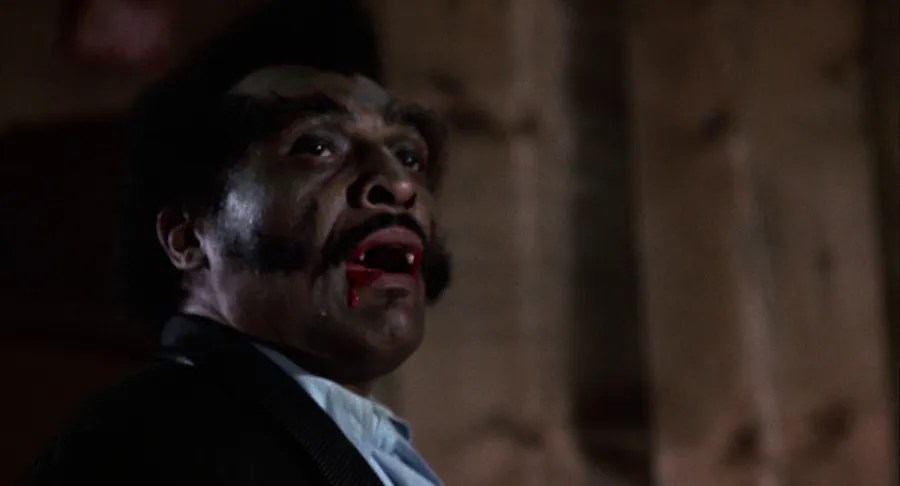
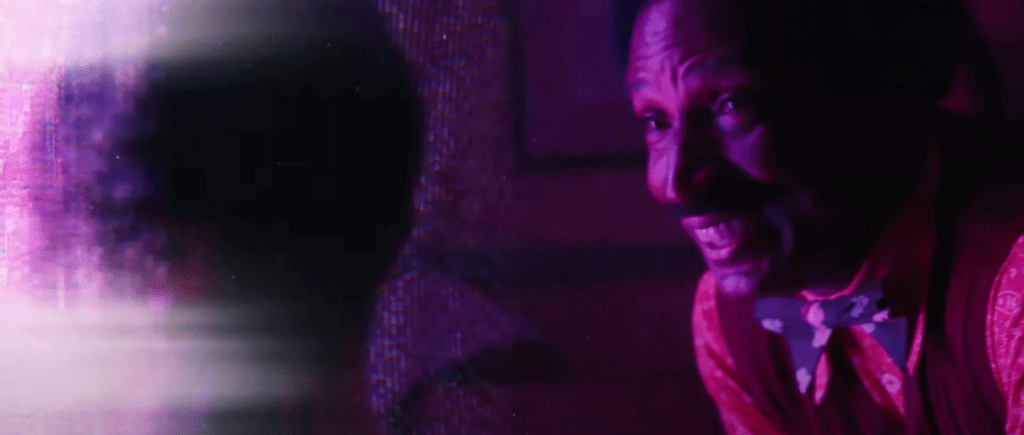
The casting of the role of Blacula is perhaps the most poignant step towards the change in perspective of what horror can look like. William Marshall was a Shakespearean actor who performed on national and international stages. His stately manner was punctuated by an imposing stature (he stood at 6’6”) and a deep baritone that commanded attention. Never before had a vampire been played by a Black man, and Marshall’s rendition became an instant classic, serving as a model for creators interested in casting Black actors as leading men as well as an example for students of the craft looking to improve their skills.
Often, horror movies are shot with a backdrop of secluded areas, off the beaten path of onlookers and innocents. Blacula, however, is filmed in an urban center. The antagonist interacts with a cast of many and even meets his end on top of a modern structure in the middle of a bustling city. This film brings to light the possibilities of modern horror films, showing that they can be brought out of the shadows and examined under a microscope in the light of day. While many movies continue to use the cover of night to convey frights, notable contemporary films like Ju-On, 28 Days Later, and Midsommar make use of the light to deliver some of the most unsettling scenes.
Horror had never looked like that before. Thankfully, horror has never looked the same as what predates this groundbreaking film either.
Blacula addressed injustice and inequality head-on in a cinematic space, but unlike Oscar Micheaux’s comprehensive work in the early part of the century, Blacula did so from a supernatural perspective. From the opening scene where Prince Mamuwalde and his wife travel to Transylvania from what is only called the Dark Continent to meet with Count Dracula and his counterparts to urge the cessation of the slave trade garner and inclusion in the so-called community of nations, a societal plight is revealed. Discussions around topics such as slavery, racial inequality, and misogyny were not coffee table conversations to be had in what community elders deemed “mixed company”, and still aren’t, yet this forward-thinking film approached these controversial topics directly before the seven-minute mark of the film. Count Dracula’s depravity doesn’t take long to reveal itself, and soon Prince Mamuwalde is fighting to save his wife and himself. He would lose this bout, be turned into a vampire by Count Dracula’s bite, and be confined to the casket that would serve as his cell for centuries. He would be transported from Europe to the United States toward the end of his slumber, among artifacts that two entrepreneurial interior designers planned to use in their staging projects and/or sell as antiques, subsequently subjecting the prince to the very thing he and his wife had advocated against: the buying and selling of African people.
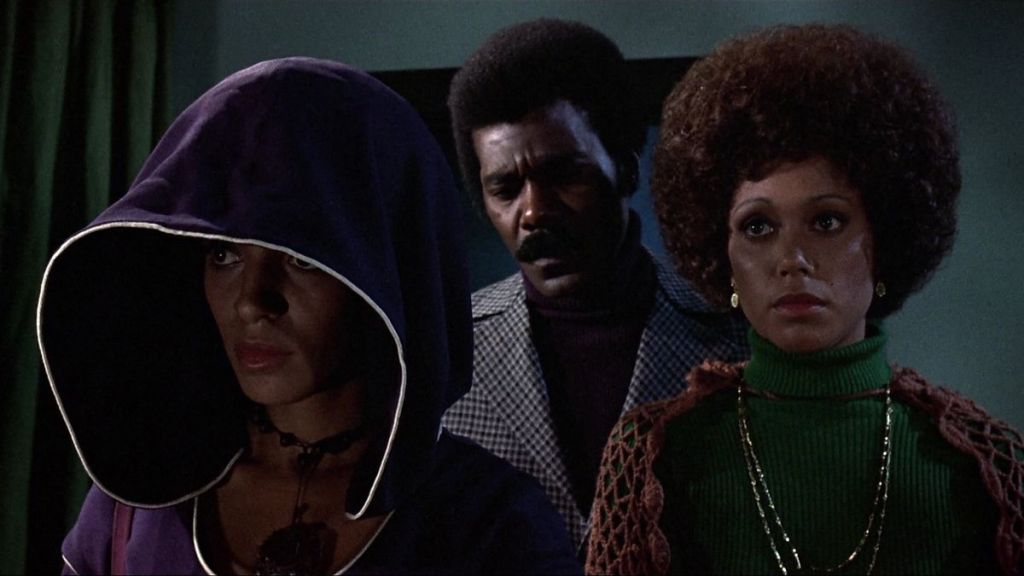
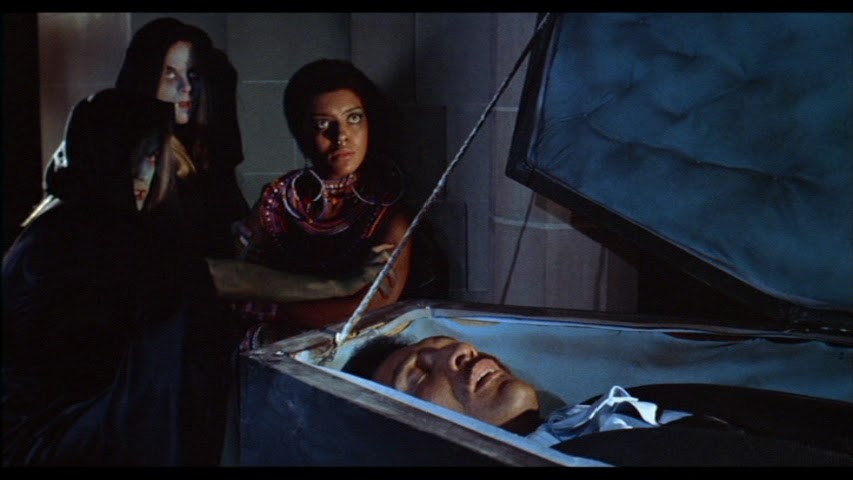
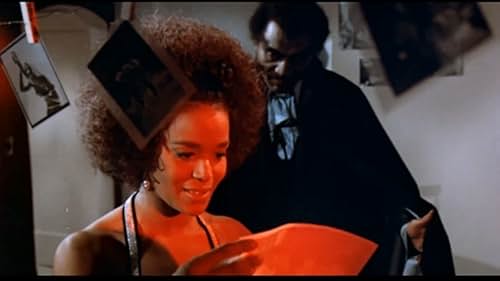
Horror has long been considered the genre that tackles societal concerns, reflecting the world’s ills to itself like a mirror. In Blacula, this propensity is illustrated not only in the plight of Prince Mamuwalde and his emergence as a sympathetic character, but also in the content of the supporting scenes. Commentary on the way that Black victims are treated by the police occurs at the police station; the complex interaction between members of the Black community; social biases related to homosexuality; segregation and cultural impositions – these concerns of the day were related onscreen for audiences to take back to their homes and discuss, much like gender biases, consumerism, and, still, race are reflected in films today.
Blacula was released in 1972, when Black images on screen were enjoying a positive reception. Sidney Poitier’s Guess Who’s Coming to Dinner?, Billy Dee Williams’ Brian’s Song, and Sammy Davis Jr.’s massive filmography in the 1960s had solidified the Black male in prominent roles to great acclaim. Sweet Sweetback’s Baadasssss Song had already kicked off the fledgling Blaxploitation era and was quickly followed by memorable films like Shaft and Superfly. Cinema with Black people in roles outside of what had been standard casting heretofore – porters, maids, primitives – was becoming more mainstream, ushered in by acting prowess and compelling storytelling once the initial opportunity was seized. Blacula held its own in that regard; Marshall’s delivery was impeccable and spoke of training and a focus on style. Moviegoers would, indeed, experience all the power, dominance, and bloodsucking they would expect from a vampire film, but they would also be treated to a seasoned actor who filled a scene with his presence, one who expressed not only bloodlust, but the nuances of love and respect. As is common for the serious actor, great care and appreciation for storytelling are on display in this film, commensurate with the movies of the time.
Blacula encompasses all of the above while being an enduring symbol of early genre filmmaking that burns eerie images and uncanny scenarios into one’s head, even as it celebrates cultural differences as a matter of course rather than spectacle. This may have been the most important aspect of the film, after all. Since Blacula, there have been a few Black vampires in cinema, Maximillian in Vampire in Brooklyn, and, of course, Blade, among them, though not nearly enough for this author. The door is open for a fresh take on the genre with a Black character in the lead role. The apple is ripe; one needs only take a bite.

 NightTide Magazine
Leave a comment