Whistle (2025) dir. Corin Hardy/No Trace Camping ⭐️⭐.5
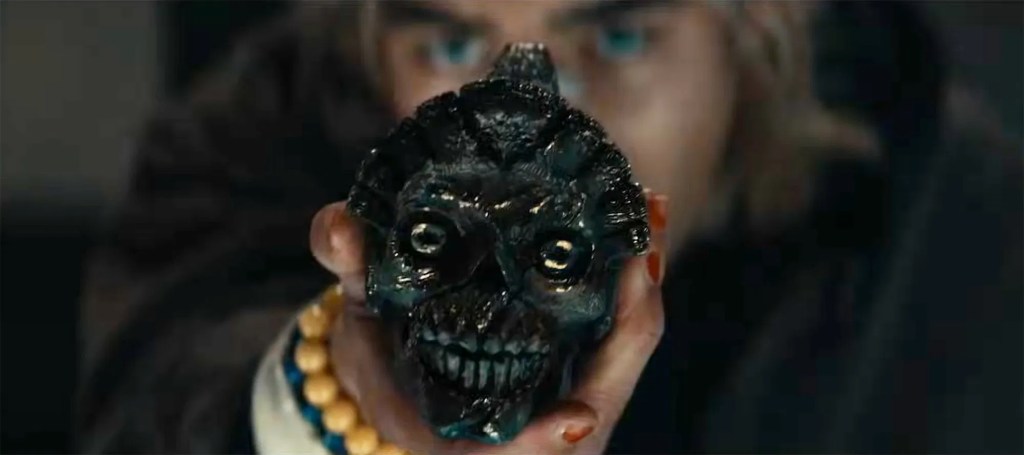
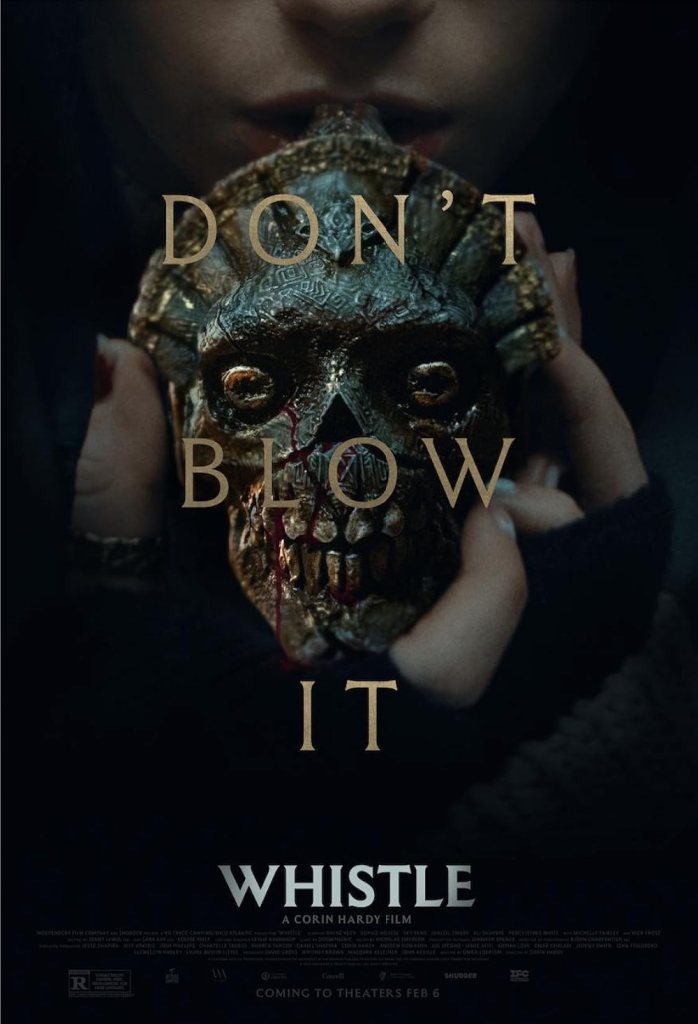
A misfit group of unwitting high school students stumble upon a cursed object, an ancient Aztec Death Whistle. They discover that blowing the whistle and the terrifying sound it emits will summon their future deaths to hunt them down.
There’s something comforting about a teen slasher that knows exactly what era it wants to live in. Whistle (2025) wears its late 80s and early 2000s influences on its sleeve: high school hallways as battlegrounds, social hierarchies, and a cursed object passed between teenagers who think they understand the rules better than they do.
The lineage is clear. It’s invocational horror, runs straight back to Mr. James’s ‘Oh Whistle, and I’ll Come to You, My Lad’, in which a man discovers an ancient whistle, blows it out of curiosity, and summons a relentless entity that refuses to detach from him. It’s contractual terror; once called, something answers.
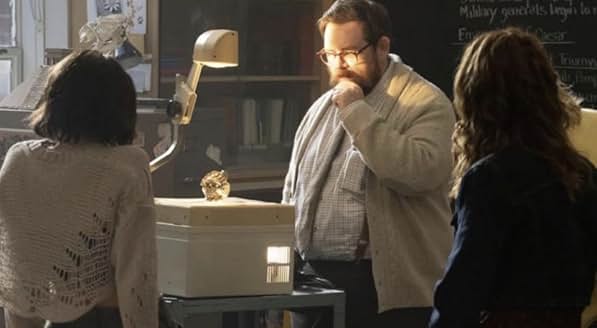
Whistle updates the premise through a Mayan death whistle that binds itself to whoever dares to blow it. But instead of centering adults meddling with forces they don’t understand, this film locks itself entirely inside the teenage ecosystem. There’s almost no functional adults. Guardians exist off-screen. Authority figures are corrupt, opportunistic, or absent. A youth pastor doubles as a drug dealer. A history teacher, Mr. Craven (Nick Frost), sees the whistle as profit. Protection, for them, isn’t coming from any angle. What we’re left with is a sealed world where teens are forced to manage consequences alone.
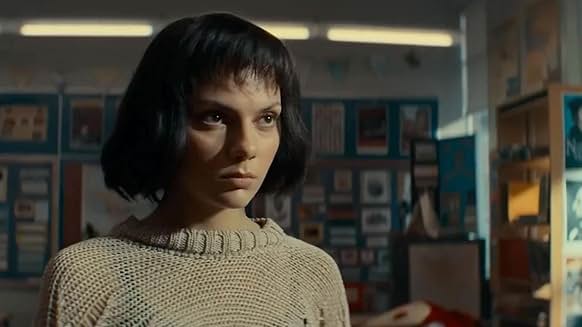
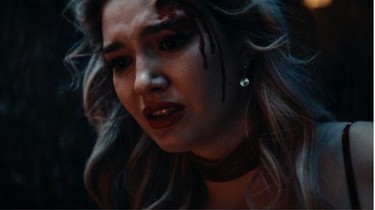
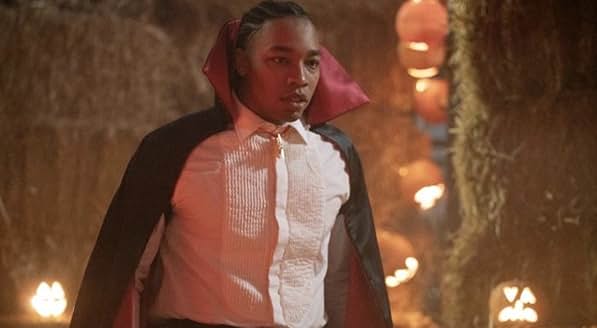
When Chrys (Dafne Keen) arrives as the New Girl. She’s already marked. Rumor precedes her: she killed her father while she was on drugs. The story mutates in the hands of the school’s Golden Boy Dean (Jhaleil Swaby) until she becomes ‘the girl who killed her dad’. In a space ruled by affluence, jock dominance, and social cruelty, Chrys is positioned as contaminated before she ever touches the whistle.
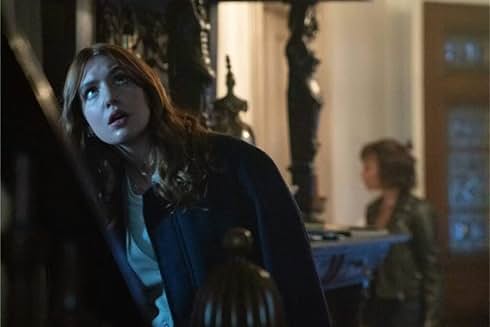
So when she’s compelled to blow it, it doesn’t feel arbitrary. It feels aligned with horror’s long fascination with girls who already live close to annihilation. Hierarchy abounds in this film. The wealthy, popular girl Grace (Ali Skovbye) and her best friend Ellie (Sophie Nélisse) are insulated by status. Her boyfriend is navigating proximity to power. And the bullied cousin, Rel (Sky Yang), orbits the crush she’ll never have. There’s a really sweet queer undercurrent that softens the edges of the violence. Everyone knows their place in this ecosystem, and the whistle doesn’t flatten it.
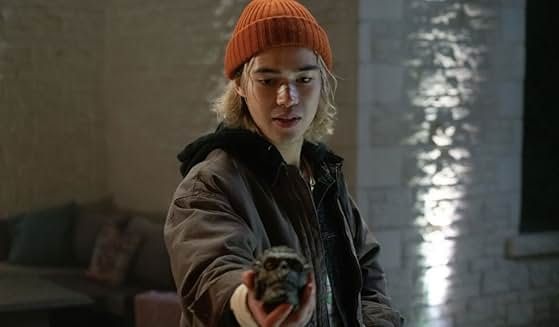
Structurally, the film isn’t doing anything new. The logic that death can be reset by dying and being revived recalls Flatliners. The chain reaction fatalism echoes Final Destination. The idea that you can cheat death if you’re clever enough is often one of teen horror’s oldest lies. There’s nothing radically new about these mechanics, but that doesn’t mean it doesn’t have legs.
The kills are inventive and vicious, the pacing is confident, and most importantly, the film commits to teen interiority. It treats their fear, jealousy, humiliation, and longing as real forces rather than disposable slash or fuel.
Here’s where the film works best:
Whistle plays like a late 80s slasher revival filtered through grief, hierarchy and adolescent fatalism. It’s cursed object runs straight back to Mrs. James’s ‘Oh, Whistle and I’ll Come to You, My Lad’. Invocation as contract, but here the summoning belongs to teens abandoned by adult authority. In a school ruled by affluence, rumor and masculine dominance, Chrys arrives already marked by guilt and stigma. The whistle echoes a social reality in which she’s been positioned as destructive and disposable. While its “die to reset the curse” mechanics feel familiar, brushing against Flatliners and Final Destination, the film’s energy lies in its ruthless team focus, its super sweet queer undercurrent, and gleefully vicious kills.
Where it falters is in its depth. The cultural history of the whistle is largely glossed over. The adult corruption threads, particularly the youth pastor, feel underdeveloped. The premise is homage rather than reinvention. You can see the seams, and yet it’s really fun. Fully unashamedly fun.
It takes us back to the pleasure of watching teens band together in fluorescent-lit hallways and backyard pool parties while something unseen stalks them. It knows the high school itself is a pressure cooker, and it remembers that adolescence often feels like a curse you didn’t consent to. 2 1/2 stars, maybe 3 on the right day. Not groundbreaking, but alive. And sometimes in teen horror, that’s enough.

 NightTide Magazine
Leave a comment