
By Mo Moshaty

For as long as horror has existed, women have been there, shaping it, riding its fears, directing its nightmares, and performing its most unforgettable roles, all while pushing the genre into new emotional and political territory. Yet the historical record of horror cinema is often treated has often treated their contributions as footnotes rather than its foundations.
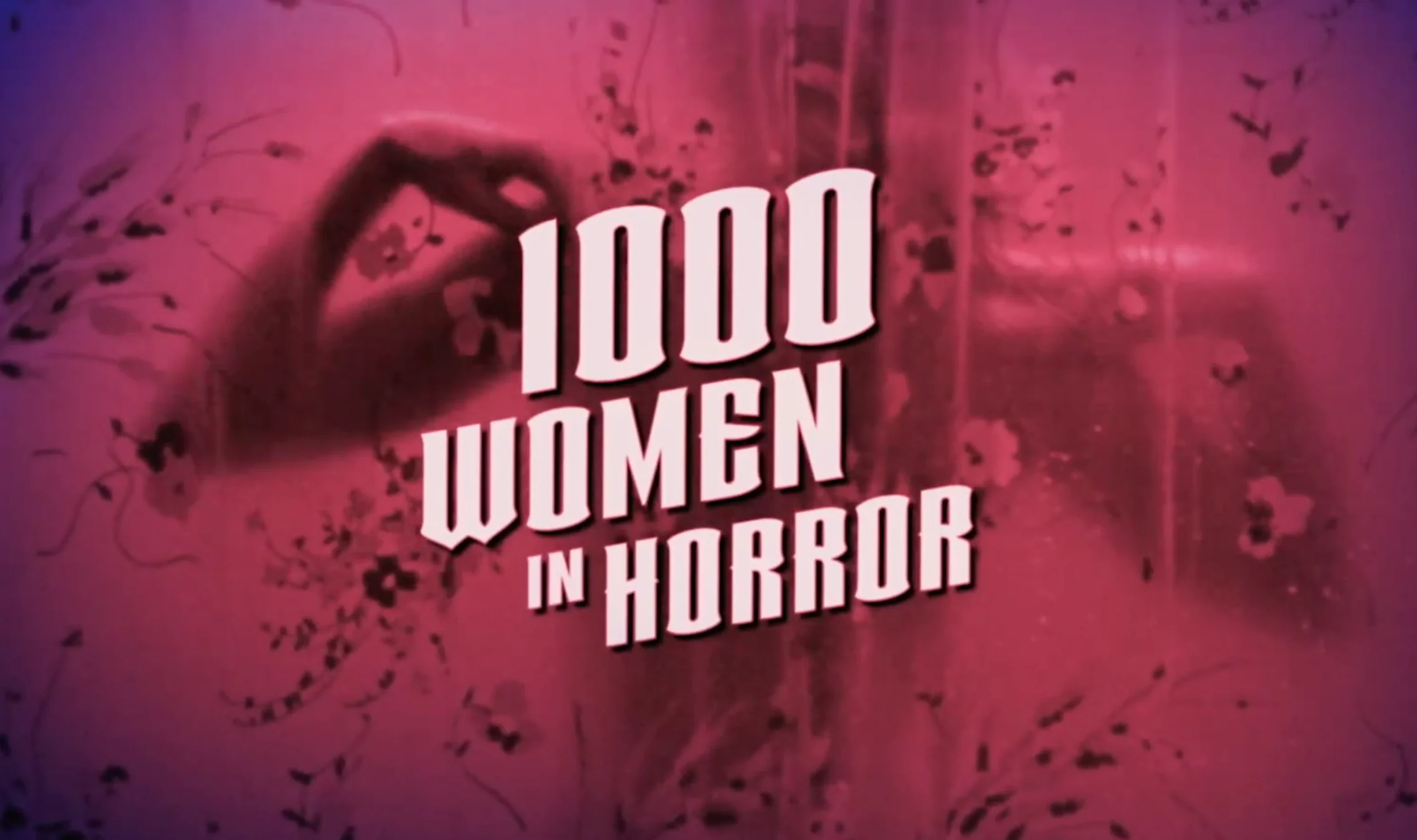
That imbalance is exactly what Alexandra Heller-Nicholas set out to address with her landmark reference book 1000 Women in Horror, an expansive chronicle documenting the women who have shaped horror from its earliest days of cinema through the present. Now that research has taken on a new life in the documentary 1000 Women in Horror, directed by Donna Davies, which transforms the encyclopedic scope of the book into a cinematic exploration of women’s experiences within and contributions to the horror genre.
Rather than simply listing names and films, the documentary approaches horror through the stages of a woman’s life, through girlhood, adolescence, motherhood, and aging, using these moments to explore how the genre reflects the pressures and anxieties women encounter both on and off screen.
Featuring voices from across the horror and landscape, including filmmakers like Mary Harron, Akela Cooper, and Gigi Saul Guerrero, the film opens a wider conversation about authorship, representation, and the ways women have always been central to horror’s evolution. We sat down with Heller Nicholas about bringing such an ambitious project to the screen, translating its massive research archive into a cinematic journey, and why documenting women’s labor in horror remains urgent and unfinished work.
Mo Moshaty: One thing that still gets repeated in film culture, and usually by the film bro corner of the Internet, is the idea that women don’t like horror, which always feels strange when you consider that women around the world live with very real threats of violence, surveillance, and bodily control every day. For you, does horror function as a kind of recognition space for women, where those dangers are finally acknowledged rather than dismissed?

Alexandra Heller-Nicholas: For me personally at least, horror at its heart pivots around – and yes, often exploits – the vulnerability of what it is to be human, whether physically, spiritually, or emotionally. There is a universality to this, reflected in the fact that horror is a very much a global genre, with powerful examples of the form emerging from all corners of the world. But the reality is, when it comes to lived experience, many of us understand differences in power – who is weak, who is strong; who has control, who doesn’t have control – through socially-constructed points of difference, often but not only relating to things like gender, sexuality, ethnicity, race, class, and religion.
This is a really useful way for me to frame questions of power and control in horror as they relate not just to women, but to femme-identifying, nonbinary, and other gender non-conforming folk more generally. To put it bluntly, while there are a lot of really supportive and fabulous cis men – many of whom were involved in the bringing of both the book at film of 1000 Women in Horror to the world, I might add – there is still unfortunately in some quarters an unsavory, cliched brand of cis male nerdjock who sees any suggestion of diversity in the genre as a direct threat to their sense of control, refusing to relinquish any delusional self-appointed sense of their own biologically-defined role as Gatekeeper of Horror Movies.
Horror films and horror and gothic literature before it have always spoken about otherness, about vulnerability and volatility, and of fears that maybe the universe and everything in it is controlled and controllable. I can only speak for myself, but I know it’s something a lot of femmes I know have also identified: I love horror because it honestly feels sometimes like the only cultural forum where I am not being constantly gaslit into thinking the world is a safe and happy place, that there are forces out there that wish to cause me harm simply because of my gender.

MM: Your project traces women’s involvement in horror back to the earliest years of cinema. What surprised you most looking at that full historical arc since the late 19th century? Were there pioneers whose influence on the genre has been overlooked or miscredited? Because we all know how men like to steal shit.
AHN: My understanding is that the label “horror movie” really didn’t pick up steam in public discourse until the enormously successful boom of things like the 1925 Phantom of the Opera and the ’30s Universal Monster movies, which means a lot of films before then that we should now be talking about as horror films have sort of been far too easy to slip through the critical net. This is really a general observation, and not just relevant to women’s filmmaking: something like The Spoiled Darling’s Doll (1913) to me absolutely belongs in any conversation about the history of horror cinema, but is rarely ever mentioned.
But film history, of course, has an additional blind eye when it comes to women, on top of that. Alice Guy* is now widely recognised as an important early filmmaking pioneer, especially in the context of fantastic cinema. But in 1905, she made a film called Esmerelda which was an adaptation of Victor Hugo’s 1831 gothic novel The Hunchback of Notre-Dame, and while not all her films have survived, there is a whole stack of Guy’s other films that feel appropriate to conversations about early horror cinema, including The Blood Stain (1912), The Face at the Window (1912), her Poe adaptation The Pit and the Pendulum (1913), The Monster and the Girl (1914), The Lure (1914), and the The Vampire (1915).
Similarly, Lois Weber’s important donation to the development of early cinema has, in recent years, been given a long-overdue critical spotlight, and something like her 1913 film Suspense is absolutely a textbook example of an early home invasion film. Its gender politics might not feel particularly progressive on a representational front from a reductive contemporary perspective, perhaps, but Weber didn’t only just co-direct it (with Philip Smalley), but wrote and starred in it also: a proper proto scream queen!
MM: Women and women in the future occupy a huge range of archetypes. The Ingenue, The Final Girl, The Witch, Vengeful Spirit, Monster, Rescuer, Seductress, Mother, and Survivor. Which of these archetypes do you think has been the most misunderstood historically, and which one is currently being reclaimed in the most interesting ways?
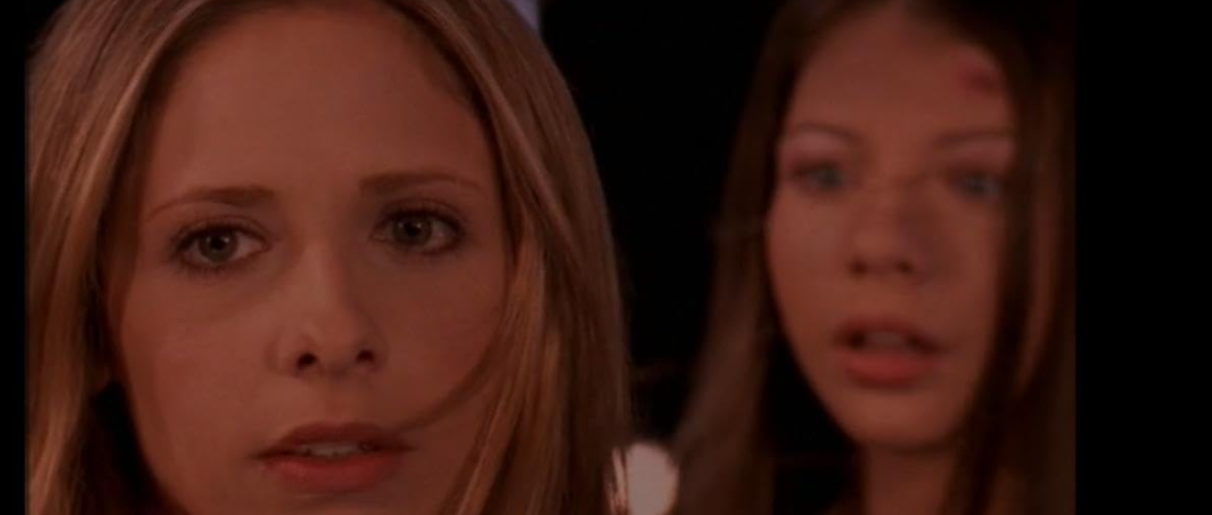
AHN: I honestly think there’s a case to be made that each of these is the most misunderstood, over-simplified, and that isn’t just from male critics. I don’t want to name names, but yesterday a post randomly came up on my IG feed where a woman was insisting that Buffy was unusual for the period because she was a “subversive final girl”, and it’s like, honey, I beg of you, read at least one book, ever. The Final Girl was subversive by definition! The Final Girl transcends slasher film and her roots can be found back in movies like the German krimi films, the Bela Lugosi classic The Corpse Vanishes (1942) – at the least! It may just be that my algo is especially fucked, but I see far, far too many simplistic, reductive takes like this on IG (from women as much as men) that I’m at the point that I am using it less and less out of fear it will actually make me more stupid.
But I digress! I guess for me personally, the archetype you mentioned that most immediately grabs my attention is the figure of the witch, which I talk about at length in my 2024 book The Cinema Coven: Witches, Witchcraft and Women’s Filmmaking. Because the whole point of that book really hinges on contradictory understandings of what the witch “means” culturally and socially that exist simultaneously. That entire book is based on the premise that women filmmakers fit a lot of these contradictory, still contemporary cliches about the witch: that they are outsiders, that they are going against social norms (based on the assumption that filmmaking is a more ‘natural’ job for men), and yet that they have enormous power when their talents are unleashed, and/or when they join forces with other likeminded filmmaker-witches – hence “the cinema coven” of the book’s title.
MM: Historically, women’s anger has been labeled as hysteria, madness, or instability. Horror seems uniquely capable of translating that suppressed rage into imagery and narrative. Why do you think the genre has become such a powerful space for articulating female anger?
AHN: I have a great passion for melodrama (Sirk and Fassbinder especially), and I think it has a long and widely underacknowledged association with horror that is well overdue for a proper discussion. Both horror and melodrama at their heart are about excess: big spectacles, big feelings! This comes to the fore perhaps nowhere more vividly than in the hagsploitation film, which is a category that I will defend to the grave. I know people who avoid that label like the plague for fear of being seen as regressive, but – now that I am a hag myself – I passionately feel the “hag” element needs to be not just articulated, but embraced. Those films hinge around a kind of melodramatic comic excess, real Bakhtin areas. There is a superficial argument to be made that they glorify a kind of monstrous femininity and uphold sexist stereotypes about older women being horrific, but as an older woman myself, what I see is these glorious actresses going absolutely commando and having the times of their fucking lives playing these incredible characters in a genre where everywhere else expects them to be kind, pliant grandmothers. Bring on the hag renaissance!

MM: So many horror films created by or about women revolve around the body: transformation, violation, reproduction, aging, and possession. Why do you think horror has become such a powerful space for examining how women’s bodies are regulated, feared, and politicized?
AHN: I think these spectacles function in many ways as an articulation of a lot of negative assumptions and stereotypes around women that add to the broader provocative nature of horror. It would be absolutely ridiculous to claim that all horror films are progressive – that is obviously clearly not the case – but the films I personally find really fascinating are the ones that are a little more ambivalent or undefined on what it is that they are actually saying on the gender political front. Carrie by Brian De Palma is a great example of this, a film I will fight for with a knife in my teeth.
But going back to what I was saying earlier, horror is a genre where points of social difference, such as gender, are often amplified for narrative, thematic, and spectacular effect. I think this in practice means all sorts of different ‘takes’ on not just women but femininity more generally are revealed, often (frequently!) subconsciously and without the filmmaker necessarily being aware that this is in fact what they are doing. These ‘takes’ can be subversively progressive or explicitly, regressively dunderheaded, but horror as a form almost refuses to not be a kind of Rorschach test for not just filmmakers but audiences and critics themselves. What do you see here? What do you think this film is saying to you?
MM: When women direct horror, the emotional centerpiece of the story often changes: relationships, the interior, and psychological stakes come to the forefront in new ways. Across the filmmakers you’ve spoken with, did you notice any recurring themes, concerns, or storytelling approaches?
AHN: Honestly, I have found the opposite in my experience, but I think that is just as exciting: femmes are not any more or less gifted than anyone else to tell certain stories, because we’re all human. There are absolutely women horror filmmakers who make regressive, simplistic, moronic trash (I won’t name names), just as there are men horror filmmakers who have made profoundly insightful films about the femme experience in really moving, important, and profound ways.
That being said, the thing that does come to the fore when talking to femme horror filmmakers that I have found is their shared experiences of working in a field still widely assumed to be masculine terrain. Women filmmakers in general, but women horror filmmakers in particular, are still seen as interlopers or novelties; you still get that “women are making horror films now, can you believe it?!” tone in mainstream film publications, and that is absolutely reflected in the stories of so many women filmmakers I’ve spoken to. Again, not all, but enough of them to reflect a significant and very depressing trend. We’ve made progress, but there is still a hell of a long way to go.
MM: Many cultures have traditions of women sharing frightening stories as warnings, survival tools, or ways to bond within their communities. Do you see modern horror cinema continuing that tradition in any way?
AHN: 100% agree with this. Orthodox horror film crit defaults almost always to literary precursors like Edgar Allan Poe and HP Lovecraft, who – while obviously very important – come from a very different tradition than key Gothic writers like Ann Radcliffe and Clara Reeve, who are not quite household names in the same way. I am old enough to remember the absolute shitshow when the first Twilight film came out in 2008, and the vocal, pearl-clutching mortification of the horror-dudes en masse that their precious sacred genre had been (gasp) feminised. Directed by Catherine Hardwicke and adapted from Stephenie Meyer’s novel of the same name by Melissa Rosenberg, there was a widespread dudebro interpretation that women got horror wrong: no acknowledgement at all here of the gothic roots of the contemporary film genre, and what an incredibly central women like Radcliffe and Reeve, amongst many others, played in those origins.
MM: Who benefits from maintaining the myth that women don’t enjoy horror despite the enormous number of women working in the genre, being the centerpiece, and consuming it? And what does it obscure about women’s relationship to fear and storytelling?
AHN: Gaslight, Gatekeep, Dickhead: a story as old as time. Reading responses from some quarters when the Shudder doc 1000 Women in Horror was announced, there was a real pattern in the responses that really brought those three words aggressively to the fore.
The first category was cis men arguing that horror, in fact, can’t be feminist because so many women are killed, and that it fetishises violence against women. Well, first of all, that argument depends on cherry-picking specific films and discounting others, so fuck that shit. And perhaps more importantly, it also denies the broader systemic issue that women have historically been aggressively excluded from making horror movies themselves and presenting gender difference from their perspective: while important women horror filmmakers are going back to the earliest days of cinema as noted above, even today it’s indescribably depressing that they are still a minority, still seen as an anomaly.
The other trend that I didn’t expect that I saw a lot from the usual suspects representing the misogynist dipshit brigade was an almost comically aggressive attempt to gaslight any femme who has felt excluded in the horror community: “What are you talking about? You can actually shut up and fuck off with this documentary because if you feel you aren’t being seen or heard, you are totally imagining it. There is no gender discrimination! Why would you be so stupid to say that there is, you dumb bitch? Stop hitting yourself! Why are you hitting yourself?”


MM: If horror is a genre built around fear, what does the growing presence of women creators suggest about who is finally being allowed to define what fear looks like?
AHN: One of my favourite parts of the documentary is the extraordinarily talented and kind filmmaker Natasha Kermani saying that women have always been a part of horror storytelling, it’s not about finding a new space but reclaiming space at the table that was always there for us, as seen in everyone from Mary Shelley to Scheherazade. I think this is a really beautiful and enormously constructive way to reframe the conversations that we hope that both the book and the documentary 1000 Women in Horror want to encourage: it’s not just about looking ahead to a world with more access, distribution and opportunities to women-made horror movies, but looking back and rethinking how the entire sausage fest of horror film history has been based on a fundamentally incorrect assertion that women were not a crucial part of that history.
1000 Women in Horror reminds us that horror history has never been as narrow as it is sometimes presented. The genre has always been shaped by women as creators, scholars, performers, and fans, and the work of documenting that legacy is ongoing.
The documentary 1000 Women in Horror is currently available to stream on SHUDDER, while Heller-Nicholas’s companion volume 1000 Women in Horror remains an essential resource for anyone interested in the deeper history of the genre.
Supporting women in horror can take many forms: seeking out films directed and written by women, amplifying critics and scholars who are reshaping the canon, and championing the next generation of filmmakers who continue to expand what horror can be, look like, and mean. After all, as this project makes abundantly clear, the story of horror has never belonged to just a few voices. It belongs to thousands…and counting.

Mo Moshaty is an acclaimed horror writer, lecturer, and producer whose work combines visceral storytelling with the psychological insight of her Cognitive Behavioral Therapy background. She has lectured internationally, including as a keynote speaker at Nightmares from Monkeypaw: A Jordan Peele Symposium (Prairie View A&M), No Return: A Yellowjackets Symposium (Horror Studies BAFSS Sig), The Whole Damn Swarm: Celebrating 30 Years of Candyman (University of California), and with the Centre for the History of the Gothic (University of Sheffield). Mo has also presented at the BFI, Miskatonic Institute of Horror Studies, and Final Girls Berlin Film Festival’s Brain Binge on women’s trauma in horror cinema, Cine-Excess on The Creepy Kid Horror Subgenre and Mother/Daughter Trauma in Horror, and Romancing the Gothic on Cosmic Horror’s Havoc on The Body Electric Her short film, 13 Minutes of Horror: Sci-Fi Horror, won the 2022 Rondo Hatton Classic Horror Award for Best Short Film. As a core producer with Nyx Horror Collective, Mo co-created the 13 Minutes of Horror Film Fest and partnered with Shudder in 2021 and 2022, while also establishing a Stowe Story Labs fellowship supporting women creatives over 40+ in horror. A member of the Black Women in Horror Class of 2023 and featured in 160 Black Women in Horror, Mo’s short fiction appears in A Quaint and Curious Volume of Gothic Tales (Brigid’s Gate Press) and 206 Word Stories (Bag O’ Bones Press). Her debut novella, Love the Sinner, was released July 5, 2024, with Clairviolence: Tales of Tarot and Torment released in October 2025. The first of her five-volume non-fiction series, The Annex of the Obscure: The Afterlife, will be released in 2027 from Tenebrous Press. As the Editor-in-Chief of NightTide Magazine and founder of Mourning Manor Media, Mo champions marginalized voices in horror. Under her leadership, NightTide plans to launch a film festival in 2028, furthering her mission to reshape the genre through inclusivity and representation.
Leave a Reply